Some random, unfiltered thoughts on AI and the market:
The gulf between “San Francisco” and “New York” has never been wider than it is right now
AI is accelerating in capability, rapidly and in a way that is structurally changing, and in many ways upending, the nature of the firm and the fundamentals of capitalism
If that sounds extreme, consider that Anthropic has ~6,000 employees, Meta has 67,000, and both companies are worth ~$1.5T
Talk to your average startup and it’s clear that, given the opportunity to start from scratch, nobody is building their companies “the old way.”
Talk to your average Fortune 500 company and it’s clear that getting an AI agent into production at scale is a Herculean task
Intelligence may not be the bottleneck, but firms built from the foundational assumption that intelligence is improving quickly in capability and price are scaling at a genuinely unbelievably velocity
There’s a reason Zuck wanted to fire 60% of many of the teams at his company, in large part likely out of frustration that he can’t start from scratch like his competitors had the luxury of doing
A structurally weaker Nvidia and OpenAI have minimal impact on the pace and impact of AI diffusing across the economy (“San Francisco”), but completely breaks the models built in “New York.” Hence the absolute freak-out these last few weeks. It was all priced to go perfectly and now things are not perfect
But for the boots on the ground, AI will not slow down. And counterintuitively, economic weakness might accelerate diffusion. After all, tokens are much more fungible and flexible than people
Where does that leave us? I think firmly in the second phase of the AI build-out. Real value is being built in the app layer (though how defensible it is…TBD).
Trying to predict the next bottleneck, or whether Washington does this or that other thing wrt policy, or exactly how many data centers get built out…who can say? Certainly not me. It’s not the bet I’m trying to make
I’m looking at who wins from rapidly improving intelligence available at increasingly cheaper prices, and critically, which leaders are able to move with conviction into this new operating paradigm
When you're coordinating a fleet of AI agents, you are responsible for maintaining the mental model in your head. You're supposed to know what the overall goal is, and then divide the goal into prompts for each agent.
Most Romans never once ate a "Roman feast." The real daily diet was way stranger and more human than the movies show.
The staple was puls, a thick porridge of emmer wheat. Poor families ate it morning and night for their whole lives. Rome ran on porridge long before it ran on bread.
Then there was garum. Fermented fish guts left in salt under the sun for weeks until they broke down into a salty brown sauce. It smelled so bad that making it was banned inside some city limits. Romans put it on almost everything. It was their ketchup.
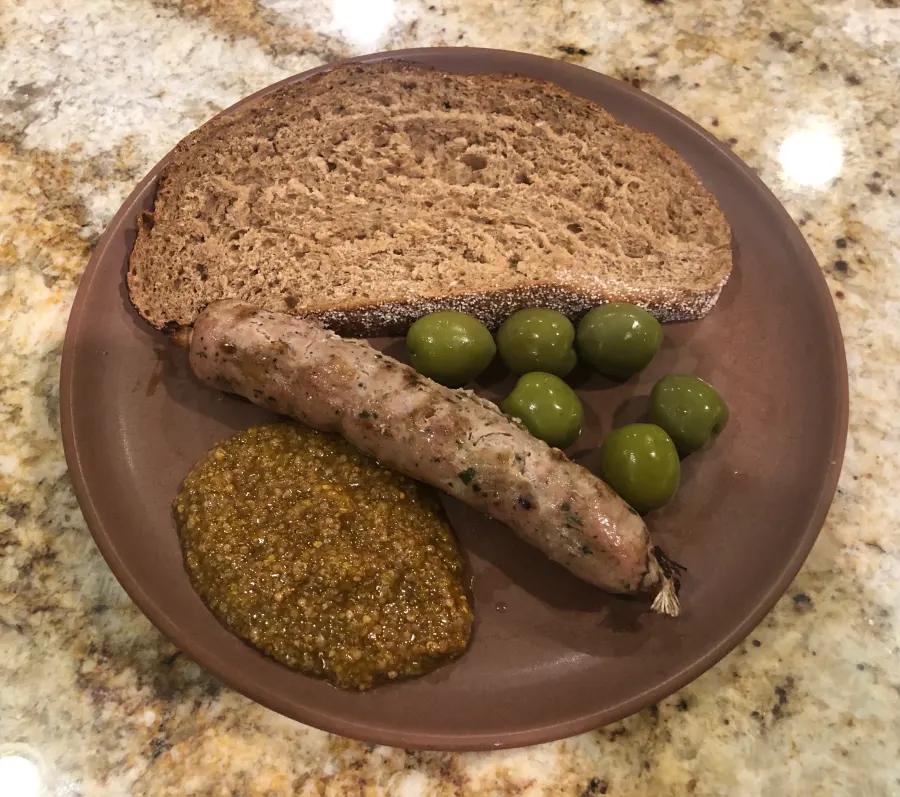
Most people lived in apartment blocks with no kitchen, because open fires in packed wooden buildings meant the whole block burned down. So they ate out. Every street had a thermopolium, a counter with clay pots of hot food sunk into it. Stew, sausage, chickpeas, whatever was cheap that day. Ancient fast food, and you can still see the counters standing in Pompeii.
Meat was a luxury for ordinary people. When they got it, it was usually pork. Sausages, offal, blood, the cheap cuts. Beef was rare because oxen were worth more alive, pulling plows.
Vegetables did the heavy lifting. Cabbage, leeks, onions, garlic, lentils, fava beans, chickpeas. Cato the Elder was so obsessed with cabbage he claimed it cured basically every disease and wrote about using it as medicine.
No sugar existed, so honey was the only real sweetener. They put it in wine, on cheese, even on meat.
Nobody drank plain water if they could help it. Wine was watered down and sipped all day long. Poorer people and soldiers drank posca, a sour mix of vinegar and water that also killed bacteria without anyone knowing why.
And the rich? Totally different world. At elite dinners they served dormice fattened in clay jars and rolled in honey, flamingo tongues, whole roast peacock, and imported spices worth more than gold. One surviving Roman cookbook reads like a dare.
So the true taste of ancient Rome was not marble and grapes. It was porridge, cheap wine, and fish sauce that smelled like a dock at low tide. And they loved it.