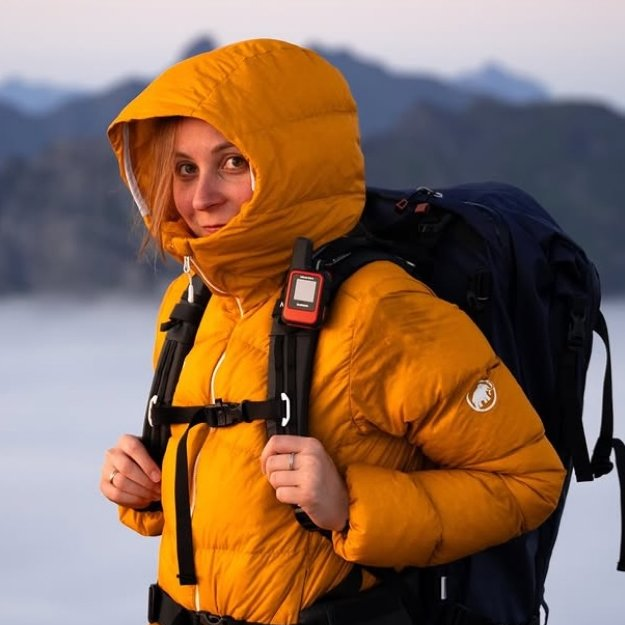
It is my honor and privilege to be headed to the US Senate to serve the great state of Michigan.
Michigan, we did what they said couldn’t be done. We won. Together. Now the real work begins.
Elephant in the room : ADDRESSED
Ducks : In a fucking row
Horses : HELD
Eggs: In so many baskets
Bigger Fish : Fried
Ace : Up my sleeve
2 Birds : Stoned
The Claude Startups program is expanding to more founders.
Members can get a year of Claude Team, API credits, special offers on the tools a startup runs on, and office hours with Anthropic’s Applied AI team.
📣 Applications for the @Airwallex Agentic Banking Hackathon are now open.
If you're building agents that can move money, come build with us.
🤖 Airwallex APIs
💰 $100K in prizes & credits
🌉 Demo day in SF
Apply now: https://t.co/KTyhPfm7KS
Big thanks to the partners putting up prizes, credits and tools for builders: @visa, @claudeai, @awscloud, @altaxyz, @t0finance, @Base44 and @coinbase.
Duo-Man offers the complete walkman experience on the iPhone Duo. Open the Duo to pick and 'insert' the cassette, Close the Duo to start listening.
Yes, I actually recorded the button clicks and static noise from a real Walkman!
It was fun making this at @bitrig hacks today.
I made a computer vision tool for rock climbing analysis in 3D using iPhone LiDAR!
Having learned a lot from sharing my previous rock climbing demos, I realized that a lot of rock climbing analysis is well-suited for 3D. Even something as simple as supporting videos where the person filming moves with the climber requires 3D information.
To get the depth information, I used my iPhone 15 Pro’s LiDAR depth sensor through my local iPhone app. I found that the depth measurements help a lot.
I think the holds activation is better, and I like the final view of all of the holds in 3D. It’s also interesting to see the distance traveled in meters. Plus, it looks cool and it feels like a video game 🙂
In short, I think this new demo is an improvement in that climbers can see the real-world distance traveled and a visualization of which hand and foot activated which hold.
I recorded the video and depth measurements from my iPhone app, and I ran the rest of the analysis on my computer. I used ViTPose+ Large for pose estimation and SAM 3.1 to segment the holds, both models accessed through the @vlmrun Gateway.
Let me know what you think!
The analysis code is open-source on GitHub: https://t.co/IJP6QKpgnY