We are the Department of Cell nucleus plasticity, a part of Institute of Experimental Medicine of Czech academy of Sciencies.
#oocyte#nucleolus#chromatin
How are mitotic chromosomes built? 🏗️ Our Review @TrendsGenetics revisits the classical chromosome scaffold model and connects it to condensins, topoIIα, and physical forces. We propose interphase chromatin domains as “building blocks”🧩of chromosomes:
https://t.co/AQgiZlSjYS
"Use it or lose it!" 🐇
Lab work is a fine skill that needs constant maintenance.
Cognitive research shows skill decays fast and orderly: 🎯Accuracy >⏱️Speed >⚖️ Mixed tasks
Performance drops within 4 weeks of non-use, but relearning takes just 10%–30% of the original effort.
The safety of suboptimal and posthumously retrieved sperm for ICSI is questionable. Sperm motility can be misleading here: immotile sperm may have intact DNA, while motile sperm can be damaged. Read our new editorial in JARG 🧬
#Genetics#Bioethics#ICSI#WildLifeConservation
Tired of forced updates and system bloat, so I finally made the switch:
I wiped Windows and installed Linux on a spare laptop 🐧
- 0% bloatware
- Feels brand new
I like it!
Seems like sometimes the best upgrade is just freeing your old hardware.
#Linux
What’s the next big shift in reproductive science? 🧬
From AI entering the lab to shifting global regulations and genetic breakthroughs, the "future" of assisted reproduction is happening right now. That's why we created the Future of Assisted Reproduction consortium. 🧵 (1/3)
We want to hear from you: What are we not talking about enough in the ART space? What is overhyped? If you could put ONE topic or burning challenge on our agenda to solve, what would it be?
⏬ Drop your thoughts below or DM us to share privately! Let’s shape the field together.
As scientists, we can’t navigate this rapidly evolving space alone.
We need to bring together researchers, clinicians, lab staff, and stakeholders to tackle what's next, with a strong focus on real-world bottlenecks, clinical reality, and day-to-day breakthroughs. (2/3)
@ecogwendoc Thanks for sharing this. The situation has been frustrating me for quite some time. On the other hand, do you think there could be a placebo effect/benefit? (I guess not - it would show somewhere.)
Do IVF add-ons increase the chances of
pregnancy? 🤔 It seems that nowhere do hope and
commerce collide more directly than in IVF "add-ons": costly,
optional procedures often marketed to patients before reliable evidence. The new analyses are sobering. 🧵 (1/3)
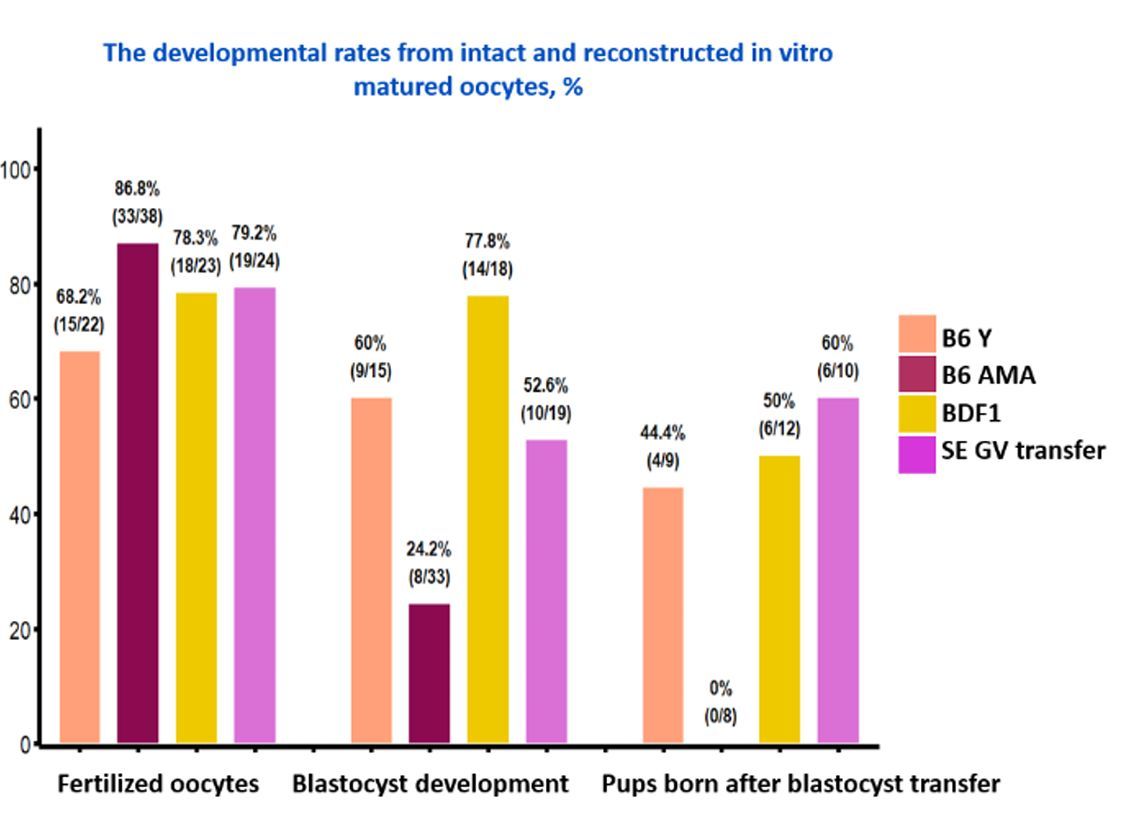
Reminder: A normal chromosome count ≠ a successful pregnancy.
In our aged mouse model:
🧬 50% of oocytes were euploid
🧫 25% hit blastocyst stage
🛑 0% resulted in live births
Euploidy is just the baseline. The rest matters just as much.
https://t.co/RPpzgmRKK6
#Oocyte#Aging
Is there a clear conflict between promotional language intended to sustain commercial interest and evidence-based information intended to aid understanding? A companion study showed that when patients get independent, transparent data, they make far more informed choices. (3/3)
A rigorous new meta-analysis in The Lancet Obstetrics, Gynaecology, & Women's Health had to discard nearly HALF of all eligible trials (72 of 157) due to concerns about data integrity and trustworthiness. Of the remainder, most add-ons showed no clear clinical benefit. (2/3)
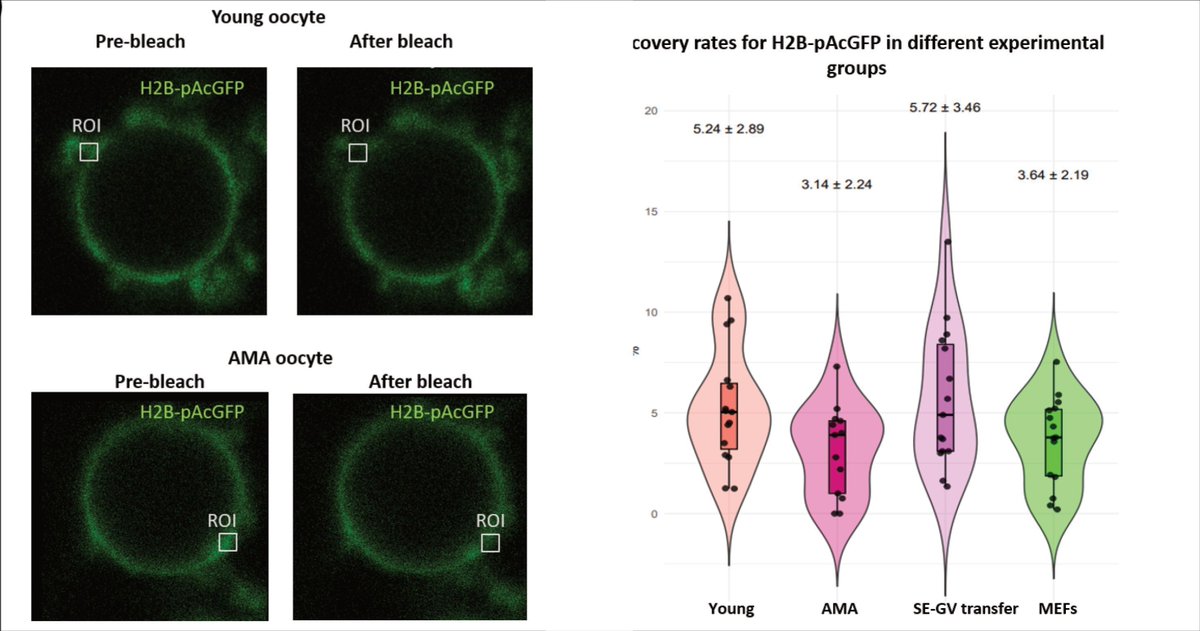
Oocyte DNA damage rises with age. Repair requires both repair factors and a repairable DNA template. There's evidence for the first, but the second is often overlooked. In AMA oocytes, histone turnover falls to somatic levels.https://t.co/RPpzgmRKK6 #ReproductiveAging#Chromatin
How do oocytes handle DNA damage when transcription is shut down? What I thought would be a small, fun project has ballooned into a nightmare of endless variables. Science really isn’t all sunshine and rainbows. #CellBiology#ReproductiveBiology#futureART
„I had an antibody from Hell“
was the opening of one post about Western blot troubleshooting.
Does this ring a bell for anyone? Have you seen the thread? Drop the link if you know it (and bonus points if you reply with your own antibody horror story).
#WesternBlot#LabTwitter
Being an editor sometimes really tests your patience, especially when authors treat peer-review feedback and formatting as optional. We're not gatekeepers but your safety net. Revisions help your research survive scrutiny and earn citations. #PeerReview#JournalEditor#Science