𝗧𝗵𝗲 𝗦𝗼𝘂𝘁𝗵 𝗔𝗳𝗿𝗶𝗰𝗮𝗻 𝗥𝗲𝘀𝗲𝗿𝘃𝗲 𝗕𝗮𝗻𝗸 is the oldest central bank in Africa, it was established on June 30th 1921.
It was because market participants were arbitraging Gold that the SARB came into existence.
𝗪𝗮𝘁𝗰𝗵 𝗵𝗲𝗿𝗲 🔻
Households, businesses, and local governments are users of money (currency). They need to earn, borrow, or tax before they can spend.
National governments (through the central bank) are different, they are the issuers of money. This is why they say;
𝗚𝗼𝘃𝗲𝗿𝗻𝗺𝗲𝗻𝘁 ≠ 𝗛𝗼𝘂𝘀𝗲𝗵𝗼𝗹𝗱
Government is not constrained by tax collections, and selling bonds or “borrowing” is not really a source of funding for government. Rather,
it’s an operation, bond sales are a monetary tool, not a fiscal need.
𝗔𝗱𝗱𝗶𝘁𝗶𝗼𝗻𝗮𝗹𝗹𝘆.
Taxation is a merely a mechanism to (I) redistribute wealth, (ii) destroy money that has been spent into economy, and (iii) creates demand for that currency.
That means the conversation should shift from “𝘄𝗲 𝗱𝗼𝗻’𝘁 𝗵𝗮𝘃𝗲 𝘁𝗵𝗲 𝗺𝗼𝗻𝗲𝘆 𝘁𝗼 𝗶𝗻𝗱𝘂𝘀𝘁𝗿𝗶𝗮𝗹𝗶𝘇𝗲” to governments can issue currency, and 𝘁𝗵𝗲 𝗿𝗲𝗮𝗹 𝗰𝗼𝗻𝘀𝘁𝗿𝗮𝗶𝗻𝘁 𝗶𝘀 𝗶𝗻𝗳𝗹𝗮𝘁𝗶𝗼𝗻, 𝗰𝗿𝗲𝗱𝗶𝗯𝗶𝗹𝗶𝘁𝘆, 𝗮𝗻𝗱 𝗱𝗶𝘀𝗰𝗶𝗽𝗹𝗶𝗻𝗲.
That means;
❌Deficits aren’t inherently bad
❌Taxes don’t fund spending
𝗔𝗴𝗿𝗲𝗲 𝗼𝗿 𝗱𝗶𝘀𝗮𝗴𝗿𝗲𝗲?
𝗧𝗛𝗘 𝗜𝗡𝗙𝗢𝗥𝗠𝗔𝗟 𝗘𝗖𝗢𝗡𝗢𝗠𝗬
South Africa’s informal economy represents a massive pool of economic activity, valued at roughly R900 billion, with some estimates believing its total value is closer to R1 trillion, 𝗮𝗰𝗰𝗼𝗿𝗱𝗶𝗻𝗴 𝘁𝗼 𝗙𝗼𝗿𝗯𝗲𝘀 𝗔𝗳𝗿𝗶𝗰𝗮.
Within this landscape,𝘁𝗵𝗲 𝘁𝗼𝘄𝗻𝘀𝗵𝗶𝗽 𝗲𝗰𝗼𝗻𝗼𝗺𝘆 𝗮𝗹𝗼𝗻𝗲 𝗶𝘀 𝗯𝗲𝗹𝗶𝗲𝘃𝗲𝗱 𝘁𝗼 𝗴𝗲𝗻𝗲𝗿𝗮𝘁𝗲 𝗮𝗿𝗼𝘂𝗻𝗱 𝟲%-𝟴% 𝗼𝗳 𝗦𝗼𝘂𝘁𝗵 𝗔𝗳𝗿𝗶𝗰𝗮'𝘀 𝗚𝗗𝗣.
According to Statistics South Africa's Q4 Quarterly Labour Force Survey, 𝘁𝗵𝗲 𝗶𝗻𝗳𝗼𝗿𝗺𝗮𝗹 𝗦𝗲𝗰𝘁𝗼𝗿 𝗮𝗰𝗰𝗼𝘂𝗻𝘁𝗲𝗱 𝗳𝗼𝗿 𝗮𝗻 𝗲𝘀𝘁𝗶𝗺𝗮𝘁𝗲𝗱 𝟭𝟵.𝟱% 𝗼𝗳 𝘁𝗼𝘁𝗮𝗹 𝗲𝗺𝗽𝗹𝗼𝘆𝗺𝗲𝗻𝘁.
𝗠𝗼𝗿𝗲𝗼𝘃𝗲𝗿,
GG Alcock, estimates that South Africa's informal independent traders, 𝘀𝘂𝗰𝗵 𝗮𝘀 𝘀𝗽𝗮𝘇𝗮 𝘀𝗵𝗼𝗽𝘀, 𝗰𝗼𝗻𝘁𝗿𝗶𝗯𝘂𝘁𝗲𝘀 𝟮𝟲% (𝗥𝟭𝟴𝟰𝗯𝗶𝗹𝗹𝗶𝗼𝗻) 𝗼𝗳 𝘁𝗵𝗲 𝘁𝗼𝘁𝗮𝗹 𝗥𝟳𝟭𝟲 𝗯𝗶𝗹𝗹𝗶𝗼𝗻 𝗙𝗮𝘀𝘁-𝗠𝗼𝘃𝗶𝗻𝗴 𝗖𝗼𝗻𝘀𝘂𝗺𝗲𝗿 𝗚𝗼𝗼𝗱𝘀 (𝗙𝗠𝗖𝗚) 𝗺𝗮𝗿𝗸𝗲𝘁.
For reference, to compare:
South Africa’s Stock Exchange -JSE- has a market cap of around $1.5 trillion, which is roughly R24 trillion.
It’s more than double South East Asia’s largest stock market, and bigger than Singapore and Indonesia combined. 😁
𝗢𝗡𝗘 𝗖𝗢𝗠𝗣𝗔𝗡𝗬. 𝗕𝗘𝗔𝗧𝗦 𝗔𝗡 𝗘𝗡𝗧𝗜𝗥𝗘 𝗠𝗔𝗥𝗞𝗘𝗧
South Africa's TOP40 largest listed companies are worth a combined $1.38 trillion, and NVIDIA is worth nearly 4x more than that.
𝗡𝗩𝗜𝗗𝗜𝗔 = $𝟱.𝟮𝟬 𝘁𝗿𝗶𝗹𝗹𝗶𝗼𝗻
Think about that 🤯
𝗠𝗮𝗿𝗸𝗲𝘁 𝗖𝗮𝗽 ≠ 𝗟𝗶𝗾𝘂𝗶𝗱 𝗰𝗮𝘀𝗵
Market capitalization is often mistaken for cash, but it doesn’t mean that amount of money is readily available.
𝗟𝗲𝘁 𝗺𝗲 𝗲𝘅𝗽𝗹𝗮𝗶𝗻 ✍🏼
𝗘𝘀𝗸𝗼𝗺 is reducing their investment into new generation capacity because it 𝗶𝘀 𝗯𝗲𝗰𝗼𝗺𝗶𝗻𝗴 𝗮 𝘁𝗼𝗹𝗹𝘄𝗮𝘆 instead.
They are charging users a fee to access their network, so that users can distribute their electricity without needing to invest in transmission infrastructure.
𝗟𝗲𝘁 𝗺𝗲 𝗲𝘅𝗽𝗹𝗮𝗶𝗻 🔻
I started converting some of my Rands into stablecoins, such as the USDT and USDC.
𝗧𝗵𝗲𝘀𝗲 𝘀𝘁𝗮𝗯𝗹𝗲𝗰𝗼𝗶𝗻𝘀 𝗮𝗿𝗲 𝗽𝗲𝗴𝗴𝗲𝗱 𝟭:𝟭 𝘁𝗼 𝘁𝗵𝗲 𝗨𝗦 𝗗𝗼𝗹𝗹𝗮𝗿.
My money is now sitting in dollars, shielding me from any ZAR depreciation. The stablecoin optionality eliminates the volatility that comes with other cryptos, and allows me to essentially hold dollars that I can still spend locally.
✅I get dollar-protected savings.
✅I get the convenience of tap-to-pay.
✅The merchant gets Rands.
🇿🇦Universities ( collectively ) in South Africa are receiving 40% of their revenue from Government.
And,
🇿🇦More than 50% of their costs are going toward employee compensation.
𝗠𝗼𝘀𝘁 𝗯𝗼𝗿𝗿𝗼𝘄𝗲𝗿𝘀 𝗮𝗿𝗲 𝗳𝗮𝗺𝗶𝗹𝗶𝗮𝗿 𝘄𝗶𝘁𝗵 𝘁𝗵𝗲 𝗣𝗿𝗶𝗺𝗲 𝗟𝗲𝗻𝗱𝗶𝗻𝗴 𝗥𝗮𝘁𝗲 (𝗣𝗟𝗥). Because;
This is normally how home loans are priced in South Africa.
𝗕𝘂𝘁 𝗶𝘁 𝗺𝗮𝘆 𝗮𝗹𝗹 𝗯𝗲 𝗰𝗵𝗮𝗻𝗴𝗶𝗻𝗴 𝘀𝗼𝗼𝗻 🔻
𝗧𝗵𝗲 𝗖𝗼𝘀𝘁 𝗼𝗳 𝗪𝗮𝗶𝘁𝗶𝗻𝗴 𝗶𝘀 𝗠𝗔𝗦𝗦𝗜𝗩𝗘 🚨
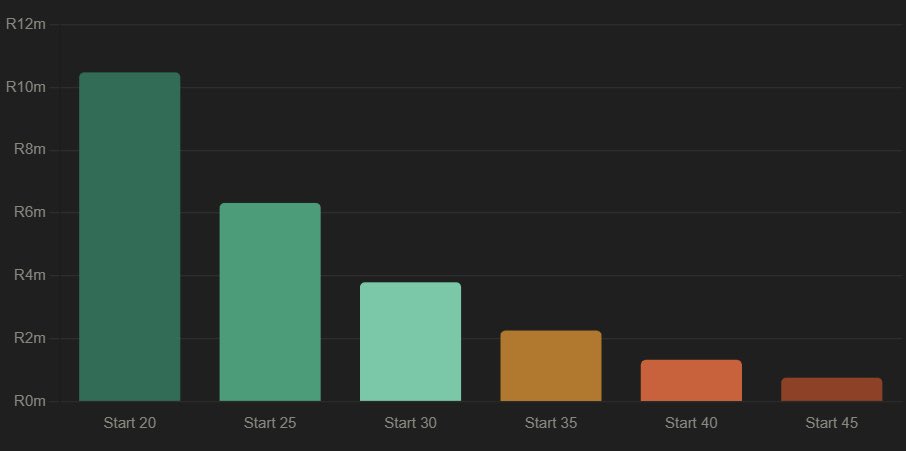
Here is what Investing R1,000 per month at 10% annual return, compounded until age 65, looks like.
𝗛𝗼𝘄𝗲𝘃𝗲𝗿,
Each bar below shows the same R1,000 monthly investment growing to age 65, but started at different ages.
Notice how every decade of delay roughly halves your final amount.
𝗦𝘂𝗺𝗺𝗮𝗿𝘆:
Starting sooner is massively beneficial.
Because the power of compound interest rewards time far more than any other factor. 𝗧𝗵𝗲 𝗲𝗮𝗿𝗹𝗶𝗲𝗿 𝘆𝗼𝘂 𝗯𝗲𝗴𝗶𝗻, 𝘁𝗵𝗲 𝗺𝗼𝗿𝗲 𝘆𝗼𝘂𝗿 𝗺𝗼𝗻𝗲𝘆 𝘄𝗼𝗿𝗸𝘀 𝗳𝗼𝗿 𝘆𝗼𝘂.
𝗧𝗵𝗲 𝗖𝗼𝘀𝘁 𝗼𝗳 𝗚𝗿𝗼𝗰𝗲𝗿𝗶𝗲𝘀 🇿🇦
A basket of goods that cost you
R200 in 2005, 𝗻𝗼𝘄 𝗰𝗼𝘀𝘁𝘀 𝗥𝟲𝟬𝟮 𝘁𝗼𝗱𝗮𝘆!
Since 2005, The Rand’s real purchasing power has decreased by roughly 67%.
Over the same period, groceries have more than tripled in price. 🤯
The future value of an ordinary annuity formula is below:
FV = P × [((1 + r)^n - 1) / r]
💰Start at 20 (45 years): —> R10.48m
💰Start at 25 (40 years): —> R6.32m
💰Start at 30 (35 years): —> R3.80m
💰Start at 35 (30 years): —> R2.26m
💰Start at 40 (25 years): —> R1.33m
💰Start at 45 (20 years): —> R0.76m