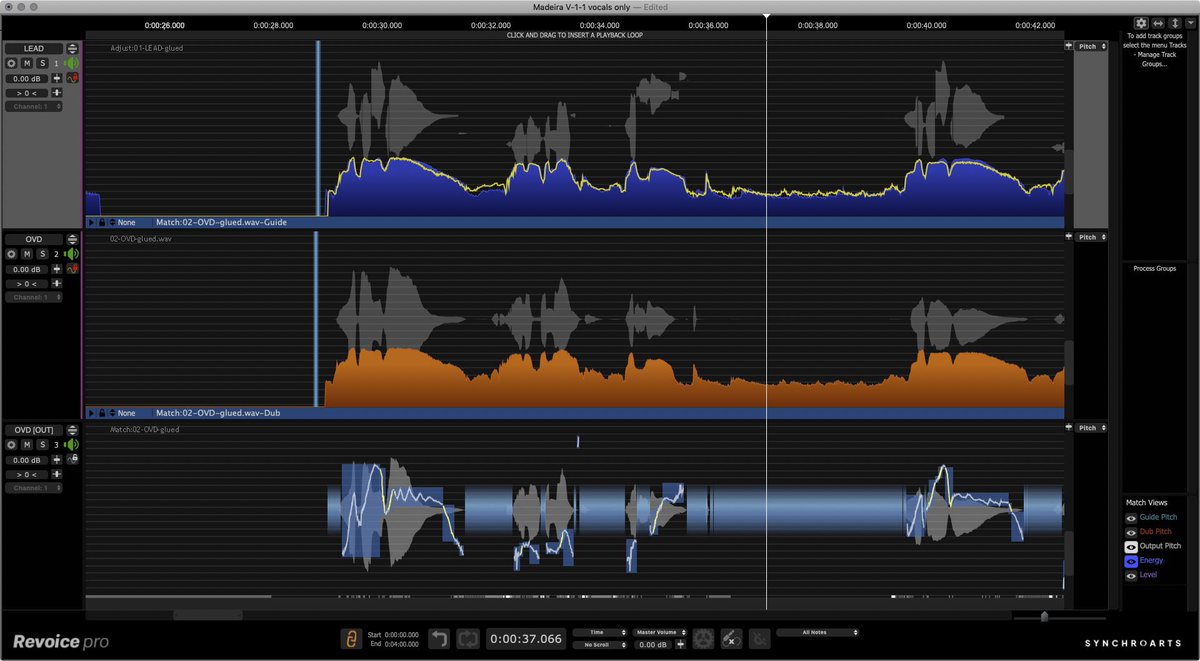
🎚️ Why I edit vocals in 96k?
It is well known that I prefer to mix in 96k sample rate, but more than that, I also edit in that sample rate. Honestly, my sample rate is set up to 96k everywhere.
But why vocal editing in 96k works better? There are a few reasons:
1. Improved Precision in Pitch Correction:
• Higher Resolution: At 96kHz, the DAW is working with double the data points compared to 48kHz, which gives pitch correction tools (like Melodyne, Auto-Tune, or Revoice) more audio information to work with. This increased resolution allows for more accurate pitch adjustments with less chance of artifacts, especially when fine-tuning subtle pitch shifts.
• Smoother Transitions: Since 96kHz captures more detail in the higher harmonics, pitch correction is more likely to preserve the natural overtones of the vocal. This is particularly important when working with expressive performances that involve a lot of vibrato or complex inflections. The corrections sound more transparent and less “robotic.”
2. Cleaner Time-Stretching:
• Less Artifacts: Time-stretching algorithms also benefit from the higher resolution of 96kHz audio. Since these processes often involve complex resampling, the higher sample rate gives the algorithm more information to process, resulting in cleaner stretching. At lower sample rates, stretching vocals can lead to noticeable artifacts like “warbling” or loss of definition, particularly in the mid and high frequencies. In 96kHz, these issues are minimized, leading to a more natural and smooth result.
• Preserving Harmonics: When vocals are time-stretched or manipulated at higher rates, the preservation of harmonic content is much better. This means that the timbre and color of the voice remain intact even after significant editing, giving a more natural sound.
3. Editing Flexibility:
• More Room for Extreme Manipulation: If you’re doing more extreme edits (like shifting vocals several semitones or doing creative warping/stretching), working at 96kHz provides extra headroom for these edits without degrading the quality as much as at 48kHz. This flexibility is especially useful in experimental genres or when creating vocal effects that push the boundaries of normal tuning or stretching.
4. Sibilance and High-End Detail:
• Better Handling of High Frequencies: Vocals have a lot of sibilance (the “s” and “sh” sounds) and other high-frequency content that can be delicate to manipulate. At 96kHz, there’s more accurate representation of these high frequencies, which helps to preserve the clarity of these sounds without introducing harshness or artifacts, especially when you work with smart tools like iZotope RX and you process sibilances manually. More information you have overall, more accurate results you can get.
@natemixing