Didn’t expect ALE to spark this much attention — thanks for the interest !
It feels like we’re past the “prompt it and hope” phase.
The next leap is infrastructure for agents in real task environments!
Here’s the problem: Because of the lack of end-to-end infrastructure and scalable feedback loops, models can’t learn effectively from complex, multi-step interactions.
So we built ALE: an open Agentic Learning Ecosystem that closes the loopexecution → feedback → learning in executable environments.
Under the hood, ALE is powered by
ROCK:A sandbox environment manager that orchestrates complex trajectories at scale.
ROLL:A post-training framework dedicated to weight optimization.
iFlow CLI: An agent framework for efficient, configurable context engineering.
The Secret Sauce: IPA Algorithm
Standard LLM training fails on long tasks. Our IPA algorithm fixes this by optimizing for semantic interaction blocks—not just tokens—giving agents the stability to handle hundreds of steps.
The Capstone: ROME(ROME is Obviously an Agentic ModEl) was born naturally. Trained on 1M+ real trajectories.
ROME is a 30B-scale model, achieves 57.40% on SWE-bench Verified, outperforming similarly sized models and rivaling 100B+ giants.
30B is also the ‘sweet spot’ to get started — build your own “super ROME” from here.
We’ll keep sharing what we’re building next — agents, multimodal systems, and AI-native applications, powered by strong infrastructure like ALE.
If you’re building agents too, stay tuned!
HappyOyster 1.0 is now live!
Happy Oyster 1.0 is an open-ended world model product for real-time world creation and interaction. Create your world now at https://t.co/yA7ArX71MF — let's explore together!
Directing:
Real-time interactions: Chat with virtual companions—every prompt changes the experience.
Rewrite story: Pause, rewind, and generate a new path whenever you want.
More ways to play: Virtual pets, dress-up, mystery boxes, and hidden interactions waiting to be discovered!
Adventure:
Explore extraordinary places: From deep ocean floors ruins to oil paintings or surreal dreamscapes.
Feel the freedom of movement: Skate, parkour, and wingsuit through dynamic worlds.
Open-world interaction: Move freely with WASD controls, jump, hide and battle enemies—just like playing a game!
Limited-time rewards: Get FREE credits daily until July 17!
Start exploring: https://t.co/B0PTG1NSaA
The world is your oyster. Open it.
1/5 0.1% acceptance rate. Out of 16,092 top-tier submissions, only 15 made the cut.
Our joint work from Alibaba Future Life Lab and Tsinghua University has been selected as a CVPR 2026 Best Paper Finalists.
Say goodbye to the O(N²) compute explosion. A new paradigm for high-resolution vision models is here.
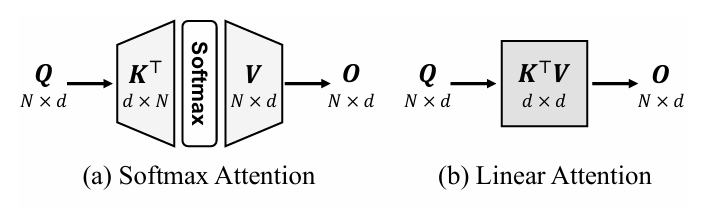
Vision Transformers (ViTs) are the industry standard, but they face a critical bottleneck: when processing high-res images or long videos, the Softmax-based pairwise attention scales at O(N²) . It is excruciatingly slow and highly memory-intensive.
Previous attempts at "linear attention" reduced complexity to O(N), but their simplistic information compression discarded crucial contextual details, severely compromising accuracy.
Are high accuracy and high speed truly mutually exclusive?
5/5 Beyond discriminative tasks, we integrated the core ViT³ module into a diffusion model architecture (DiT³). Even without complex fine-tuning, image generation quality saw across-the-board improvements.
The cost-efficiency is striking: when processing 1248x1248 ultra-high-resolution images, ViT³ requires only 10% of the standard VRAM to run at full capacity. It operates 4.6x faster than mainstream classical models while saving 90.3% of GPU memory.
High-res tasks that once required expensive enterprise-grade servers can now run smoothly on consumer GPUs or edge devices.
By trading extreme efficiency for uncompromised expressive power, the ceiling for linear vision models is far higher than we imagined.
They might all be called 'World Models,' but the big tech players are building entirely different animals. Today, let's unpack Yann LeCun and his JEPA architecture.
Once AI agents move into production, the first issue to solve may not be capability.
It is identity.
When people talk about agents today, the first questions are usually:
Can it call tools?
Can it complete tasks automatically?
Can it keep going on its own?
But once it enters an enterprise environment, the question becomes much more practical:
Who is actually taking the action?
Is it the user?
Is it a system proxy?
Is it a temporary authorization?
Or is it a long-lived machine identity?
If this boundary is unclear, it becomes hard to assign accountability for every step the agent takes.
Who granted the permission?
What data did it access?
Which tool did it call?
If something goes wrong, whose access should be revoked?
It is like bringing a very capable new teammate into a company.
Capability matters, of course.
But before that teammate touches real systems,
you need to know their role, permissions, and scope of responsibility.
As agents begin entering real business environments, identity, authorization,and permission boundaries will become part of the discussion.
Future agents that can operate reliably in production environments will need to do more than just complete tasks.
They will also need to understand who they are acting on behalf of and which actions fall within their authorized scope.
Autonomous driving is not usually tested hardest by the easy miles.
Clear weather.
Straight roads.
Stable traffic.
Pedestrians crossing normally.
These scenes matter.
But they are not where the real pressure shows up.
The harder cases are the ones that happen rarely,
but become dangerous the moment they appear.
Rain at night.
Temporary construction.
A car braking suddenly.
A pedestrian stepping out from a blind spot.
A complex intersection where another vehicle does something unusual.
These situations are not always easy to collect at scale in the real world.
But an autonomous driving system cannot wait until the first real encounter
to learn how to handle them.
That is where world models become especially valuable for self-driving.
They are not just about generating realistic road videos.
They can turn rare, risky, and hard-to-collect scenarios
into environments the system can practice before deployment.
It is a lot like pilot training.
The important part is not only normal takeoff and landing.
It is also engine failure,
bad weather,
emergency avoidance,
and all the situations that rarely happen,
but still have to be handled correctly.
So the next stage of world models in autonomous driving may not be about making ordinary roads look more realistic.
It may be about turning dangerous long-tail scenarios
into repeatable training grounds.
Because self-driving systems do not only need to perform well when the road is easy.
They need to have seen enough trouble
before that trouble appears in the real world.
While showbiz bickers over AI video continuity glitches and educators remain stuck debating AI-generated PPTs, World Models are quietly disrupting non-tech sectors, igniting a radical paradigm shift in clinical medicine and surgical simulation.
Why healthcare and not Hollywood?
Because Hollywood demands visual perfection, but healthcare mandates absolute physical causality.
Traditional medical AI could only act as a static periscope—pinpointing a lesion on an existing scan.
Yet disease is inherently dynamic. When a physician prescribes a treatment, they historically lacked a patient-specific, long-term window into the exact downstream changes after the patient ingests the drug.
Recent breakthroughs showcased at elite computing summits like ICCV have elevated medical AI from passive visual recognition to a predictive, generative "World Simulator" tailored for prognosis and treatment optimization.
In validated clinical applications, this technology leverages potent counterfactual reasoning.
Take transarterial chemoembolization (TACE) for liver cancer and advanced radiotherapy as prime examples: before finalizing an intervention, a Medical World Model (MeWM) ingests a patient’s current CT imagery to simulate months of dynamic disease progression within its latent space.
It cross-aligns multimodal parameters to synthesize high-fidelity visual representations of post-treatment tumor trajectories. Simultaneously, its inverse dynamics model quantifies how varying embolic agents or drug cocktails shift long-term survival curves. Empirically, this "future-simulation" paradigm has propelled clinical decision success rates (F1-score) by 13%, cementing its role as an indispensable AI co-pilot.
Today, multimodal medical models are rapidly embedding into hospital HIS/EMR nervous systems, as specialized prognosis simulators push past theoretical boundaries into raw performance validation.
The ultimate utility of a World Model isn't coding text or animating fantasy; it is evolving into a rigorous, low-cost simulation infrastructure—serving as a high-stakes safeguard for human decision-making.
【The Grand Forecast】
The successful clinical deployment of Medical World Models proves their unique capacity to "simulate future outcomes before executing current actions." This technical paradigm—trading pure aesthetic appeal for rigid physical and biological causality—is sprawling beyond tech ecosystems at a breakneck speed.
Stripping away healthcare, autonomous driving, and media entertainment, which trial-and-error heavy traditional industry do you predict World Models will infiltrate and disrupt next?
Will it be macro-climate disaster modeling in modern agriculture, dynamic supply-chain evolution in urban planning, extreme stress-testing in deep-sea aerospace engineering, or an entirely unmapped frontier?
Drop your sharpest thesis and reasoning in the comments below. Let’s chart the hidden industrial landscape of the next generation of World Models!
Something big is quietly happening in the AI world: we’re seeing a massive paradigm shift. The default output for multimodal models and agents is making a huge leap—moving away from those endless walls of Markdown and straight into fully live web pages.
Think about it: why is Markdown just not cutting it anymore? Because when outputs get long, a screen packed with hashtags, bold words, and bullet points is just a total headache to read. It used to be that when an AI dumped a thousand-line financial report or technical plan on you, finding the key insights was like looking for a needle in a haystack.
But delivering results via Web completely changes the game. Instead of staring at a massive wall of text, you get a dynamic webpage with multi-column layouts, collapsible tabs, interactive tables, and live charts. What used to be a dry, boring long-form doc is now a clean, interactive micro-app.
This shift to "interface-as-a-result" means that if you don't like what you see, you don't have to sit there arguing with the AI back and forth in a chat box. You can just drag, drop, click, and tweak everything in real-time right on the screen. This kind of frictionless, "use-and-discard" web experience is where the future is heading. It completely wipes out the line between documents and software. AI-generated content isn’t just something you read anymore—it’s something you actually run and control.
The most profound misconception in training world models lies in the assumption that programmatically simulating an environment equates to enabling the model to learn a cognitive map of the world.
Code-driven environment synthesis, by its very nature, explicitly enumerates causal relationships. The state transitions hard-coded into the simulation are strictly bounded by the programmer's preconceived causal graphs. Consequently, the model merely learns rule execution rather than inducing underlying lawsfrom observational data.
The divergence between these two paradigms is fundamental: the former relies on deductive simulation, whereas the latter demands the inductive learning of world logic.
The intrinsic value of a world model hinges on its capacity for out-of-distribution (OOD) generalization—making plausible predictions in novel scenarios. This necessitates extrapolating to unseen states through an understanding of latent causal structures, rather than memorizing an exhaustive set of predefined rules.
In contrast, the complexity of the real world is infinite, perpetually yielding scenarios that elude programmatic coverage.
While synthetic data is valuable for domain-specific data augmentation, it cannot serve as the core training paradigm. Over-reliance on it inevitably confines the model’s open-world performance within the deterministic bounds of the programmed sandbox.
Inductive capability versus rule execution—this constitutes the fundamental divergence between two entirely distinct trajectories toward artificial intelligence.
1/5 Accepted to ACL as Oral!
Do we really have qualified "AI Shopping Assistants"?
Today's e-commerce platforms all want large language models to act as personal shopping assistants, but the reality is that AI often fails to understand personalized needs, will not proactively communicate, and is even less able to precisely pick out the right item from a sea of highly similar products.
Previous research (such as WebShop) is mostly based on all-English product data, which does not conform to real Chinese online shopping habits.
More critically, previous simulation environments were mostly one-way evaluation benchmarks used just for testing, lacking fully realistic simulations that include multi-turn dialogues, long-term preferences, and extremely fine-grained product differentiation, nor did they provide training materials or multi-dimensional reward feedback mechanisms to help AI improve its capabilities.
5/5 Rather than just pointing out problems, we have completely open-sourced this sandbox environment along with its code and data.
In this work, we have completed the full loop from environment setup and model capability evaluation to strategy optimization, providing the entire industry with an infrastructure to deeply explore the decision-making capabilities of large models.
A true "personal shopping assistant" can never just be a mechanical search tool. Letting AI learn to understand personalized needs, proactively communicate like a real person, and accurately pick out the correct item for you among a sea of similar products remains a huge chasm that the entire e-commerce AI industry must cross.
And ShopSimulator is exactly the training platform we have paved for everyone; we welcome you all to explore and build truly intelligent shopping assistants together.