AI is reshaping shopping into a verify-before-you-buy habit. New Salsify data shows 22 percent of shoppers use AI tools, but only 14 percent fully trust AI recommendations while 27 percent verify them elsewhere. Shoppers now use AI to shortlist, then check product pages and reviews before buying. Source: Salsify Research Reveals AI Trust Gap, 2026 Shopping Trends
Read more: https://t.co/dM6OCQPf46
AI is reshaping shopping behavior: consumers now start searches inside AI, then double-check elsewhere. Federated Digital Solutions reports shoppers go from 1.6 to 3.8 steps post-AI, with 78 percent visiting retailer sites and one in three clicking through from AI tools. Source Federated Digital Solutions.
Read more: https://t.co/uyGn4o7Vc7
AI becomes the new travel agent: 53 percent of AI search users now plan trips end to end with generative tools, using AI for discovery, comparisons, recommendations, and review summaries. Source McKinsey
Read more: https://t.co/sRj2WjAix0
AI is becoming the new "one-screen" destination. McKinsey says about 50% of Google searches already show AI summaries, rising to more than 75% by 2028, with brands at risk of a 20 to 50% drop in traditional search traffic as decisions happen before the click. Source: McKinsey, Winning in the Age of AI Search
Read more: https://t.co/VIq9aWDG27
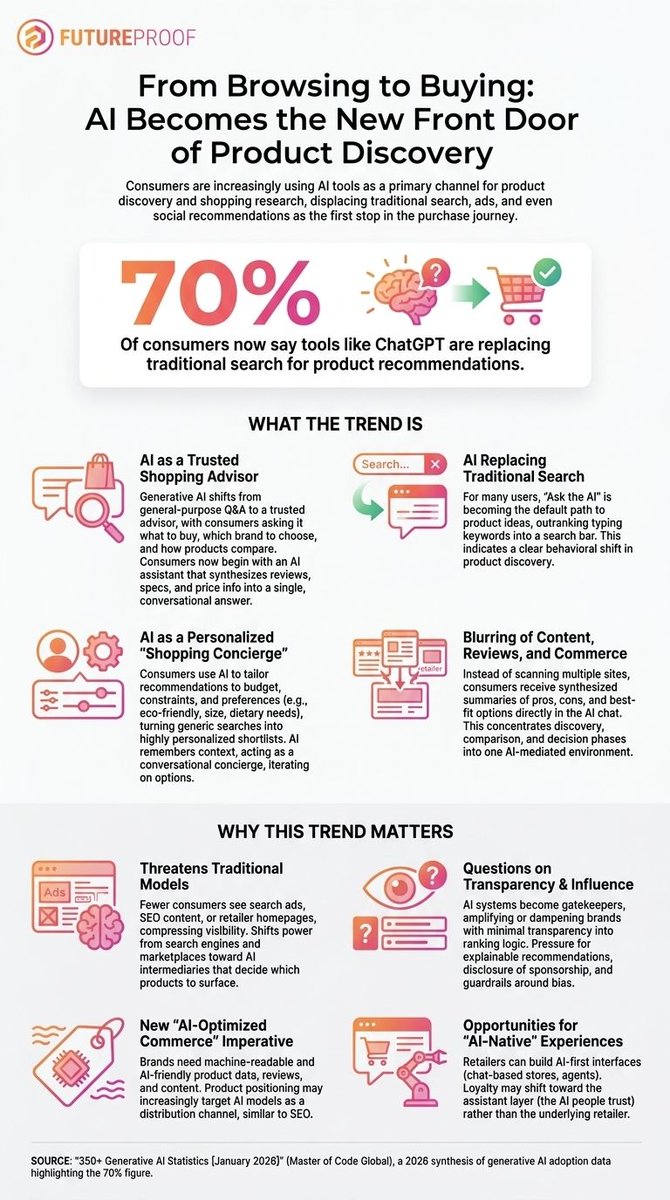
AI is becoming the new front door of shopping. Consumers now start product discovery with AI instead of search. Key data point: 70% say tools like ChatGPT are replacing traditional search for product recommendations (Master of Code Global, 2026).
Read more: https://t.co/Z0HatRqrbV
From search to self improvement: consumers now treat AI as a daily performance coach. Menlo Ventures finds 51% of consumers use AI for writing support, the top AI use case. AI is shifting from a tool you open to a coach embedded in everyday apps.
Read more: https://t.co/TcJgFRElWc
AI is becoming the new personal shopper as more consumers start their buying journey with AI agents. Adobe’s 2026 AI and Digital Trends report shows that high intent users are now discovering brands through AI referrals, marking AI as a measurable traffic source. Source: Adobe 2026 AI and Digital Trends
Read more: https://t.co/xOvxb2hlIZ
AI becomes the new co-parent as more parents quietly offload daily decisions to assistants. Adobe's 2026 AI and Digital Trends report shows AI is now an everyday companion across search, shopping, and support. Source: Adobe 2026 AI and Digital Trends.
Read more: https://t.co/VFAd9ijqRl
AI is becoming the new pre-checkout step. Shoppers now use assistants to sanity-check features, pricing, and tradeoffs before they buy. Stanford’s 2026 AI Index shows a 50-point gap between experts and the public on AI’s impact on work (73 percent vs 23 percent), highlighting how actively people negotiate trust. Source: Stanford HAI 2026 AI Index Report
Read more: https://t.co/ercXkpWYl1
AI shoppers are no longer relying on one assistant. They now run the same query across a stack of tools to cross-check answers. New data shows ChatGPT’s B2B AI referral share fell from 89 percent to 62.6 percent while Claude rose to 18.5 percent, Gemini to 10.6 percent, and Perplexity to 7.3 percent. Source: 2026 AI Search Traffic Report by Goodie
Read more: https://t.co/JmqMdDQhgT
From browsing to briefing: AI is quietly rewriting the B2B discovery funnel. New data shows only 4.3 percent of B2B companies appear in early stage AI driven buyer questions, while 95.7 percent show up only when buyers already know their name. Source: 2026 2X AI Visibility Index.
Read more: https://t.co/iQxqiJqKsW
AI is becoming the new product discovery engine. Consumers now prompt instead of browse, outsourcing comparison and research to conversational assistants. Brands that are not AI visible risk never entering the consideration set. Key data point: 96 percent of B2B companies are invisible in AI discovery, with only 4.3 percent appearing in early stage buyer questions. Source: 2X AI Visibility Index, Demand Gen Report, April 2026
Read more: https://t.co/v7AoyFNV22
AI is reshaping B2B discovery, and 96 percent of brands never show up until buyers already know their name. New data from the 2026 2X AI Visibility Index shows only 4.3 percent of companies appear in early AI-driven category queries. If you are not visible in open-ended prompts, you are not making the shortlist. Source: 2X 2026 AI Visibility Index.
Read more: https://t.co/2ppiAmGwys
AI is becoming the new front desk for brand discovery, with consumers starting and finishing their research inside chatbots. Similarweb reports that GenAI platforms drove 226.8 million US referral visits in January 2026 and that 35% of consumers now begin early stage discovery in AI, not search. Source: Similarweb 2026 Generative AI Brand Visibility Index
Read more: https://t.co/Pps5EIl7an
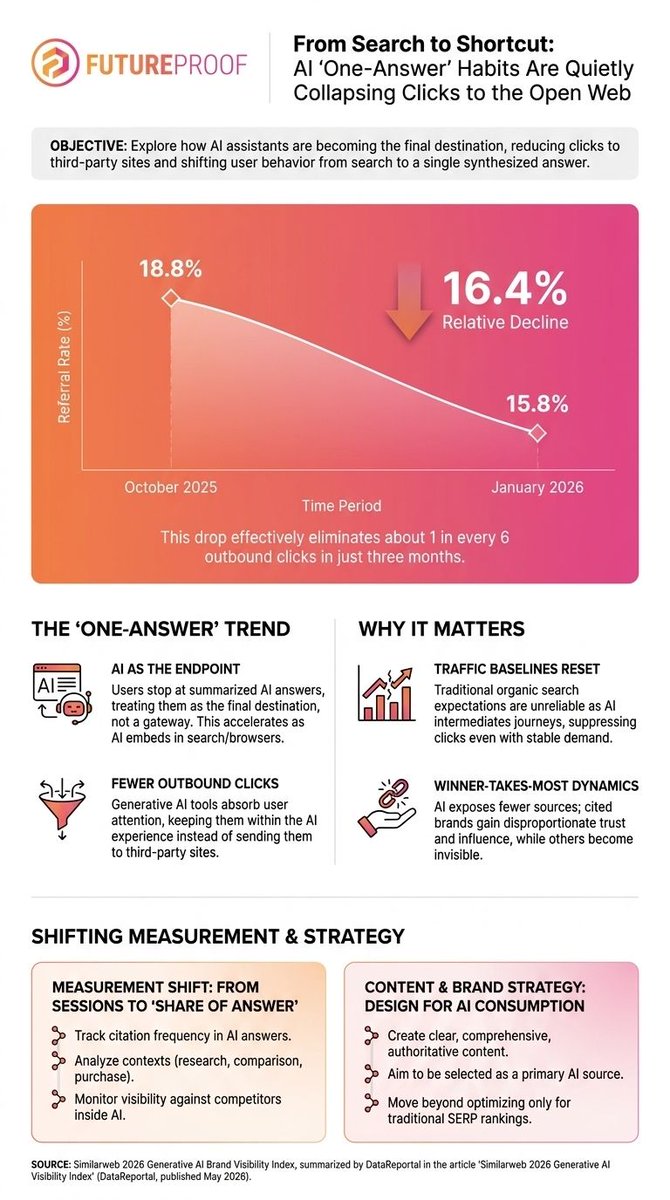
AI assistants are becoming the destination, not the gateway. New data shows outbound clicks from GenAI platforms in the US dropped from 18.8 percent in Oct 2025 to 15.8 percent in Jan 2026, a 16.4 percent decline. One answer behavior is resetting traffic norms and shrinking brand visibility. Source: Similarweb 2026 Generative AI Brand Visibility Index via DataReportal.
Read more: https://t.co/rm5syGOLoy
AI is reshaping local discovery as reviews and rich websites overtake tech SEO. New data shows businesses visible to ChatGPT and Perplexity average 133 Google reviews compared to 11 for those AI cannot find. Websites are cited in 72 percent of awareness queries. Traditional SEO shows no correlation, while AI still hallucinates details for 45 percent of known businesses. Source: 2026 AI Visibility Report by Insites, published May 6, 2026, in The National Law Review.
Read more: https://t.co/b08dAa77gV
AI-powered local search is officially mainstream. 47% of US adults used an AI tool to find a local business in the past month, rising to 59% among daily searchers. A major shift in how consumers discover where to go next. Source: Yext 2026 Consumer Search Behaviors Report
Read more: https://t.co/56n1O5ky7G
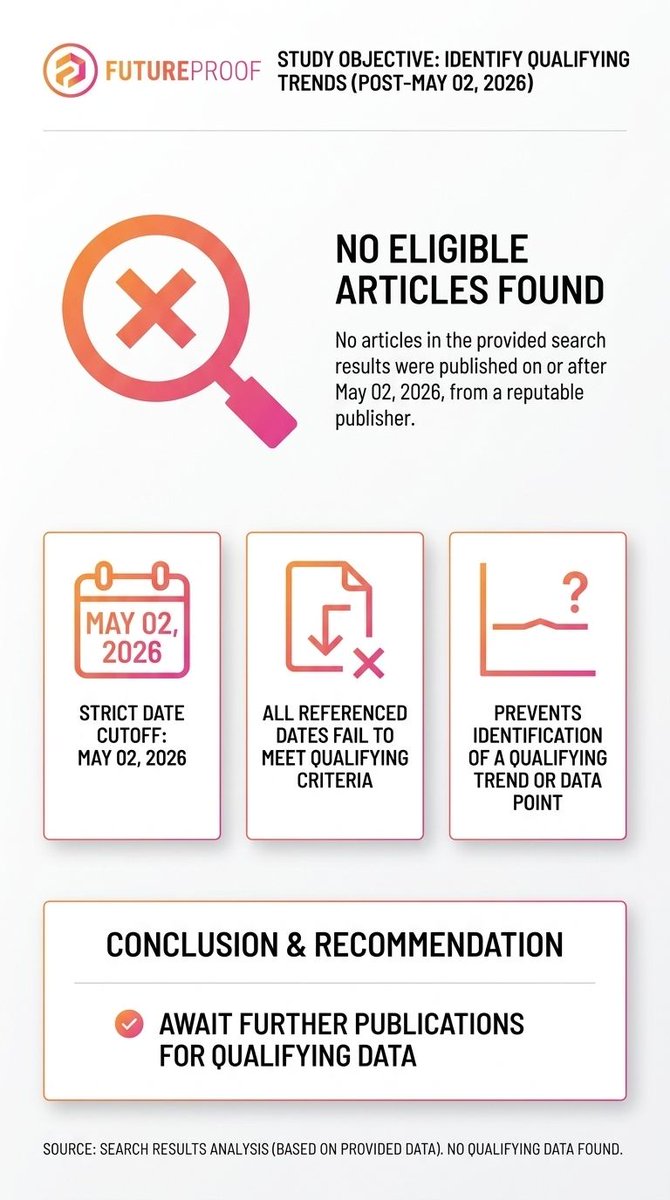
Latest audit shows zero qualifying articles published after May 2, 2026, from reputable sources, highlighting a gap in up-to-date trend reporting. Source: internal search review
Read more: https://t.co/WigdkFrkAN
No new reputable reports published after May 01 2026 highlight a growing gap in timely economic and tech trend data. Key data point: zero qualifying articles identified in post May 2026 review. Source: automated publication scan.
Read more: https://t.co/aG7LJyGncB
No recent trend to report due to zero qualifying articles found as of April 28, 2026. Key data point: 0 eligible sources identified. Source: internal search review.
Read more: https://t.co/tf4wSprsFn