I want to make the web a better place for everyone. Help people on their journeys to web literacy, and make awesome tools that support their everyday lives.
One command to prevent this using my skill set:
echo "Tautological tests considered harmful." >> CODING_STANDARDS.md
From then on, /code-review will pick this up
@ClaudeDevs Well... That more or less replaces my /mailbox skill for use within Claude... Nice shortcut. Now just the inter-model-agent messages left... Maybe an open protocol for this...?
New in Claude Code: your sessions can now message each other.
Instead of having to re-explain yourself in another session, you can now tell Claude to do it. It sends a summary (not your history or files), and the other session picks it up mid-task.
@ryanlanciaux@mattpocockuk To start with I'm just hoping to get a handful of behaviours that are less frustrating. Something along the lines of the agent suggesting to breaking large work down, and/or, having it self set a timer to pause and resume on the other side of the wall if working AFK.
I'm experimenting with a new skill today, that gives Claude a self-awareness of my session limits, so that it doesn't run head-first into them when working on large chunks of work.
If it pans out well, I'll then start looking at giving it some pointers on self-context managing using some of @mattpocockuk's teachings. (Smart-Zone → Dumb-Zone for example)
@Michael_WCD Not sure, but I've tried adding into prompts before to warn me or pause tasks if its getting close to its session limits, and it never has... so hoping this test skill I'm working on will help with that a little.
@mattpocockuk I guess, and never tried, giving it a distinction that /spawn should be HITL tasks not AFK tasks... (might try that with my version, probably in the description...)
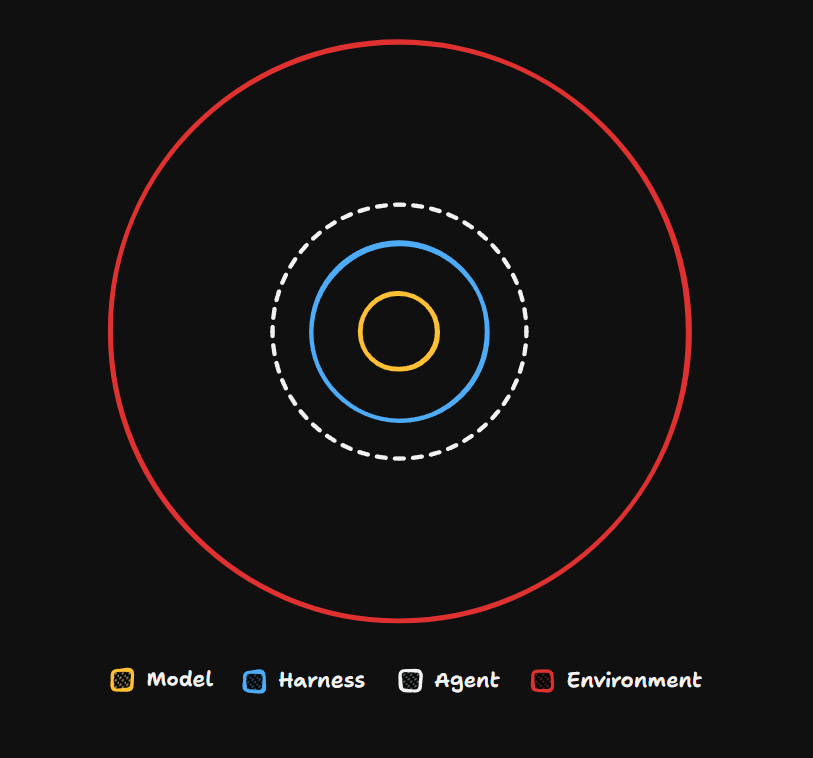
I noticed the harness has the session limits, but not the agent, so I took a look into https://t.co/tiLHxmT7j1 to see what they're doing to get the usage, and then dialled it down to a single `httpie` + `jq` using CLI command that Claude can run on its own to see the raw data.
As for how well it runs... time will tell...
It's mac specific at the moment, but I think it should be convertable to windows or linux pretty easily. Will put the time in for that if it works well rather than making the agent paranoid about its limits...
For me, I don't have a log.md file, I have the entire thing (ex. raw) as a git repo, and use conventional commits with the wiki keywords. Got acts as my log.
For the mismatches, I have the agent explicitly call them out in the wiki, and in it's report back to me. This way I can address them if they're something to resolve. If they're just conflicting idea or opinions, then I leave them with the callout, allowing the agent to be cognisant of this fact when querying.
During my lint phase, I try to address all of the stale/conflict/inferred callouts. Looking for solid sources of inferred information, updated sources for stale, and by making decisions about conflicts as/where possible.
This is something we do to some degree.
We have a higher level multi-team podcast we generate called "Last Week In Linear" which looks at the ticket level first - for their movements, and drills to the code (if linked) for detail.
We also have an eng focused weekly which is a 1m to roundup of the PRs that merged, with attribution. "The Main Branch Minute". This is news buliten style, and is code first for just what shipped.
Both post to Slack with a canvas containing the generated audio, and a supporting https://t.co/OUhHnwAnxu style changelog for the same changeset.
Working well for us.
I am curious how you're encoding the "why" as we often have this inferred but not always explicit. The agents extract what they can from the code/PRs/tickets... Are you layering in some other docs too?
For folks following my personal wiki journey, it's going extremely well.
Every weekday I have a 15-minute podcast on the new stuff coming into the wiki (from X, Discord, Slack, Gmail, GitHub issues etc). This acts both as a "cool, new stuff" listen but also a vibe check on how well the stuff in the wiki reflects reality.
I'm now building on-demand podcasts, so I can get a wiki deep-dive on a topic before I make a video on it.
I have a custom CLI that agents can call from the wiki to investigate my course material/AI Hero posts. This is invaluable in them helping me flesh out my new course before filming.
Overall, I had no idea how powerful owning your data could be. It's changing the way I think about my business going forward and opening up all sorts of loop possibilities.
I hate the phrase "code is cheap" so much
✅ Communicates that code has become cheaper to produce
❌ Implies that code is disposable, low worth, not worth caring about
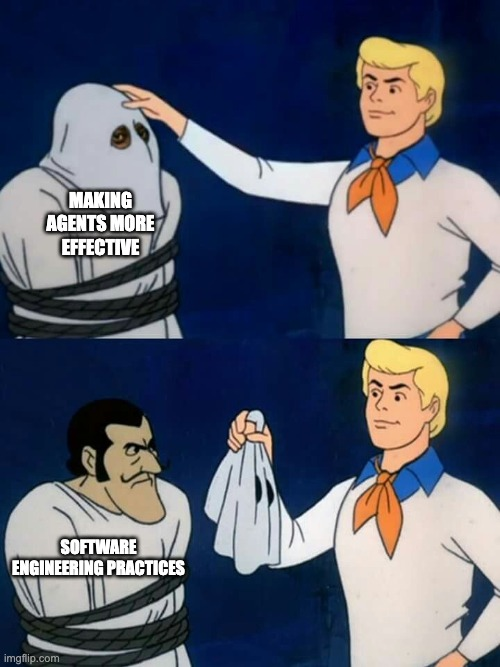
Code is the environment the agent operates in. Better code = better output
Been coding with AI a lot this week and it's wild how much of an edge real architecture knowledge still is.
Seeing frontier models constantly reach for the wrong abstractions. Easy to course-correct, but only if you already know what good looks like.
Take a look at your favourite skill.
Go on, take a look.
Check for lines like:
- "Make the commit message very detailed"
- "Be thorough"
- "Make the implementation easy to read"
What do these lines have in common?
They're no-ops. They do nothing to change the agent's behavior.
Agents always write good commit messages. They always try to be thorough. They always try to create easy-to-read implementations.
Try removing them. Does the output change? No? Then the line was a no-op.
Agent-authored skills are LITTERED with no-ops. Entire paragraphs and sections of text that does nothing to change the agents' behavior.
No-ops make skills harder to evaluate, harder to maintain, and burn tokens uselessly.
Learn to spot them, test them, and remove them. Your skills will thank you.