Challenges and Opportunities in Digital Healthcare Transformation
In the process of advancing digital healthcare systems, some countries still face practical challenges, such as a shortage of IT professionals, financial pressure on public hospitals, and limited availability of healthcare software providers. These factors can slow the pace of healthcare digitalization to some extent.
However, with increasing government investment, the growth of health technology companies, and the continuous improvement of digital infrastructure, these challenges are gradually being addressed. By strengthening the development of healthcare technology talent, introducing diversified capital support, and promoting open technology ecosystems and cross-industry collaboration, digital healthcare systems will gain stronger long-term sustainability.
Challenges often create new opportunities for development.
FXlinq believes that healthcare digitalization is a long-term global trend. As technology, capital, and policy environments continue to align, the digital healthcare ecosystem will steadily mature and unlock greater social and industry value in the years ahead.
Entering a New Era of Tech × Finance × Healthcare Integration
Healthcare is no longer an isolated industry; it has evolved into a comprehensive ecosystem deeply integrated with technology and capital. Innovation, investment, and health services interact synergistically, shaping the future landscape of medical development.
Leveraging its global presence and diverse capabilities, FXlinq drives:
✔️ Global financial investment expertise, providing long-term capital support for healthcare and technology innovation
✔️ Data and artificial intelligence technologies, enabling intelligent and digital applications of medical data
✔️ Strategic healthcare initiatives, building ecosystems for precision medicine, health management, and biotechnology
This achieves deep integration across finance, technology, and healthcare.
Our mission is to tightly connect capital, technology, and the value of life—enhancing healthcare efficiency and quality, while fostering innovation in the health industry and creating sustainable long-term value for society.
Healthcare digitalization in Asia is accelerating, aligning more closely with global trends.
From Europe to Asia, more and more countries are steadily advancing the digital transformation of their healthcare systems. Through the development of national-level databases, the expansion of electronic medical records, and the integration of digital identity systems, Asia’s healthcare sector is increasingly becoming part of the global digital healthcare landscape.
This is not only a technological upgrade, but also a systemic improvement in national healthcare governance, public service efficiency, and health infrastructure.
As a global enterprise group focused on the synergy of finance, technology, and healthcare, FXlinq will continue to pay close attention to the long-term structural opportunities emerging from this transformation.
Big Healthcare Data Empowers Public Governance Upgrades
As healthcare data becomes increasingly standardized, structured, and systematized, its role is no longer limited to internal hospital management. It is now expanding into broader governance areas such as disease prediction, public health decision-making, health insurance oversight, and cost control.
Data-driven governance is becoming a major direction in the modernization of global healthcare systems.
At FXlinq, we believe that the continuous improvement of the healthcare data ecosystem will not only enhance governance efficiency and decision-making quality, but also unlock greater long-term value for artificial intelligence applications, digital healthcare innovation, and the upgrading of the health industry.
The Legal Framework for Healthcare Digitalization Continues to Improve, Moving the Industry Toward Institutional Development
As countries continue to strengthen regulations related to medical data and digital healthcare, the industry is gradually entering a more standardized and institutionalized stage of development. The establishment of relevant policies and regulatory frameworks provides a clear institutional foundation for medical data management, electronic medical record systems, and digital healthcare platforms.
Clear and stable rules are a crucial prerequisite for the long-term and healthy development of technology.
At FXlinq, we believe that healthcare digitalization relies not only on technological innovation but also on a stable institutional environment. Only under a transparent and well-regulated framework can the digital healthcare ecosystem achieve long-term stability and continue to generate greater social value.
Electronic Health Records Accelerate the Shift Toward Lifetime Health Management
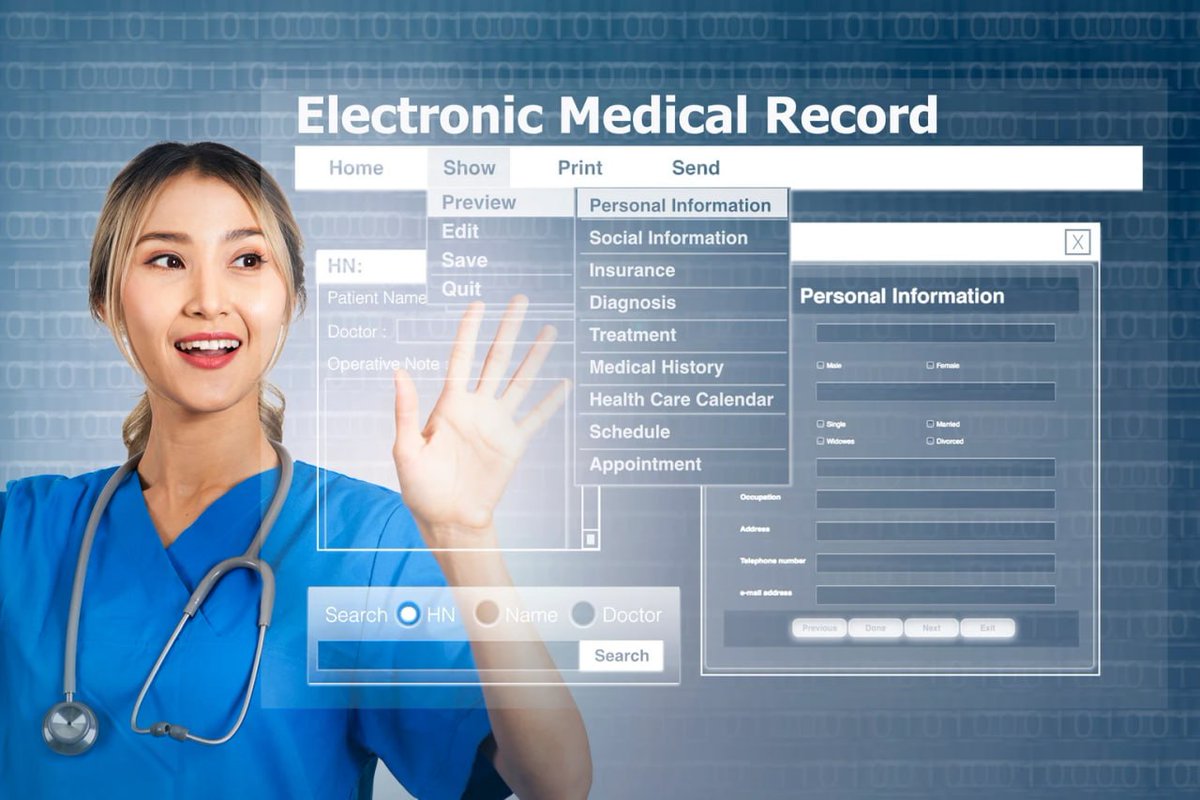
As electronic health record (EHR) systems continue to expand, an increasing amount of personal health data is being systematically recorded and integrated, gradually shaping the foundation of a lifetime health management system.
In the future, personal health information will be continuously updated, securely stored for the long term, and shared across different medical institutions, enabling more connected and precise healthcare services.
This transformation is driving healthcare from a treatment-centered model toward one focused on prevention and long-term health management.
At FXlinq, we believe the ongoing development of healthcare digitalization and health data systems will become a critical foundation for future medical technology innovation and the growth of the health industry. As electronic health records, medical data platforms, and intelligent analytics systems continue to evolve, healthcare services will gradually shift from traditional one-time treatment models toward a data-driven system of long-term health management.
Cashless Healthcare Payments Accelerate as Asia Enters a New Era of Digital Medical Services
Across many Asian countries, an increasing number of healthcare institutions are promoting cashless payment systems, with medical payment methods rapidly shifting toward digitalization.
From QR code payments to e-wallets, and from bank cards to online platforms, healthcare payment systems are becoming more efficient, convenient, and aligned with the growth of the digital economy.
Digital payments not only improve service efficiency but also enhance transaction transparency and risk management capabilities.
At FXlinq, we believe the deep integration of healthcare and financial technology is gradually transforming traditional medical service models across Asia, while driving the health industry toward a smarter, more efficient, and more open digital economic ecosystem.
By combining digital payments, data platforms, and intelligent systems, healthcare services can improve efficiency and transparency, optimize resource allocation and risk management, and create more sustainable long-term value for medical institutions, patients, and society as a whole.
In regions across Asia, including Indonesia, Malaysia, Singapore, Thailand, and Vietnam, healthcare institutions are rapidly integrating with national digital identity systems, driving the digital consolidation of insurance verification and identity authentication.
This signifies that healthcare services are gradually being incorporated into a unified, nationwide digital identity framework.
From FXlinq’s perspective, the upgrade of digital identity infrastructure is not merely a technical system optimization—it is a critical component of modernizing national governance capabilities.
When digital identity systems achieve deep integration with healthcare platforms, the accuracy, security, and traceability of data will be greatly enhanced, and cross-departmental collaboration efficiency will improve. Such infrastructure-level upgrades will promote a more transparent, efficient, and standardized healthcare system while providing a solid foundation for the long-term stability of public health management and social security systems.
The Acceleration of the Electronic Medical Record Era: Healthcare Advancing Toward Higher Standards
More than 1,200 hospitals across Vietnam have now implemented electronic medical record (EMR) systems, making digital management the new industry norm.
This marks a profound transformation in healthcare services:
✔️ Patients no longer need to keep paper reports
✔️ Medical expenses become more transparent
✔️ Test results are traceable and comparable over time
✔️ Health insurance management becomes more standardized and efficient
🔥 Electronic medical records not only improve operational efficiency, but also rebuild long-term trust within the healthcare system.
At FXlinq, we believe the core value of healthcare digitalization lies in leveraging data systems to enhance transparency, strengthen risk management, and align medical standards with international benchmarks.
As a global enterprise group driven by finance, powered by technology, and strategically focused on healthcare, FXlinq continues to monitor the structural opportunities created by medical data infrastructure development and system upgrades.
The 12 National Healthcare Databases Are Advancing Rapidly as Vietnam’s Digital Health Infrastructure Takes Shape
Vietnam’s Ministry of Health has completed the development of 12 national specialized healthcare databases and successfully integrated them with the national consolidated data platform.
This marks a new phase in which healthcare data is moving toward standardization, structured management, and greater interoperability.
As data becomes interconnected, the healthcare system can undergo profound transformation:
✔️ Improving diagnosis and treatment efficiency
✔️ Reducing overall social costs
✔️ Strengthening public health governance
✔️ Enhancing transparency and accountability in health insurance oversight
🔥 The core of healthcare digitalization is not merely system upgrades, but the establishment of stable, long-term data infrastructure.
At FXlinq, we believe that robust data infrastructure is a critical foundation for advancing medical technology innovation and upgrading the broader healthcare ecosystem.
Sustainable healthcare transformation must be built upon standardized and systemized data architecture.
Vietnam Accelerates Healthcare Digitalization, FXlinq Sees Long-Term Opportunities
The year 2025 marks a phase of accelerated digital transformation across Vietnam's healthcare sector.
Over 34 million electronic health records have been integrated into the VNeID application.
Electronic medical records are being widely implemented nationwide.
Healthcare data is gradually achieving national-level standardization.
This is not just a technological upgrade.
It is also a structural transformation that strengthens the governance capacity of the national healthcare system.
Against this backdrop, FXlinq — a global enterprise operating in finance, technology, and healthcare — is closely monitoring this historic transformation phase.
We believe that healthcare digitalization is not a short-term trend.
It will serve as a core foundation for sustainable growth in the decades to come.
The Importance of Digital Healthcare and Data Governance
The core of modern healthcare systems lies in data and management. Unified data governance, intelligent analytics, and risk assessment determine the efficiency and sustainability of healthcare systems.
FXlinq integrates digitalization, intelligent technologies, and financial tools to build efficient data management and decision-making frameworks. Whether in disease prevention, chronic disease management, or health education, data-driven scientific approaches significantly improve the utilization of healthcare resources.
Through systematic data governance, FXlinq not only provides technological support for healthcare systems, but also delivers sustainable health assurance solutions for governments and society, achieving deep integration across healthcare, capital, and technology.
FXlinq’s Global Collaborative Network
From North America to Europe and Asia, FXlinq is steadily building a global industrial collaboration network. This global presence is not merely a strategic choice, but a necessary foundation for long-term value creation.
Cross-regional collaboration enables us to integrate capital, technology, and healthcare resources, optimizing project execution efficiency and strengthening risk management. In an increasingly complex and dynamic market environment, a global footprint allows FXlinq to maintain stable growth while accelerating the cross-border deployment of technological and healthcare innovations.
The global collaborative network also underpins FXlinq’s commitment to delivering long-term value for investors, partners, and society. Through systematic management and cross-regional cooperation, we are building a truly sustainable and scalable global enterprise model.
The Role of Finance in the Healthcare System
Finance is not only a tool for investment and capital appreciation, but also a critical pillar supporting the sustainable development of healthcare systems. Through financial mechanisms, resources can be allocated more efficiently, medical risks can be reduced, and innovative projects can be sustained over the long term.
FXlinq integrates finance closely with technology and healthcare, supporting healthcare system upgrades and technological innovation through systematic investment, risk control, and capital management. Capital is directed not only toward high-potential healthcare projects, but also managed intelligently to maximize overall efficiency.
This finance-enabled healthcare model not only drives medical innovation, but also enhances overall public health security. FXlinq firmly believes that the deep integration of capital and healthcare will be a core force driving sustainable social development over the next 10–20 years.
How Technology Is Transforming Healthcare Efficiency
Technology is reshaping the healthcare industry at an unprecedented pace. Artificial intelligence, big data, and digital platforms enable more accurate medical decision-making, more efficient resource allocation, and smarter healthcare services.
FXlinq regards technology as a foundational driving force, leveraging intelligent systems to enhance the overall efficiency of healthcare systems. We focus not only on technology itself, but on how it truly serves real-world medical scenarios, improving patient experience and health management outcomes.
Looking ahead, digital healthcare will become a core pillar of modern healthcare systems, and technological empowerment will define the competitiveness of nations and enterprises in the healthcare sector. FXlinq is committed to deep integration of technology and healthcare, building efficient and sustainable healthcare service models through data and intelligent systems, ensuring that every investment of capital and technology creates maximum social value.
Global Healthcare Trends
As population aging accelerates and the burden of chronic diseases increases, healthcare is becoming one of the most critical long-term needs of global society. Governments and enterprises worldwide are increasing investment to upgrade healthcare systems and drive digital transformation, aiming to improve overall public health.
FXlinq clearly recognizes this trend and has integrated it into its strategic vision. Through the deep integration of capital and technology, we participate in the development of global healthcare systems, advancing digital healthcare solutions, health management platforms, and intelligent services. Our systematic and data-driven approach focuses not only on improving healthcare efficiency, but also on enhancing population health and overall social well-being.
In the coming decades, healthcare will no longer be a standalone industry, but an ecosystem deeply integrated with technology and finance. FXlinq is committed to playing a core role in this ecosystem, creating sustainable value for society while delivering long-term growth opportunities for investors and partners.
Technology Reshapes Finance, Not Replaces It
Technology is not the opposite of finance; rather, it is a tool to bring finance back to rationality.
At FXlinq, we believe the value of AI, data models, and automation systems lies not in replacing finance itself, but in enhancing decision transparency, verifiability, and overall stability.
When financial decisions shift from experience-based judgment to data-driven approaches, the system begins to gain replicability and long-term controllability.
The future of truly competitive financial platforms is not about being more aggressive, but about being calmer, more robust, and focused on long-term value.
Technology Drives Finance, From Aggression to Rationality
At FXlinq, we believe the core significance of technology empowering finance lies not in amplifying market emotions or short-term fluctuations, but in restraining risks, enhancing transparency, and enabling more rational and controllable financial decisions.
In the past, financial decisions were often driven by market emotions and short-term predictions, leading to heightened market volatility and increased uncontrollable risks. However, with the application of AI, data models, and systematic decision-making, financial decisions are transitioning to data-driven and logic-validated approaches. Finance no longer relies solely on emotions and intuition, but leverages precise data analysis and model predictions to achieve more accurate risk assessments and decisions.
This shift means that the core competitiveness of financial platforms is moving from emotion-driven to structure-driven, with a focus on robust risk management and systematic decision-making capabilities.
In the future, truly competitive financial platforms will no longer be the "fastest," but will have more stable systems, proactive risk controls, and more consistent decision-making. The true value of technology empowering finance is shifting finance from short-term speculation to long-term stable value creation.
Modern finance is no longer a tool for short-term speculation.
At FXlinq, we believe that modern finance is shifting from being transaction-driven to system-driven.
In the past, financial activity focused primarily on short-term price fluctuations and market sentiment; today, what truly matters is whether the financial system possesses the structural capacity to operate stably over the long term.
The core of modern finance is no longer merely about returns, but about how risks are identified, diversified, and proactively managed.
Only when risks become quantifiable, predictable, and controllable can finance genuinely serve the creation of long-term value.
In an era of high uncertainty, the maturity of a financial system is measured by its ability to withstand cycles, not by its ability to amplify returns within a single cycle.
A New Era of Medical Innovation!
The latest study shows:
"The future healthcare system will rely on the deep integration of biomedical engineering, data science, and artificial intelligence, shifting treatment from reactive response to proactive prediction."
This means that everyone can receive personalized health plans, disease risks can be predicted in advance, and treatment approaches become more precise and intelligent.
FXlinq is applying this approach to AI-assisted diagnosis and treatment systems, health big data platforms, and digital chronic disease management, driving medical technology from the lab to real-world implementation and serving national health.
Future healthcare is not just about treatment—it’s about prediction and prevention!