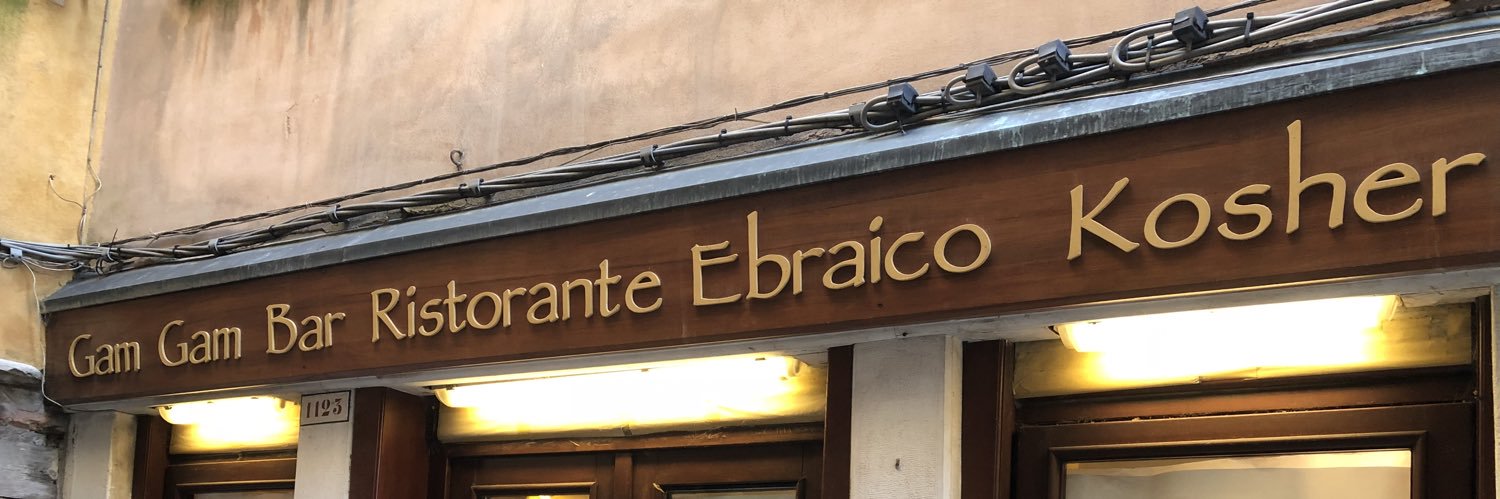
GREAT FOOD. GREAT PRICES. GREAT TIME. Redefining kosher cuisine, thru presentation & taste with the finest ingredients. 📝 "Best #kosher restaurant in Italy"
🚨🚨🚨🚨🚨🚨If you want to see what’s actually happening in California, this is what you need!
Up to the minute updates.
Crowd sourced.
Vetted.
https://t.co/zyacMfYsfU
Please share!
It’s never too late to make Hanukkah Donuts! Here’s my famous sufganiyot recipe from GAM GAM Kosher Restaurant in the Jewish Ghetto of Venice, Italy.
https://t.co/TBUaevw4OF
It’s never too late to make latkes! Here’s my famous latke recipe from GAM GAM Kosher Restaurant in the Jewish Ghetto of Venice, Italy.
https://t.co/bLNBYncXYu
🚨Please take a minute and read this. The Torah that G-d gave us at Mount Sinai has two parts:
1.The Torah She’bichtav (the Written Torah)
2.The Torah She’baal Peh (The Oral Torah)
The Written Torah consists of the Tanach, which is an acronym for its 24 books made up of the:
•Torah
•Navi/Prophets
•Ketuvim/Writings
Most Jews are familiar with the Written Torah. Some of the 24 books are: the Five Books of Moses, King David’s Book of Psalms, King Solomon’s Proverbs, Isaiah, and the Book of Esther (the Megillah) that we read/hear twice on Purim.
The Oral Torah was all the detailed instructions G-d gave Moses on Mount Sinai along with the Written Torah.
For example, the Written Torah tells us the commandment to put on tefillin and the Oral Torah tells us the shape, color and material of the tefillin. The Written Torah tells us to build a sukkah and the Oral Torah explains the specifications and measurements the sukkah needs to be.
Throughout the generations from Moses’ time and on, the Oral Torah was passed down verbally from teacher to student, hence its name.
As the centuries passed and the Jews were going through the difficulties of exile, this oral transmission of Torah was at risk of being forgotten. Realizing this, Rabbi Judah the Prince (around 1800 years ago) gathered the Torah scholars from his generation and compiled all the oral teachings into what is called the Mishnah. Then, all the thoughts and details based on the general statements of the Mishnah were written down during the time period approximately 300-400 years later. That’s called the Gemara. The Mishnah and Gemara together are called the Talmud. And that’s how the Oral Torah got written down.
So, if we only had the Written Torah, we would know what the commandments were, but we wouldn’t know how to do them without the details in the Oral Torah. Both are very important parts of Judaism.
Nowadays, the entire Torah (both Written and Oral) have been translated into many languages. So, if you haven’t had an opportunity to learn, or would like to learn more, find someone to study with.
Although the Talmud is extremely detailed and complex, I find that it opens your mind and makes you a better listener.
If you aren’t already, I would highly recommend learning the weekly Torah portion with Rashi’s commentary. Rashi (an acronym for Rabbi Solomon Yitzchaki) was born in 1040 and he is still known as the Torah’s foremost commentator. The weekly Torah portion is broken into seven sections, one for each day. Sometimes it takes 10-15 minutes to read, and sometimes it takes longer. Rashi comments/explains many of the verses, referencing books of the Written Torah and the Oral Torah, so it’s a good way to get acquainted with or learn more in both Tanach and the Talmud.
There is so much to know and learn about Judaism, and with all the technology we have available, literally in our hands, everyone can spend at least a few minutes a day learning.
If you have any questions, I am happy to help. And, if you’d like to share what you enjoy learning, feel free to tell us in the comments.
Rebbetzin Shachar Banin
Chabad of Venice, Italy
@RebtznUnplugged
Missing that cozy street vendor vibe? Check out my recipe for homemade roasted chestnuts—just like you'd find on an Italian street corner! 🍁🌰 https://t.co/gr5rDgvXN7
If you love dunking your cookies, then this is for you!
It's my easy and delicious recipe for one of Venice, Italy's most famous cookies and a favorite at @GAMGAMKosher Restaurant! https://t.co/pCSuTWVFDK
It’s an honor to share my experiences as a shlucha / Chabad Rebbetzin and talk about overcoming the challenges particular to our Chabad House including beginning without kosher food, Jewish education and many of the necessities of Jewish life. By encouraging one another, we can help each other in our own personal growth. Read more on https://t.co/n8Co3vHrwx
Rosh Hashanah will be here before you know it. It’s a two day holiday all around the world, including in Israel. And this year, it comes before Shabbat making it a three day extravaganza! But no worries, I’ve got you covered. Here’s my meal planning template to help you keep everything in order. If you have any questions, or need some help, be in touch! https://t.co/T7QMeDvsxO
#RoshHashanah
In two days, on the 9th day of the month of Av (Lunar/Jewish calendar), Jews around the world will fast, as they have for nearly 2000 years, mourning the destruction of the Beis HaMikdash, the Jewish Temple in Jerusalem. If you’ve ever visited the Western Wall in Jerusalem, you’ve seen the last remaining part of that very Temple!
#History #Facts