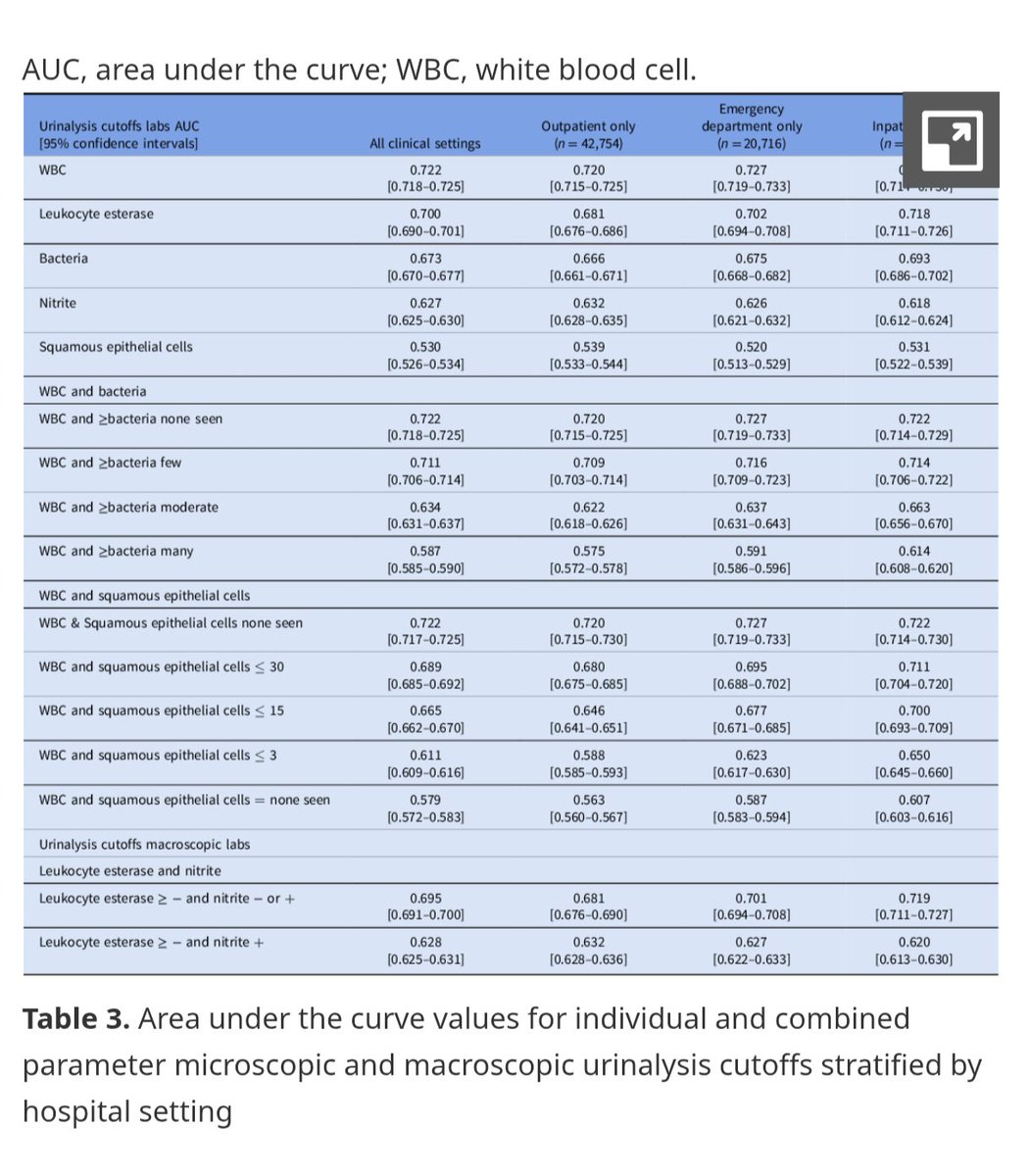
📊 New study >80k UA–culture pairs
no single parameter achieved both high sensitivity & specificity detecting uropathogens
👉 Pyuria (WBCs /microscopic UA) showed the best performance(AUC 0.72 = fair discriminative power) outperforming LE,nitrite& bacteria
https://t.co/ei9r58GXR3
This consensus statement creates a clinical guideline for the diagnosis and management of UTIs that addresses the gap between the evidence and recommendation strength. https://t.co/c1nnbwewIz @bradspellberg
We are proud to present the next @Wiki_Guidelines on UTI; providing the first comprehensive review of literature in the immense area of UTI in over FOURTEEN YEARS. Thanks to everyone who contributed. We truly hope this will make a difference in the care of patients!!!
The great aspect is not to be qualified as "expert" (too big honour) but having the chance to collaborate with an international team led and coordinated by real world experts in the #infectious_diseases field. Proud to have been a useful cog in a fantastic wheel.
#MEDTwitter
Routine cystoscopy and urodynamic studies do not require antimicrobial prophylaxis in
asymptomatic patients. Pre-operative antibiotics do not appear to reduce infectious complications from routine cystoscopic stent removal nor nephrostomy tube placement
Randomized controlled trials have demonstrated the individual and ecological benefits to
antibiotic de-escalation and all authors encourage its use when able during the treatment of
urinary tract infections
For patients undergoing invasive urologic procedures, most authors feel that many patients could
receive a single dose of pre-operative prophylaxis prior to the scheduled procedure
When treating ASB, the
ideal duration of treatment is unknown. In pregnancy, it may be reasonable not to exceed the
duration used for symptomatic cystitis (e.g., 3-5 days, depending on the antimicrobial used).
There are theoretical reasons and limited evidence which support treatment of ASB in pregnant patients and in those undergoing invasive urologic procedures associated with expected mucosal bleeding. When treating ASB, the
ideal duration of treatment is unknown.
ASymptomatic Bacteriuria:
There is no conclusive evidence that there is any population in which treatment of ASB is required and randomized controlled trials are welcomed.
We are unable to provide a clear recommendation for the treatment duration for febrile UTI.
Considering the available data for pyelonephritis and GN bacteremia from a urinary source, it may be reasonable for febrile UTI to be treated in a similar fashion to
pyelonephritis
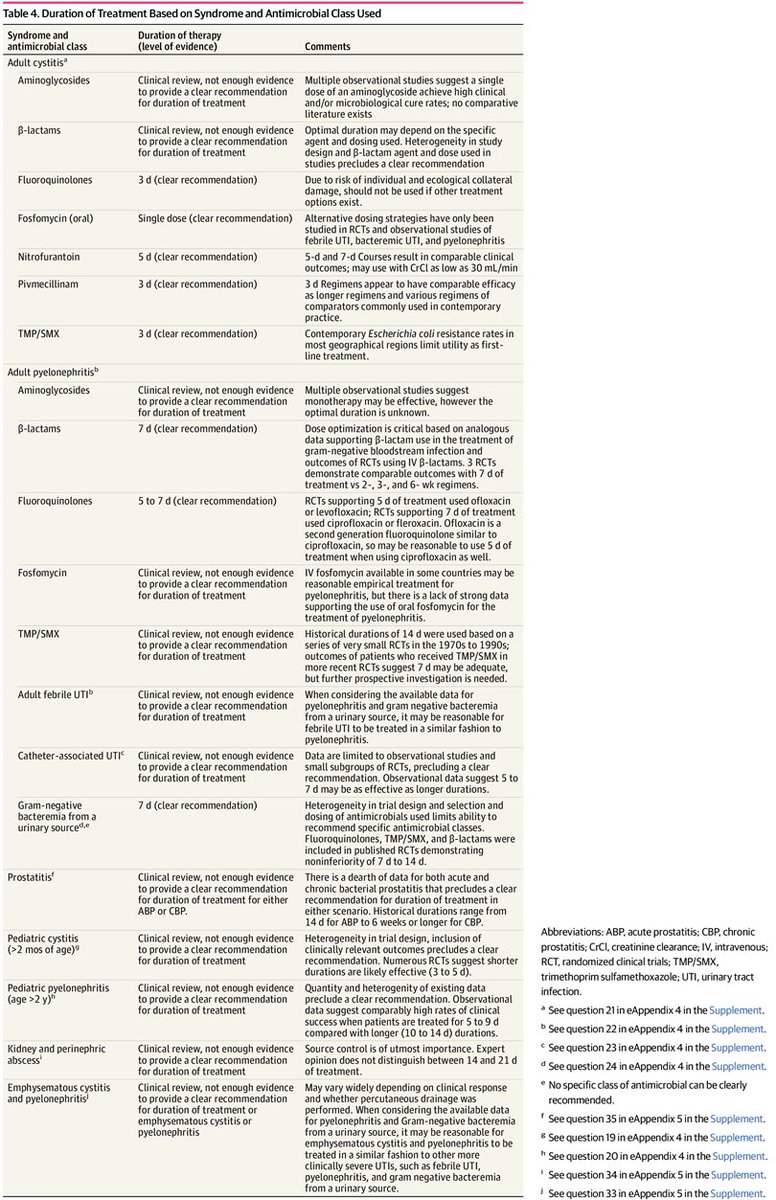
We cannot provide clear recommendations for pyelonephritis treatment duration with trimethoprim sulfamethoxazole, fosfomycin, or aminoglycoside monotherapy due to lack of reproducible high-quality data or heterogeneity across small studies
Pyelonephritis:
Based on several RCTs, we can provide a clear recommendation on the duration of therapy for the following antimicrobial classes (regardless of biological sex) for the treatment of acute pyelonephritis
• Fluoroquinolones: 5 -7 d
• Dose-optimized β lactams: 7 d
Optimal durations of treatment for cystitis (regardless of biological sex)
• Nitrofurantoin: 5 days
• Trimethoprim/sulfamethoxazole: 3 days
• Fluoroquinolones: 3 days
• Oral fosfomycin: single dose
• Pivmecillinam: 3 days
• Gepotidacin: 5 days
Cystitis:
Based on several RCTs shorter courses (3 -5d, depending on the antimicrobial used) result in comparable outcomes to longer courses (7 -14d) and are reasonable for treatment of cystitis in children >2 months of age when the likelihood of pyelonephritis deemed to be low
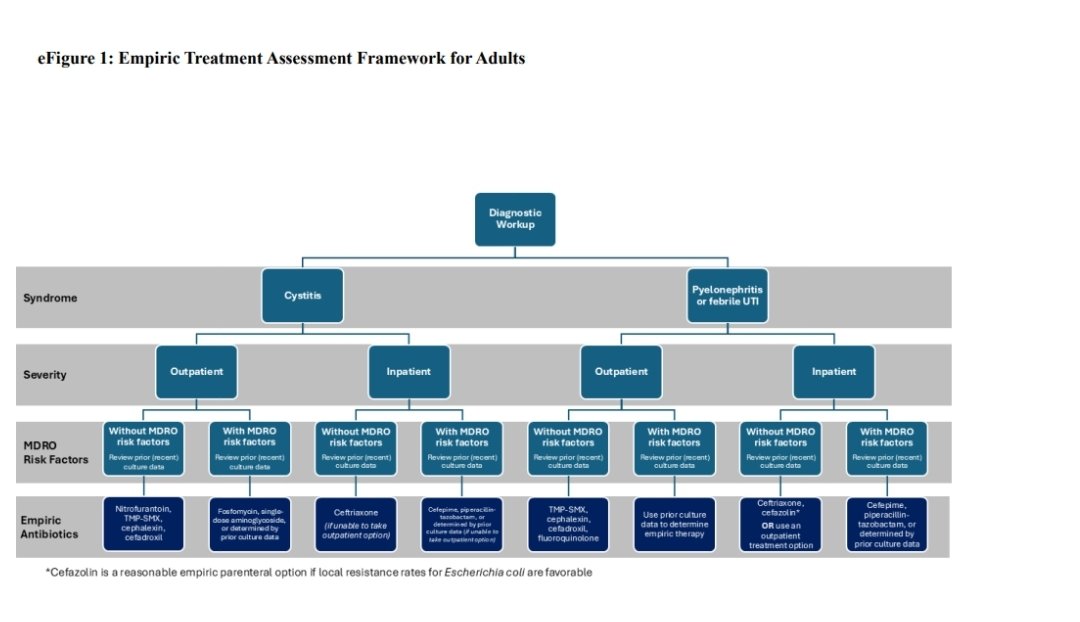
For patients with uncomplicated cystitis, nitrofurantoin is a reasonable drug of choice, based on robust evidence of efficacy and its ability to spare use of more systemically active agents for treating other infections
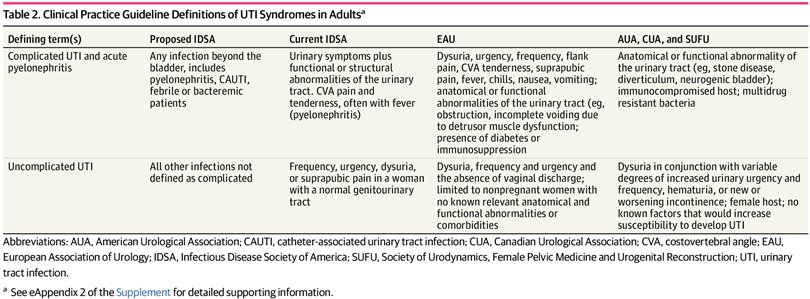
Unfortunately, complicated UTI lacks a standard clinical definition due to diverse criteria
in literature and guidelines. Complicated UTIs may involve catheters or other foreign bodies,
complicating factors like structural anomalies or immunosuppression, or systemic symptoms
Most WikiGuidelines authors strongly encourage the use of more precise descriptions of UTI in clinical practice rather than continuing to use vague terms such as “complicated” or “uncomplicated
We are delighted to announce the publication of UTI WikiGuideline in JAMA Network Open. Thank you to the 54 experts from 12 countries for drafting. Special thanks to @zacroBID and @amenalor for leading the effort.
https://t.co/XC2MgtjTdb