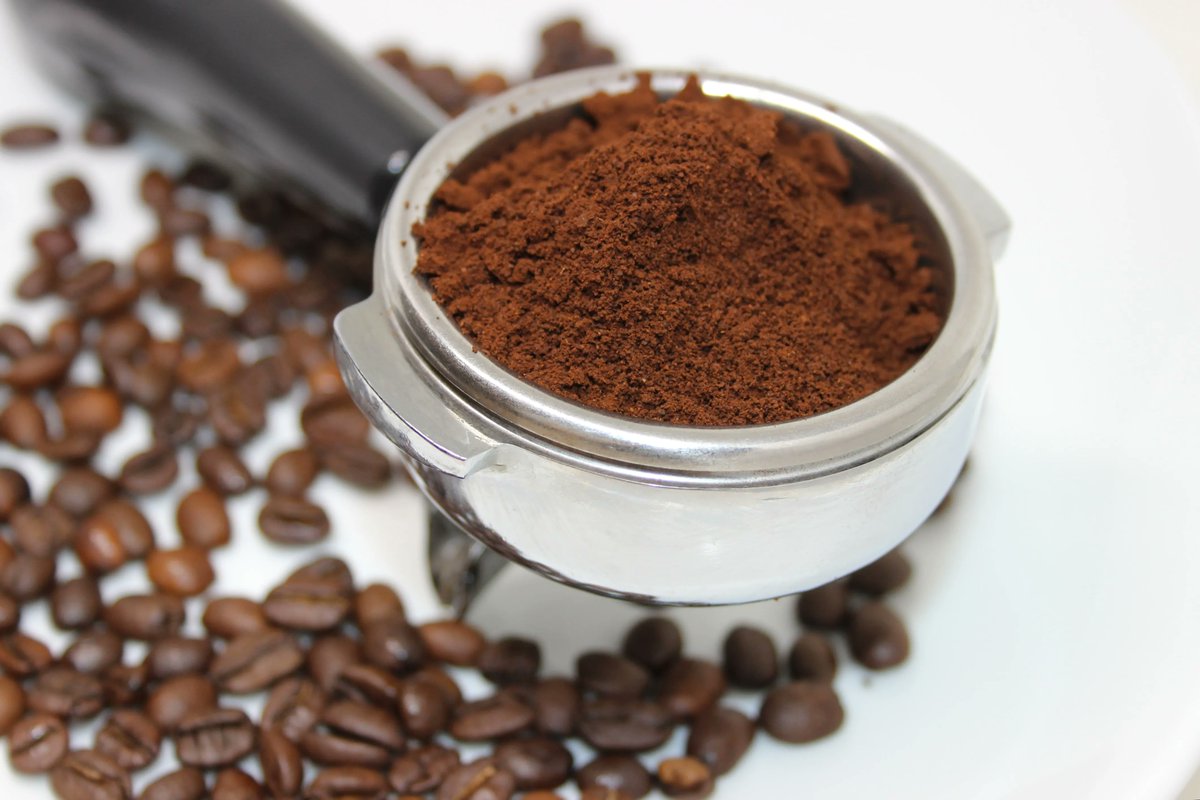
Coffee grounds contain up to 20 wt% oil. They were evaluated as a lubricant feedstock with an eye toward #CircularEconomy. Authors tested properties of coffee waste-derived oil ITO friction &wear, comparing to the industry standard PAO made from ethylene.
https://t.co/8ouwDRducj
Coffee grounds contain up to 20 wt% oil. Authors evaluated coffee grounds as feedstocks for lubricants. Properties of coffee waste-derived oil were tested ITO friction & wear, and compared to the industry standard derived from ethylene. #CircularEconomy
https://t.co/8ouwDRe21R
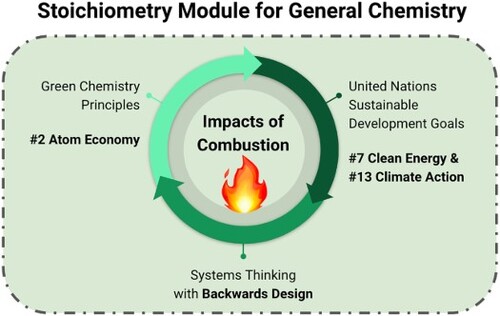
Educators connect #greenchemistry principles and #UNSDGs using systems thinking to teach fundamental chemistry concepts and help students discuss complex ideas such as reaction efficiency. Thanks Julian Silverman @heterocat and Jessica D'eon @prof_deon! https://t.co/AxqFdmyx4H
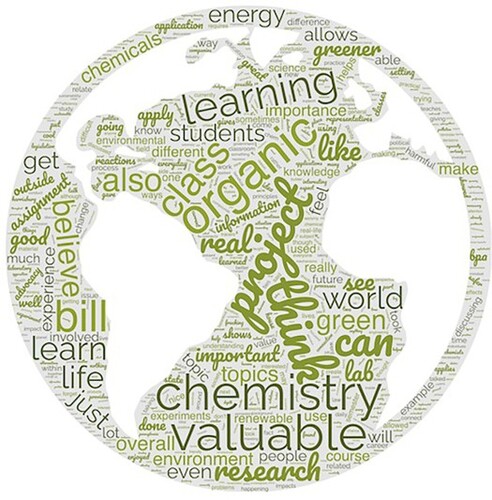
Can an undergraduate organic chemistry laboratory “GO GREEN”? ...project-based curriculum transformation engaging students in STEM practices at Michigan State U. highlighting green and sustainable chem. Thanks @CooperGroupCER@MSUChem https://t.co/HzoRvYXfNQ
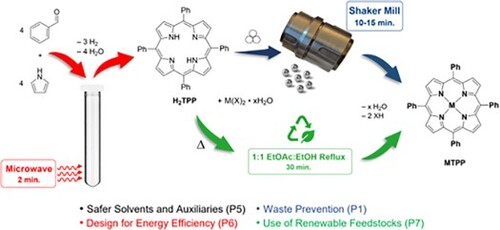
Fantastic work toward greening the Inorganic Chemistry laboratory curriculum: A greener tetraphenylporphyrin synthesis and metallation. Thank you and congratulations on your work @DrDeBack! https://t.co/VORYeVO2KS
We are honored to be part of @Apple's giving initiatives. Apple is supporting Beyond Benign's Minority Serving Institution (MSI) Initiative, designed to provide #GreenChemistry educational support for faculty and students at minority-serving institutions. https://t.co/SeW32sRTsO
New special collection on 2022 Advances in Green Chemistry Education! Topics include introducing UNSDGs, new experiments; & connecting political engagement to #sustainablechemistry.
https://t.co/AJwrYVMUwa
Thanks @moseskigozi5 for your recent contribution to GCLR, #upcycling PET plastic into carbon nanomaterials for #supercapacitor applications. https://t.co/lemqdbDCX7
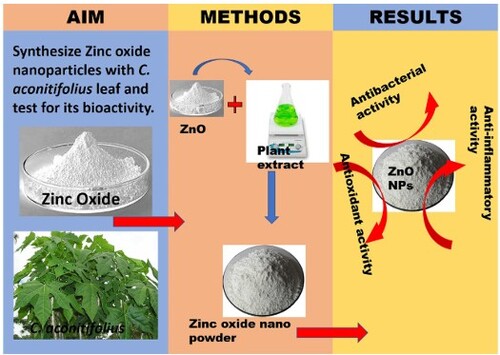
This study synthesized and characterized zinc oxide nanoparticles (ZnO NPs) using spinach tree, Cnidoscolus aconitifolius and investigated the in vitro antioxidant, anti-inflammatory and antibacterial potentials. https://t.co/X8lrcboKiv
Nominations are due by Feb. 28th, 2023 to [email protected]. Only 1 author per published manuscript will be considered. If you have any queries about eligibility, please contact the journal’s Portfolio Manager, Kaleigh Sunday, at [email protected].
Nominees must be within 12 y of receiving their PhD and work full-time in an academic or government lab. Include manuscript title, DOI, when the author received their Ph.D., current position, contribution to the manuscript, and a statement as to why they should receive the award.
We are now soliciting nominations (including self-nominations) for the 2022 John C. Warner Early Career Researcher Prize! To be nominated, the author must have a manuscript which has been published in Volume 15 of Green Chemistry Letters and Reviews. https://t.co/RCd86PsG5y
#BallMilling was used in a #Suzuki reaction to prepare a class of polymers used in optoelectronic devices like #LEDs. EcoScale, an open-source web-based #GreenChemistry calculator, was used to compare this process to a typical solvent-based synthesis. https://t.co/OxLX0HyrJ4
We've taken some time off from social media postings at GCLR, so let's review the highlights of the latter part of 2022. Vol 15 Issue 4 was a special issue on green organic #mechanochemistry. https://t.co/eByNfhFfj6
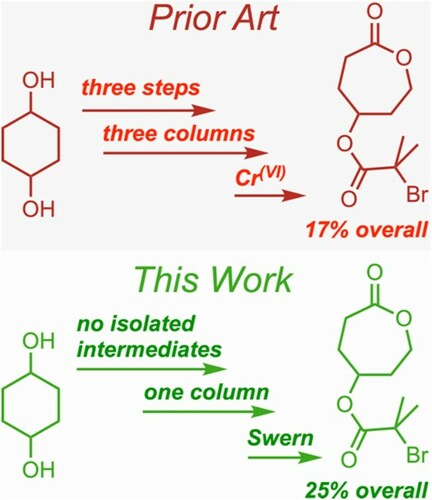
This improved synthesis BMPCL, a caprolatone derived inimer, cuts two columns, replaces Cr(VI) with a Swern oxidation, & improves yield by 50%. BMPCL has been used to make branched copolymers via ROP & CRP since 1999. Congrats @GetzlerChem! https://t.co/5A6HvKCbfa
This improved synthesis BMPCL, a caprolatone derived inimer, cuts two columns, replaces Cr(VI) with a Swern oxidation, & improves yield by 50%. BMPCL has been used to make branched copolymers via ROP & CRP since 1999. Congrats @GetzlerChem! https://t.co/5A6HvKCbfa