About a decade ago, I sat in a presentation on driverless cars, skeptical.
That changed the moment the presenter said something that shifted my perspective:
"When a driverless car makes a mistake, all other driverless cars will learn how to avoid it. That’s not the case for traditional cars."
There’s quite a difference between learning individually and learning collectively.
I was reminded of all this while reading a NY Times column by neurosurgeon Jonathan Slotkin in which he writes:
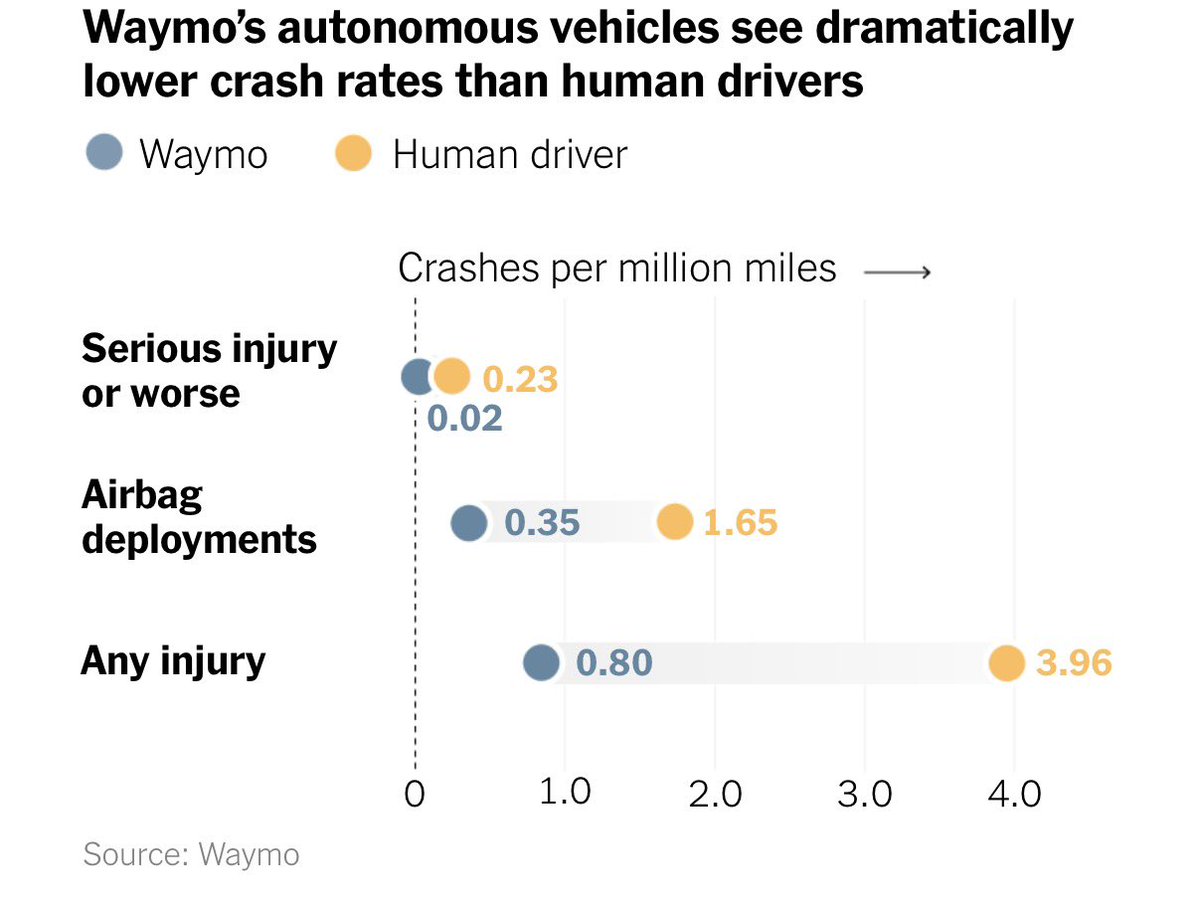
“When compared with human drivers on the same roads, Waymo’s self-driving cars were involved in 91 percent fewer serious-injury-or-worse crashes and 80 percent fewer crashes causing any injury. It showed a 96 percent lower rate of injury-causing crashes at intersections, which are some of the deadliest I encounter in the trauma bay.”
#cars #droving #accidents #waymo @nytimes #ArtificialIntelligence #MachineLearning #AutonomousVehicles #TechTrends #FutureOfTech #Innovation #BigData #NetworkedIntelligence
This column discusses the consequences of tax increases and expenditure cuts which can be mitigated through strategic, ideologically consistent, and well-timed policy decisions.
A Alesina @Harvard, @GCimins@ADB_HQ, D Furceri @IMFNews, G Saponaro @Harvard
https://t.co/vlS6vuLbmB
Presenterò un disegno di legge affinché nei programmi elettorali sia indicato il costo delle misure promesse dai partiti e relative coperture (compreso eventuale deficit). Forse non andrà lontano ma migliorerebbe la trasparenza della politica. Se concordate ritweettate per favore
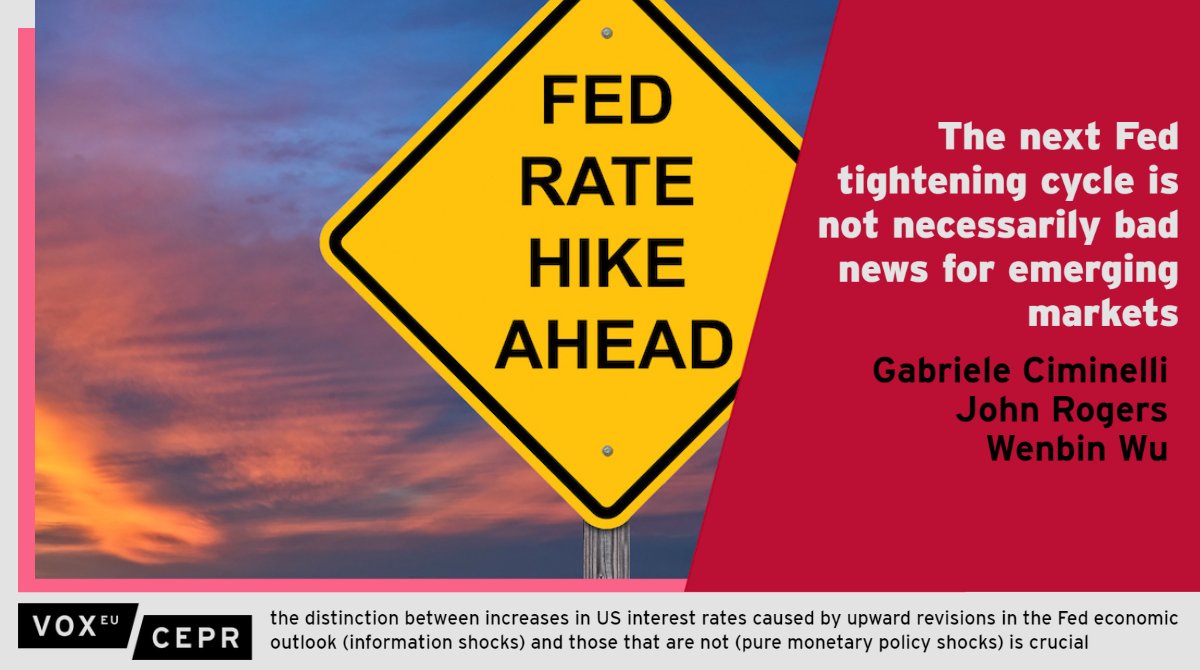
Not always bad news: The conventional perception that #Fed's rate hikes always imply capital outflows from #EmergingMarkets assets is an incomplete assessment. When the Fed hikes on backdrop of improving economy EMs assets do not suffer outflows. https://t.co/j3EIqKYy7K
Pure #monetary#policy shocks have conventional, negative effects but positive information shocks do not. The latter even drive a reallocation out of #US Treasuries and into growth-sensitive US assets
@GCimins@OECD@OECDeconomy, J Rogers, W Wu @FudanUniv
https://t.co/3DSiWI7qcF
Thrilled to soon present on the future of #telework at the @banquedefrance -@OECDeconomy Will it stick after #covid? We analyzed millions of job advertisements to find that it will!
@PawelAdrjan@KoelleM
Check out the full paper https://t.co/koN3uoAkFd
Right now it's hard to imagine the pandemic going away... but when it does, will remote work persist?
New Indeed-OECD paper with data from 20 countries by @GCimins, @AlexandreJudes2, @KoelleM, @TaraSinc, Cyrille Schwellnus & me: https://t.co/0itA7LvQMC
Thread 1/
Are governments implementing #austerity punished at the polls? It depends on their electoral base and whether they go for tax hikes or expenditure cuts. Find out more here: https://t.co/mz6KlwxKv5
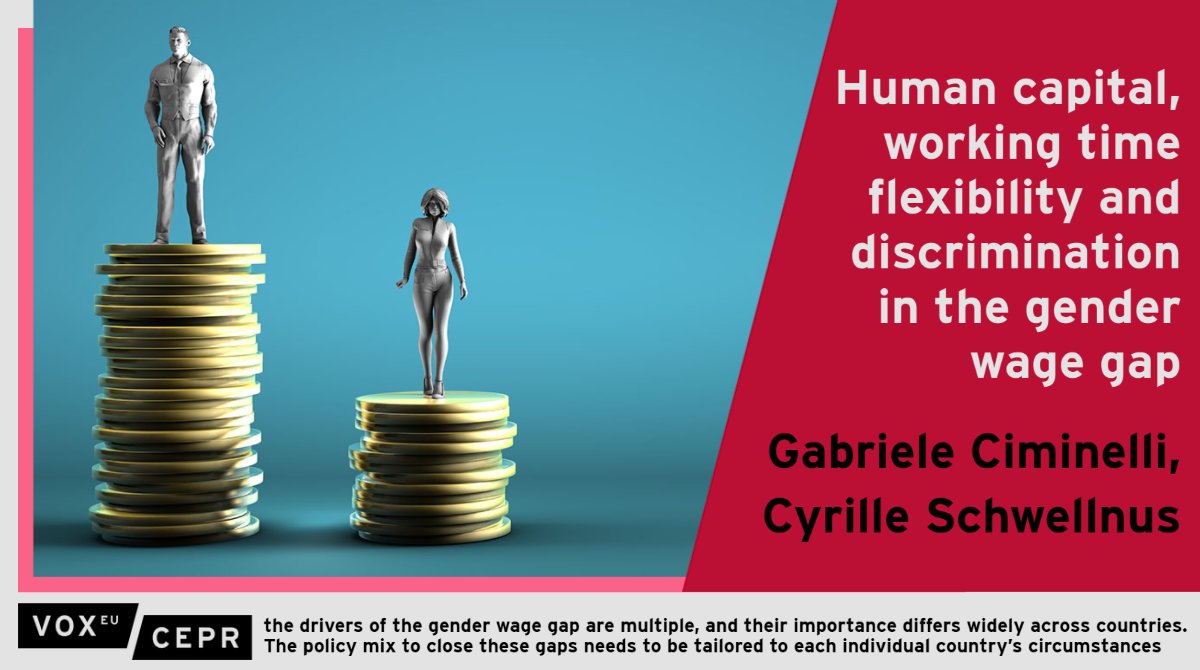
Looking at the evolution of gender wage gaps over the working life shows that gender wage gaps arise even among teenagers age 14–19 and increase sharply at ages 20–29 and 30–39, indicating a high "child wage penalty"
find @GCimins & Cyrille Schwellnus 👇🏻
https://t.co/rHUr4e1v7l
The drivers of the #gender#wagegap are multiple, and their importance differs widely across countries. The #policy mix to close these gaps needs to be tailored to each individual country’s circumstances
@GCimins, Cyrille Schwellnus @OECD@OECDeconomy
https://t.co/ytxaJg49CD
Bold, country-tailored policies are needed to close gender wage gaps in Europe, @OECD evidence on effects of childbirth (‘glass ceilings’) & 'sticky floors' (social norms, gender stereotyping, discrimination) on pay differentials between women & men @voxeu https://t.co/E15o3M4DhQ
On average across 25 European countries, there remains a gap of around 15% in hourly earnings between similarly-qualified men & women.
What is the role of human capital, working time flexibility & discrimination in the #genderwagegap?
Read more 👉https://t.co/7hwFLxz4J9
@OECD