A farmer, tired of rats destroying his crops and stealing his grain, came up with a clever but cruel plan. He threw a dead pig into a deep, abandoned well. Attracted by the smell, nearly 80 rats rushed into the well to feast on the carcass. At first, everything seemed wonderful. There was more than enough food for everyone, and the rats ate until they were satisfied.
But when the food was gone, they discovered something terrifying. The walls of the well were too steep to climb. They were trapped. Days passed, and hunger turned into desperation. Desperation turned into aggression. The rats that had once eaten peacefully beside one another began fighting for survival. Eventually, they began killing and eating each other.
One by one, their numbers dwindled until only a single rat remained. Its eyes were bloodshot, and it had survived by consuming its own kind. Then the farmer returned, lowered a rope into the well, and rescued the last surviving rat. But he didn't save it out of kindness or compassion.
The farmer knew the rat had learned to survive by hunting other rats. When he released it into his fields, it would continue killing its own kind instead of eating his grain. The farmer had turned his enemy into his greatest weapon.
And that is the lesson of divide and conquer. Those who control the trap don't need to fight the battles themselves. They simply create the conditions in which others turn against one another.
The rats believed their enemies were the other rats. They never realized that the true enemy was the farmer who had put them there.
The greatest danger isn't always the enemy standing in front of you. Sometimes it's the one who created the conflict and stands quietly watching you destroy each other.
Before you turn against your neighbor because of their political beliefs, ask yourself who benefits from keeping Americans divided. While we fight each other over Republican and Democrat, we may be overlooking those who profit from the conflict. Perhaps the real question isn't which side you're on, but who built the well—and why they want us fighting at the bottom of it.
She was SEVEN YEARS OLD. She was asleep on her grandmother’s couch when a police officer fired the shot that k!lled her.
May 16, 2010. Detroit, Michigan.
Aiyana Stanley-Jones was sleeping under a blanket at her grandmother’s home when Detroit police carried out a midnight raid. Officers were searching for a murder suspect who was believed to be upstairs in the house.
Aiyana was downstairs.
She was not the person they were looking for. She was not involved in the investigation. She was a little girl who should have been safe in her own home.
But during the raid, Officer Joseph Weekley fired his weapon, striking Aiyana in the head.
She died at just seven years old.
And there was something else that made this tragedy even more disturbing: a reality television crew was there filming the police operation for A&E’s The First 48.
The raid was being recorded for a television audience. A child was killed in the process.
Aiyana’s death devastated her family and sparked outrage over police conduct, the use of force during raids, and the treatment of Black children in their own homes.
The legal proceedings dragged on for years. Weekley faced charges in connection with her death, but two trials ended without a conviction. Prosecutors eventually dropped the charges in 2015.
No conviction followed the killing of a seven-year-old girl who had been sleeping when the raid began.
Think about that for a moment.
A child went to sleep in her grandmother’s home. She never got the chance to wake up, eat breakfast, play with her friends, or grow into the person she might have become.
Her family was left with a loss that no court proceeding could undo.
Aiyana Stanley-Jones was seven.
She deserved to grow up. She deserved to feel safe at home. And her life deserved more than becoming another name in a long record of tragedies involving police violence.
Her name was Aiyana Stanley-Jones. She was a child. And she should still be here.
In 1911 Maryland opened a place called the Hospital for the Negro Insane.
The first patients BUILT IT. They cleared the ground and put up the buildings they were then locked
inside.
One man was committed because he startled a white man's horse. Another because he spoke with an English accent.
Crownsville, Maryland. It was not a hospital the way you are picturing a hospital. It was a farm with
locks on it, and the people inside were the labour.
The standard for being sent there was not a diagnosis. It was somebody's opinion — usually a white
police officer's or a white neighbour's. The journalist Antonia Hylton, who spent ten years on the
records, puts it plainly: the criteria were "incredibly wide and flexible."
So: a man cut in front of a white driver in traffic and spooked his horse. That is the whole reason
he was committed.
And a man was picked up walking around Baltimore speaking with an English accent, because the
authorities assumed a Black man with that voice must be putting it on.
He was not putting it on. He was from London. He had been a jockey.
Sit with that for a second. He told them where he was from. His accent was the evidence against him.
They kept coming — new patients every week, for decades, while the farm got bigger and the wards got
fuller. Some of the men who built the place in 1911 never left it. They died on the grounds.
Crownsville did not close in the 1950s, or the 1970s.
It closed in 2004.
There are people alive right now who worked there, and families still trying to find out where their
relatives are buried on that land.
No trial. No sentence. No release date. Somebody decided you were mad, and that was the rest of your
life.
Hey Black folks,
Do you have “liberal” white friends? If so, do they “love” you like they love their dog?
This story is for you.
(Researching who the author is)
Why are National Guard troops in Washington D.C standing in front of a ballot drop box like they’re guarding it! This seems like it would be against 18 US code 592 which makes it a federal crime for any Military officer to be at any general or special Election polling place & ballot box.
In 1838 a university sold two hundred and seventy-two human beings to pay off its debts.
Men, women and children were loaded onto ships in Maryland and sent to Louisiana sugar plantations to keep a college solvent.
Georgetown. The Jesuits who ran Georgetown owned plantations in Maryland. The college was in financial trouble.
So the provincial superior authorised the sale of the enslaved community — the entire community, families together and families broken, for about a hundred and fifteen thousand dollars.
Some of them had been promised they would never be sold south. Priests went down to the quarters to organise the loading.
The money saved the school. For most of two centuries this was simply not discussed.
A university needed money. So it sold 272 human beings. Some of the darkest chapters of Black history were not hidden by accident. They were buried because powerful institutions had something to lose.
If these are the stories you were never taught, it’s time to uncover them https://t.co/V6OJtayKnF
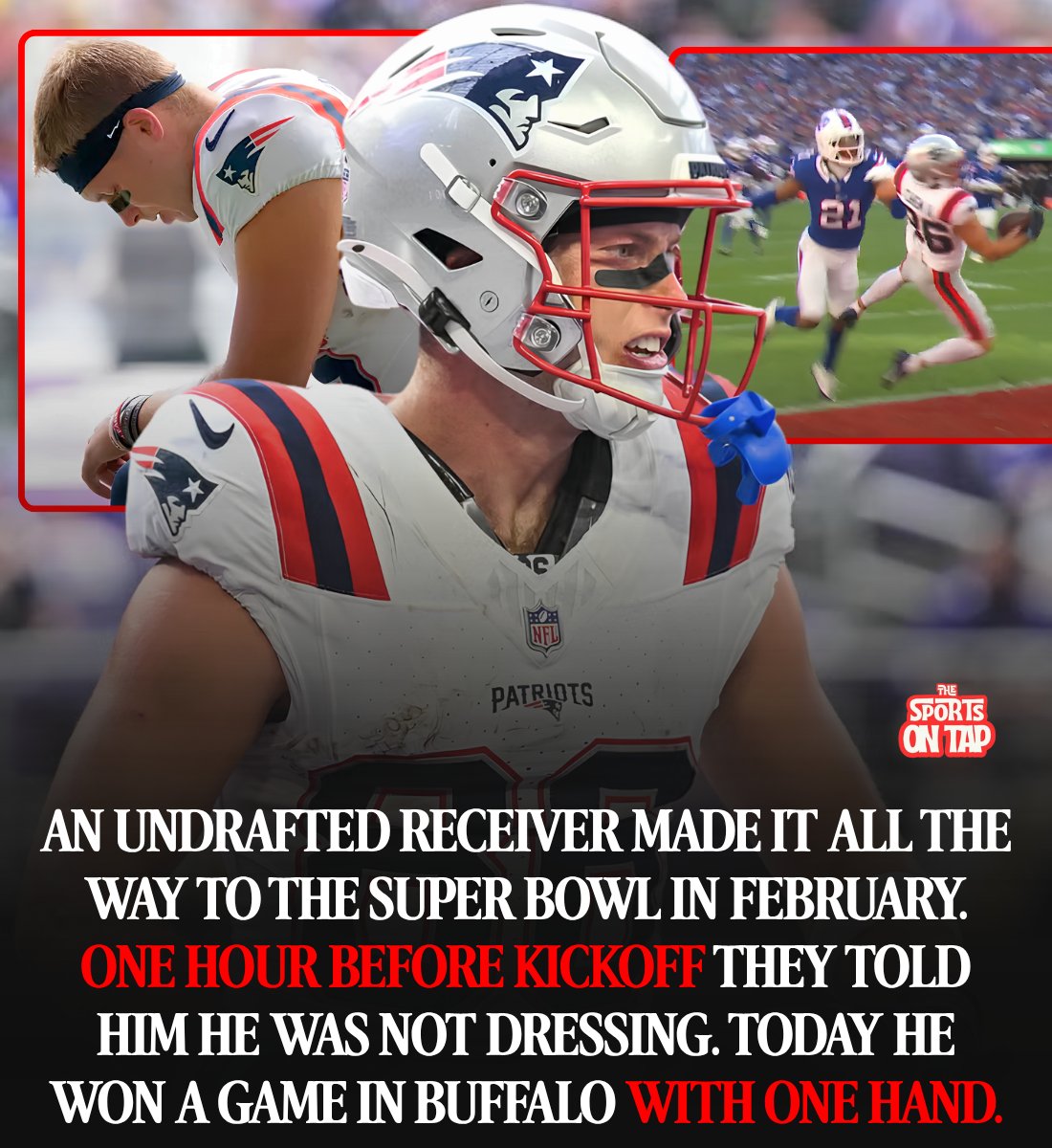
An undrafted receiver made it all the way to the Super Bowl in February.
One hour before kickoff they told him he was not dressing.
Today he won a game in Buffalo with one hand.
His name is Efton Chism III. He is from Monroe, Washington, and he is 5 foot 11.
His father is a Marine Corps veteran. His mother and his older sister are both educators. He is the third Efton Lynn Chism in his family.
The man who trained him from about the sixth grade was Michael Bumpus, a former Seattle Seahawks receiver who ended up as the head coach at Monroe High School.
"Efton was the type of kid who did whatever you asked and went above and beyond," Bumpus said.
He left Monroe as the school's all time leader in catches and receiving touchdowns. Almost nobody in Division I wanted him anyway.
So he stayed home and went to Eastern Washington, in a town called Cheney, where the field is red.
Then he had one of the great careers in FCS history. 346 catches. 3,852 yards. 37 touchdowns. He caught a pass in 53 straight games, which no player in FCS football has ever done. In 2024 he caught 120 passes in a season and broke Cooper Kupp's school record.
His college coach Aaron Best described him in one line.
"He's who you want your daughter to marry. He's who you want your quarterback to throw the ball to on third down."
In 2025 he went undrafted. All seven rounds, 257 picks, nobody called.
The New England Patriots signed him anyway and he made the roster.
His position coach Todd Downing noticed one thing immediately.
"Tenacious work ethic. He's in my office every morning at 6 a.m. He beats a lot of coaches there."
Six in the morning. As an undrafted rookie who could be cut any Tuesday.
He returned kicks that season. On offense he caught three passes the entire year.
And then New England went to the Super Bowl.
He got to the stadium. He went through the whole week. He was there.
About an hour before kickoff they listed him inactive. The roster was full when a veteran receiver came back from injury.
He stood on that sideline in street clothes and watched Seattle win it 29 to 13.
Now today, in Buffalo.
Fourth quarter. 1:55 on the clock. New England down by five.
Drake Maye threw it deep right and Efton Chism III reached out and caught it with one hand for 23 yards and a touchdown.
That was the game.
Be honest about the size of it. One catch does not erase standing in a suit while your team plays for a championship. He is still a role player, and he will probably be returning kicks again next Sunday.
But a man who was told he was not needed on the biggest day of his life kept showing up at six in the morning anyway.
Today the ball came to him with the game on the line, slightly out of reach.
He got one hand on it.
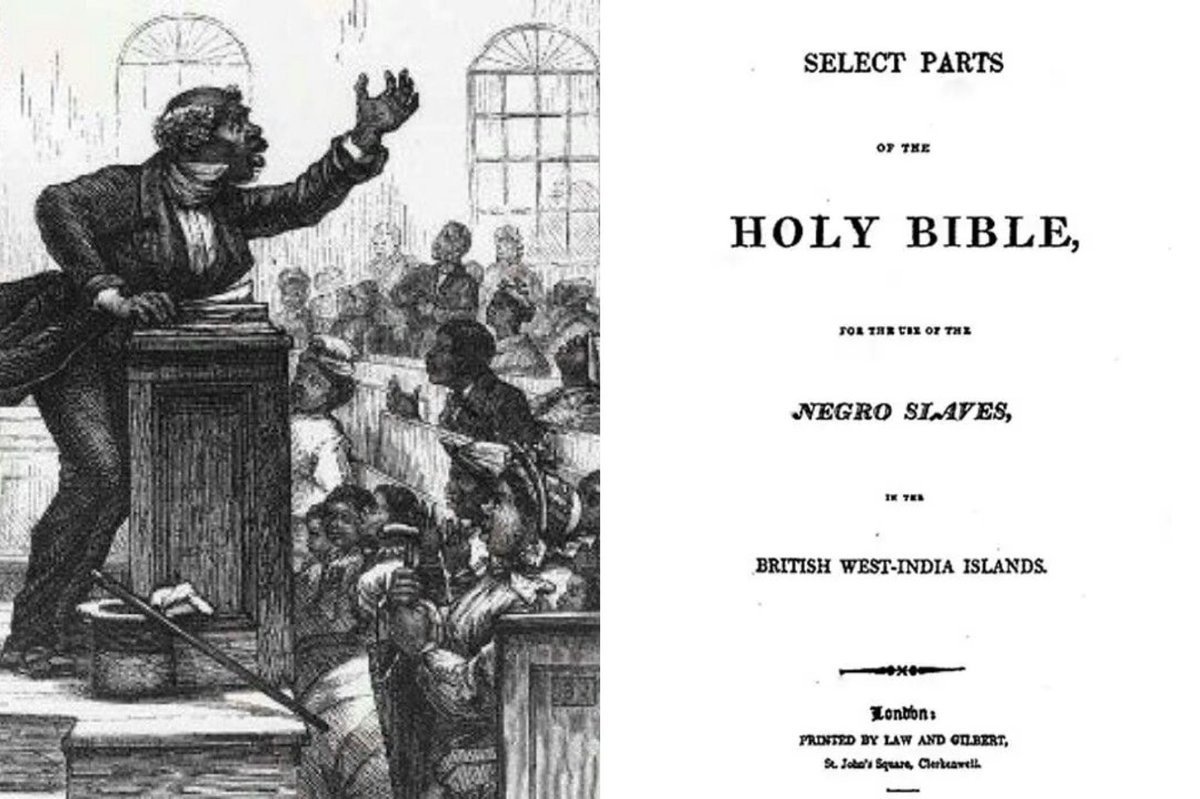
In 1807, missionaries in London produced what became known as the “Slave Bible” for enslaved Africans in the Caribbean. The Bible removed passages about freedom while keeping verses like Ephesians 6:5, which instructed slaves to obey their masters just as they would obey Christ.
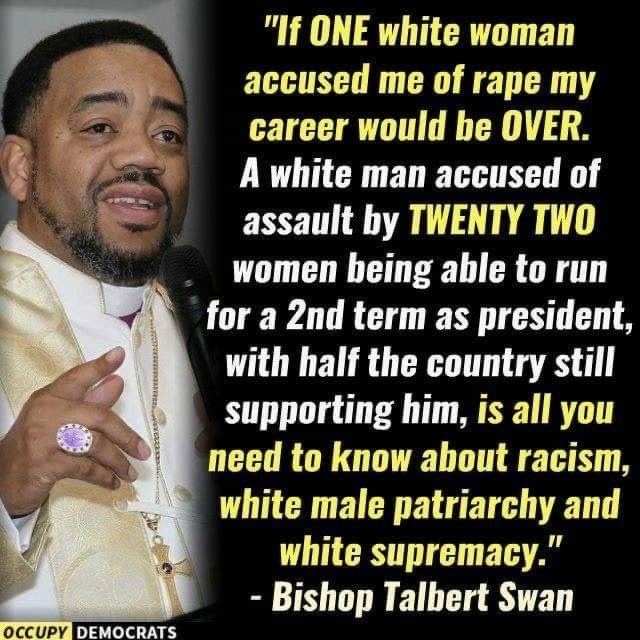
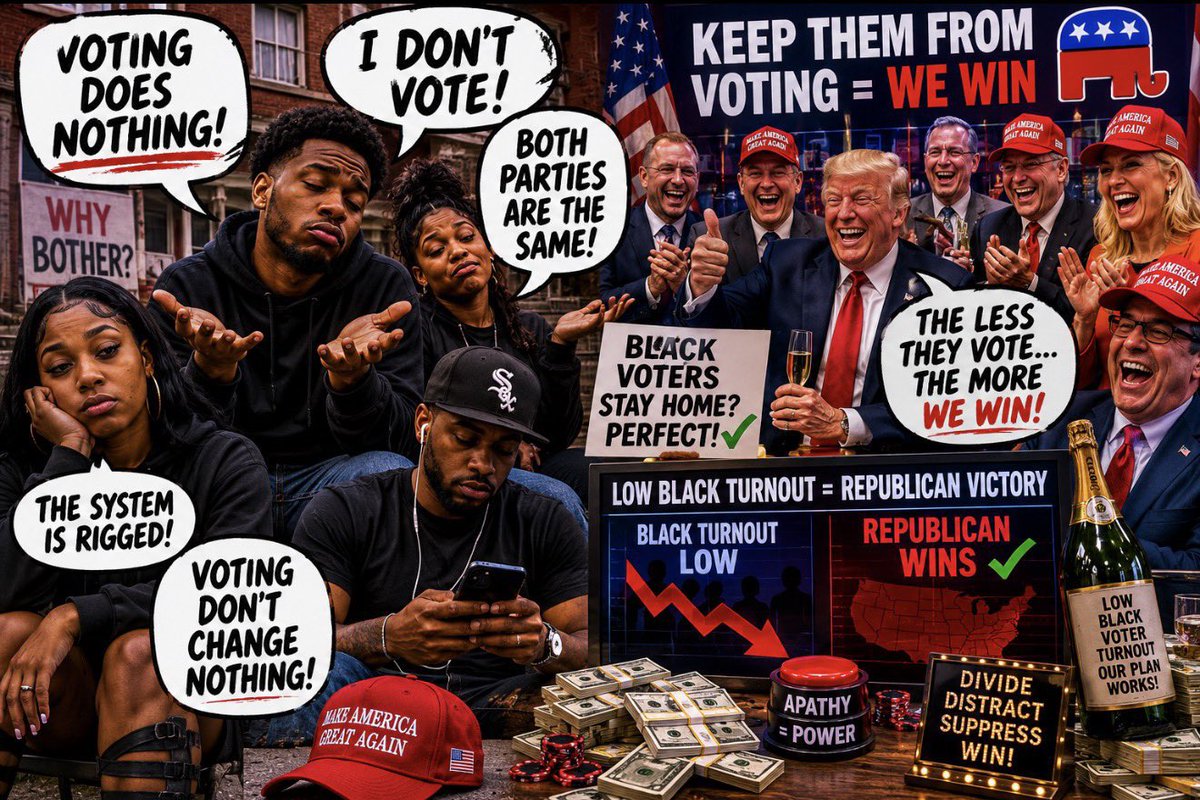
I never hear white people telling their own people not to vote. I only hear that message aimed at Black voters.
Every generation before us fought for this right. Our ancestors marched, registered, and sometimes died for access to the ballot box. Casting a vote honors that legacy and builds power for the next generation.
Black voices shape school boards, city councils, state legislatures, and the highest offices in this country when Black voters show up. Encourage your family, your friends, your neighbors to register and vote. Show up at every election, local and national. Our power grows when we use it.
Make a plan to vote. Check your registration. Bring someone with you to the polls.
#VoteReady #BlackVotesMatter #OurPowerOurVote #BlackVoterTurnout #VoteLikeOurAncestors #CivicDuty #TexasVotes #MakeAPlan #EveryVoteCounts #BlackExcellence