#Puebla está de moda
Padre e hijo en #Tehuacán, Puebla, agredieron a un vendedor d piñas por ocupar el espacio frente a su refaccionaria. En respuesta, usuarios de redes sociales se organizaron y en la madrugada incendiaron el negocio, el automóvil y la casa de los agresores.
@wildcats9214 Hi!
Yes, it’s been a while! I’ve been good, thank you! How about you?
That’s fantastic! Day of the Dead is a great time of the year to visit my city!
I just recently installed campfire, I couldn’t see the message before, my apologies. I saw it now and replied in campfire 😁
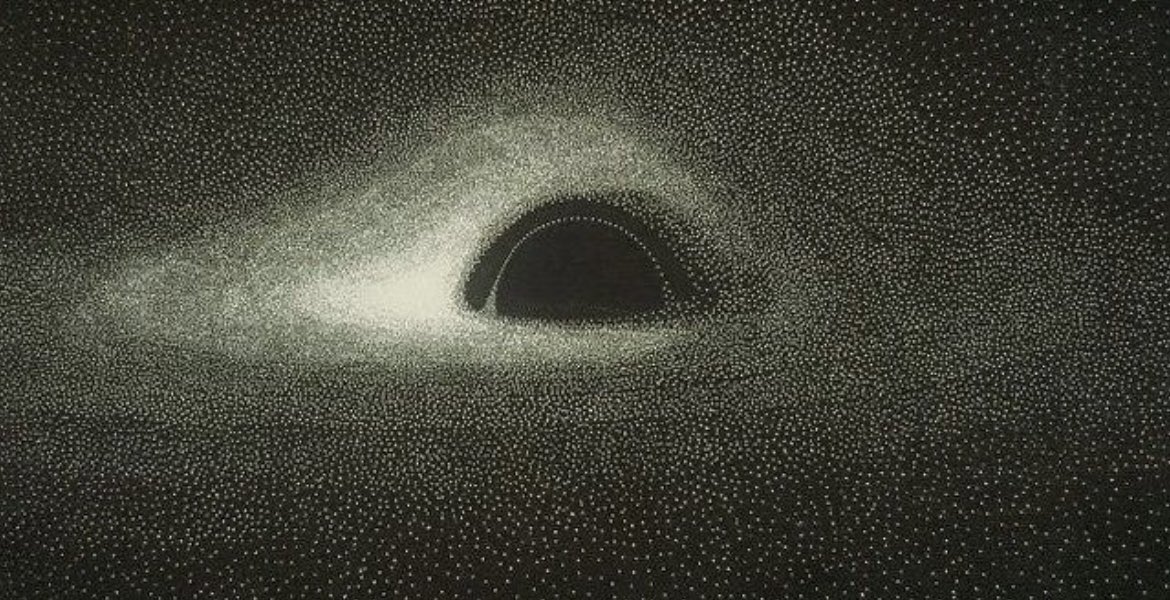
The first simulated image of a black hole is a remarkable achievement in the field of astrophysics, and it represents a significant milestone in our understanding of these enigmatic cosmic objects. The image was calculated using an IBM 7040 computer, a cutting-edge technology at the time, and it was painstakingly plotted by hand by French astrophysicist Jean-Pierre Luminet in 1978.
The concept of a black hole had intrigued scientists for many years before the image was created. These incredibly dense regions of space, with gravitational forces so strong that nothing, not even light, can escape them, posed a profound challenge to researchers. One of the key questions was how to observe something that absorbs all the light falling into it, making it seemingly invisible.
Jean-Pierre Luminet sought to address this challenge by employing computational methods to simulate the behavior of light around a black hole. With access to an IBM 7040 computer, a machine known for its reliability and computational power during that era, Luminet embarked on his groundbreaking project. However, it was no easy task. The limitations of computing technology at the time meant that calculations had to be carried out using punch cards, a laborious process that required careful programming and meticulous attention to detail.
Luminet's simulation focused on the behavior of light in the vicinity of a black hole, taking into account the powerful gravitational field and the phenomenon of gravitational lensing, where light is bent and distorted by the immense gravity. The simulation produced a vast amount of data that had to be analyzed and translated into a visual representation of the black hole.
To create the image, Luminet painstakingly plotted the data by hand. This involved using mathematical equations to calculate the brightness and position of each point in the image. With each point carefully marked, the final result began to take shape. The image revealed a striking, asymmetric distortion of light, characteristic of a black hole's gravitational effects.
Luminet's simulated image of a black hole was a groundbreaking achievement that provided scientists with a visual representation of these mysterious objects for the first time. It allowed researchers to gain valuable insights into the behavior of light in extreme gravitational fields and paved the way for further advancements in the study of black holes.
Since Luminet's pioneering work, advancements in computing technology have revolutionized our ability to study black holes. The recent development of techniques like the Event Horizon Telescope has enabled us to capture actual images of black holes in unprecedented detail, further enhancing our understanding of these cosmic marvels. Nonetheless, Luminet's hand-plotted simulation remains a significant milestone in the history of astrophysics, showcasing the power of human ingenuity and perseverance in unraveling the mysteries of the universe.
@Gylfie33 Hey! Yes, I made a spot. You can try adding me again or you can send me you friend code. I’m not very active in the game righ now but I can send you the gifts.
⚠️ WILD RIFT SKIN GIVEAWAY ⚠️
Thanks to @wildriftukn I have Random Skin Chests to giveaway
These are global codes open to ALL regions 🌍
To enter:
👉 Follow Me
♻ Retweet This Tweet
📺 Bonus entries on my YouTube (LINK BELOW)
I’ll pick the winners March 16th
#LeaguePartner