@northcoastposse If we had the old leagues--Big 10 with only 10 teams, Big 8, Pac 10, SWC, SEC, ACC, Big East, an 8-team playoff of conference champs plus an at large of ND or another independent or highest ranked team from a mid major might make sense. Otherwise, just do old bowl games plus 1.
The Pittsburgh Steelers asked an Englishman to sing the American national anthem.
Bruce Dickinson did it a cappella, no autocue, having never sung it before in his life.
He held "free" for six seconds.
Vancouver International Airport's own "Come From Away."
How #YVR welcomed 8,500 travellers stranded by the September 11 terrorist attacks, 25 years ago.
We remember 9/11 and Canada's Operation Yellow Ribbon. #bcpoli#vanpoli
https://t.co/L9KNrqfcqn
On this anniversary of the 9/11 attacks, the US government is unlikely to express the appropriate gratitude to the Canadian people for all their efforts to help on that day and the days after.
So I suggest retweeting Canadians congratulating themselves.
@WriteGrlProbs It increasingly feels like technology is designed to exclude people who don't understand it, rather than to help people. I forget the company, but there used to be an ad that said something like, "If technology doesn't work for people, it doesn't work."
Don't be a afraid to aim high when choosing your life's goal, for no matter how high you aim, your achievements may fall below...because it is t always about hitting goals, it's WHO you become in the process
The world needs better people. Small steps everyday creates big level ups
What the Old LISTSERV Tapes Are Teaching Me About Signal, Social Media and What We Lost
I’ve been deep in the tapes again literally converting backup media from that recovered tape drive (and a few companion tapes that surfaced through surplus channels and my Eudora savings) into structured data for local AI training.
Late nights with the drives spinning up, the low hum of the M2 Max keeping the recovery scripts alive, and decades-old LISTSERV archives unfolding like letters from another age. It’s not just nostalgia. It’s a quiet, wrenching education in what the early internet actually felt like before the algorithms took the wheel.
The clearest lesson hitting me hardest is the **purity of signal**. On those LISTSERVs, you followed what you *wanted* to follow. No recommendation engine whispering, “Hey, look at this cop bust video — rage and sirens, stay glued.” No green-screen commentator churning out hot takes on the latest outrage, optimized to keep you doomscrolling.
No infinite feed pushing unrelated sports drama, celebrity feuds, or algorithmically engineered culture-war bait just because it maximizes time-on-platform. You subscribed to HUMANIST because you cared about computing in the humanities. You joined LINGUIST List because linguistics was your world. You followed a technical list because you needed real answers from people who actually knew the iron. The signal was clean, direct, and voluntary.
And it scaled. Some brand-subject lists grew to hundreds of thousands of subscribers yet the engagement stayed intellectual, not farmed. Messages weren’t spam blasted for clicks. They were contributions to a shared conversation. You owned your words.
Even when identity sat behind a simple email address no real-name mandates, no endless verification theater people felt a deep communal responsibility. Flame wars happened, sure, but so did careful, reasoned replies that advanced knowledge. A researcher posting a half-formed idea on a physics or classics list could get thoughtful pushback from across the globe, often within hours. Accountability came from the community that mattered to you, not from some distant platform’s terms of service or shadowban hammer.
I’ve seen the read rates in the old logs and subscriber patterns. Extraordinary well over 80% of messages on active lists were actually opened and engaged with. Not skimmed in a feed, not buried under 47 algorithm-pushed distractions. People *wanted* to read it, so they did. The “engagement” wasn’t manufactured dopamine; it was the quiet satisfaction of intellectual interchange. You reached people who cared because they chose the list, not because an algorithm decided their eyeballs were ripe for harvesting.
Compare that to now. We traded that clear, owned signal for platforms that interview your every hesitation and shove something else in your face to keep you hooked. Cop videos for the algorithmically induced adrenaline. Green-screen pundits turning every random event into commentary fodder. Rage-bait thumbnails engineered to trigger tribal reflexes.
The uptime signal: “I follow this because I genuinely want to read it” got drowned out by engagement farming. Responsibility eroded too. Behind avatars or anonymous handles today, the stakes often feel lower because the community is diffuse and the platform owns the arena. Words became content optimized for metrics, not conversation built for understanding.
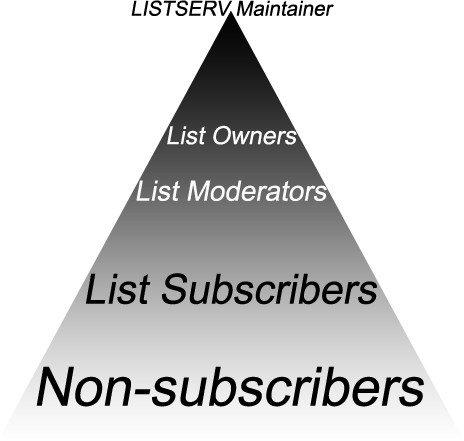
It makes me wrathful sometimes, late at night with these tapes spinning. We had something pure decentralized, permission-based, university-rooted commons where the list owner and subscribers shaped the space. The early intent was human connection and knowledge at the speed of email, without gatekeepers or growth-at-all-costs mandates.
And we let so much of it slip away during the transitions, as mainframes were retired and archives weren’t systematically migrated. The Great Forgetting claimed another layer.
But here’s the hopeful part that keeps me converting these tapes: **this can happen again**.
We don’t need TikTok’s endless scroll, Instagram’s filtered perfection, Facebook’s outrage amplifier, or any of the algorithm-fueled rage-bait machinery to sustain connection.
We never did. We just needed to see what we wanted to see clear, voluntary, high-signal feeds where people own their words and communities hold each other responsible.
This is as lazy as staging car assidnets that we all slow down to see, every minute till we become numb, which we all are to the AI or algorithm “suggestion”.
YOU ARE AND ALWAYS WILL BE THE ALGORITHM.
The brave ones in social media will prove it. Builders who give folks exactly that no forced recommendations, no farming the worst parts of human attention, just the pure seed of “I follow this because I care.”
It is very simple. And in an AI world all of the old ways to get humans engaged will dissolve into useless atomized noise. It already has started.
It was all “push” and no “pull” and everyone loved it. A majority of folks would love to get even 100s of LISTSERV messages a day because they had such high signal to noise. And if they did not, they just unsubscribed or one to a weekly digest most had.
WE WANT PURE SIGNAL BASED MOSTLY ON WHO WE FOLLOW. The other 15% can be on subject OUR FOLLOWS SIGNAL, not the last links we clicked on only to realize we hated it and now it’s our timeline.
The tapes keep teaching. A world I forgot to fiully remember and now it is all coming back.
As I read 1000s of thoughtful threads and well presented ideas, I want to scream WHAT HAPPENED TO US. We want this and we can show “them” but I fear we will have to wait until it is so clear.
The signal was there all along. We just have to be brave enough to let it lead again.
I will have more to say on this, but this hits me in my gut.
I see a future in our past.
@DTheKingpin@mmilam75 Friedman was writing when bureaucracy was growing and crowding out private investment. He always followed the data and could make pragmatic compromises when necessary, as his article on health care shows. https://t.co/QvrHrK1uBK
The coolest thing about the Space X IPO is that so many employees are getting to participate in the wealth creation, including cafeteria workers.
More companies should follow this model and grant equity to their long-term, loyal employees, regardless of role. $SPCX
The reason elite chess players have lower IQs is the same reason "successful founders dropped out" is bad advice.
Once you select for the top of any field, the traits required to get there become negatively correlated. Elite chess players need both IQ and chess-specific skill. Within them, the lower-IQ players must have higher pure chess skill to compensate, or they wouldn't be elite. The correlation is mechanical. It comes from how you drew the sample.
Apply this to founder advice. Among the general population, education and outcomes correlate positively. Among elite founders, dropouts had to compensate with something else: world-class technical skill, family capital, or an exceptional network. The "missing" trait in dropout-founders forced the other traits higher. Copying the dropout move without the compensating trait does nothing.
Every refrain from a top performer follows this pattern:
"I never networked, I just built great products." Within elite founders, the ones who skipped networking had exceptional products. The constraint selected for them.
"I sleep 4 hours a night." Within elite executives, sleep trades against output. In the general population, less sleep correlates with worse cognitive performance. You're hearing the substitution pattern of survivors.
"I don't read books." A top 0.01% operator who doesn't read requires compensation somewhere: raw memory, decades of operating reps, or a network that fed them what books would have.
The chart is the cleanest version of this you'll ever see. Black dots are the full population, strong positive correlation between early and adult performance. Red dots are the elite subset. Slope near zero.
Every advice book lives in the red dots. Every "what makes top performers different" study lives in the red dots. Every Forbes profile lives in the red dots. You're learning the substitution patterns of people who already won. Their path is in the red dots. Yours lives in the black.
When someone elite tells you what made them successful, the real question is what they had to be elite at to have the option of skipping the conventional path.
@Kiradavis This reminded me of a parable about a knotted, twisted tree. Because it was "worthless," no one cut it down for carpentry, which allowed the tree to grow tall and strong, providing shade to people and shelter to animals.
If You added up Individually what every single mitochondria inside of you is doing, you would discover That inside of you, you are producing more energy Every day then the sun.
They don't want spiritual beings. They want you at War with yourself
@Corneli35722222@SteveKim323 How close is Olajuwon to this list? Hard to argue with the others on the list, but Olajuwon was great at defense, shot blocking, and always had a new scoring move. He would have been great in today's game. He would have developed his shot even more and been a 3-point threat.
@mcuban This sounds similar to a key component of Singapore's system. "Private money, public provision.". You might find this book interesting for ideas on how to adapt that in the USA. https://t.co/g5g0y2rhsA