📢 Mitigating super pollutants, like methane and black carbon, will have an immediate impact on slowing global warming, and the good news is that the technology to do so exists today.
We're on a mission to slow global warming, faster - and we need your help📢 Mitigating super pollutants, like methane and black carbon, will have an immediate impact on slowing global warming, and the good news is that the technology to do so exists today.
We're on a mission to slow global warming, faster - and we need your help📢 Mitigating super pollutants, like methane and black carbon, will have an immediate impact on slowing global warming, and the good news is that the technology to do so exists today.
We're on a mission to slow global warming, faster - and we need your help📢 Mitigating super pollutants, like methane and black carbon, will have an immediate impact on slowing global warming, and the good news is that the technology to do so exists today.
We're on a mission to slow global warming, faster - and we need your help📢 Mitigating super pollutants, like methane and black carbon, will have an immediate impact on slowing global warming, and the good news is that the technology to do so exists today.
We're on a mission to slow global warming, faster - and we need your help📢 Mitigating super pollutants, like methane and black carbon, will have an immediate impact on slowing global warming, and the good news is that the technology to do so exists today.
We're on a mission to slow global warming, faster - and we need your help.
✍️In this week's "Heat Signal" Blog, learn what the Climate Shift Index can tell us about:
• An overheated outback in Australia
• Excessive heat post #Chido in Madagascar & Mayotte
• Ho-ho-Holiday heat across Europe
🧠Learn more 👉 https://t.co/5xqAXzTEOn
When it occurred, 2016 was striking as the hottest directly measured year up until that point.
Eight years later, 2024 will set a new record for the hottest year.
2024 will be ~0.25 °C (~0.45 °F) hotter than 2016.
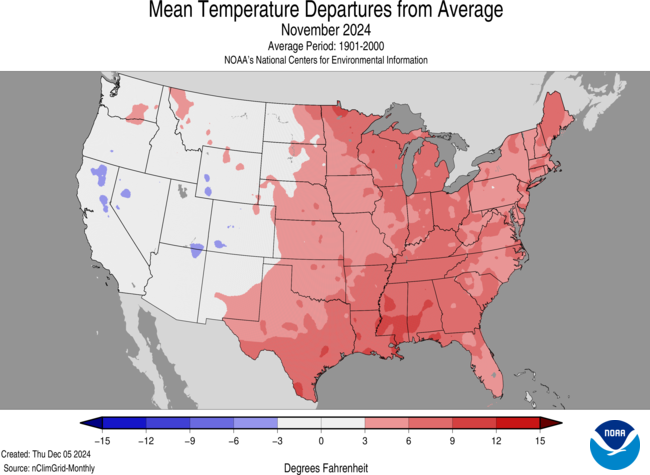
(1 of 5) JUST IN: #Fall 2024 was the nation’s warmest on record.
The U.S. experienced its warmest year-to-date period on record.
More from our #November 2024 #StateofClimate Report:
https://t.co/M97Th5Jj3R
@NOAANCEI
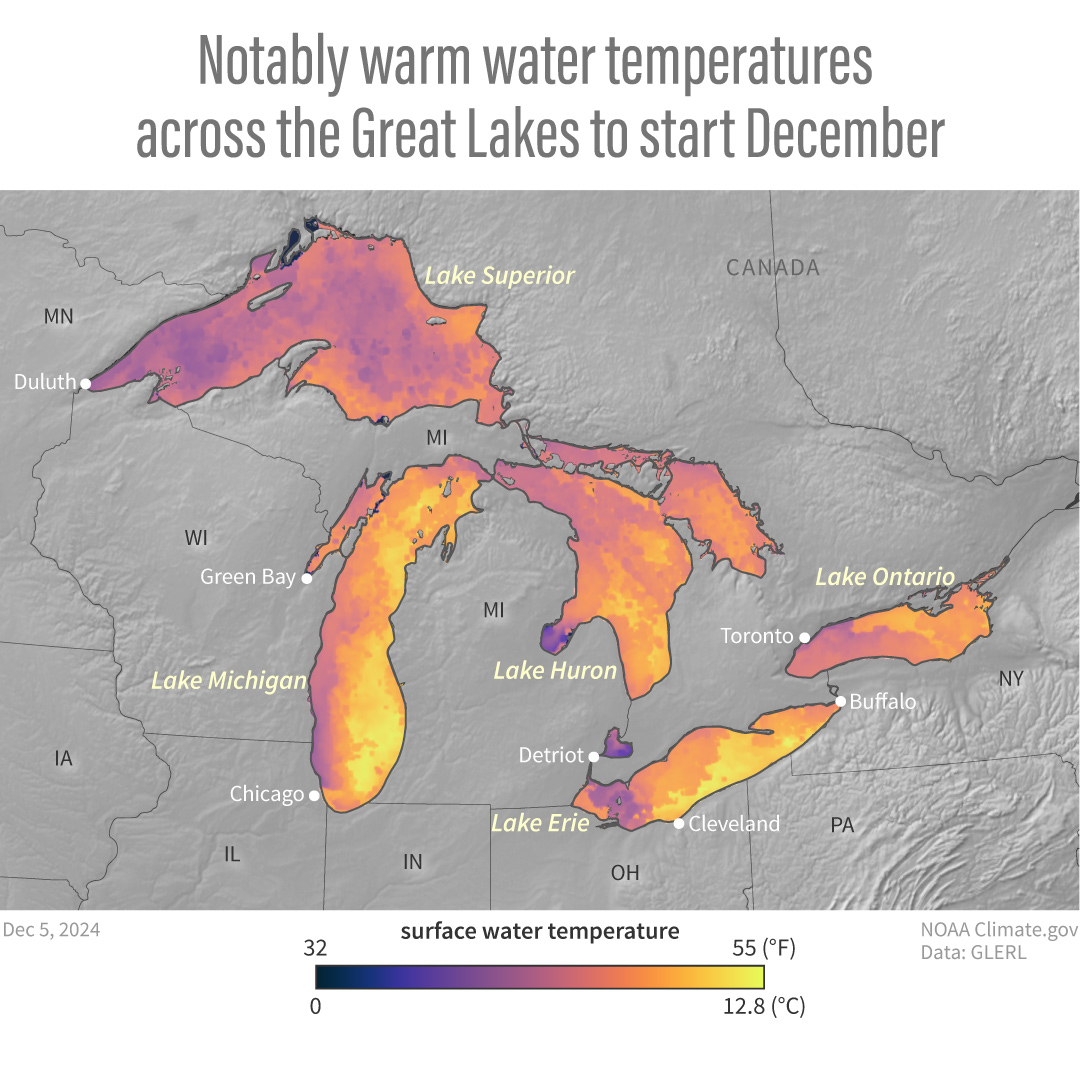
A warm fall and a notably warm 2023-2024 winter has water temperatures across most of the Great Lakes at record-highs. Could these record temperatures impact ice cover again this year? Read more: https://t.co/E0RBgwu7dN
What is #blackcarbon and how is it different from greenhouse gases?
Learn about black carbon from Professor of Civil & Environmental Engineering and Director of the Atmosphere and Energy Program at @Stanford, Mark Jacobson.
#climate#sustainability#globalwarming
With sweeping implications for climate change, health and agriculture, tropospheric ozone contributes 0.23°C of global warming. It’s time for urgent and immediate global action to address the dangerous super pollutant.
🌐Read the full report: https://t.co/0mYY0eCebf
Tropospheric ozone is one of the super pollutants driving half of global warming 🤯🌎
Yet dedicated action to reduce it is absent from the climate policy agenda at a global, regional, and country level.
Read @CleanAirFund new policy brief here⬇️ https://t.co/8w48RsMsus
"This is the other half of warming that we have put to the side & not put so much attention on." 🔍 Why is focusing on #methane & other super pollutants key to tackling #climatechange? 🦹 @MartinaOtto, @CCACoalition told us more at #COP29 in #Baku
More: https://t.co/VVJ3nApPqo
N2O (nitrous oxide) is no longer a forgotten super pollutant.
“Abating N₂O emissions could avoid up to 235 billion tonnes of CO₂-equivalent emissions by 2100,” said David Kanter, Associate Professor of Environmental Studies at NYU and Co-Chair of the Assessment.
N₂O is currently the most significant ozone-layer depleting substance being emitted to the atmosphere, equal to all other current ODS emissions.
Ambitious abatement could have 5x the benefits provided by the Montreal Protocol accelerated phase-out of HCFCs by 2100.
Global Nitrous Oxide Assessment Report: https://t.co/420YeTFyuE
Press release: https://t.co/9gGPa66PNe
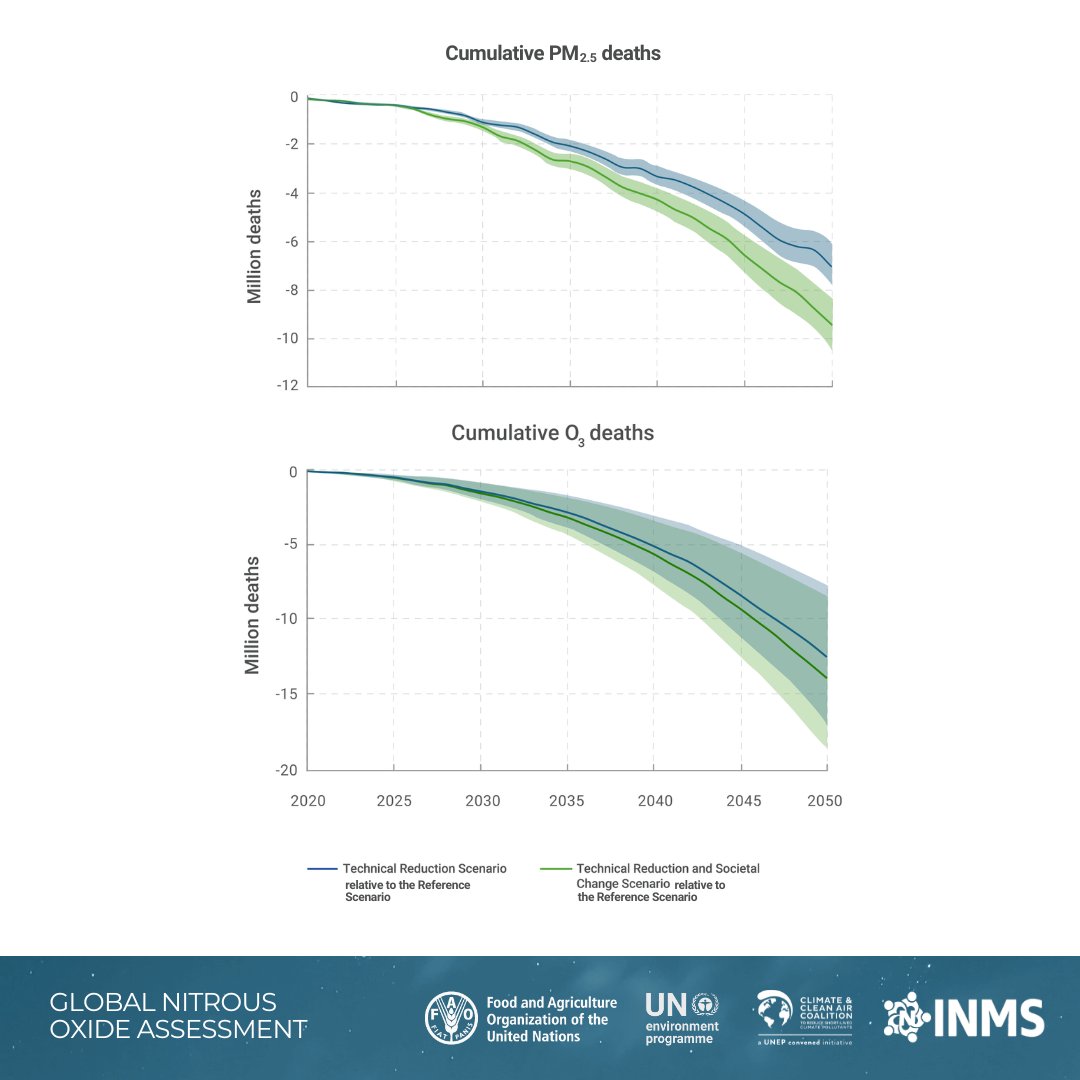
Ambitious abatement of N₂O emissions could contribute to saving 20 million lives by 2050 through improved air quality.
Global Nitrous Oxide Assessment Report: https://t.co/Gd5EJdCLIm
Press release: https://t.co/3LWjt4JLSD
🚨Once again, we are sending out a Red Alert.
📈The #StateOfClimate update at #COP29 confirms that 2024 is on track to be the hottest year on record—hotter even than 2023, which smashed all previous records.
🔗 Full update: https://t.co/IRzRXXGPhl
Watch a panel of experts discuss the three crucial methane imperatives needed to reverse rising emissions, slow global warming, and achieve climate goals to mitigate harmful health and agricultural impacts upon the world.
Watch now: https://t.co/0X3NG3MoTs
#FrontiersForum
Our climate registry focuses on projects that decrease super pollutants, offering the only credits on the market focused on reducing excess planetary heat in the crucial near-term.
Learn more: https://t.co/z0VEei8272.
#climatesolutions#VCM t #sustainability
At #COP29, governments and a coalition of NGOs announced the #Methane Abatement Partnership Roadmap.
Credible data and frameworks provided by @UNEP’s IMEO will be essential to #CutMethane through transparency and accountability.
https://t.co/5js477IfJX
Tropospheric ozone is one of the super pollutants driving half of global warming 🤯🌎
Yet dedicated action to reduce it is absent from the climate policy agenda at a global, regional, and country level.
Reducing tropospheric ozone has untapped potential to mitigate the impact of human-induced #ClimateChange.
It could also deliver cleaner air, reduce premature deaths and save billions in economic costs.
Read our new policy brief with @CleanAirInst@cleanaircatf@Hill_Consulting ⬇️
https://t.co/OWfvIjqdM1
#COP29 #ClimateAction
Did you know that Nitrous Oxide is incredibly more potent than carbon dioxide in terms of warming the planet? The Global Nitrous Oxide Assessment, released this week, makes it clear that we must take urgent action to reduce N2O in order to slow global warming.
#climateaction #sustainability #climatesolutions
Nitrous oxide is currently the most significant ozone-layer depleting substance being emitted into the atmosphere.
The Global Nitrous Oxide Assessment shows that proactively tackling N₂O would also support the continued recovery of the ozone layer, helping to avoid a future in which much of the global population is exposed to harmful UV levels.
Press Release: https://t.co/ss1RL7Fs48
Global Nitrous Oxide Assessment Report: https://t.co/X2x0JxoZvS
Keeping a close eye on the climate super pollutant developments during the UN climate negotiations at @COP29_AZ. Rick Duke from the US Dept of State emphasized that focusing on climate super pollutants was a key gap in our climate policy, that is now being addressed so we can hit the "climate emergency brake" on warming in the near term.
Highlights from @COP29_AZ November 13 — The Other Half of Warming: Climate Super Pollutants
Join us for talks on the role of governments in raising ambition and action on climate super-pollutants.
Speakers:
Rick Duke, Deputy Special Envoy for Climate, U.S. Department of State
@DurwoodZaelke, President, @IGSD_DC@davidrkanter, Associate Professor of Environmental Studies, New York University
@MartinaOtto, Head of Secretariat, @ccacoalition, UNEP
Organizers:
@WeDontHaveTime
US Government
Watch the full session here: https://t.co/lxso7KYLfh
Follow all sessions from COP29 on: https://t.co/vxQRdiDXP7
Taking ambitious action to reduce N₂O emissions could help prevent up to 20 million premature deaths globally by 2050 due to poor air quality, and avoid the equivalent of up to 235 billion tonnes of carbon dioxide emissions by 2100.
Report: https://t.co/zCp5Ba6BMd
Press release: https://t.co/9gGPa66hXG
A.R. Ravishankara, Chemist and atmospheric scientist, Colorado State University & @davidrkanter, Associate Professor of Environmental Studies at NYU & Co-Chairs of the Global Nitrous Oxide Assessment speak about nitrous oxide and its impacts.
The GHR protocol is the only approach that includes all drivers of climate change - not just carbon dioxide and other greenhouse gases, but also super pollutants, albedo, and more.
Learn more from leading US climate scientist Dr. Drew Shindell. https://t.co/LfsnDIH9lH