The victim has every right to respond to the aggressor. Iran's response is more than adequate. Israel and the US are responsible for the deaths of civilians. 🇮🇷🇮🇱 🇺🇸
@Suriyakmaps
https://t.co/kJQN3gim4q
The victim has every right to respond to the aggressor. Iran's response is more than adequate. Israel and the US are responsible for the deaths of civilians. 🇮🇷🇮🇱🇺🇸
The Sumy-Kharkiv highway has also been under heavy attack since late April. This route is vital for Ukraine because it connects two key border regions and is used to rotate troops and supplies in a sector where Russia is maintaining pressure with advances aimed at creating a buffer zone. Russia is using inexpensive, EW-resistant drones to attack military convoys heading toward the front lines, as well as energy and ammunition depots.
Meanwhile, Putin publicly stated in early June that Russia will improve and strengthen its air defense system to counter Ukrainian medium-range drones. They are redeploying air defense systems and radars to key logistics routes. This has already been happening in recent months, in addition to using alternative routes (which are longer and more vulnerable) or moving supply depots away from the front lines, which has reduced the effectiveness of their advances compared to last year. At the same time, countermeasures against drones such as the Hornet are being implemented, including more radars, drone interceptors, and advanced EW. However, these deployments require at least six months, so changes will not be visible until the end of the year.
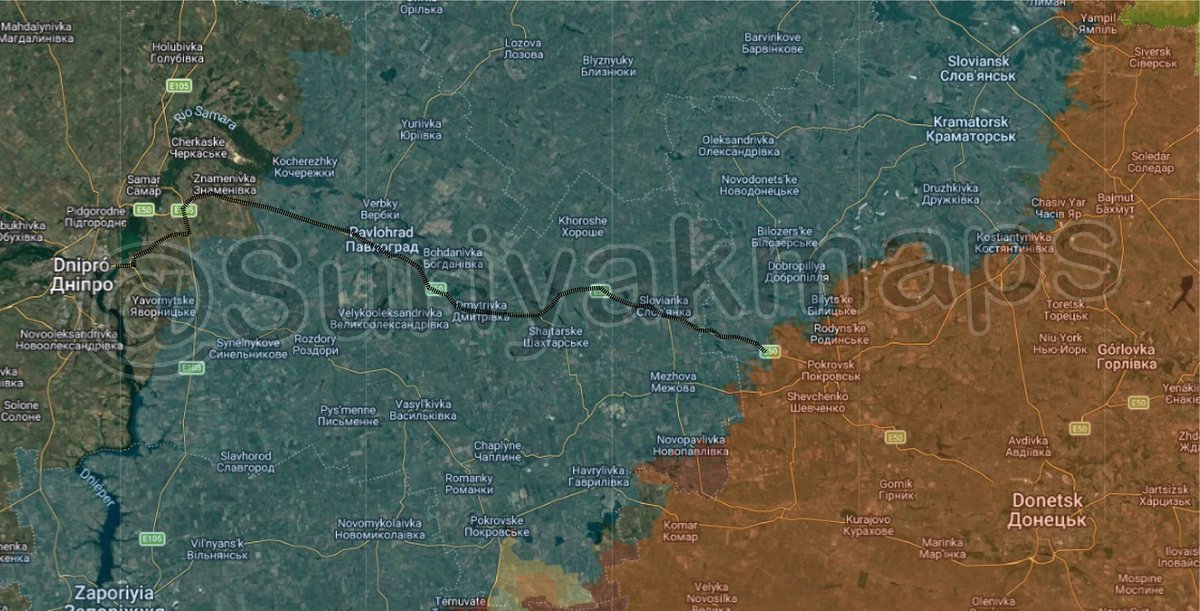
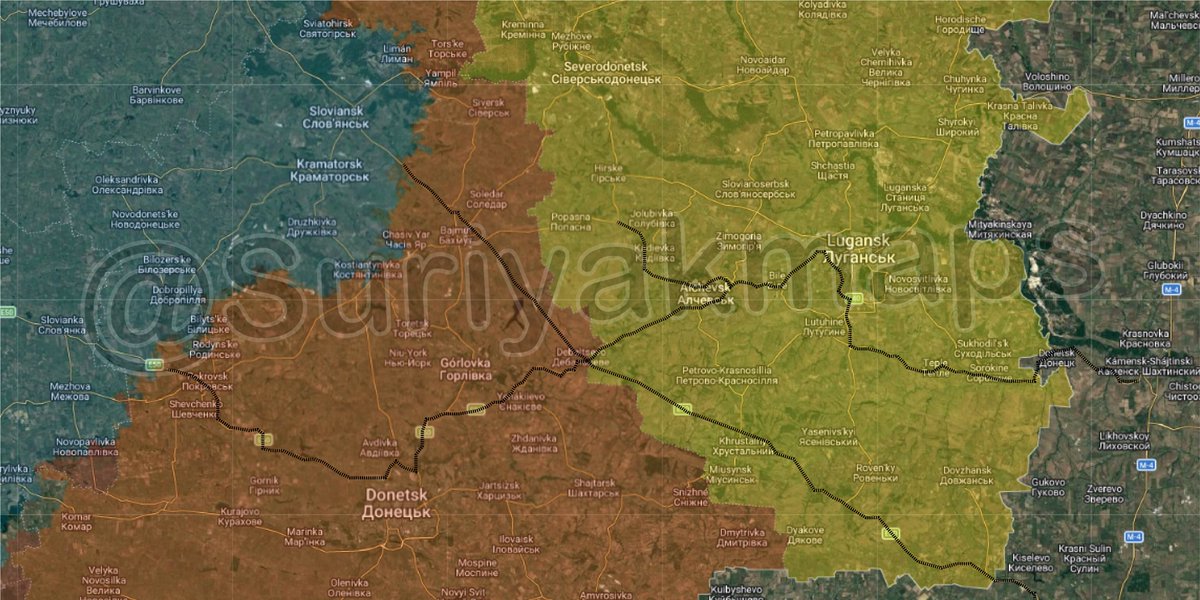
In addition, the Russian military has also begun attacking Ukrainian logistics routes with greater intensity, specifically the Pokrovsk-Pavlohrad highway. Unlike Ukraine, the Russians have been using low-cost FPV drones such as the Molniya and mother drones to attack trucks, fuel tanks, buses, armored vehicles, and engineering equipment since January. This has allowed them to create a “death zone” north of Pokrovsk, which significantly complicates the Russian army’s supply lines to Dobropillya and Andronivka, straining Ukrainian resources to hold the front there.
On June 5, during the 27th St. Petersburg International Economic Forum, Russian President Vladimir Putin made the following remarks:🇷🇺🇺🇦
“Russia will undoubtedly achieve the liberation of the entire Donbas.
Hostilities will eventually come to an end, and they will end once Russia has achieved the objectives it has set for itself.
The implementation of certain goals, such as denazification, will be pursued through negotiations, and Moscow is counting heavily on the assistance of the international community.”
As I mentioned earlier this year, the war will likely end once the Donbas has been completely taken by Russia. This would prolong the war for at least two more years, resulting in hundreds of thousands of additional deaths on top of the approximately half a million that will have already occurred. Whether it is the armistice line or the new borders, that will be the situation on the front at that time. Anyone hoping for maximalist solutions such as Novorossiya or the Dnieper as the new border is in for a major disappointment.
Supply routes have become death routes. Is this the end of Russia’s current pace of progress of 2024–2025? 🇺🇦🇷🇺
By late 2025, the Ukrainian military—which had been ramping up its drone production and testing “middle strike” capabilities—began significantly increasing its attacks on Russian logistics, including trains, depots, and convoys in occupied areas. From isolated attacks with longer-range drones, the introduction of the Hornet drone (equipped with AI and fiber optics) coincided with Ukraine beginning to more actively strike railways and key routes in Donetsk, Zaporizhzhia, Kherson, and Crimea from the rear toward the eastern and southern fronts.
The IDF reports that the Houthis launched two more ballistic missiles at Israel this morning. One reportedly failed in flight, while the other was intercepted outside Israeli airspace.
Tonight, Iran’s response was met with a huge public outpouring of support in Iran, but also in Lebanon, particularly in the Shia-majority areas, which have been hardest hit by Israeli attacks over the past three months. 🇮🇷🇱🇧
Iran's second retaliatory attack on Israel consisted of at least 8 ballistic missiles, launched from central, northern, and northwestern Iran. The Houthis in Yemen launched 1 missile as well.
So far, since the beginning of Israel's retaliatory attacks against Iran, 12 ballistic missiles have been launched, including 8 from Iran and 4 from Yemen. Central Israel was targeted by 5 missiles, southern Israel was targeted by 5 missiles, and Prince Sultan Airbase in Saudi Arabia was targeted by 2 missiles.
Only one impact has been confirmed, in an open area of the West Bank. Most missiles were intercepted by Israeli, Jordanian, and Saudi air defence.
The map below shows the approximate flight routes of the missiles launched.
Events appear to be cooling down in the Middle East for the time being.
Iran's Khatam Al-Anbiyaa Central HQ announced that their strikes have concluded for now, but that if Israel continues to attack Lebanon or Iran, it will respond with strikes.
Israeli media seems to believe that Israel has also halted attacks against Iran for the time being, and there have been no additional security alerts or news.
Trump and Netanyahu have held another phone call, according to Israeli Channel 12. Trump issued a statement saying that both sides are "looking to do an immediate ceasefire", but that the blockade of the Strait of Hormuz will remain in place until a "final deal" is reached.
Following the Iranian threat that any repeated Israeli attacks on Lebanon would be met with another Iranian attack on Israel, the Israeli Air Force began another wave of airstrikes on southern Lebanon.