Glaciers, Geomorphology, Paraglacial, Remote Sensing, UAV, GIS, Photography. ...and of course... tweets are not mine – they live their own modest lives
5/5 UAVs provide a significant advantage over high-res satellite data - Our cm-scale elevation models and orthomosaics captured changes invisible to satellites #DEM#GIS#RemoteSensing
Thank you @NCN_PL for funding the research and IDUB @UAM_Poznan for covering OA fees!
1/5 Drones and alluvial fans – in a study led by Aleksandra Tomczyk and published in Catena, We used time-series of UAV data to map & quantify annual changes in periglacial alluvial fans in Svalbard: https://t.co/Q5Y8dFh3My #Geomorphology#UAV#ArcticResearch#WNGIG@UAM_Poznan
4/5 Permafrost degradation plays a massive role: We observed significant ground collapse linked to thermoerosion in most of the studied fans. This process highlights the critical impact of warming on Arctic stability #Permafrost#Geomorphology
One week left!: PhD Opportunity in in recreation ecology, geomorphology, and GIS is available at AMU Poznan, Poland, within the project: “Geomorphological effects of tourism and recreation: quantification and monitoring of trail impacts in mountain areas”: https://t.co/0LUPnUilI1
We invite applications from candidates interested in tourism and recreation, GIS, geomorphology and remote sensing. Applicants must hold a Master's degree at the time of document submission.
PhD candidates are enrolled at Adam Mickiewicz University (AMU) Doctoral School of Natural Sciences (https://t.co/juSzISdn0Q), which provides education, contact with other PhD students and opportunities to gain additional skills (courses are taught in English).
In this project, we will develop and test a novel framework for high-resolution mapping and monitoring of recreational impacts in mountain areas to derive spatially coherent information about indicators of recreational trail conditions.
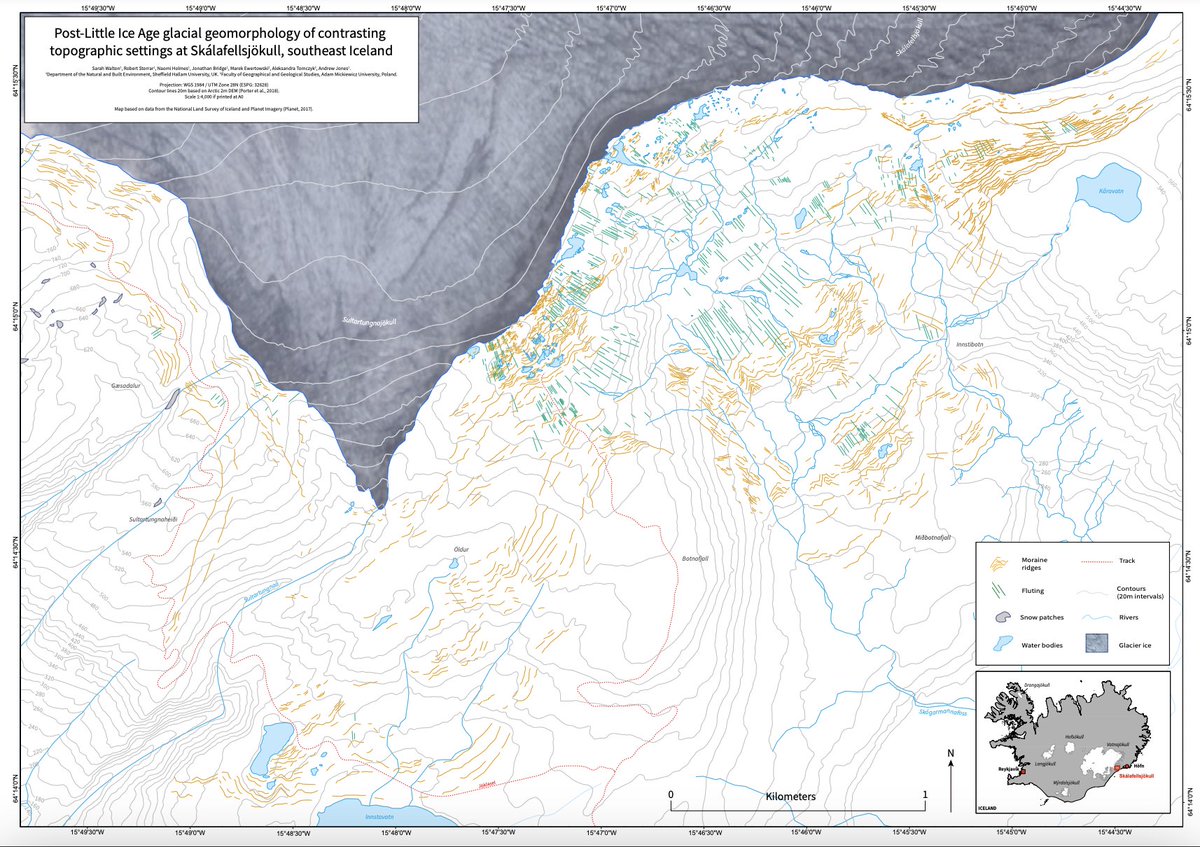
"Post-little ice age glacial geomorphology of contrasting topographic settings at Skálafellsjökull, southeast Iceland" by Walton et al.
@Geog_sarah, @DrNaomiHolmes, @GIS_Geomorpho
Full open access article here: https://t.co/Ain3LtvlZw
The 5th PalaeoArc Conference will be held between May 27-29, 2024 in Stockholm, Sweden. Details will be available at the start of January. In the meantime please save these dates, and spread the word to your colleagues and students. https://t.co/Ce8RuWaRI0 @PalaeoArc
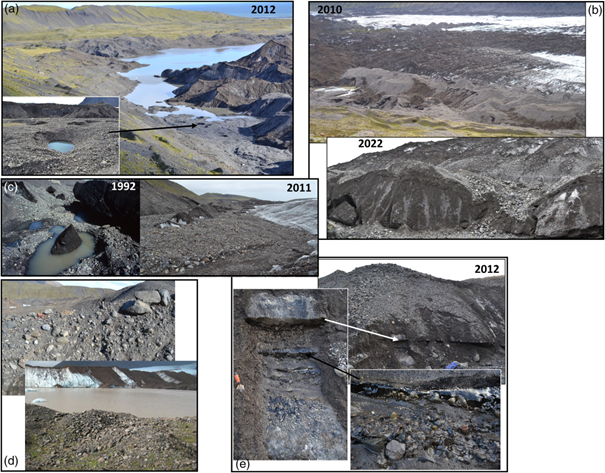
@UAM_Poznan@GeogDurham The gradual evolution of largely chaotic hummocky terrain (formed not only by supraglacial debris cover but also glacitectonic), outwash fans/heads and complex englacial esker networks is an important modern landsystem analogue for informing palaeoglaciological reconstructions
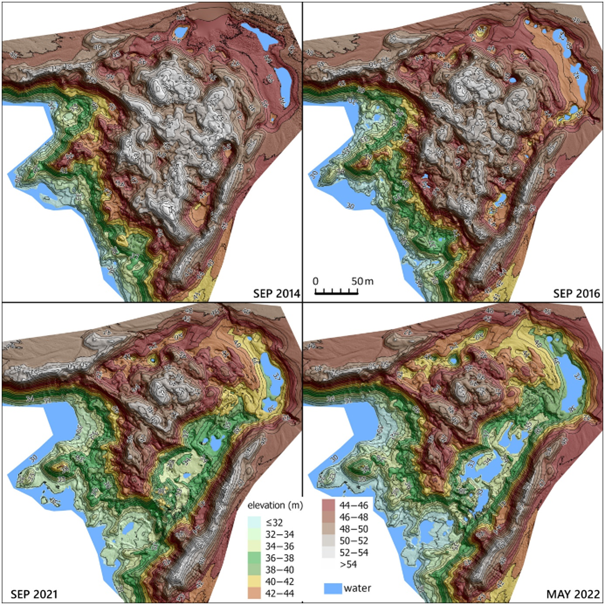
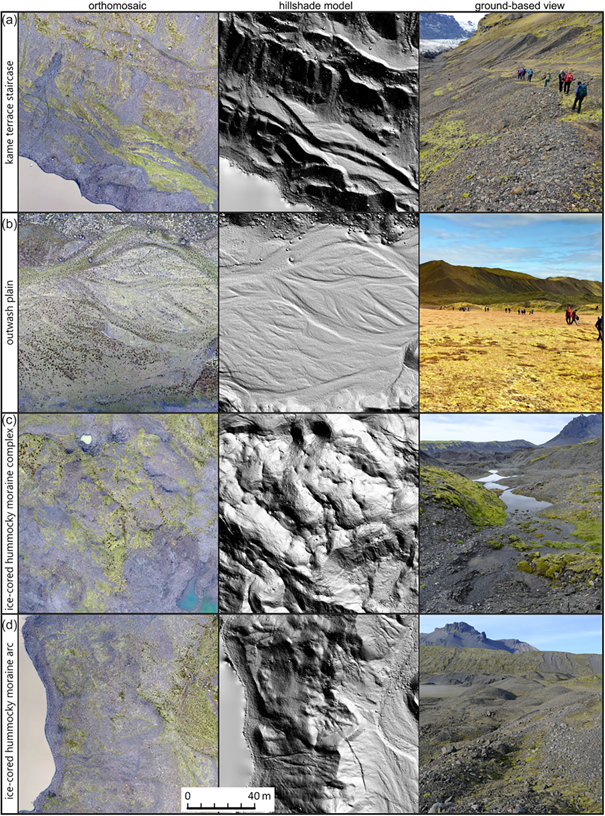
1/5 New paper about short-term dynamics of proglacial landforms at Kvíárjökull, SE Iceland by @UAM_Poznan PhD student Szymon Śledź, Dave Evans (@GeogDurham) and myself published in Land Degradation and Development https://t.co/XievxIgAXG #GlacialGeomorphology#Iceland
@UAM_Poznan@GeogDurham 4/5 The average annual change in volume as derived from land surface lowering ranged from −0.06 m a−1 in a relatively stable area of kame terrace staircase to −0.82 m a−1 for the ice-cored hummocky moraine complex.
@UAM_Poznan@GeogDurham 3/5 Compared with long-term research in this foreland since 1945, our results confirm the ongoing degradation of ice-cored moraine and outwash complexes visible and quantifiable by using land surface collapse, at variable rates related to buried ice volume and age of deglaciation
@UAM_Poznan@GeogDurham 2/5 Drone data (2014-2022), historical aerial photographs (1945-2003) and satellite images (2011-2022) combined with several seasons of fieldwork have been used to quantify changes in the proglacial landscape of Kvíárjökull – a temperate glacier in SE Iceland.
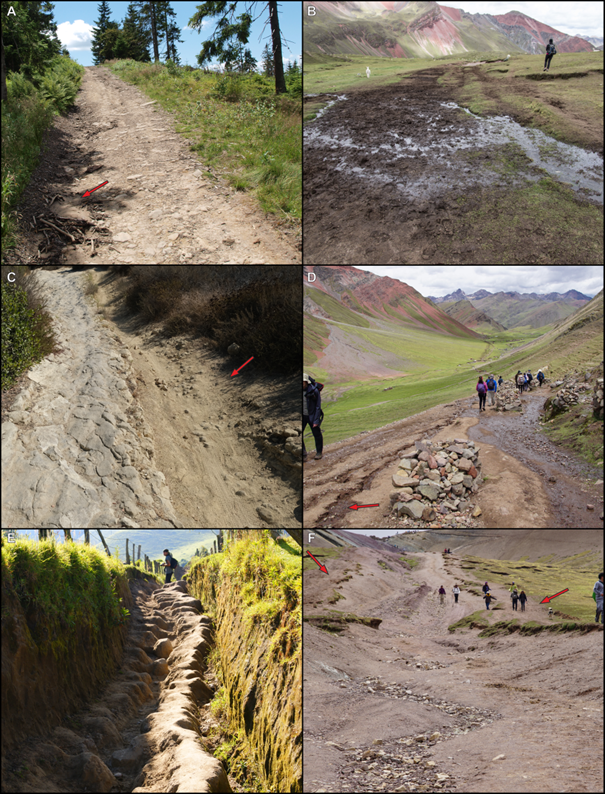
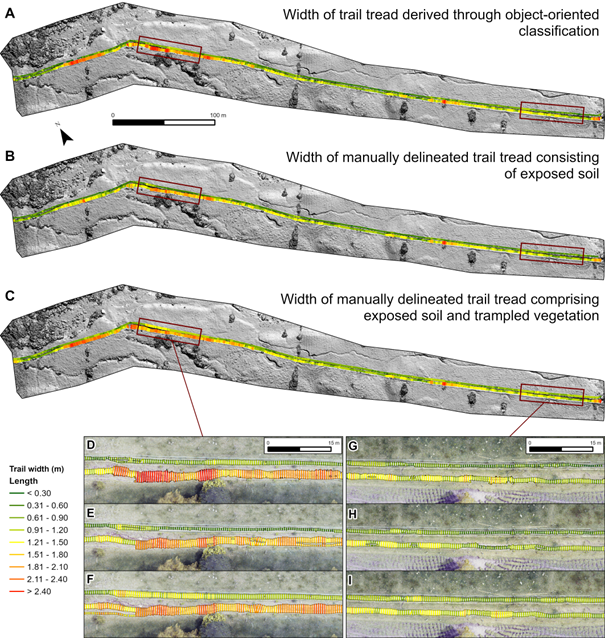
5/5 The paper is entitled: “The application of unmanned aerial vehicle (UAV) surveys and GIS to the analysis and monitoring of recreational trail conditions,” and the full text (open access) can be found here: https://t.co/lorks5NWcu
1/5 Drones and recreational trails: Our new study led by Aleksandra Tomczyk has been just published in the International Journal of Applied Earth Observation and Geoinformation: https://t.co/R3V7j8aSKx #recreationEcology#UAV#GIS
4/5 The study was a collaborative effort by Noah Creany & Chris Monz (Utah State University), Francisco Javier Ancin-Murguzur (UiT-The Arctic University of Norway), Aleksandra Tomczyk & myself (Adam Mickiewicz University).