The first and only Global South-led health diplomacy initiative to support the attainment of the 2030 SDGs on women's, children's and adolescent's health.
Every year, around 260,000 women die from complications in pregnancy and childbirth, close to two million babies are stillborn, and almost five million children die before their fifth birthday, nearly half of them in the first month of life.
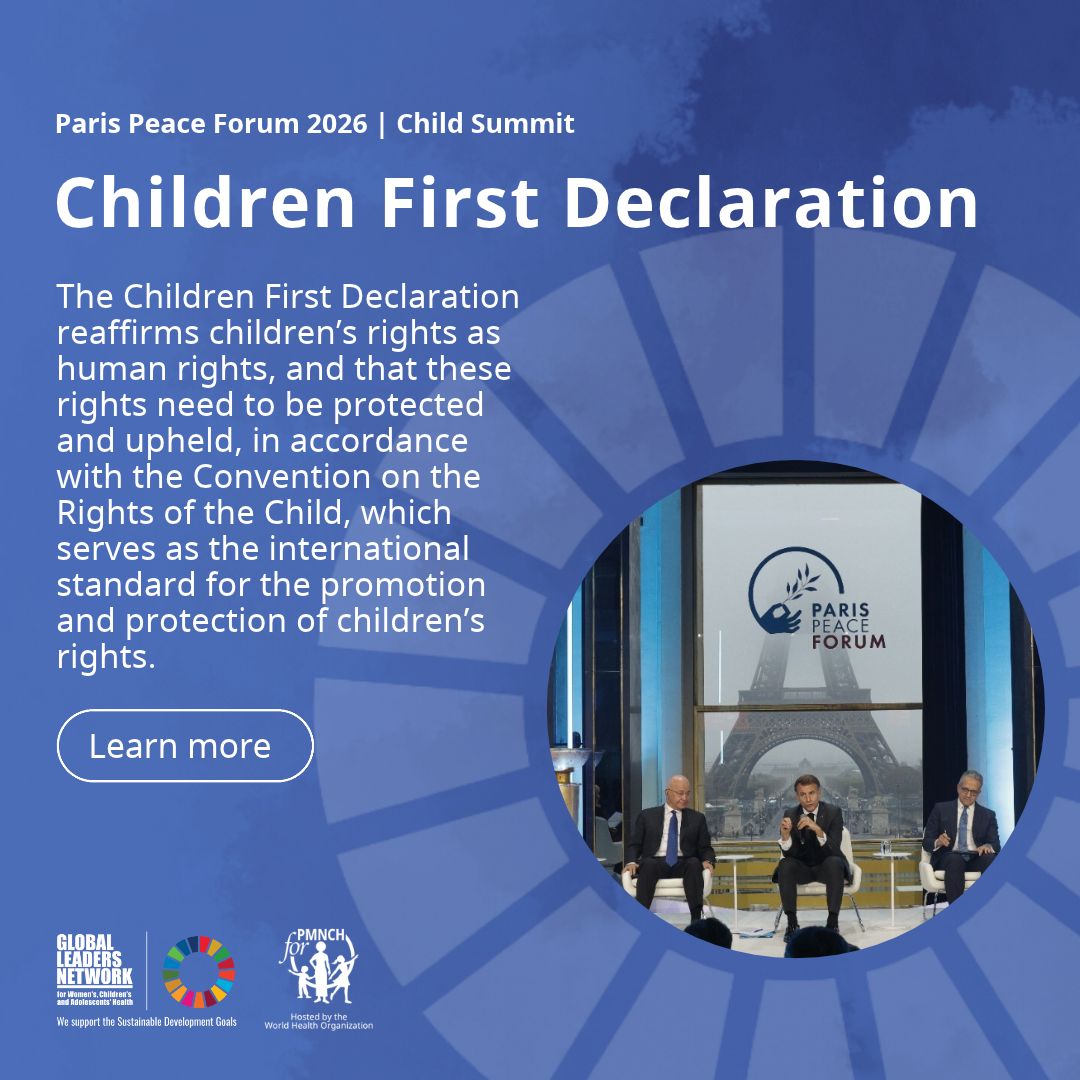
At the Paris Peace Forum’s Child Summit yesterday, 57 countries, UN agencies and partners endorsed the Children First Declaration, pledging to halve major shortfalls in child well-being by 2045. Signatories include six GLN countries: France, Kenya, Somalia, South Africa, Spain and Tanzania.
Spanning health, nutrition, education, protection and digital safety, the Declaration reflects long-standing GLN priorities:
🔹 Country-led action, with public budgets and external financing aligned behind national priorities.
🔹 Maternal, newborn and child health, supported by skilled birth attendance, strong primary health care and community health workers.
🔹 Continuity of care through adolescence, including sexual and reproductive health and rights.
🔹 Accountability for progress, with clear national reference points for maternal, newborn and under-five mortality.
The focus now turns towards translating commitments into stronger national policies, sustainable financing and measurable results for women, children and adolescents.
Read the full Declaration: https://t.co/1TDuCeFMkY
#ParisPeaceForum #PPF2026 #ChildSummit #ChildrenFirstDeclaration
“Child and adolescent wellbeing is a core business priority. We see this not as expenditure, but as an investment, not only in health, but in the economy itself.” — Hon. Dr Aaron Motsoaledi, South Africa’s Minister of Health.
At the Paris Peace Forum roundtable launching the Action Hub for Children, Minister Motsoaledi outlined three proposals from South Africa to the Hub’s founding partnership:
🔹 A First 1,000 Days Corporate Compact to connect food producers, retailers and logistics companies with public health networks, improving access to fortified foods and micronutrients and helping reduce child stunting.
🔹 An Adolescent Health and Human Capital Dividend Accelerator to finance adolescent health and school retention programmes through outcome-based contracts and social impact bonds.
🔹 Stronger corporate accountability, encouraging businesses to measure and disclose how their products, marketing and investments affect children’s health and wellbeing.
He also highlighted how the Action Hub and the GLN’s Financial Diplomacy Series could complement one another in mobilising results-based financing for adolescent health and school retention, helping young people remain in education and move into training and decent work.
#ParisPeaceForum #PPF2026 #ChildSummit #ActionHubForChildren #ChildWellbeing #WCAH
“Twenty-five years ago, we were losing 11 million children a year. Now it’s around 4.9 million. Can’t this be a motivation not to decrease our investment, and actually invest more to maintain the gains?”
On Day 1 of the Paris Peace Forum’s Child Summit, WHO Director-General Dr Tedros Adhanom Ghebreyesus warned that hard-won gains in child survival are at risk as budgets tighten and global priorities shift. He delivered this message during the high-level session, “Children First: A Global Commitment to Child Wellbeing.”
Dr Tedros called on countries to set their own priorities and lead investment decisions, with international support complementing national efforts. Protecting children, he said, starts with the mother during pregnancy, continues through the newborn’s first month and extends across the first 1,000 days of life.
#PPF2026 #ChildSummit #ParisPeaceForum @ParisPeaceForum
“Child protection is at the heart of public policy. Over the past decade, we have developed a national strategy that prioritises protecting children and vulnerable people.” — H.E. President Bassirou Diomaye Faye, Senegal
On Day 1 of the Child Summit at the Paris Peace Forum, President Faye joined fellow Heads of State and leaders from international organisations, business, science, philanthropy and civil society in the high-level session “Children First: A Global Commitment to Child Wellbeing”.
As one of the Global Leaders Network (GLN) Heads of State championing women’s, children’s and adolescents’ health, he shared how Senegal built a national strategy that combines judicial protection for minors with community-based networks that identify children at risk early and keep them safe from violence.
That commitment extends to health, with large-scale, structured investments in maternal and infant health that give children the strongest possible start in life.
#PPF2026 #ChildSummit #ParisPeaceForum #ChildProtection #WCAH #Senegal @ParisPeaceForum
“When we look at the international situation today and say we have to make children a priority, not only is it a moral imperative, but it’s also an investment.”
Speaking at the Paris Peace Forum’s high-level session “Children First: A Global Commitment to Child Wellbeing”, French President H.E. Emmanuel Macron highlighted the strong returns on investing in children’s health, nutrition, education and protection, with experts estimating that every €1 yields €7, and warned that the cost of inaction is far greater.
He also called for continued international support for primary health care, immunisation, maternal and child health, nutrition and education, and for safeguards such as pre-certification of AI tools to protect children in the digital world.
France joined the Global Leaders Network (GLN) in September 2026, and President Macron’s remarks reinforce the Network’s argument that investing in the health of women, children and adolescents is one of the best decisions a government can make, with proven returns.
#PPF2026 #ChildSummit #ParisPeaceForum #InvestInChildren #WCAH
“We often talk about investing in future generations. But children are living today.”
At the Paris Peace Forum’s high-level ministerial roundtable, “Children First: Making the Case for Investing in Children”, Tanzania’s Minister of State in the Prime Minister’s Office, Hon. Prof. Palamagamba Kabudi, shared how sustained national investment in children’s health and nutrition is delivering results.
Between 2015/16 and 2021/22, under-five mortality fell by about 36%, from 67 to 43 deaths per 1,000 live births. Tanzania has also expanded its neonatal care capacity from 14 functioning units in 2018 to 438 today, and trained nearly 24,000 maternal and child health workers. While progress is significant, persistent neonatal mortality and child malnutrition remain key challenges requiring further investment.
Under the leadership of H.E. President Samia Suluhu Hassan, African Union Champion for Maternal and Child Health and a member of the GLN, Tanzania is now scaling up universal health coverage (UHC) following legislation passed in January 2026.
Its progress shows what is possible when UHC and sustained national investment prioritise women, children and adolescents.
#PPF2026 #ParisPeaceForum #ChildSummit #ChildrenFirst #WCAH #UHC #Tanzania
During the high-level ministerial roundtable at the Paris Peace Forum, “Children First: Making the Case for Investing in Children”, Somalia’s Deputy Prime Minister, H.E. Salah Ahmed Jama, called for more consistent and predictable financing as the country strengthens domestic resources and increases investment in children’s health and well-being.
He highlighted the scale of the challenge facing Somalia, where more than one million children are affected by malnutrition, including nearly half a million experiencing severe malnutrition. Despite making child nutrition and health a national priority, the government faces significant resource constraints, with insecurity, displacement and climate impacts placing further pressure on its response.
The Deputy Prime Minister outlined Somalia’s whole-of-government approach to child well-being, including social protection programmes, and called on partners to align their support with national priorities.
As a GLN member, Somalia reinforces the Network’s collective commitment to increasing investment in women’s, children’s and adolescents’ health (WCAH), and to ensuring that financing, partnerships and health system strengthening respond to country priorities.
#ParisPeaceForum #ChildSummit #HealthFinancing #Somalia
“When there is no universal health coverage, where people have to pay from their own pockets to receive help, it is women and children who suffer.”
Speaking at the Paris Peace Forum’s Child Summit, South Africa’s Minister of Health, Hon. Dr Aaron Motsoaledi, highlighted domestic resource mobilisation (DRM) and universal health coverage (UHC) as essential to building sustainable health systems and protecting those most at risk of being left behind.
His message echoes the Global Leaders Network’s (GLN) priorities to:
🔹 Put women, children and adolescents at the centre of UHC policies to end preventable deaths and improve health and well-being.
🔹 Increase sustained investment in WCAH, supported by domestic resources, innovative financing and stronger partnerships.
#PPF2026 #ChildSummit #WCAH #UHC #HealthFinancing @ParisPeaceForum@PMNCH
The climate crisis is a health crisis, and women, children and adolescents are among the first and hardest hit. Extreme heat raises the risk of preterm birth and stillbirth. Floods, droughts and displacement cut off antenatal care, skilled birth attendance, immunisation and nutrition services when they are needed most.
As leaders gather from 9–20 November for #COP31 in Antalya, Türkiye, the Global Leaders Network calls on governments and partners to:
✅ Recognise women, children and adolescents as a priority population in climate risk and resilience planning
✅ Protect sexual, reproductive, maternal, newborn, child and adolescent health services as essential and life-saving in every climate and humanitarian plan
✅ Invest in climate-resilient health systems, food systems and cities, supported by a trained and protected health workforce
✅ Ensure the meaningful participation of young people in climate decision-making processes at local, national and global levels
Those who contributed least to the climate crisis must not bear its heaviest burden.
📄 Read the key messages to help drive action and accountability at #COP31:
🔗 https://t.co/MQDguJX0Sm
#ClimateIsHealth #MaternalHealth #ChildHealth
As discussions on global health architecture (GHA) reform continue to advance, women’s, children’s and adolescents’ health (WCAH) must remain central in shaping the way global health institutions, governance and financing evolve.
A more coordinated architecture should support country-led priorities, strengthen national health systems, safeguard essential services and uphold the rights and needs of women, children and adolescents, including SRHR.
At #PPF2026, GLN will continue to advocate for a global health architecture that is responsive to country needs and delivers measurable progress for WCAH.
Explore the key advocacy messages and join efforts to keep WCAH at the centre of global health and financing reform
🔗https://t.co/r5GbnXi5c6
#PPF2026 #ChildSummit #ParisPeaceForum #ChildWellbeing #WCAH #HealthFinancing
📣 HAPPENING NEXT WEEK | Paris Peace Forum
The 9th Paris Peace Forum takes place on 10–11 November, with the Child Summit bringing governments and partners together across both days to advance a holistic approach to children’s health and well-being.
For the Global Leaders Network (GLN), every child’s chance to survive, thrive and reach their full potential depends on sustained investment in health across the life course.
Child and Maternal Health is one of the five pillars of the Child Priority Framework, which recognises the importance of safe births, essential healthcare and maternal health services in shaping children’s futures. The discussions will also offer an opportunity to consider the wider continuum of women’s, children’s and adolescents’ health, including sexual and reproductive health and rights (SRHR).
Throughout the Forum, GLN will highlight the political leadership, sustained investment and systems needed to deliver measurable health outcomes for women, children and adolescents.
#PPF2026 #ChildSummit #ParisPeaceForum #ChildWellbeing #WCAH #GlobalHealth
As the global health architecture (GHA) evolves, safeguarding SRHR and ensuring equitable access to essential services must remain a priority. On the margins of #WHS26 in Berlin, the governments of Spain and South Africa, as GLN Chair, hosted a high-level roundtable with support from @PMNCH and WHEN.
Governments, global health initiatives, funders and civil society explored how reform can strengthen national health systems, sustain investment in SRHR and ensure that the needs of communities inform national health priorities and decisions.
Key outcomes emerging from the discussion included:
🔹 Keeping SRHR on the agenda of GHA reform efforts, including the WHO-hosted Joint Task Force (JTF) on GHA reform.
🔹 Embedding SRHR in national health systems and universal health coverage, while safeguarding the full range of essential services.
🔹 Placing equity at the centre of reform and addressing barriers faced by vulnerable and marginalised populations.
🔹 Strengthening domestic financing and regional capacity, including through regional manufacturing of SRHR commodities.
🔹 Ensuring meaningful civil society participation in shaping national priorities, informing service delivery and holding health systems accountable.
Read more: https://t.co/yRBcFspQrx
📢 HAPPENING TODAY
On the margins of the World Health Summit, the governments of South Africa and Spain, together with the GLN, the Partnership for Maternal, Newborn and Child Health (PMNCH), the Nexus Initiative and the Women’s Health Empowerment Network (WHEN), will co-host a high-level roundtable on safeguarding sexual and reproductive health and rights (SRHR) during global health architecture reform.
Building on the political commitments advanced at the 79th World Health Assembly, the discussion will contribute to the ongoing reform discussions ahead of WHA80.
The roundtable will bring together a cross-regional group of government and organisational representatives who play leading roles in the global health architecture reform processes and advancing SRHR.
#WHS2026 #GlobalHealth #SRHR
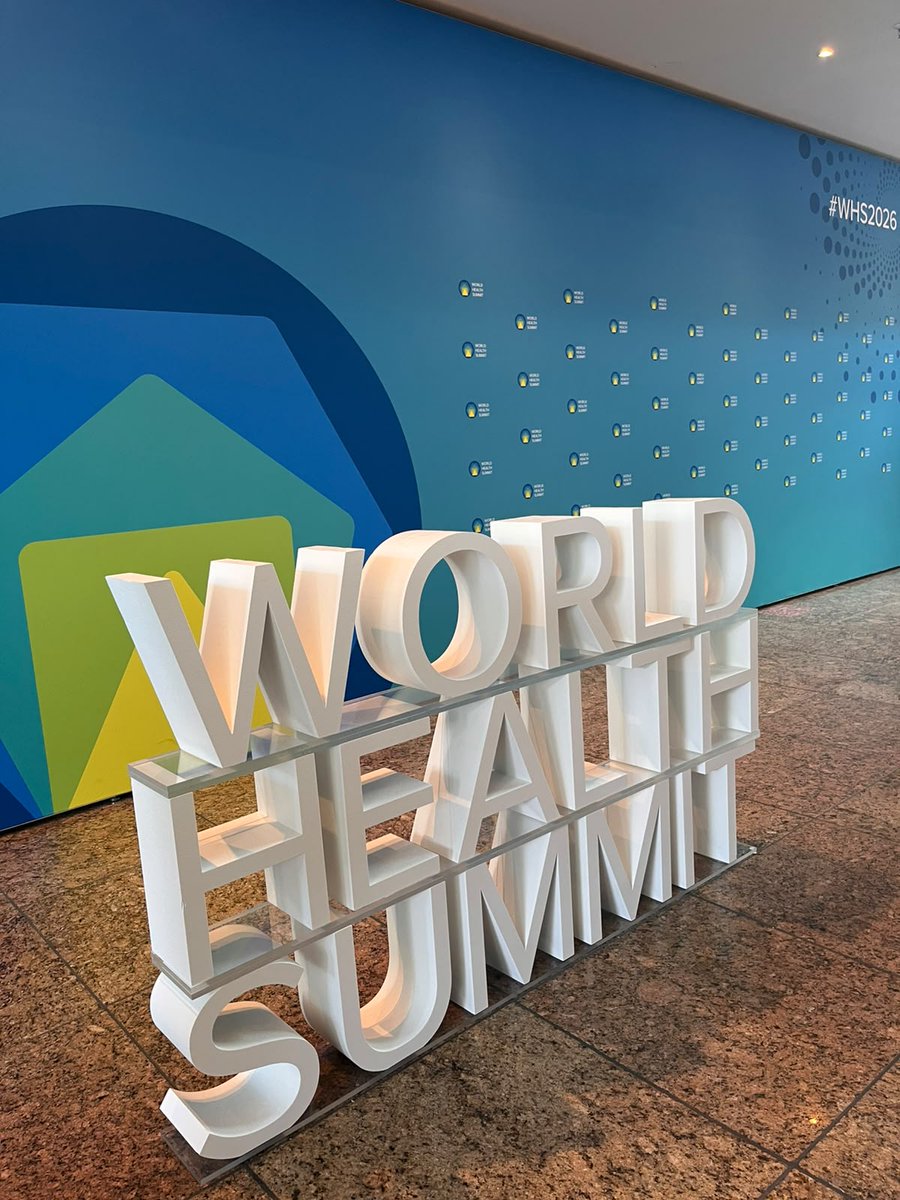
The Global Leaders Network for Women’s, Children’s and Adolescents’ Health (GLN) is at the World Health Summit in Berlin, where global health architecture (GHA) reform and health equity are among the central topics.
Building on the joint statement issued by GLN Ministers of Health at the 79th World Health Assembly earlier this year, the Network is calling for women’s, children’s and adolescents’ health (WCAH), including sexual and reproductive health and rights (SRHR), to be explicitly prioritised in GHA reform efforts.
Reform must deliver measurable gains for women, children and adolescents. That means safeguarding SRHR, protecting essential services through the transition, and strengthening country-led systems with rights, equity and accountability at their centre.
🔗 Read the GLN’s group statement at WHA79:https://t.co/im7uq7Z8sl
#WHS26 #GlobalHealth #WCAH #SRHR
Following the Global Leaders Network's high-level meeting on "Financing for Women's, Children's and Adolescents' Health in a Time of Austerity" at #UNGA81, Matshidiso Masire, Deputy Director for Southern Africa at the Gates Foundation, reflected on the commitments countries shared and why maternal and child survival must stay at the top of the agenda with adequate financing.
"The financing dialogue that the GLN has put together is a great platform that we will continue to support," she said, "to ensure that as we face ODA cuts and different priorities at a country level, we make sure that our children and our mothers are not left behind."
🎧 Listen to her remarks below.
#GLN #WCAH #HealthFinancing @GatesAfrica@gatesfoundation
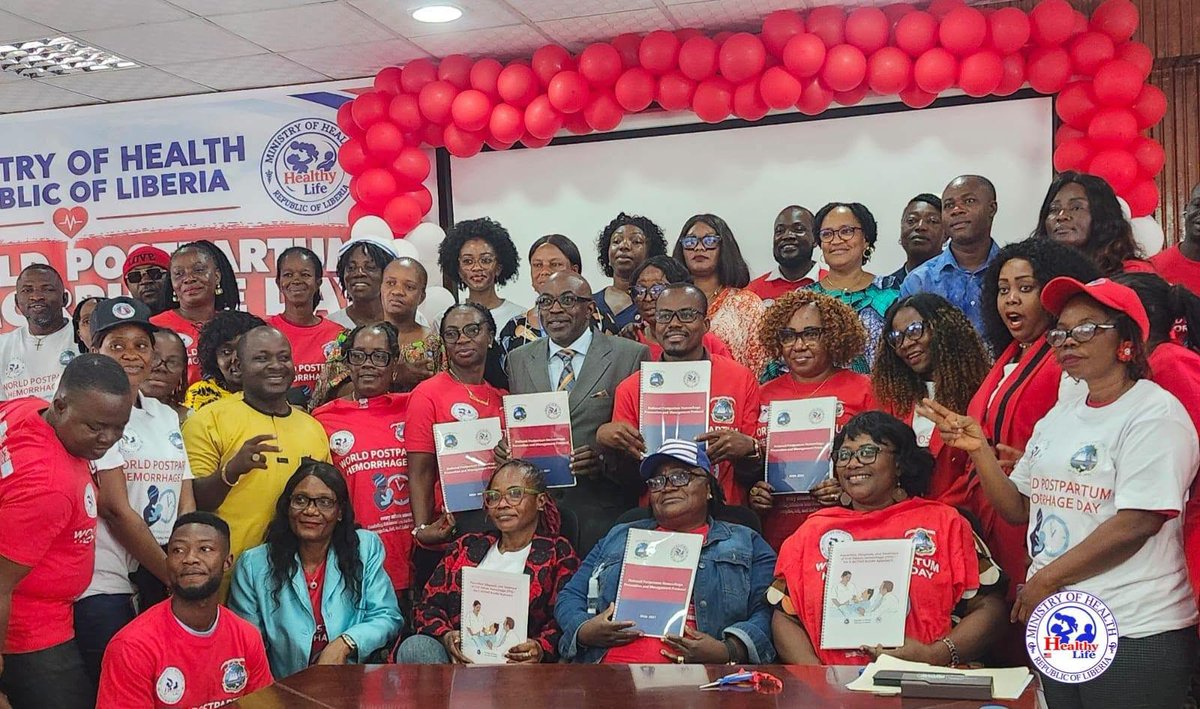
In Liberia, World Postpartum Hemorrhage (PPH) Day marked a renewed focus on ensuring women receive timely, quality and lifesaving care during childbirth.
The Ministry of Health, in collaboration with development partners, launched a revised national PPH protocol and locally modelled calibrated drapes to support earlier and more accurate detection of blood loss.
The effort builds on the country’s work to strengthen the readiness of health workers, access to lifesaving commodities, blood supplies and referral systems, helping ensure women experiencing postpartum haemorrhage can receive the care they need without delay.
For Liberia, strengthening the response to postpartum haemorrhage forms part of its broader commitment to reducing preventable maternal deaths and improving maternal health outcomes.
Read more: https://t.co/tDDFaNJlrD
#WorldPPHDay #MaternalHealth #Liberia #WCAH
Following our high-level event at #UNGA81, Sierra Leone’s Minister of Health, Hon. Dr. Austin Demby reflected on the progress made through the country’s 300 Days of Activism for Triple Zero campaign.
With maternal deaths reported 31% lower and infant deaths 11% lower than the same period last year, Sierra Leone is demonstrating that measurable progress is possible, even in a challenging financing environment.
The next step is to turn this momentum into lasting change, with sustained financing, stronger partnerships and continued country-led action.
#UNGA81 #TripleZeroSL #WCAH #MaternalHealth #ChildHealth #HealthFinancing #SierraLeone
“A policy without a budget is a press release. A commitment without financing is a promise already broken.”
Last week at #UNGA81, WHO Director-General Dr Tedros Adhanom Ghebreyesus called on leaders to protect health budget lines, prioritise financing for sexual and reproductive health and services in humanitarian settings, and strengthen accountability by returning with “numbers, not intentions.”
Dr Tedros also highlighted the Accra Reset as an important initiative for health sovereignty through domestic resource mobilisation, and welcomed Ghana’s focus on maternal mortality as a litmus test for progress in health.
“We watch with utter broken hearts as women around the world continue to die from causes that are largely preventable. We also stand alongside women and their families through the devastating effects of stillbirth and grief.”
At the GLN’s high-level event on the margins of #UNGA81, midwife Sanele Lukhele (@saniegambu) shared first-hand insights from the frontline of care, highlighting the consequences of gaps in health financing for women, children and adolescents.
Lukhele also highlighted the challenges faced by health workers when systems lack the workforce and resources needed to provide essential care.
#GLN #WCAH #GlobalHealth #UNGA81
WATCH: Jean-Sébastien Conty, Deputy Director for Global Affairs at France’s Ministry for Europe and Foreign Affairs, announces France as the newest member of the Global Leaders Network at #UNGA81.
Looking ahead, Mr Conty invited participants to continue the conversation on child health at the Child Summit, taking place at the Paris Peace Forum on 10–11 November.
The Summit will bring together governments, philanthropic organizations, the private sector, and civil society to advance collective action for the health and well-being of children.
#GLN #UNGA81 #ChildHealth #ChildSummit #ParisPeaceForum