🧬 New paper explores peptide affinity ligands for scalable purification of VSV-G lentiviral vectors.
Researchers tested peptide-functionalised resins & membranes for LVV capture and compared binding, productivity and impurity reduction.
https://t.co/wASk7SIuZU
Key takeaways:
• Strong binding of active LVVs
• Cleaner eluates via reduced host-cell impurities
• Compatible with standard downstream workflows
Promising step toward more reliable large-scale LVV manufacturing.
#Lentiviral#Pseudotyping#Virology
🧬 New paper explores peptide affinity ligands for scalable purification of VSV-G lentiviral vectors.
Researchers tested peptide-functionalised resins & membranes for LVV capture and compared binding, productivity and impurity reduction.
https://t.co/wASk7SIuZU
PVNA titres correlated strongly with LVNA results across multiple SARS-CoV-2 variants (r ≈ 0.9–0.96).
Pseudotyped virus assays closely match authentic virus assays, making them a reliable, safer, and scalable alternative.
#Vaccinology#Virology#PseudotypedVirus#Pseudovirus
By binding both viral and host targets, the bsAb pre-positions at the fusion site, enhancing potency, which could be useful for other viruses.
#Pseudovirus#Abs
🚨 New research on HIV-1 neutralising antibodies 🧬
A PNAS study reports a bispecific antibody targeting gp41 (NHR) and CCR5 that achieved 100% neutralisation breadth across 119 HIV pseudotyped viruses.
🔗 https://t.co/2Zgi2yqyXg
#HIV#Virology#Immunology#PseudotypedVirus
🔥Vaccine news🔥
A study of 2,300 women has shown that HPV infections dropped by 98% (!!) in vaccinated women
HPV causes cervical cancer
This vaccine prevents cancer!
https://t.co/pSHD9jlBLu
Infectivity varies across bat & mammalian cell lines
GP–receptor interface differences appear to govern tropism & zoonotic potential.
💡Understanding these mechanisms helps assess spillover risk & guide countermeasure development.
#PseudotypedVirus#InfectiousDiseases
Key findings:
VLPs assembled from NP, GP & VP40 adopt classic filamentous morphology.
Some bat filoviruses are cross-neutralised by Ebola monoclonal antibodies.
Use human TIM-1 & C-type lectins for entry (less efficiently than Ebola/Marburg).
#VirusLikeParticles#ZoonoticRisk
@lii_elaine Thanks! I think it’s unlikely on the basis of this study alone, as the groups were quite small and from a limited geographical area. But it would be really interesting to see if larger, more diverse studies found the same effect.
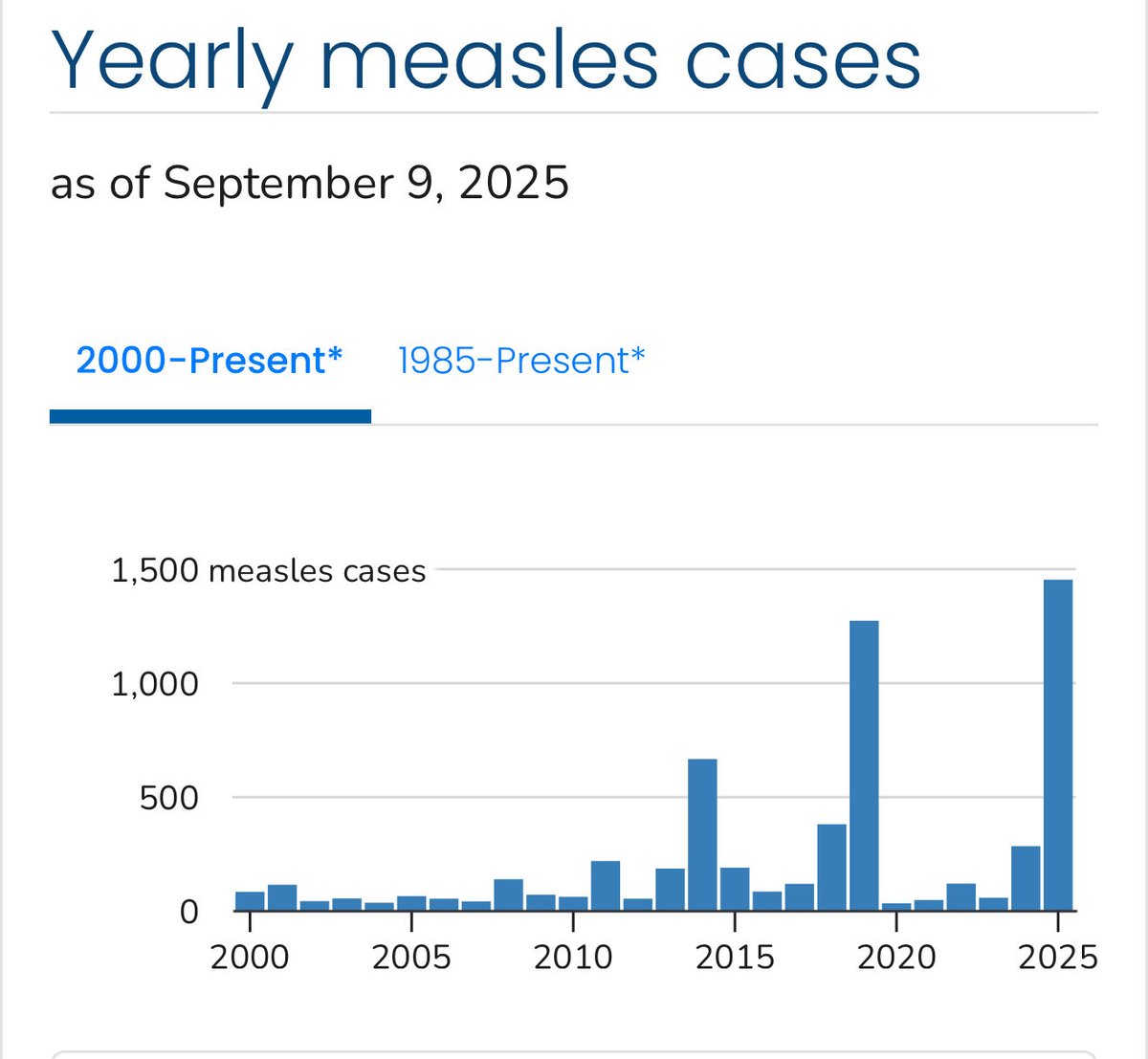
⚠️Measles update US 🇺🇸
1454 cases, 42 jurisdictions, 65% kids, 96% not fully vaccinated, 12% required hospitalisation, 3 kids dead.
The US Measles outbreak continues to moderate, although still breaks all records since eradication 2 decades ago.
VelociRAPTR, a platform combining yeast display with virus-like particles, maps T cell receptor interactions with antigens at high throughput. Insights could aid T cell therapy design and immune recognition models.
https://t.co/ebRKEIvPh3
#TCR#HighThroughput#VLP#Pseudotype
A novel nanoparticle vaccine, based on S1-CTD, elicits robust protective immune responses against porcine deltacoronavirus | Journal of Virology https://t.co/lP1PMw243m
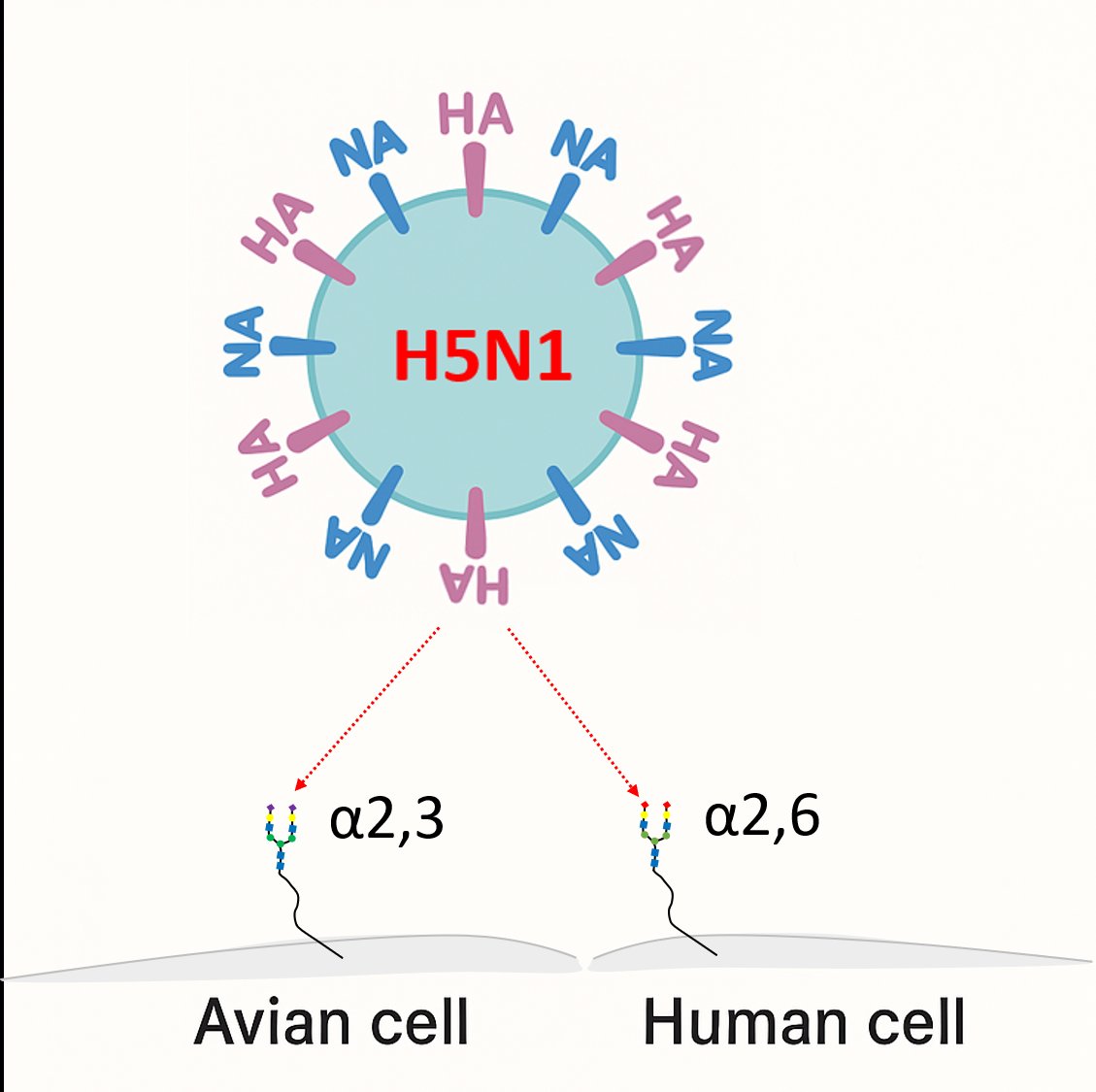
Post 29 — Adaptation Underway: H5N1 Is Narrowing the Gap Toward Human-to-Human Transmission
The H5N1 clade 2.3.4.4b has changed a lot since it circulated only among birds. Since 2010, it has accumulated adapative mutations that increase its ability to infect mammals, 1/10
Is this CHIKV platform a real step forward, or just another point on the pseudotype–replicon continuum?
Would love to hear your thoughts 👇
Tanaka & Miyazawa (2025): https://t.co/27a16QBJLn
#Virology#PseudotypedVirus#Replicon
So, alphavirus envelopes alone can drive budding, but doesn't removing capsid move us further from a native virus? For vaccines, yes, less vector immunity. But for pseudotyping, isn't closer to a native virus better?