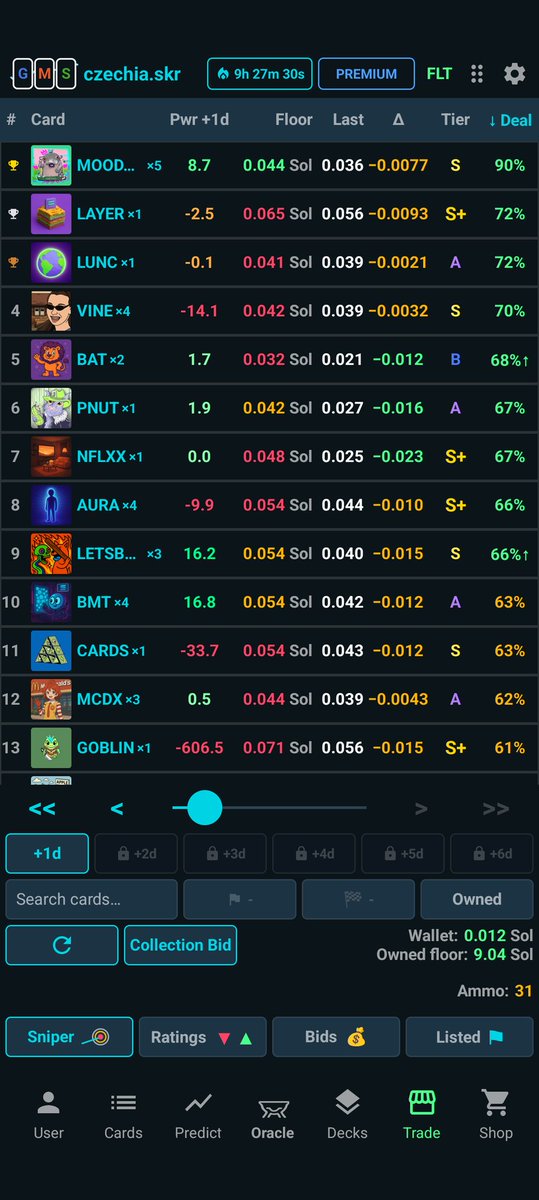
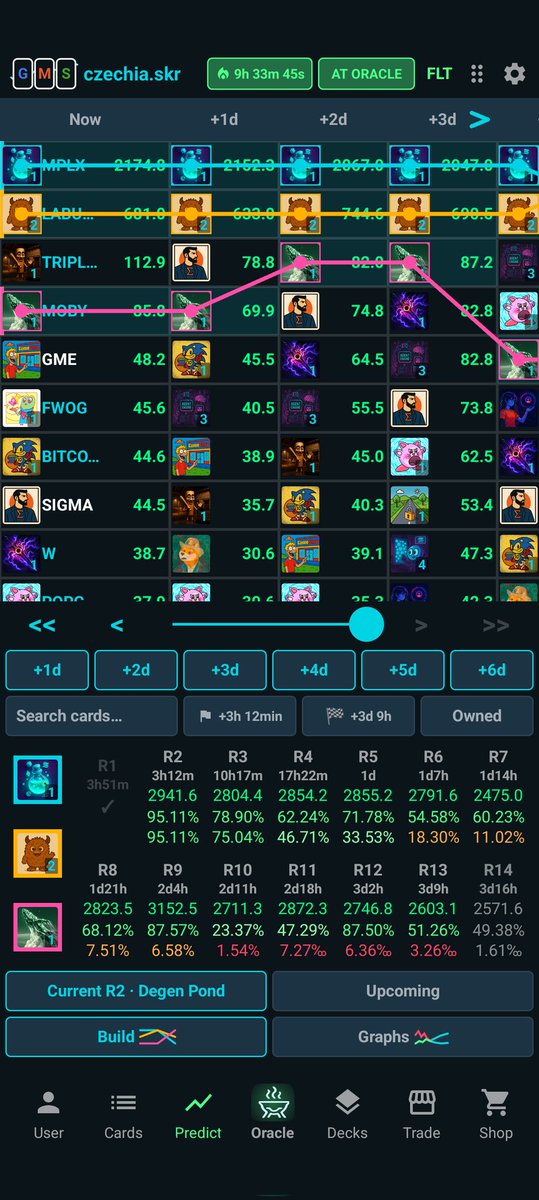
Moodeng, LUNC, BAT, PNUT, VINE are definitely considerable deals if you think long-term. Good cards for good prices. Sniper overview feature of #GMS if available to Free tiers. Don't miss good deals! #GibMeme#GMStrategist
I just found a tool that makes your Claude Code sessions basically unlimited. It's called 9Router and it's trending on GitHub right now.
It sits between Claude Code and 60+ AI providers. One local endpoint. That's it.
When your Claude Code quota runs out, it switches to a cheaper model.
When that runs out, it drops to a completely free one. You don't notice the switch. Your session never stops.
→ Works with Claude Code, Cursor, Codex, Cline, Copilot, and more. One setup covers your entire stack.
→ Built-in token compression saves 20 to 40% on every request. Same answers, fewer tokens to get there.
→ Tracks your quota per provider in a live dashboard so you always know where you stand.
→ Translates between OpenAI, Claude, and Gemini formats automatically. Any tool talks to any provider.
The free tier alone is wild. Kiro gives you unlimited Claude Sonnet 4.5. iFlow gives you unlimited Kimi, GLM, and MiniMax. Qwen gives you unlimited Qwen 3 Coder.
Setup is two steps. Install it, point your tool at localhost:20128. Done.
For anyone burning through Claude credits mid-session or tired of hitting rate limits at 2am, this changes what's possible on a near-zero budget.
@VaibhavSisinty These are experiences you eventually gather by pain of failures, the knowledge of how to work with AI is something you also improve and refine over time, and time spent with AI will teach you these. I would say don't underestimate Claude either in ability to ask questions.
#Claude MAX became for 3 months my attached symbiont, it made me work 17h/day. With Pro I feel having one arm only, but can finally take some breath and rest.
Okay this is interesting. One of the first real head-to-head runs between GPT 5.6 Sol and Claude Opus just dropped.
Same GPU problem. Both models running on their own for hours. No human touching anything.
Opus did what you'd expect. Explored fast, wrote dense code, pivoted quickly when something broke.
Sol did the opposite. Slower. Failed more. Wrote 5x less code. But it kept pushing harder approaches instead of bailing.
30 hours in, Sol quietly passed what Opus took 64 hours to reach. Half the time. A third less code.
Two completely different problem-solving styles. One goes wide. The other goes deep. On this one, deep won.
🗓️ The format
Solana Blitz is a weekend hackathon series for builders shipping real-time apps on Solana
v6 starts next Friday (July 10) and runs until Sunday (July 12)
Solo or squad up to 4 in the Builders Telegram group
Register here👇
https://t.co/CfSUemnwJm