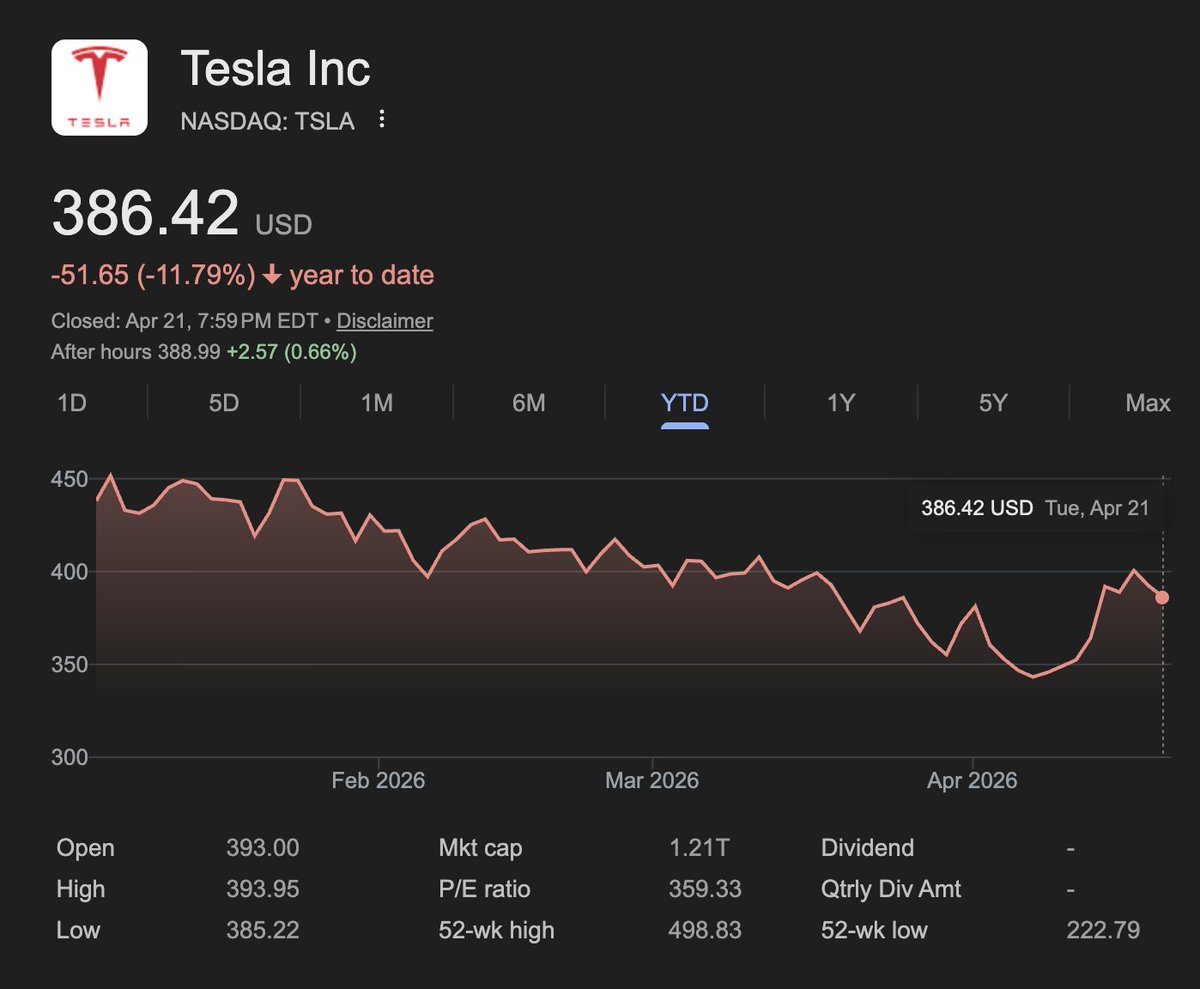
U.S. markets close Wednesday (April 22): Tesla is set to report its Q1 2026 earnings — and Elon Musk may have more than just numbers to share.
Wall Street is treating this as a key moment for Tesla’s AI narrative. Investors are watching closely for updates on AI progress, the rollout of its robotaxi, and timelines for Optimus V3.
There’s also strong interest in how Tesla’s investment in xAI is playing out — and whether any hints emerge around a potential tie-up with SpaceX.
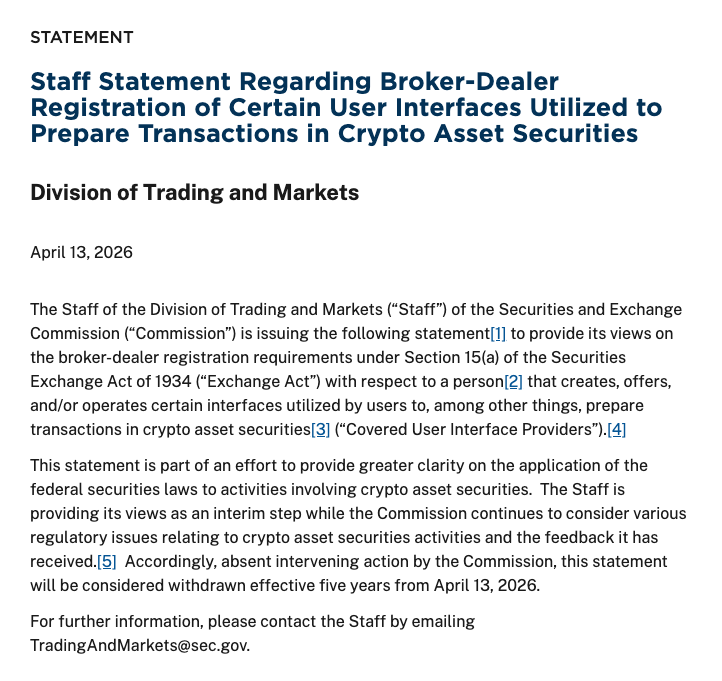
NEW 🚨: As part of Project Crypto, the Division of Trading and Markets issued a staff statement providing its views on broker-dealer registration requirements in connection with certain interfaces used to prepare transactions in crypto asset securities.
https://t.co/8jCwFOJZcw
@gmtrade_xyz
Citing U.S. sources on the 6th, mediators are pessimistic that Iran will "capitulate" and reopen the Strait of Hormuz before the deadline set by U.S. President Donald Trump, with hopes for a U.S.-Iran ceasefire agreement "gradually diminishing."
Some U.S. officials stated that before the deadline of 20:00 ET on the 7th set by Trump, the positions of the U.S. and Iran are "too far apart to bridge." Meanwhile, according to Arab officials familiar with the situation, Iranian officials have told mediators that even if negotiations with the U.S. make progress, they expect the U.S. to continue striking Iran, and Israel to continue air strikes against Iran to "eliminate" senior Iranian officials.
Some U.S. officials said Trump is privately "less optimistic" about reaching an agreement with Iran and is expected to issue the final order to strike Iran on the evening of the 7th ET, though Trump's thinking may change at any time depending on the situation. Trump is eager to end the war, recognizing that the American public has limited patience for further military action.
@gmtrade_xyz
Citing U.S. sources on the 6th, mediators are pessimistic that Iran will "capitulate" and reopen the Strait of Hormuz before the deadline set by U.S. President Donald Trump, with hopes for a U.S.-Iran ceasefire agreement "gradually diminishing."
Some U.S. officials stated that before the deadline of 20:00 ET on the 7th set by Trump, the positions of the U.S. and Iran are "too far apart to bridge." Meanwhile, according to Arab officials familiar with the situation, Iranian officials have told mediators that even if negotiations with the U.S. make progress, they expect the U.S. to continue striking Iran, and Israel to continue air strikes against Iran to "eliminate" senior Iranian officials.
Some U.S. officials said Trump is privately "less optimistic" about reaching an agreement with Iran and is expected to issue the final order to strike Iran on the evening of the 7th ET, though Trump's thinking may change at any time depending on the situation. Trump is eager to end the war, recognizing that the American public has limited patience for further military action.
Oil price volatility has emerged as the central driver behind sharp swings in global equity markets. Since the outbreak of the conflict, stocks have come under broad pressure, with market direction frequently whipsawing in response to Donald Trump’s remarks on the war’s progress.
Michael Antonelli, a market strategist at Robert W. Baird & Co., said, “Equities currently lack a clear directional catalyst, but pricing in the October oil contracts suggests investors increasingly expect the crisis to be resolved before the fall.”
@gmtrade_xyz
Oil price volatility has emerged as the central driver behind sharp swings in global equity markets. Since the outbreak of the conflict, stocks have come under broad pressure, with market direction frequently whipsawing in response to Donald Trump’s remarks on the war’s progress.
Michael Antonelli, a market strategist at Robert W. Baird & Co., said, “Equities currently lack a clear directional catalyst, but pricing in the October oil contracts suggests investors increasingly expect the crisis to be resolved before the fall.”
U.S. equities staged a sharp rally on Tuesday (ET), with all three major indexes posting their largest single-day gains since May last year. The Dow Jones Industrial Average surged 1,125 points, as easing geopolitical tensions between the U.S. and Iran lifted investor sentiment.
The market’s optimism was driven in part by overnight developments. President Donald Trump had reportedly indicated to aides that he was prepared to wind down military operations against Iran—even if the Strait of Hormuz remains largely constrained.
U.S. officials assessed that forcibly reopening the critical waterway could extend the conflict well beyond the initially anticipated 4–6 week timeframe. Against this backdrop, Trump is said to have opted for a gradual de-escalation after achieving key objectives, including degrading Iran’s naval and missile capabilities.
During Tuesday’s session, Iranian President Masoud Pezeshkian signaled that Iran would be willing to end the conflict, provided its demands are met—most notably guarantees against further aggression. The conciliatory tone triggered a broad rally across risk assets, alongside a sharp move in gold.
Mega-cap technology stocks led the advance:
• Meta +6.67%
• Nvidia +5.59%
• Alphabet (Class A) +5.14%
• Tesla +4.64%
• Amazon +3.64%
• Microsoft +3.12%
• Apple +2.90%
@gmtrade_xyz
U.S. equities staged a sharp rally on Tuesday (ET), with all three major indexes posting their largest single-day gains since May last year. The Dow Jones Industrial Average surged 1,125 points, as easing geopolitical tensions between the U.S. and Iran lifted investor sentiment.
The market’s optimism was driven in part by overnight developments. President Donald Trump had reportedly indicated to aides that he was prepared to wind down military operations against Iran—even if the Strait of Hormuz remains largely constrained.
U.S. officials assessed that forcibly reopening the critical waterway could extend the conflict well beyond the initially anticipated 4–6 week timeframe. Against this backdrop, Trump is said to have opted for a gradual de-escalation after achieving key objectives, including degrading Iran’s naval and missile capabilities.
During Tuesday’s session, Iranian President Masoud Pezeshkian signaled that Iran would be willing to end the conflict, provided its demands are met—most notably guarantees against further aggression. The conciliatory tone triggered a broad rally across risk assets, alongside a sharp move in gold.
Mega-cap technology stocks led the advance:
• Meta +6.67%
• Nvidia +5.59%
• Alphabet (Class A) +5.14%
• Tesla +4.64%
• Amazon +3.64%
• Microsoft +3.12%
• Apple +2.90%
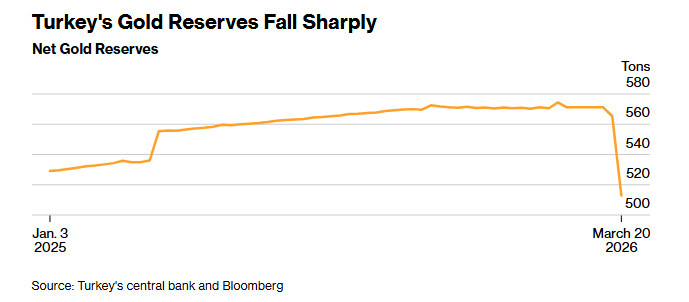
According to the latest data released by the Central Bank of Turkey, the country’s gold reserves fell by 6 tonnes in the week of March 13, followed by a further decline of 52.4 tonnes in the week of March 20, marking a sharp drawdown in reserves.
Sources familiar with the matter indicated that part of the gold was sold outright, while the majority was utilized through swap agreements to obtain foreign currency or lira liquidity.
Recent gold decline is primarily driven by the renewed constraint that rising energy prices impose on interest rate expectations. As the Middle East conflict continues, crude oil prices have remained elevated, leading the market to adopt a more cautious view on the path of disinflation. U.S. dollar becomes stronger in the short term, and puts downward pressure on gold.
Compared to 2025, marginal shifts in the U.S. interest rate cycle and the growing influence of trading driven forces in 2026 may increase gold’s volatility, making tactical timing more important.