The biggest Myth in all of this LSU mess is that LSU has broken SEC rules (False), and they've sued the SEC (also False). LSU is trying to follow LA court orders and SEC request. They are in between a rock & a hard place and are being singled out to make a point by Greg Sankey.
LSU rostered R.J. Luis Jr. under a court order, played him once, and then stood down. Five days after his appearance, the SEC told a federal judge its presidents would meet to consider expelling LSU.
On November 13, a Baton Rouge judge barred the SEC from treating Luis as ineligible to practice or compete for LSU. On November 16, SEC counsel told Luis's lawyers the conference would abide by the injunction and would impose no penalties or fines if LSU put him on its roster. LSU added him the next day.
On November 18, Luis played 15 minutes off the bench at the Pete Maravich Assembly Center. He scored 11 points, grabbed nine rebounds and recorded one assist and one block in LSU's 79–67 win over Louisiana-Monroe. The next day, after speaking with SEC Commissioner Greg Sankey, LSU System President Wade Rousse announced that he had instructed coach Will Wade to stop playing Luis.
The judge left playing time to LSU. He also expressly barred LSU from agreeing with the SEC to deny Luis the opportunity to practice, play or compete. That distinction gives the November 19 call its significance. Did Rousse decide independently to sit Luis, or did he and Sankey reach an agreement? The timing alone cannot answer that question.
Luis's lawyers had already moved for contempt on November 18 over the statement the SEC issued the night before about LSU's decision to roster him. On November 23, the SEC told the federal court its presidents would meet December 3 to consider terminating LSU's membership "regardless of whether LSU continues not to play Mr. Luis." That evening, Luis's attorney, Tony Clayton, said Luis planned to seek damages from the SEC and Sankey for allegedly violating the injunction.
The SEC says LSU had previously given its word. In his sworn declaration, Sankey cites a September 5 text from athletic director Verge Ausberry and an October 14 call with Wade as assurances that Luis would not play for LSU. Both preceded the November 13 judgment. The conference also points to the earlier dispute over two football players and invokes its First Amendment right to decide who belongs in the SEC. One difference between the proposed and signed orders bears directly on that defense. Luis's proposed order would have barred termination of membership by name. The signed judgment does not mention termination.
Luis's contempt motion alleges that 13 of the SEC's 16 members have rostered athletes who played professionally. That raises a question about how the conference treated athletes in comparable circumstances. Expulsion requires 11 of 16 votes. Ross Dellenger reported that people within the SEC, and some at LSU, believed the presidents had those votes. The count remains unconfirmed.
The SEC's own November 23 filing puts both sides on the page. It acknowledges that the Louisiana injunction bars the conference from penalizing LSU for rostering and playing Luis. It also cites Luis's appearance against Louisiana-Monroe among its grounds for calling the special meeting. The SEC answers that ending a school's membership "is not a punishment." Can the SEC rely on that appearance as grounds for expulsion when the court expressly barred it from penalizing LSU for playing him?
Captain Leonard Stewart is being hailed as a hero after refusing to abandon the American Heritage cruise ship when it was struck by a 520-foot tanker and capsized Friday afternoon in New Orleans.
Despite being injured himself, Stewart reportedly refused medical attention and remained aboard until he knew his passengers and crew were accounted for.
According to American Cruise Lines, Stewart stayed on the bridge as the vessel capsized, calling for help and working to keep the ship alongside the dock long enough for passengers to escape.
He was reportedly the LAST person to leave the vessel.
Miraculously, all 191 passengers and crew survived the disaster, although dozens were injured.
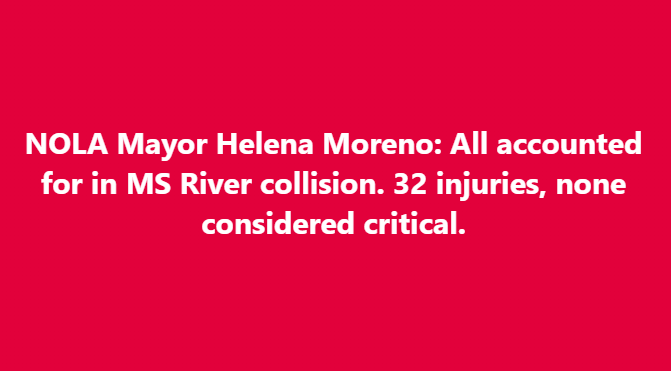
New Orleans Mayor Helena Moreno called the outcome a “miracle on the Mississippi.”
Good job, Captain!
Pecan Island was always worth the trip, and soon the whole world will know why. Here's how @SpaceX ended up in our marsh.🚀
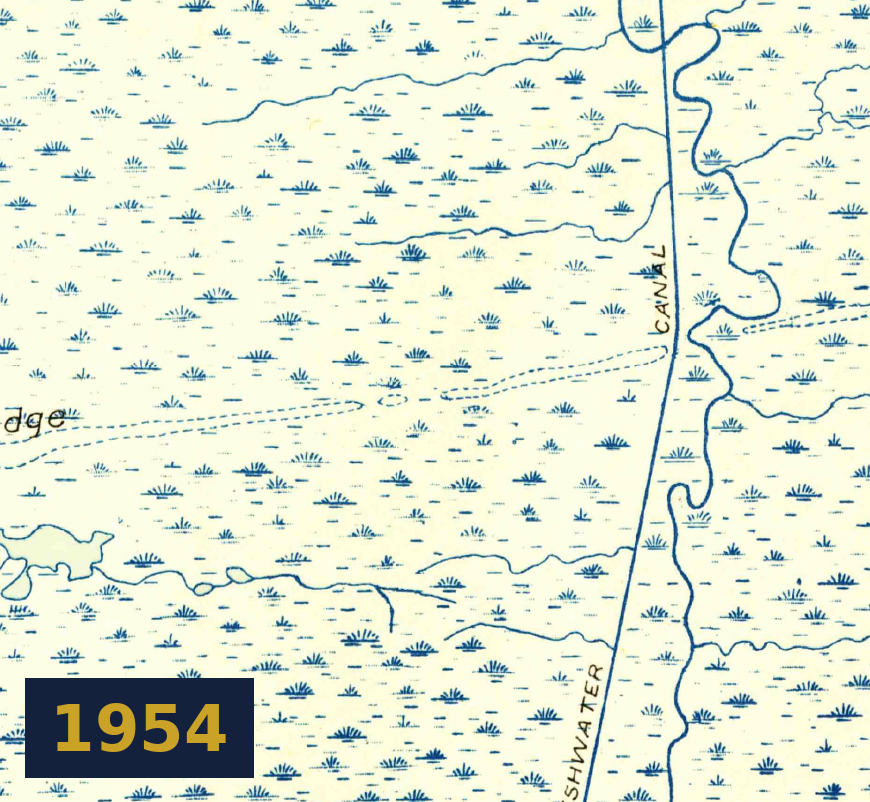
First you have to know this place. Pecan Island didn't even have a road until 1953. You got there by boat, and the mail boat came three times a week. Growing up, it felt like the edge of the world, but remote never meant empty. I remember the Pecan Island Mardi Gras parade in the early 2000s pulling in huge crowds every year. It was our favorite place to go, and people traveled to see it. Even now, when we visit the refuge, we come across people from many different places.
So how did a rocket company end up out there? Honestly, the stars aligned. ✨
For more than a decade, Vermilion Parish and the state had been locked in a coastal lawsuit with Exxon over this exact land. It was part of a wave of suits against oil companies that started back in 2013 and seemed like it would never end. Then in April 2026, the U.S. Supreme Court ruled 8-0 that one of these cases could move from state court to federal court. That was a big win for the oil companies, and it may have made settling look a lot better for everyone.
SpaceX came looking for room to grow, and the governor saw a chance to settle the lawsuit and land a huge project at the same time. When the deal was announced, Landry called it "resolving years of litigation." Exxon handed the land to the state, and SpaceX bought all of it, about 125,000 acres, for $100M. Only about 40,000 acres will be the actual spaceport.
When I opened the permit, I expected rocket talk, but instead it reads like a puzzle: how do you get giant rocket parts into a marsh with no real roads? Their answer is a wharf, a 15.75-mile heavy-haul road, and an 8,110-ft bridge.
Reading the permit, you can tell this was carefully thought out. Every site they considered got a hard look before they chose this one.
Two wharf sites near Grand Chenier would have meant about 30 miles of dredging through wildlife refuges, and one was inside Rockefeller. Intracoastal City was too small and right next to homes, and its route ran straight through oyster grounds.
One detail I noticed that I think sets SpaceX apart: filling in Humble Canal would've been the cheaper option, but it would have cut off local fishermen and energy boats, so they're building a bridge over it instead.
Freshwater City won. Of all four sites, it was the only one that had already been used for business. It's on the Gulf side of the lock and has the shortest dredge route. The permit says the nearest home is 6.8 miles from the wharf site, the farthest from homes of any site they considered.
But why not just use Florida or Texas? Look south from here and it's hundreds of miles of open Gulf. Polar and sun-synchronous orbits launch roughly south, and Florida can only do that through a narrow path, threading past Cuba.
The state's economic development office said the site "provides an optimal launch point to reach orbit with a wide range of trajectories over a large open area and an abundance of natural gas for fuel and power."
Which brings me to fuel. One Starship launch could take hundreds of fuel trucks, and Louisiana is sitting on a mountain of natural gas.
Money-wise, SpaceX pays $25M a year, rising 2% every year, which comes to more than $800M over 25 years. There's also $20M up front to help get ready. Superintendent Tommy Byler told us it'll be split between the school board, the police jury and the sheriff, and the schools expect about $10.2M a year.
Our schools are already strong. Vermilion is an A district, ranked 11th in Louisiana and top in Acadiana, and 6th in the state on this year's LEAP tests. They've still been squeezed by falling oil and gas money and fewer students, and the parish has roads, bridges and water projects waiting on funding. This money builds on a solid base, and he told us the first of it is planned for teacher bonuses. 🎉
3,000 permanent jobs averaging about $92,600 a year, plus up to 34,500 construction workers at the peak. This is massive for our area. Between Lafayette and Vermilion parishes, we've lost over 11,000 oilfield jobs since 2014. That's more than 6 in 10. And it's not just promises. The deal includes penalties if SpaceX misses its job goals, and they're on the hook for repairing our roads.
This is a huge change for a quiet corner of Louisiana, but Freshwater City is no stranger to heavy commerce. Once the lock opened in 1968, crew boats, supply boats and jack-up barges poured through. From then until 1992, it averaged over 34,000 big boats a year. That's around 90 a day.
After months of rumors, excitement and waiting, hearing Mark Soltys' words in the announcement, "And we're here to build a spaceport," is a moment in time I'll never forget.
None of this means we stop asking the hard questions. As this moves forward, we'll keep asking them, and keep sharing what we learn.
SpaceX is pushing humanity farther than we've ever gone, to the Moon, Mars and beyond. As a kid, I watched Mardi Gras parades roll through Pecan Island, and I'm hopeful this growth might bring that back so Luke and Lena can experience Pecan Island Mardi Gras the same way I did. For years, they have been excitedly waiting for the day they are able to learn about SpaceX in school, and I never could have imagined they'd have a front-row seat to history in the making.
Pecan Island was always worth the trip, but what was once the end of the road is now the beginning of a much bigger journey! 🚀
Starship Flight 14 launch and orbit was a success, but what did the launch sound and feel like form Port Isabel, about 5 miles away?
Here is a visual & audio experience almost as good as being there! If you haven't been to a Starship launch, you really need to plan a trip! @esherifftv
Sound UP!