Silk's beauty begins with the spring silkworm, but not all tales of its origin are gentle. In "In Search of the Supernatural", a Jin Dynasty text, a girl in ancient Shu missed her father so deeply that she jokingly vowed to marry the horse if it brought him back. The horse did—and was killed for its unsettling devotion. When the girl mocked its skin, it seized her and vanished. Days later, she and a neighbor's daughter reappeared—transformed into silkworms.
🎨 劉凌滄 郭慕熙《羅敷采桑圖》
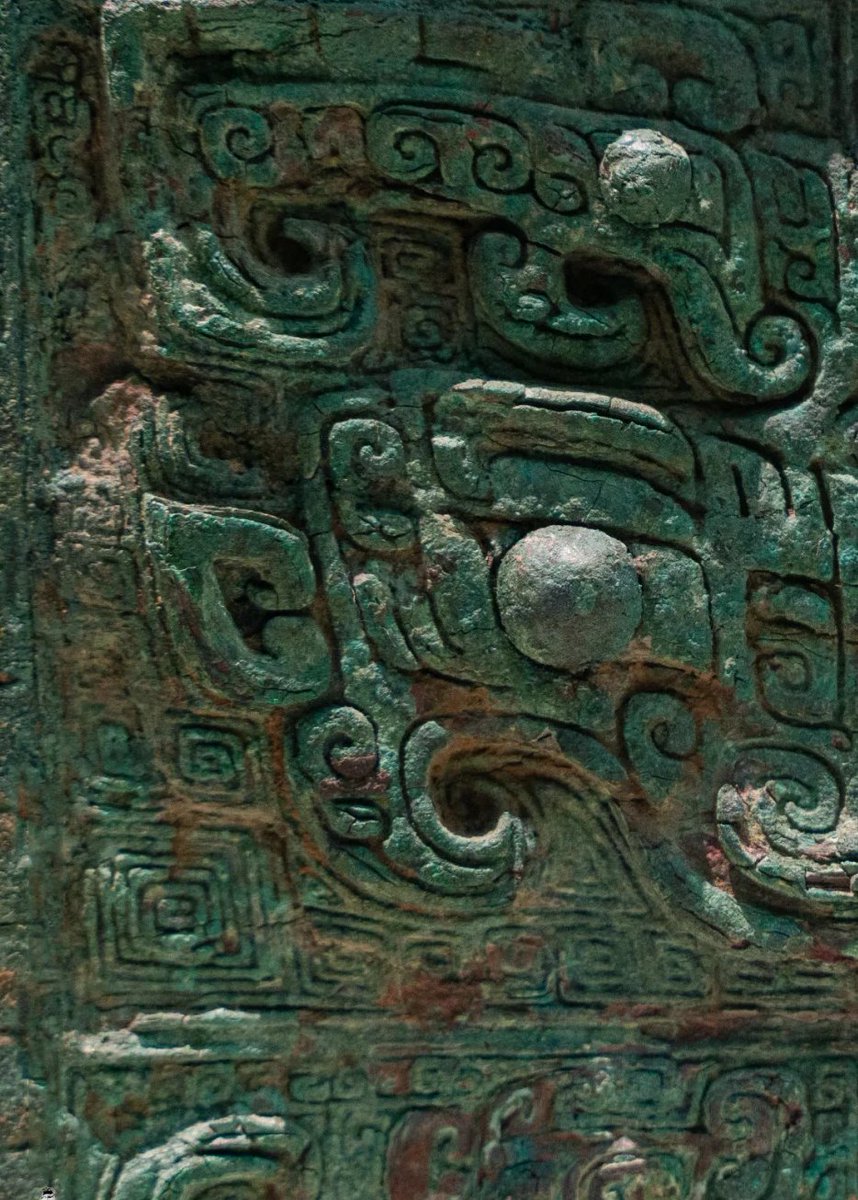
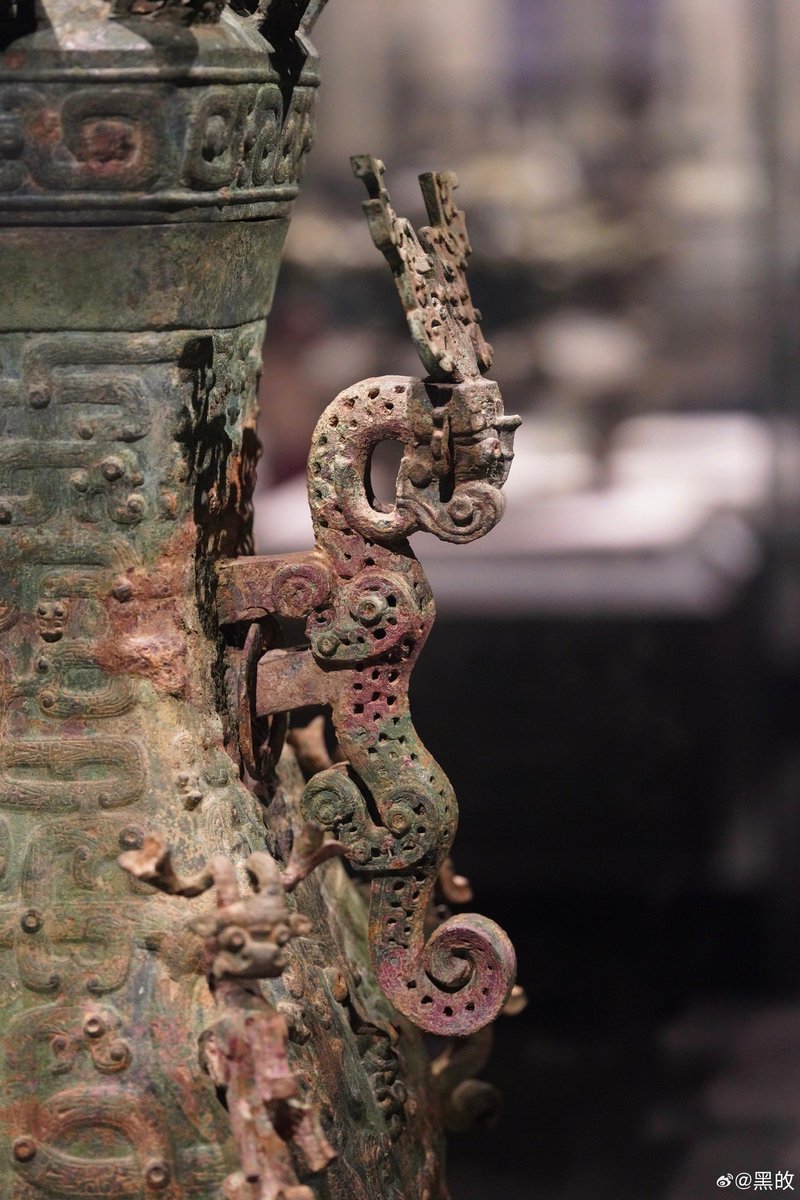
In Chinese myth, Da Yu, founder of the Xia Dynasty, cast the Nine Tripod Cauldrons (禹鑄九鼎) after taming floods across the nine provinces. To protect travelers, he engraved local beasts and spirits onto each massive cauldron—turning them into public guides for navigating the unknown. Over time, they became symbols of imperial power. Many sought them, including Qin Shihuang—but one vanished into the Si River, and none have been seen since.
#mythology
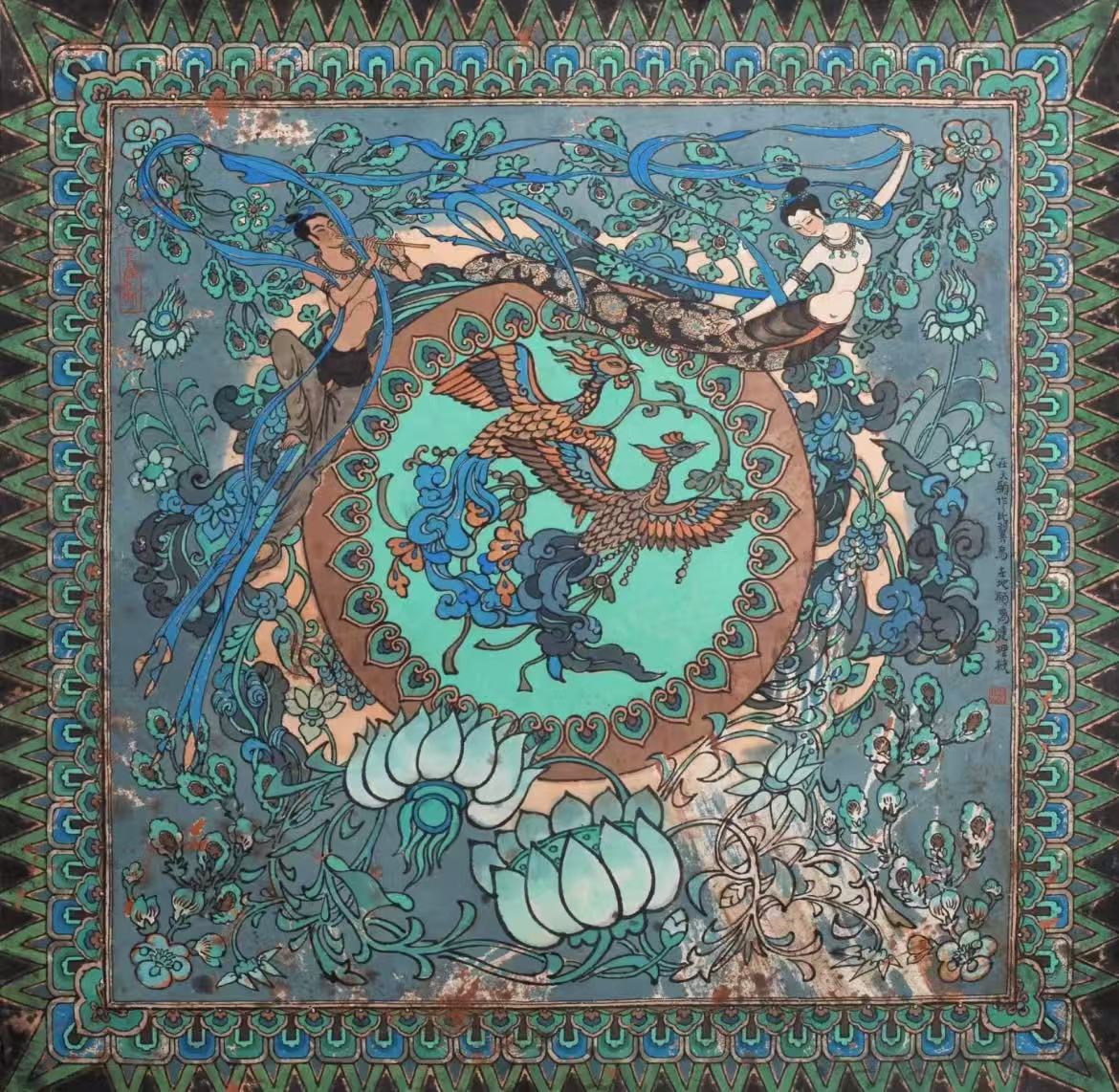
In the center of the painting are two birds that share one of their wings when they fly. In Chinese myth they are known as Biyiniao, an emblem of eternal love. The circle with flowers represents the cycle of birth&death,beside which a man&a woman sing their desires of a soulmate.
The Chinese folk tale The Goddess of Mount Wu tells the story of Yaoji, daughter of the Heavenly Emperor, who, unwilling to endure the lonely life of the celestial palace, descends to the mortal world. She comes to Mount Wu to tame floods and vanquish monsters. 1/2
#folktale#art
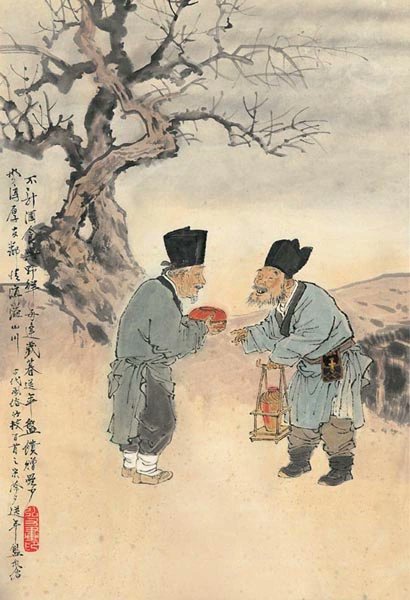
Kuisui饋歲, which means rewarding the years, was a folk tradition of sending gifts during the Spring Festival in the Northern Song dynasty. At that time, people whether they are rich or poor, would take wine&meat to streets&share them with strangers along with their best wishes.
Lijiang River, also known as Gui Shui 桂水, flows through Guilin, Guangxi Zhuang Autonomous Region of China, with the river basin breeding an original and peerless natural Guilin landscape. The 83 - kilometer stretch from Guilin to Yangshuo is the cream of the Lijiang River.
The mountains of Kuaiji tell of a mysterious figure in ancient Chinese folklore - the Cat Immortal Cai. #caturday
Living deep in the mountains, he kept a thousand cats that came and went at his command, each one answering his call with unwavering loyalty. Legend says he could control his feline companions with just a wave of his hand.
有蔡姓者,隱會稽山中,養貓千頭,呼之即來,遣之即去,時人謂之貓仙。 ~《諤厓胙脫》
🎨 Fang Chuxiong
In Chinese #folklore, the Pen Spirit(筆童) is a little sprite that transforms from a brush that has gained sentience after becoming tired of solitude.
It stands less than a foot tall, wears yellow clothing, and has flowing hair. It is quite knowledgeable and can compose poetry and engage in verse with humans. #yokai
The Pen Spirit appears before the humans it favors, promoting itself until the human is persuaded to find and use its true form.
🎨 ShanZe
Source in ALT.
According to ancient Chinese books, the original appearance of snake is not like what we see today. It can take on different forms. For example, Fei Wei肥遺, a snake mentioned in the book Shanhaijing, has six legs and four wings, and will bring drought to the place it visits.
The Luosha Bird(羅剎鳥) is a yaoguai(yokai) from Chinese folklore, said to be formed from long-accumulated energy in decaying graveyards. Its body is slightly larger than that of a grey crane, with a hooked beak and massive claws as white as snow. Its eyes glow like green phosphorescence, and it can take on various forms.
It is known for its fondness for pecking out human eyes as food. In Chinese folk stories, there is a famous tale of it disguising itself as a bride.
🎨 子不語·羅剎鳥
"The Picture of Cranes" is a renowned masterpiece of Chinese art, created by Emperor Huizong of the Northern Song Dynasty (960-1127).
Contrasting with the ethereal, dynamic movement of the cranes is the silhouette of a palace roofline, which anchors the composition and adds a narrative element to the scene.
Each of the twenty cranes is meticulously rendered, with no two sharing identical postures. Their varied movements, from soaring high to skimming the low skies, create a sense of liveliness and harmony within the painting.
Accompanying the painting is a special calligraphy postscript in the "slender gold (瘦金體)" style, written by Emperor Huizong himself. This unique calligraphic style, which the emperor pioneered, further enhances the artistic and cultural significance of this masterpiece.
🎨《瑞鶴圖》趙佶 宋
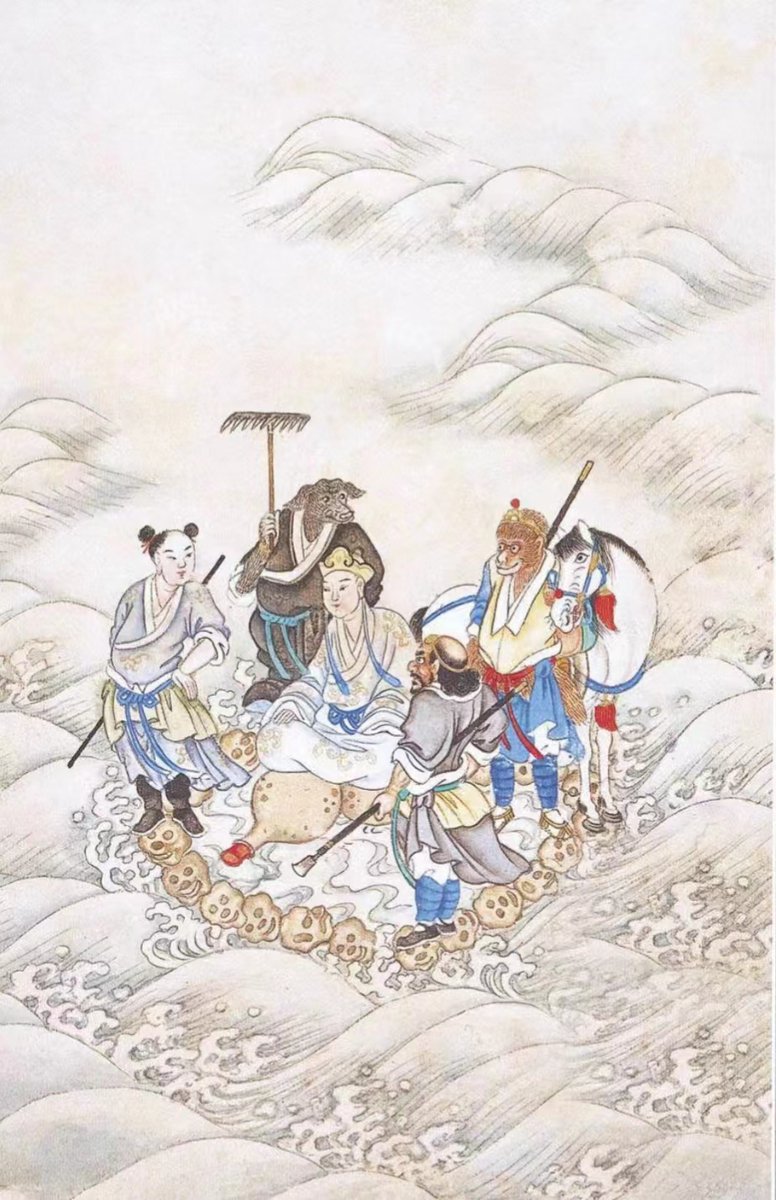
The Journey of the Monkey King(Sun Wukong): From a rebellious Monkey Demon to Demon-Conquering Buddha🧙
#art#paintings
🎨彩繪全本西遊記, by unknown Chinese artist, Qing Dynasty(1616-1912)
In Chinese mythology, Sun Wukong can leap 108,000 miles with a single somersault, while folk tales often mention traveling hundreds or thousands of miles in a day. For deities, this is easy, but for ordinary people, it demands immense awareness and sacrifice.
The Tang Dynasty book Youyang Zazu(c. 800-863) records such a story:
In the late Yuan era, a man named Zhang Yan, who was strong and capable, sent a letter to the capital. When he reached Songzhou, he encountered a man and asked to travel together. As they stayed overnight in Zhengzhou, the man said to Zhang, "If you follow my guidance, you could travel several hundred miles." He then dug two small pits, about five or six inches deep, and instructed Zhang to stand with his feet over the pits, piercing both of his feet with needles.
At first, Zhang felt no pain, but as time went on, he began to feel it, eventually bleeding black blood into the pits. Zhang suddenly felt light on his feet and reached Bian in the afternoon. When they stopped in Shan Prefecture, Zhang declined, saying he didn't have the strength. The man then suggested, "You could temporarily remove your kneecap and endure no pain; you could travel eight hundred miles in a day." Zhang was frightened and refused. The man didn't insist and said, "I have matters to attend to and must leave Shan by evening." He then departed, moving swiftly until he was out of sight.
Source in ALT.
Among the flowers, a pot of wine, I drink alone, no companion in sight.
I raise my cup to invite the bright moon, Together with my shadow, we become three.
~Li Bai
#BookChatWeekly
Colour sculpture in the Song Dynasty.
I like their elegant movements and hairstyles.Baoji包髻 is one of the popular hairstyles in the Song Dynasty.#hanfu