Nicht verpassen! Ein neuer Artikel von mir: Russia Is the Aggressor. Who Decided to Restrict Ukraine’s Communications? https://t.co/WwINrrLZbI via @LinkedIn
Berlin
I love life in the countryside. There’s something about it that feels more genuine to me. Early in the morning, when the air is still fresh even in the city, I take a sip of my first espresso and, for a moment, feel close to home. This is life.
Berlin
I’m currently in a security policy meeting. It’s actually the perfect moment for the right music. There are times when the world out there seems dark and turbulent, and many people feel at a loss. Moments when global crises and the pressure on our open, free way of life try to rob us of our confidence.
But that is precisely when we need this indomitable, primal force from Buenos Aires! When tens of thousands of people jump in unison amidst a sea of glowing devil’s horns, it is far more than just a rock concert. It is the pure, unbridled zest for life of a free world that refuses to be intimidated.
Every AC/DC riff sweeps through the heaviness of everyday life like a cleansing storm. As long as we stand together, celebrate together and turn the music right up, our inner fire remains invincible! ⚡️🔥🎸
#ACDC #HighwayToHell #RiverPlate #JoyOfLife #Freedom #RockNRoll #solidarityfount
https://t.co/XOOA4gnvCO
Berlin
Die Industrie kann das Netz sanieren. Wer saniert das „Kombinat Bahn“?
Wer sich diese Aufnahmen ansieht, sieht eine leistungsfähige Bauindustrie bei der Arbeit. Spezialmaschinen sanieren den Gleisuntergrund und bereiten vorhandenen Schotter vor Ort auf. Fachkräfte, Maschinenbau und Baustellenlogistik greifen ineinander. Die Unternehmen im In- und Ausland stehen bereit. Die Industrie baut. DB InfraGO ist Bauherrin. Die DB AG muss ihren Konzern so führen, dass aus finanzierten Vorhaben rechtzeitig fertiggestellte Strecken werden.
Die Ergebnisse der vergangenen Jahre zeigen aus meiner Sicht, wie sehr es der DB AG an Zielkontinuität fehlt. Prioritäten wechseln, während Vorhaben über Jahre geplant, vergeben und gebaut werden müssen. Das Umsetzungstempo fällt immer weiter hinter den Sanierungsbedarf zurück. Jeder Wechsel im Bauprogramm hat Folgen bis auf die Baustelle. Unternehmen müssen ihre Mannschaften und Spezialmaschinen neu disponieren, und die nächste Sperrpause ist womöglich erst Monate später verfügbar.
Damit stellt sich auch die Frage nach der Wirkung der Steuermilliarden. Der Bund muss als Eigentümer offenlegen, welche Verbesserungen er mit seinen Mitteln erreichen will und welche tatsächlich eintreten. Maßgeblich sind termingerechte Inbetriebnahmen, ein besserer Anlagenzustand und ein verlässlicherer Betrieb. Der Bundesrechnungshof hat die strukturellen Defizite der DB AG und die Versäumnisse des Bundes bei der Eigentümersteuerung bereits 2023 benannt.
Auch der Schutz der kritischen Bahninfrastruktur verlangt eine verbindliche Antwort. Die Aufnahme des verwitterten Metallgehäuses lenkt den Blick auf Anlagen, die in der öffentlichen Sanierungsdebatte selten vorkommen. DB InfraGO muss netzweit prüfen, ob Kabelanlagen sowie die Leit- und Sicherungstechnik ausreichend geschützt sind. Wo Nachrüstungen erforderlich sind, gehören sie mit festen Fristen in die Bauprogramme.
Die DB AG ist selbst ein Sanierungsfall. Sie braucht ein Sanierungsmanagement mit klaren Entscheidungsbefugnissen und einen konzernweiten Sanierungsplan mit verbindlichen Zielen, Fristen und persönlicher Verantwortung. Der Bund muss die Umsetzung kontrollieren und bei Abweichungen eingreifen. Die Industrie braucht mehrjährige, belastbare Vergabe- und Bauprogramme, um ihre Kapazitäten verbindlich einplanen zu können.
Ohne Konzernsanierung keine zeitnahe Sanierung des Schienennetzes.
#DeutscheBahn #Bahnreform #Schieneninfrastruktur #Bauwirtschaft
Berlin - Bruessel
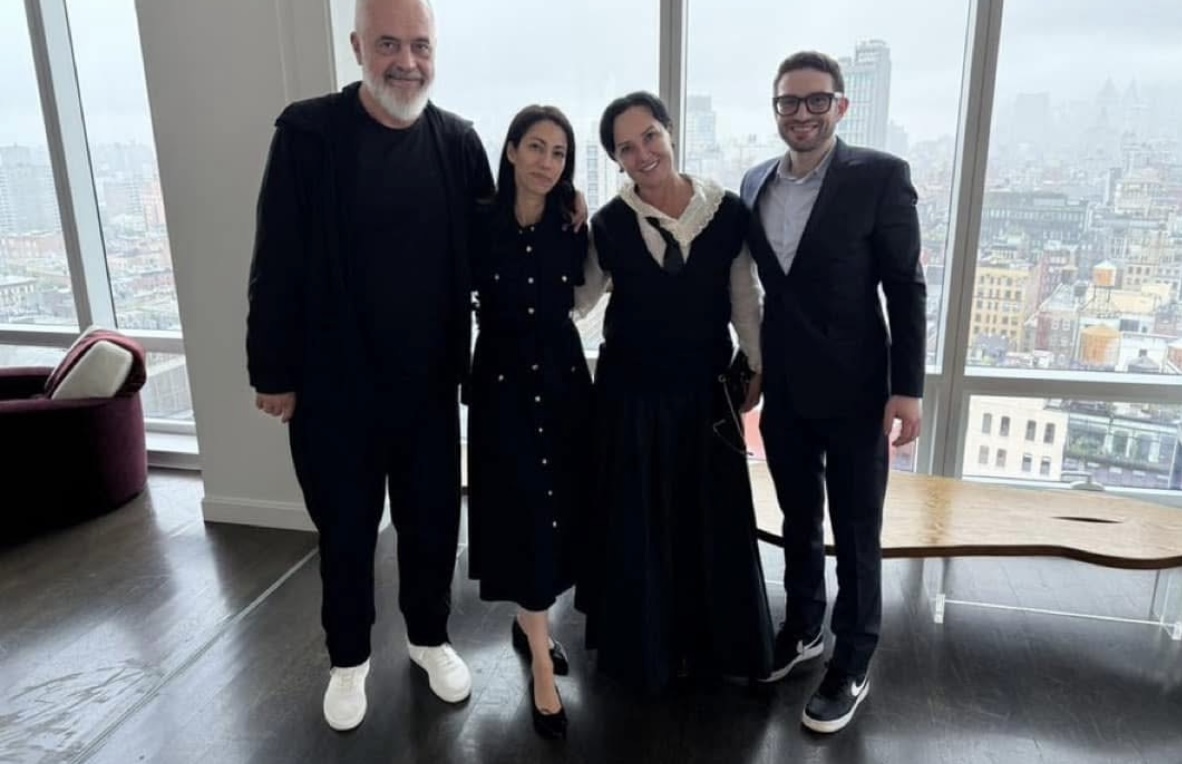
An award for tolerance is no absolution for abuses of power. The Conference of European Rabbis must withdraw the Lord Jakobovits Prize from Edi Rama.
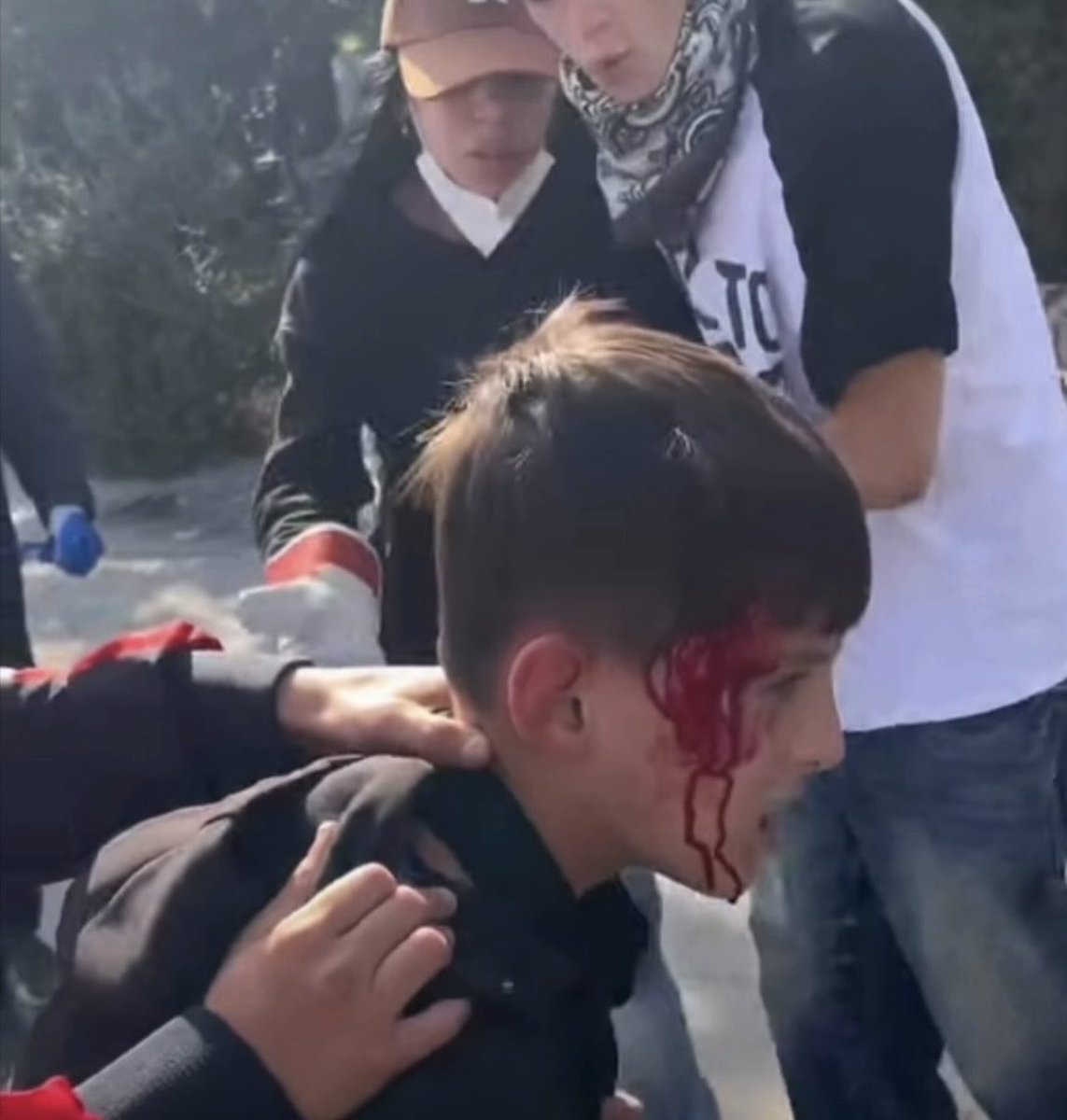
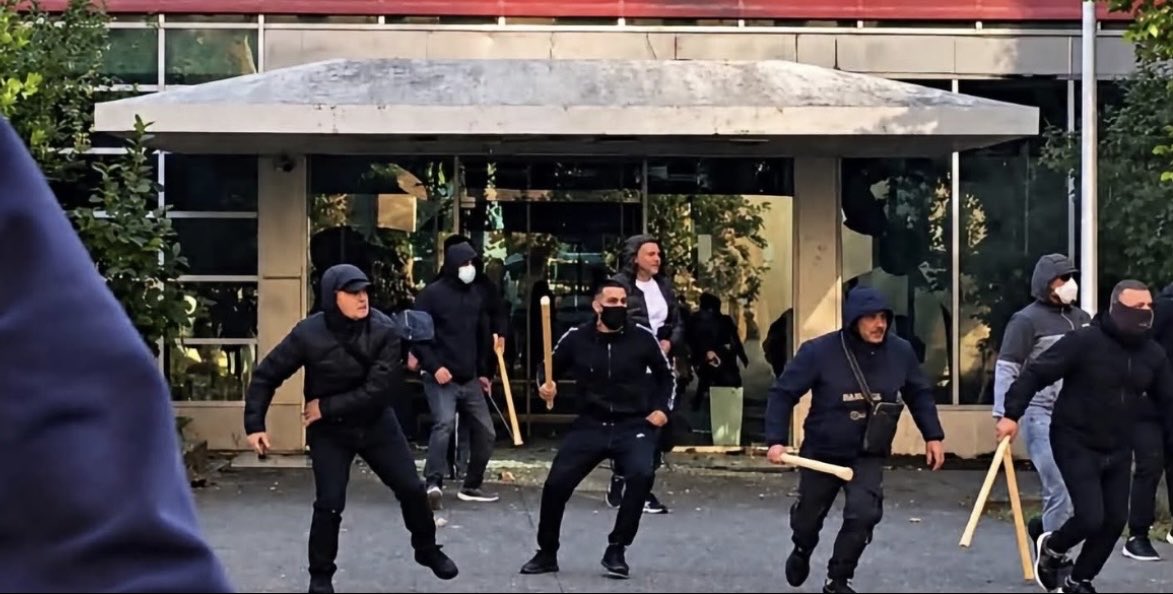
Mr Rama, tolerance is measured by how you treat those who disagree with you—especially those demanding your resignation. Serious reports of police violence against demonstrators, together with allegations of disproportionate force against journalists expressly raised by the European Union, demand independent investigation. A trophy is no substitute for accountability. https://t.co/7S462DiMSc
The police have a duty to protect the public. Where officers assault defenceless people, they behave as thugs rather than officers of the law. Such abuses must be investigated, and responsibility established throughout the chain of command. As Prime Minister, you bear political responsibility for the conduct of your administration.
Nor can an honour obscure the misuse of European assistance. The €33 million in misused IPARD II agricultural funding identified by OLAF is a specific example, not a comprehensive account of the losses. Those funds were intended to support agriculture and, through it, the people of Albania. https://t.co/8AmKS3Jqb2
The broader allegation concerns the misappropriation of public funds and international assistance amounting to hundreds of millions of euros over the past 26 years, during which you have held political responsibility first as Mayor of Tirana and subsequently as Prime Minister. That wider allegation requires independent investigation. The documented €33 million must be presented neither as a ceiling on the possible losses nor as proof of the larger sum alleged.
You invoke electoral victories as the justification for your continued exercise of power. Yet allegations of electoral fraud and manipulation cannot be answered merely by pointing to the declared result. For the 2025 parliamentary election, international observers documented widespread misuse of public resources and institutional power by the governing party, alongside reports of intimidation and pressure on public employees. They also assessed the election as competitive and professionally administered—but expressly found that contestants did not enjoy a level playing field. https://t.co/BTzHIS8zhk
Those who exploit the machinery of the state for electoral advantage cannot invoke the outcome as a licence to evade democratic scrutiny.
The awarding organisation must also answer for its decision. The programme for the 2013 prize ceremony listed Boris Mints/Bank Otkritie and Yan Abramov/New Technologies as sponsors. Abramov has been subject to Ukrainian sanctions since May 2023. Mints, by contrast, has publicly opposed Putin’s authoritarianism; describing both men indiscriminately as Putin confidants would therefore be inaccurate. https://t.co/m4Fdr0uMOl
Those earlier connections demand specific answers. Do any such business or funding relationships continue? What scrutiny is applied to donors? Who financed Rama’s award ceremony, including hospitality, travel, accommodation and interpretation? No involvement by those earlier sponsors in the present award has yet been established.
The Conference must also explain publicly how it took reports of police violence and the misuse of public funds into account when reaching its decision. An organisation that confers moral recognition must be prepared to submit its own judgement to rigorous scrutiny.
Albania’s tradition of religious tolerance belongs to its people and its faith communities. It is an achievement sustained across generations. It does not belong to Edi Rama. It must not become a shield for his exercise of power or a backdrop to his political self-promotion.
My demand to the Conference is unequivocal: withdraw the prize from Edi Rama.
My demand to Mr Rama is equally clear: permit independent investigations, disclose your government’s responsibility, and accept the political consequence: resign.
Berlin - Bruessel
An award for tolerance is no absolution for abuses of power. The Conference of European Rabbis must withdraw the Lord Jakobovits Prize from Edi Rama.
Mr Rama, tolerance is measured by how you treat those who disagree with you—especially those demanding your resignation. Serious reports of police violence against demonstrators, together with allegations of disproportionate force against journalists expressly raised by the European Union, demand independent investigation. A trophy is no substitute for accountability. https://t.co/7S462DjkHK
The police have a duty to protect the public. Where officers assault defenceless people, they behave as thugs rather than officers of the law. Such abuses must be investigated, and responsibility established throughout the chain of command. As Prime Minister, you bear political responsibility for the conduct of your administration.
Nor can an honour obscure the misuse of European assistance. The €33 million in misused IPARD II agricultural funding identified by OLAF is a specific example, not a comprehensive account of the losses. Those funds were intended to support agriculture and, through it, the people of Albania. https://t.co/8AmKS3JY0A
The broader allegation concerns the misappropriation of public funds and international assistance amounting to hundreds of millions of euros over the past 26 years, during which you have held political responsibility first as Mayor of Tirana and subsequently as Prime Minister. That wider allegation requires independent investigation. The documented €33 million must be presented neither as a ceiling on the possible losses nor as proof of the larger sum alleged.
You invoke electoral victories as the justification for your continued exercise of power. Yet allegations of electoral fraud and manipulation cannot be answered merely by pointing to the declared result. For the 2025 parliamentary election, international observers documented widespread misuse of public resources and institutional power by the governing party, alongside reports of intimidation and pressure on public employees. They also assessed the election as competitive and professionally administered—but expressly found that contestants did not enjoy a level playing field. https://t.co/BTzHIS976S
Those who exploit the machinery of the state for electoral advantage cannot invoke the outcome as a licence to evade democratic scrutiny.
The awarding organisation must also answer for its decision. The programme for the 2013 prize ceremony listed Boris Mints/Bank Otkritie and Yan Abramov/New Technologies as sponsors. Abramov has been subject to Ukrainian sanctions since May 2023. Mints, by contrast, has publicly opposed Putin’s authoritarianism; describing both men indiscriminately as Putin confidants would therefore be inaccurate. https://t.co/m4Fdr0vkDT
Those earlier connections demand specific answers. Do any such business or funding relationships continue? What scrutiny is applied to donors? Who financed Rama’s award ceremony, including hospitality, travel, accommodation and interpretation? No involvement by those earlier sponsors in the present award has yet been established.
The Conference must also explain publicly how it took reports of police violence and the misuse of public funds into account when reaching its decision. An organisation that confers moral recognition must be prepared to submit its own judgement to rigorous scrutiny.
Albania’s tradition of religious tolerance belongs to its people and its faith communities. It is an achievement sustained across generations. It does not belong to Edi Rama. It must not become a shield for his exercise of power or a backdrop to his political self-promotion.
My demand to the Conference is unequivocal: withdraw the prize from Edi Rama.
My demand to Mr Rama is equally clear: permit independent investigations, disclose your government’s responsibility, and accept the political consequence: resign.
Berlin - Bruessel
An award for tolerance is no absolution for abuses of power. The Conference of European Rabbis must withdraw the Lord Jakobovits Prize from Edi Rama.
Mr Rama, tolerance is measured by how you treat those who disagree with you—especially those demanding your resignation. Serious reports of police violence against demonstrators, together with allegations of disproportionate force against journalists expressly raised by the European Union, demand independent investigation. A trophy is no substitute for accountability. https://t.co/7S462DiMSc
The police have a duty to protect the public. Where officers assault defenceless people, they behave as thugs rather than officers of the law. Such abuses must be investigated, and responsibility established throughout the chain of command. As Prime Minister, you bear political responsibility for the conduct of your administration.
Nor can an honour obscure the misuse of European assistance. The €33 million in misused IPARD II agricultural funding identified by OLAF is a specific example, not a comprehensive account of the losses. Those funds were intended to support agriculture and, through it, the people of Albania. https://t.co/8AmKS3Jqb2
The broader allegation concerns the misappropriation of public funds and international assistance amounting to hundreds of millions of euros over the past 26 years, during which you have held political responsibility first as Mayor of Tirana and subsequently as Prime Minister. That wider allegation requires independent investigation. The documented €33 million must be presented neither as a ceiling on the possible losses nor as proof of the larger sum alleged.
You invoke electoral victories as the justification for your continued exercise of power. Yet allegations of electoral fraud and manipulation cannot be answered merely by pointing to the declared result. For the 2025 parliamentary election, international observers documented widespread misuse of public resources and institutional power by the governing party, alongside reports of intimidation and pressure on public employees. They also assessed the election as competitive and professionally administered—but expressly found that contestants did not enjoy a level playing field. https://t.co/BTzHIS8zhk
Those who exploit the machinery of the state for electoral advantage cannot invoke the outcome as a licence to evade democratic scrutiny.
The awarding organisation must also answer for its decision. The programme for the 2013 prize ceremony listed Boris Mints/Bank Otkritie and Yan Abramov/New Technologies as sponsors. Abramov has been subject to Ukrainian sanctions since May 2023. Mints, by contrast, has publicly opposed Putin’s authoritarianism; describing both men indiscriminately as Putin confidants would therefore be inaccurate. https://t.co/m4Fdr0uMOl
Those earlier connections demand specific answers. Do any such business or funding relationships continue? What scrutiny is applied to donors? Who financed Rama’s award ceremony, including hospitality, travel, accommodation and interpretation? No involvement by those earlier sponsors in the present award has yet been established.
The Conference must also explain publicly how it took reports of police violence and the misuse of public funds into account when reaching its decision. An organisation that confers moral recognition must be prepared to submit its own judgement to rigorous scrutiny.
Albania’s tradition of religious tolerance belongs to its people and its faith communities. It is an achievement sustained across generations. It does not belong to Edi Rama. It must not become a shield for his exercise of power or a backdrop to his political self-promotion.
My demand to the Conference is unequivocal: withdraw the prize from Edi Rama.
My demand to Mr Rama is equally clear: permit independent investigations, disclose your government’s responsibility, and accept the political consequence: resign.
Berlin - Bruessel
An award for tolerance is no absolution for abuses of power. The Conference of European Rabbis must withdraw the Lord Jakobovits Prize from Edi Rama.
Mr Rama, tolerance is measured by how you treat those who disagree with you—especially those demanding your resignation. Serious reports of police violence against demonstrators, together with allegations of disproportionate force against journalists expressly raised by the European Union, demand independent investigation. A trophy is no substitute for accountability. https://t.co/v8XpNXZnEh
The police have a duty to protect the public. Where officers assault defenceless people, they behave as thugs rather than officers of the law. Such abuses must be investigated, and responsibility established throughout the chain of command. As Prime Minister, you bear political responsibility for the conduct of your administration.
Nor can an honour obscure the misuse of European assistance. The €33 million in misused IPARD II agricultural funding identified by OLAF is a specific example, not a comprehensive account of the losses. Those funds were intended to support agriculture and, through it, the people of Albania. https://t.co/UykJJUosex
The broader allegation concerns the misappropriation of public funds and international assistance amounting to hundreds of millions of euros over the past 26 years, during which you have held political responsibility first as Mayor of Tirana and subsequently as Prime Minister. That wider allegation requires independent investigation. The documented €33 million must be presented neither as a ceiling on the possible losses nor as proof of the larger sum alleged.
You invoke electoral victories as the justification for your continued exercise of power. Yet allegations of electoral fraud and manipulation cannot be answered merely by pointing to the declared result. For the 2025 parliamentary election, international observers documented widespread misuse of public resources and institutional power by the governing party, alongside reports of intimidation and pressure on public employees. They also assessed the election as competitive and professionally administered—but expressly found that contestants did not enjoy a level playing field. https://t.co/BTzHIS8zhk
Those who exploit the machinery of the state for electoral advantage cannot invoke the outcome as a licence to evade democratic scrutiny.
The awarding organisation must also answer for its decision. The programme for the 2013 prize ceremony listed Boris Mints/Bank Otkritie and Yan Abramov/New Technologies as sponsors. Abramov has been subject to Ukrainian sanctions since May 2023. Mints, by contrast, has publicly opposed Putin’s authoritarianism; describing both men indiscriminately as Putin confidants would therefore be inaccurate. https://t.co/aUkTYVkq8I
Those earlier connections demand specific answers. Do any such business or funding relationships continue? What scrutiny is applied to donors? Who financed Rama’s award ceremony, including hospitality, travel, accommodation and interpretation? No involvement by those earlier sponsors in the present award has yet been established.
The Conference must also explain publicly how it took reports of police violence and the misuse of public funds into account when reaching its decision. An organisation that confers moral recognition must be prepared to submit its own judgement to rigorous scrutiny.
Albania’s tradition of religious tolerance belongs to its people and its faith communities. It is an achievement sustained across generations. It does not belong to Edi Rama. It must not become a shield for his exercise of power or a backdrop to his political self-promotion.
My demand to the Conference is unequivocal: withdraw the prize from Edi Rama.
My demand to Mr Rama is equally clear: permit independent investigations, disclose your government’s responsibility, and accept the political consequence: resign.
1/2
Q: Does this mean that a political settlement is possible only after Putin has left office?
Henze: A durable settlement must neither be reduced to the person of Vladimir Putin nor confused with the mere replacement of one political leadership by another.
The problem is structural.
It concerns a political system in which the concentration of power, the weakening of independent institutions, the subordination of the judiciary, the control of public information and the interdependence of political and economic elites have created the conditions for a largely unaccountable foreign policy.
A change at the apex of the state might be a necessary precondition for political reorientation. It would not, in itself, constitute a sufficient guarantee.
The essential question is whether Russia will eventually be prepared to recognise its neighbours as sovereign states and cease defining its own security through restrictions upon their freedom.
A durable peace therefore requires more than a ceasefire.
It demands an end to aggression, respect for Ukraine’s territorial integrity, credible security arrangements, accountability for serious violations of international law, and a political order in which renewed violence is no longer perceived as a profitable instrument of territorial revision.
A future must also remain possible for Russian society itself.
Russia is not synonymous with its present political leadership. Millions of Russian citizens bear no individual responsibility for the Kremlin’s decisions. Many have suffered repression, censorship, economic hardship and the destruction of their personal prospects.
A responsible European strategy must therefore distinguish between the political and legal responsibility of decision-makers, the individual responsibility of perpetrators, and the future of the Russian population.
Europe does not require a policy of collective retribution. It requires a policy capable of containing aggression, upholding the law and preserving the longer-term possibility of a peaceful, constitutional and democratic Russia.
The Foundations of a Durable European Peace
Q: What would a viable European peace settlement after this war need to accomplish?
Henze: It would first need to restore the fundamental distinction between peace and the mere absence of active hostilities.
A ceasefire can save lives and represent an important step towards a political settlement. But it does not, by itself, constitute a stable peace if it merely preserves the conditions for a future attack.
Five strategic requirements follow.
First, Ukraine must be able to preserve its sovereignty and maintain a credible, enduring capacity for self-defence.
Second, Europe’s security architecture must ensure that the foreseeable costs of renewed aggression clearly outweigh any anticipated strategic advantage.
Third, international agreements must regain credibility. That requires verifiable obligations, effective monitoring arrangements and predictable consequences for violations.
Fourth, Europe needs substantially greater economic and infrastructural resilience. Energy systems, ports, railway corridors, communications networks, industrial production capacity and military logistics have become integral components of the continent’s security architecture.
Fifth, a future peace settlement must not be conceived exclusively as a military arrangement. It must also encompass the protection of human rights, judicial independence, media freedom and the political self-determination of societies.
The essential challenge is to establish an order in which security derives not from the subjugation of weaker states, but from the reliability of common rules.
Europe’s Historical Choice
Q: Finally, what message would you address to European governments and to Russian society?
Henze: Europe must never become accustomed to the proposition that the forcible alteration of borders, the destruction of sovereign states and the systematic suppression of free societies can once again become normal instruments of international politics.
That would not be realism. It would be an abandonment of the historical lessons upon which our peace order rests.
To Russia’s leadership, the message is that no state becomes permanently stronger by destroying its neighbours, depriving its own citizens of their rights and sacrificing the future of its younger generations to a war without a sustainable political purpose.
To Russian society, the message is different: its future need not lie in the perpetuation of imperial conflict. Russia possesses an extraordinary cultural, scientific and human inheritance. That inheritance deserves a political order capable of enabling freedom rather than fearing it.
And to Europe, there is an obligation.
We must understand that defending Ukraine is not merely an expression of European solidarity. It is a decision about whether sovereign equality, the prohibition on the use of force and national self-determination will retain their meaning in the twenty-first century.
In 1988, the Soviet Union began to acknowledge that essential foundations of its system of government could no longer be sustained. In 1989, the extraordinary historical power of that recognition, combined with the determination of Europe’s peoples to be free, became visible to the world.
Today, we do not need history to repeat itself. We need the judgement to apply its most important lesson.
It is not the freedom of neighbouring nations that threatens Russia’s future. It is the imperial conviction that their freedom must be controlled.
A lasting European peace will become possible only when that conviction has been politically overcome.
And therein lies the historic responsibility of our generation.
End of authorised interview.
Source note: Institute for the Study of War, Russian Offensive Campaign Assessment, 8 November 2026. The casualty figures reproduced in this interview reflect the claims and estimates discussed in that assessment. The ISW expressly acknowledges limitations on their independent verification.
The Imperial Continuum: Russia’s Assault on the European Peace Order
Why the Putin Problem Demands a Strategic Turning Point Comparable to 1988
Authorised Interview with Martin Henze | November 2026
From East Berlin in 1953 to Budapest in 1956, Prague in 1968, and ultimately Georgia and Ukraine, the history of Soviet and Russian power reveals a recurring refusal to accept the sovereign right of nations to determine their own future. Yet the present crisis extends far beyond Vladimir Putin himself. At stake are the foundations of international law, the credibility of international security commitments, and the future of the European peace order.
The Imperial Continuum: Russia’s Assault on the European Peace Order
Why the Putin Problem Demands a Strategic Turning Point Comparable to 1988
Authorised Interview with Martin Henze | November 2026
The Persistence of Imperial Power
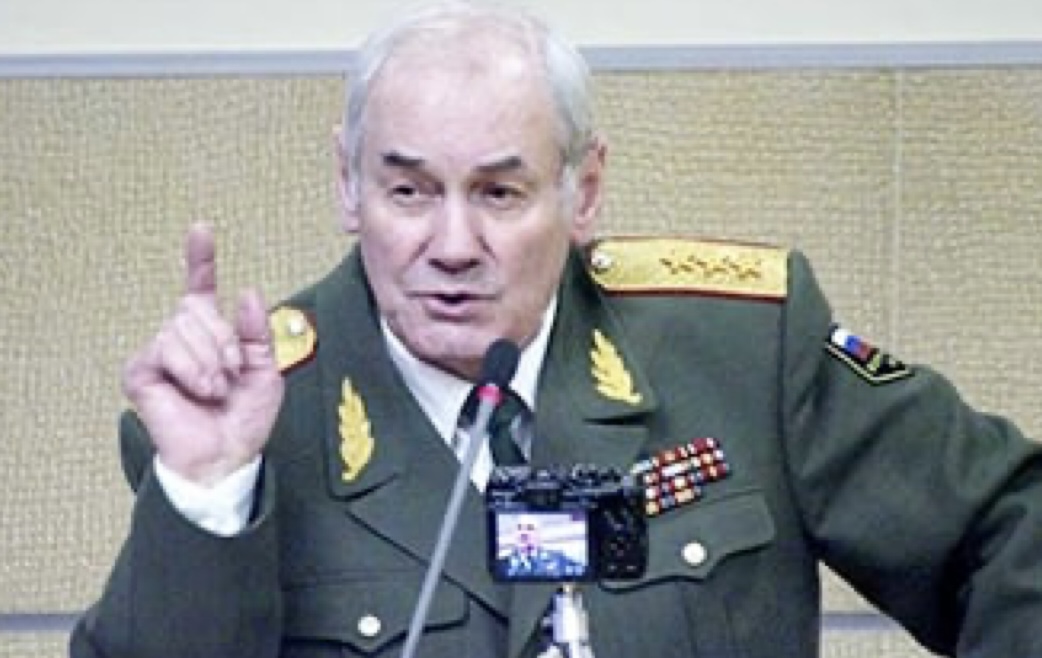
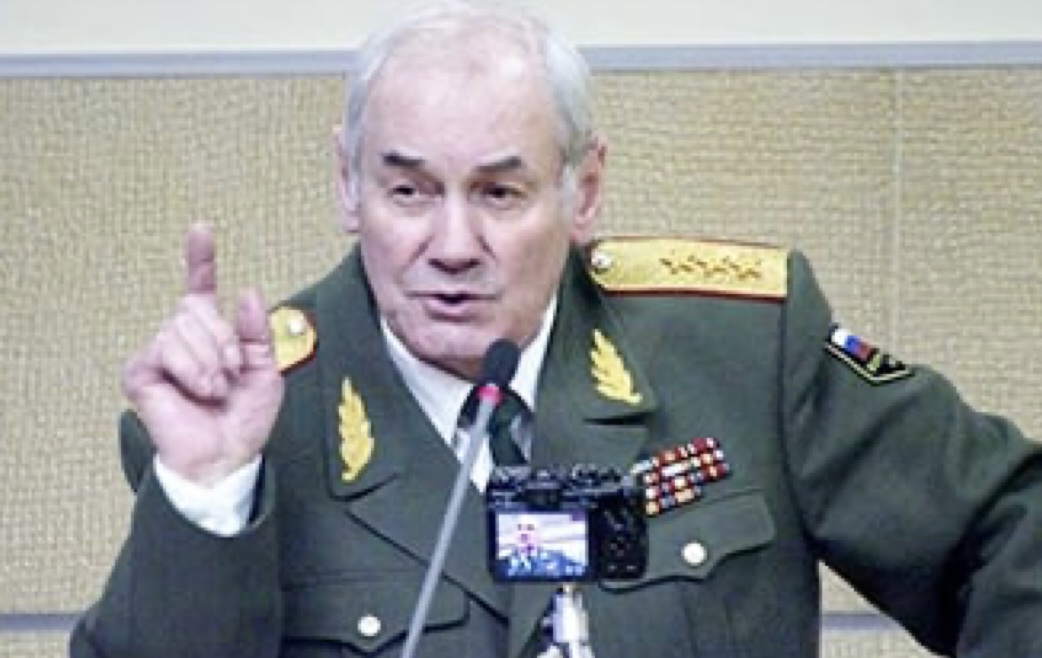
Q: Mr Henze, Europe is witnessing a further dramatic escalation of Russia’s war of aggression against Ukraine. On 9 November 2026, the closure of Novaya Gazeta’s Moscow editorial operation was announced, extinguishing one of the last remaining independent journalistic voices inside Russia. At the same time, retired Russian Colonel General Leonid Ivashov has delivered an unusually uncompromising public denunciation of Vladimir Putin. In a widely circulated livestream, he declared the war lost and accused the President of sacrificing Russia’s future to his own political survival. You have described these developments as part of a historical continuum of imperial power. What precisely do you mean?
Henze: To regard Russia’s full-scale invasion of Ukraine on 24 February 2022 as an isolated decision by Vladimir Putin is to misunderstand the historical and institutional forces that made this war possible.
What we are witnessing is the persistence of an imperial conception of power whose outward forms have changed over successive decades, but whose underlying logic remains remarkably consistent: the political leadership in Moscow claims a privileged right to determine the foreign and security policies of neighbouring sovereign states.
That is the fundamental issue.
This is not merely a dispute over territory, military installations or purported security concerns. It is a refusal to recognise other nations as equal political entities, entitled to determine their own constitutional arrangements, alliances and future.
The Soviet Union justified its interventions in the language of defending socialism. Contemporary Russia invokes historical entitlement, the protection of Russian-speaking populations, alleged threats from NATO and the restoration of geopolitical greatness.
The ideological justifications differ substantially. Yet the underlying claim to political supremacy displays an unmistakable structural continuity.
The closure of Novaya Gazeta’s Moscow operation is a particularly troubling symbol of this development. A state that regards independent journalism as a threat reveals not its strength, but its leadership’s fear of a public reality beyond its control.
Equally significant are General Ivashov’s recent remarks. He emerged from the Russian military establishment and is hardly an exponent of Western liberal political thought. That is precisely why his criticism deserves attention.
When a former colonel general publicly declares that Putin has lost the war and is jeopardising Russia’s future by continuing it, a fundamental question becomes visible within the Russian power structure: does this war still serve the long-term interests of the Russian state, or has its continuation become increasingly inseparable from the political survival of one individual?
One public intervention does not establish the existence of organised opposition within the military leadership. It may, however, indicate growing doubts about the strategic rationality of the Kremlin’s present course.
Historically, such developments matter. Authoritarian systems do not necessarily enter an existential crisis only when they suffer military defeat. They may begin to unravel when elements of their own governing elites cease to believe in the political purpose and strategic judgement of those exercising power.
From East Berlin to Budapest, Prague and Ukraine
Q: You draw a historical line from the East German uprising of 1953 through Budapest in 1956 and Prague in 1968 to present-day Ukraine. Does such a comparison not risk overlooking profound differences between these events?
Henze: Historical comparisons are valuable only when their differences are taken as seriously as their similarities.
In 1953, Soviet tanks were deployed to suppress a popular uprising in East Germany. In 1956, the Soviet Union intervened militarily against the Hungarian Revolution. In 1968, Warsaw Pact forces brought the Prague Spring to an end, extinguishing an attempt to reconcile political liberalisation and national autonomy with the existing socialist system.
The principle subsequently known as the Brezhnev Doctrine, which subordinated the sovereignty of socialist states to the perceived interests of the Soviet bloc, provided the ideological justification for this claim to supremacy.
Today, neither the Warsaw Pact nor the communist international order of that period exists. Russia is not the Soviet Union, and Ukraine was not, before the 2022 invasion, a member of a Moscow-led alliance.
In one essential respect, that makes the present aggression still more fundamental: Russia is attempting to deprive an internationally recognised sovereign state, through military force, of the right to determine its own political future.
The continuity therefore lies not in identical historical circumstances, but in the recurring proposition that the freedom of other peoples may legitimately be subordinated to Moscow’s strategic ambitions.
That is the imperial constant.
Poland in 1981: The Limits of Authoritarian Power
Q: What significance do you attach to Poland, particularly the imposition of martial law in December 1981?
Henze: Poland demonstrates that imperial control need not always be exercised through direct military intervention from abroad.
When General Wojciech Jaruzelski imposed martial law on 13 December 1981, repression was directed against a society whose Solidarity movement had asserted its demands for political self-determination and fundamental civil liberties.
Whether, and under what circumstances, the Soviet Union was prepared to intervene directly remains a question requiring historical nuance. Moscow was already burdened by its war in Afghanistan, while substantial political and military dependencies continued to bind the Warsaw Pact states.
The more important point is that an authoritarian imperial system can preserve its influence by inducing, encouraging or enabling domestic political elites to suppress their own populations.
Poland also demonstrates the limits of that strategy.
Solidarity could not be permanently destroyed, either politically or morally. Civic resistance, institutional self-organisation and the progressive collapse of communist legitimacy ultimately contributed to the democratic transition of 1989.
The lesson is not that repression inevitably succeeds. It is that even heavily militarised systems cannot indefinitely substitute coercion for political legitimacy.
Moldova, Georgia and Ukraine: Territorial Conflict as an Instrument of Imperial Influence
Q: In Moldova, Georgia and subsequently Ukraine, Russia appears to have developed a different method: creating or exploiting unresolved territorial conflicts as instruments of political leverage.
Henze: We can indeed identify a further evolution in the methods of imperial influence.
In Transnistria, Russian military and political support following the conflict of 1992 contributed substantially to the consolidation of a territorial arrangement that continues to impair the sovereignty of the Republic of Moldova.
In Georgia, the conflicts involving Abkhazia and South Ossetia were repeatedly instrumentalised through Russian political influence, military involvement and the distribution of Russian citizenship. The war of 2008 further entrenched Russian control over these territories.
The origins and trajectories of these conflicts differ. Nevertheless, a common strategic mechanism is discernible: unresolved territorial disputes become enduring instruments through which the political independence of the affected state can be constrained.
In 2014, this approach acquired a new and particularly dangerous dimension with the occupation and unlawful annexation of Crimea and Russia’s military intervention in the Donbas.
The so-called little green men, the deliberate obscuring of military responsibility, the combination of regular and irregular forces, and systematic disinformation formed part of a hybrid strategy designed to establish facts on the ground while limiting the immediate political costs of aggression.
The full-scale invasion of 2022 marked the transition from incremental territorial destabilisation to an overt attempt to determine, by force, the political existence of Ukraine as a sovereign state.
The lesson is consequential: when an unlawful territorial settlement is gradually treated as a negotiable normality, military force risks becoming an established instrument of territorial revision.
The Destruction of the European Peace Settlement
Q: Russia has violated not only fundamental principles of international law, but also specific agreements to which Moscow itself was a signatory. Which are particularly important?
Henze: Russia’s aggression constitutes a fundamental violation of the European security order established after the Second World War and reaffirmed, most notably, after 1990.
Foremost is the Charter of the United Nations. Its prohibition on the use of force is not a political aspiration but a central rule of international law.
Equally important are the principles embodied in the Helsinki Final Act of 1975 and the Charter of Paris for a New Europe of 1990: sovereign equality, territorial integrity, the renunciation of force, and the right of states to determine their own political and security orientation.
The Budapest Memorandum of 1994 is of particular significance.
In connection with its accession to the Treaty on the Non-Proliferation of Nuclear Weapons, Ukraine agreed to relinquish the Soviet nuclear weapons remaining on its territory. In return, Russia, the United States and the United Kingdom reaffirmed security assurances, including respect for Ukraine’s independence, sovereignty and existing borders, and a commitment to refrain from the threat or use of force against Ukraine.
The Memorandum did not constitute an automatic military defence guarantee. Its political and legal significance is nevertheless profound: Russia violated assurances it had given in connection with one of the most consequential nuclear disarmament decisions of the post-war era.
The 1997 Treaty on Friendship, Cooperation and Partnership between Russia and Ukraine further affirmed respect for territorial integrity and the inviolability of existing borders.
The stationing of Russia’s Black Sea Fleet on Ukrainian territory was likewise governed by bilateral agreements. Those arrangements never conferred upon Russia any right to occupy or annex Crimea.
The consequences extend far beyond Ukraine.
When a state repudiates its own security assurances through military force, it undermines confidence in international agreements more broadly. This is particularly damaging to the credibility of future disarmament and non-proliferation arrangements.
States that can no longer regard international commitments as reliable instruments of security will inevitably reconsider the means by which they protect themselves.
That is among the most dangerous long-term consequences of Russia’s conduct.
The Cost of War: Military, Demographic and Economic Depletion
Q: On 8 November 2026, the Institute for the Study of War published a striking assessment of Russian military losses. The figures raise serious questions about the long-term military and demographic sustainability of the war. What conclusions do you draw?
Henze: The findings assembled by the Institute for the Study of War are staggering in their scale.
According to its assessment published on 8 November 2026, Belarusian opposition and pro-Ukrainian hacking groups claimed to have identified at least 440,982 registered deaths among Russian military personnel between February 2022 and the end of August 2026, drawing on purportedly obtained data from Russia’s federal statistics agency, Rosstat.
Of these, approximately 356,000 deaths were reportedly classified under the category of “war operations”. Including additional deaths, the groups placed the total at more than 450,100.
The ISW expressly cautioned that it could not independently verify these claims. It nevertheless noted their broad consistency with investigations conducted by Mediazona and Meduza, while indicating that gaps in reporting could mean that the true death toll is higher.
More disturbing still is the scale of overall military casualties.
According to the figures cited by the ISW, Russian losses among those killed and seriously wounded had approached 1.6 million personnel by November 2026.
The Institute further reported that Russian forces had suffered their highest monthly casualties of the war in October 2026 and that, since July, losses had exceeded the number of newly recruited personnel.
These figures describe something considerably more consequential than battlefield attrition.
They point towards a profound depletion of Russia’s demographic, social and economic foundations.
Russia is sacrificing substantial numbers of people of working age, imposing extraordinary burdens upon its public finances, weakening civilian productive capacity and aggravating structural problems that will affect the country for generations.
The strategic question, therefore, is not merely how long Russia can continue to wage this war. It is what kind of state the Russian leadership will ultimately leave behind.
A country can remain militarily operational while progressively destroying the economic and social foundations upon which its long-term strength depends.
That is precisely the danger revealed by current developments.
The Humanitarian and Environmental Consequences
Q: Military casualties represent only part of the overall cost. What are the longer-term consequences for Ukraine and Europe?
Henze: The human, economic and environmental consequences are devastating. They demonstrate that the Kremlin is not merely inflicting destruction upon Ukraine; it is simultaneously undermining Russia’s own social and economic future.
Ukraine’s civilian population bears the immediate burden of a war of aggression it did not initiate. Cities and communities have been devastated, millions have been displaced, and substantial parts of the country’s energy, transport, housing and public-service infrastructure have been destroyed or severely damaged.
The economic consequences are equally profound. The war consumes labour, capital and technological resources that Russia urgently requires for its own modernisation, infrastructure, healthcare and demographic stability.
The environmental dimension remains insufficiently appreciated in public debate.
The destruction of the Kakhovka Dam, contamination of soil and water, damage to industrial installations, unexploded ordnance and substantial additional greenhouse-gas emissions will have consequences lasting decades.
Environmental damage does not respect national borders. It affects river systems, marine environments, agricultural land and, ultimately, European environmental and food security.
This war is therefore not merely a military and humanitarian catastrophe. It is an assault upon the economic, demographic and ecological foundations of future generations.
The historical tragedy is that Russia is sacrificing its own enduring interests to an imperial conception of power.
The West’s Responsibility
Q: What responsibility does the West bear? Did Europe underestimate the direction of Russian policy for too long?
Henze: Yes. Yet it would be intellectually simplistic to characterise Western policy towards Russia since 1990 as an unqualified failure.
The aspiration to integrate Russia into a cooperative European order through economic engagement, institutional participation and political dialogue was initially legitimate. It reflected the historic opportunity created by the end of the Cold War.
The failure arose when that aspiration hardened into a political assumption that was insufficiently revised despite mounting evidence to the contrary.
At the latest, the war against Georgia in 2008, the annexation of Crimea in 2014 and the continuing military destabilisation of the Donbas should have prompted a fundamental reassessment of Europe’s security policy and strategic dependencies.
Economic interdependence does not, by itself, create a durable peace when one government regards those dependencies as instruments of geopolitical coercion.
Nor can diplomacy succeed indefinitely when the violation of international commitments continues to yield strategic advantages for the aggressor.
That does not render dialogue obsolete. On the contrary, diplomacy remains indispensable. But it must be supported by credible deterrence, economic resilience, military capability and political resolve.
The central lesson is that peace is not secured by democracies diluting their own principles, but by demonstrating that those principles can and will be defended.
Reagan, Kohl and Bush: Strategic Resolve and Diplomatic Judgement
Q: You frequently invoke Ronald Reagan, Helmut Kohl and George H. W. Bush. What relevance does their political legacy have today?
Henze: These statesmen had distinct political backgrounds, but they shared a crucial understanding: liberty, security and international order must be considered together.
When Ronald Reagan called for the opening of the Berlin Wall in June 1987, his words were far more than a rhetorical flourish. They expressed a political and moral conviction that Europe’s division and the subjugation of its peoples should never be accepted as permanent features of history.
Yet the decisive factor was not the speech alone. It was the interaction of political resolve, economic strength, credible deterrence and a willingness to pursue serious negotiations.
German reunification in 1989–90 provides a particularly compelling illustration.
Helmut Kohl and George H. W. Bush combined strategic determination with diplomatic restraint. They recognised the historic opportunity to embed German unity within a renewed European order, while remaining attentive to the security interests of Germany’s neighbours.
Mikhail Gorbachev’s role was equally indispensable. His willingness to refrain from using military force to preserve Soviet dominance in Eastern Europe was crucial to the peaceful transformation of the continent.
The lesson is fundamental: successful foreign policy requires not only strength, but the capacity to recognise historical change and give it lasting institutional form.
Resolve without diplomacy can harden into permanent confrontation. Diplomacy without resolve can become an invitation to further coercion.
The art of responsible statesmanship lies in reconciling the two.
Germany’s Historical Responsibility under Friedrich Merz
Q: What role should Germany, under Chancellor Friedrich Merz, play in this historical moment?
Henze: As the European Union’s largest economy and a central pillar of the continent’s security architecture, Germany bears a particular responsibility.
The government led by Friedrich Merz faces the task of strengthening Germany’s foreign-policy and security capabilities so that political commitments are matched by economic, military and institutional means.
In this respect, there is a meaningful connection to Helmut Kohl’s foreign-policy tradition.
The historical circumstances are, of course, different. Kohl’s task was to integrate German reunification into a stable European and transatlantic order. Merz must help defend that order against a state prepared to challenge its fundamental principles through force.
Several requirements follow: sustained support for Ukraine, stronger European defence capabilities, the protection of critical infrastructure and Germany’s enduring reliability within NATO.
Equally essential are the strategic renewal of Europe’s defence-industrial base and the improvement of military mobility. Europe must be capable not merely of declaring its security commitments, but of fulfilling them operationally.
The transatlantic partnership remains indispensable. At the same time, Europeans must assume a substantially greater share of responsibility for their own security.
The historical task is not to reproduce an earlier era, but to preserve, under profoundly altered geopolitical circumstances, the principles that made Europe’s peaceful transformation after 1989 possible.
Germany’s claim to leadership will ultimately be judged by its ability to translate economic strength into enduring strategic capability.
Why Russia Needs Another 1988
Q: You have argued that Russia requires a new 1988. Why 1988 rather than 1989, the year the Berlin Wall fell?
Henze: Because 1988 represents a decisive transformation that preceded the visible political upheaval.
In 1989, the historical rupture became unmistakable to the wider world. But its foundations had been laid earlier.
The Soviet Union was weakened by economic inefficiency, technological backwardness, institutional stagnation and the burdens of the war in Afghanistan. Under Mikhail Gorbachev, recognition gradually emerged that the existing political and economic system could not continue unchanged.
In 1988, that recognition became increasingly evident in political reform, the gradual opening of public debate and the announcement of substantial unilateral Soviet troop reductions.
The decisive transformation therefore began not with the fall of a wall, but with the erosion of the conviction that the existing system could be sustained indefinitely.
That is where the historical parallel with contemporary Russia becomes relevant.
A new 1988 does not mean that Russia must inevitably disintegrate. Nor does it imply that a change of political leadership would automatically produce democracy and peace.
It means that Russia’s political and military elites must come to recognise that the continuation of imperial aggression threatens the future of their own state.
The strategic turning point would arrive when the costs of continuing the war ceased to be regarded within the Russian establishment as an acceptable price for imperial grandeur and came instead to be understood as an existential danger to the country’s long-term stability.
Such a change of understanding cannot simply be imposed from outside. It can, however, be influenced by credible Western unity, Ukraine’s resilience and the systematic containment of Russia’s capacity for further aggression.
General Ivashov and the Possibility of a Political Turning Point
Q: Could General Ivashov’s recent criticism be an early indication of precisely such a development?
Henze: It may indicate that the strategic costs of the war are now being openly discussed even by figures associated with Russia’s traditional military establishment.
It would be premature to infer more than that from a single public intervention.
Nevertheless, the historical comparison is instructive.
By 1988, it was increasingly apparent that the Soviet leadership under Gorbachev was being compelled to acknowledge the economic, military and political limitations of its existing model of government.
The initial transformation was not a military defeat. It was a change in political understanding.
A comparable turning point in Russia would require significant elements of its political, military and economic leadership to recognise that continued imperial aggression does not restore Russian strength, but jeopardises the long-term stability and viability of the Russian state.
Ivashov’s remarks should therefore not be mistaken for evidence of an imminent change of government. They do, however, suggest that questions concerning Putin’s responsibility and the strategic purpose of the war can no longer be entirely suppressed, even among traditionally state-aligned figures.
That is politically significant.
The historical objective should not be to humiliate Russia or precipitate the collapse of the Russian state. It should be to make possible a political development in which Russia’s leadership acknowledges the limits of military power and respects the sovereignty of neighbouring nations.
Why a Change of Leadership Would Not Be Enough
1/2