Introducing the Global South Policy Hub.🌏
A new nonpartisan #thinktank based in #WashingtonDC, dedicated to amplifying the perspectives, expertise, and priorities of the #GlobalSouth in international policy spaces.
We're launching soon! Follow us for more insights and updates!
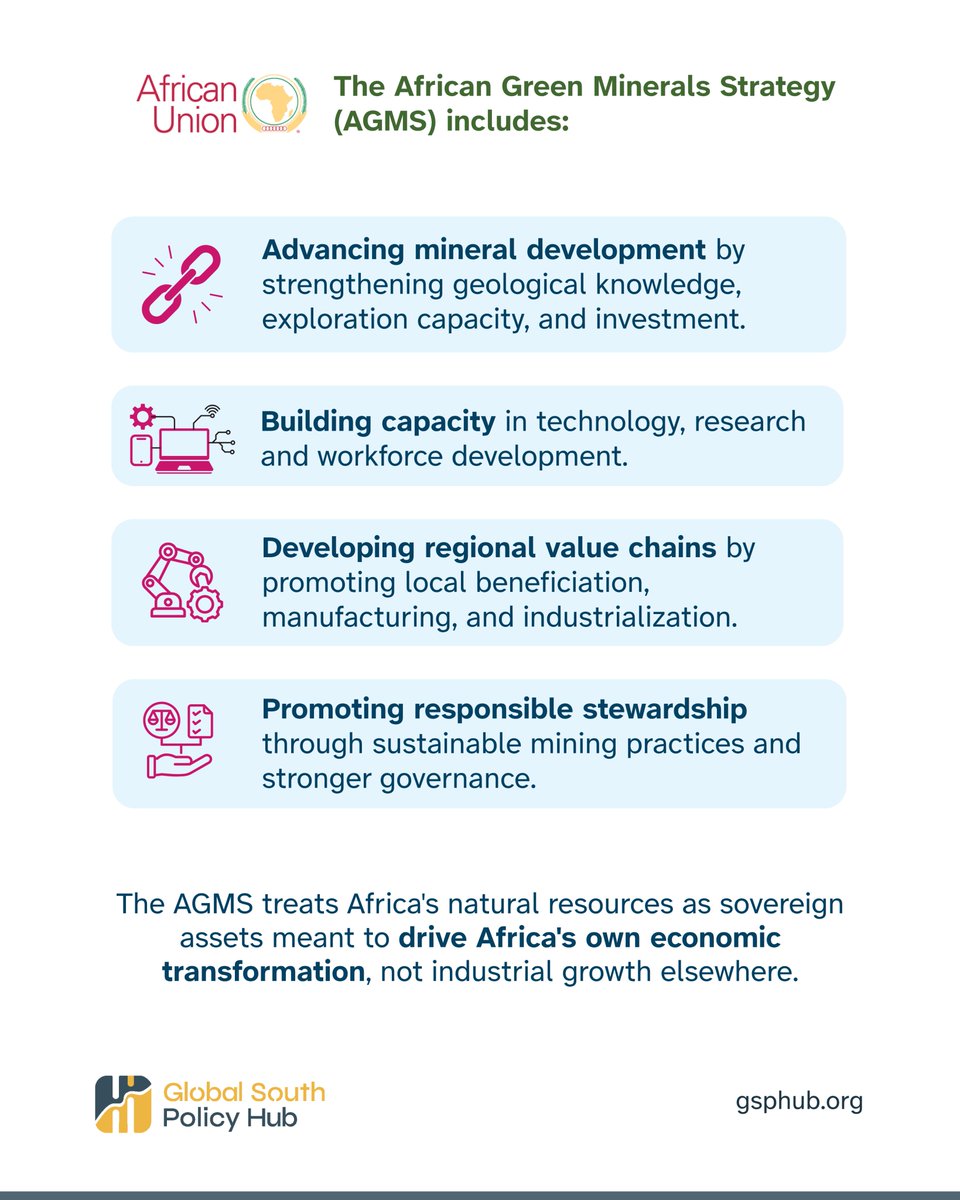
Africa's minerals are sovereign assets, not commodities up for grabs.
That's the premise behind the African Green Minerals Strategy (AGMS), which the African Union adopted in February 2025.
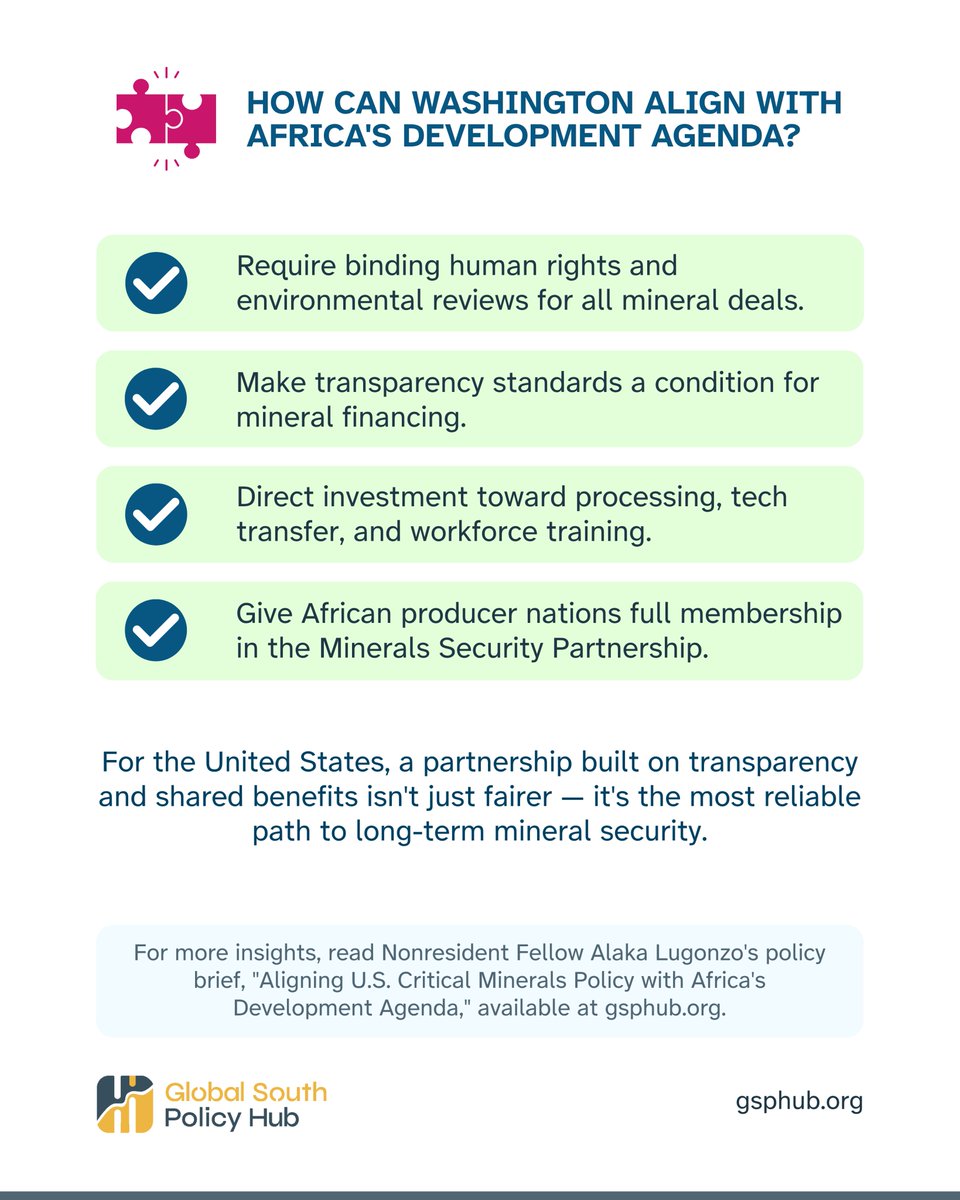
In our latest policy brief, Nonresident Fellow @alaka_lugonzo argues that the U.S. should align its critical minerals policy with the AGMS — backing local processing and industrialization instead of extraction alone. It's a shift that would also make American supply chains more durable.
https://t.co/w3ZrvHcKsN
@Global_Witness@AfCFTA@_AfricanUnion
#GlobalSouth #Geopolitics #USForeignPolicy
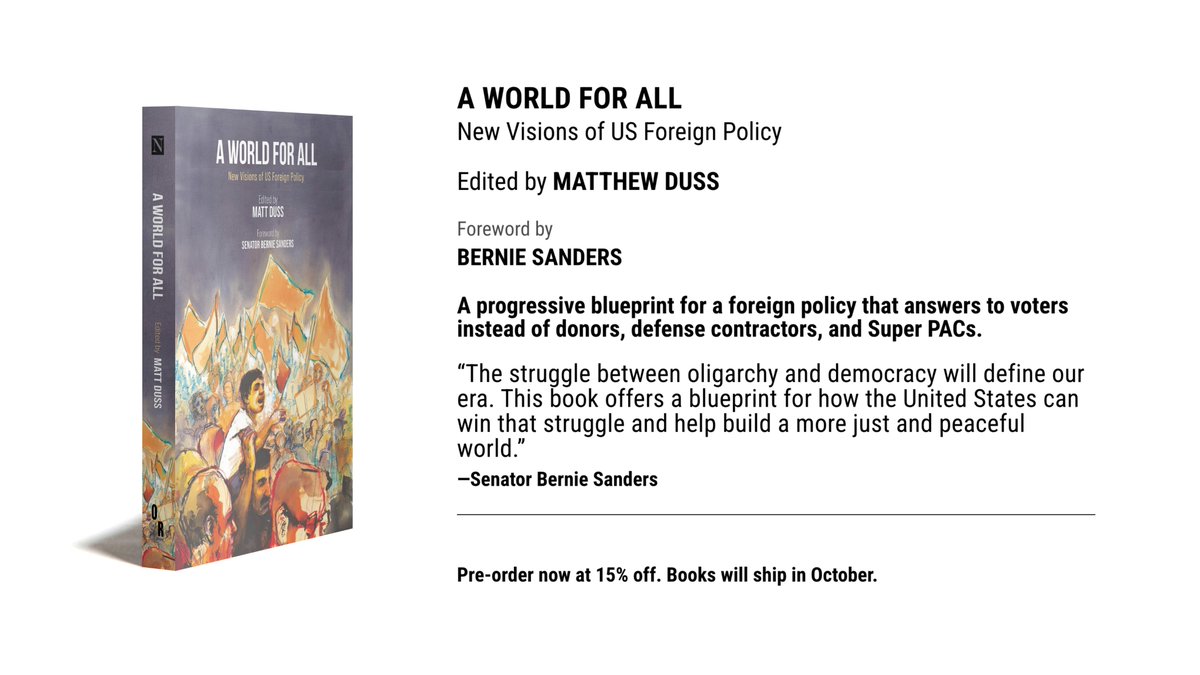
“U.S. dominance over the international system does not protect its interests; on the contrary, it undermines them,” argue Executive Director @AudeDarnal and @CIPolicy President and CEO @NancyGEO in the upcoming book “A World for All: New Visions of US Foreign Policy,” edited by Matt Duss.
Their argument: legacy multilateral institutions like the UN face a crisis of legitimacy that symbolic reform can't fix. Real change means the U.S. and other dominant powers sharing decision-making power with lower-income countries — not fostering a system that only serves the most powerful nations.
Essential reading on the future of American foreign policy and the U.S. role in the world, with the midterms this year and the 2028 election ahead.
For info and to pre-order at 15% off: https://t.co/djVbGmiv7v
#GlobalSouth #Multilateralism #USForeignPolicy
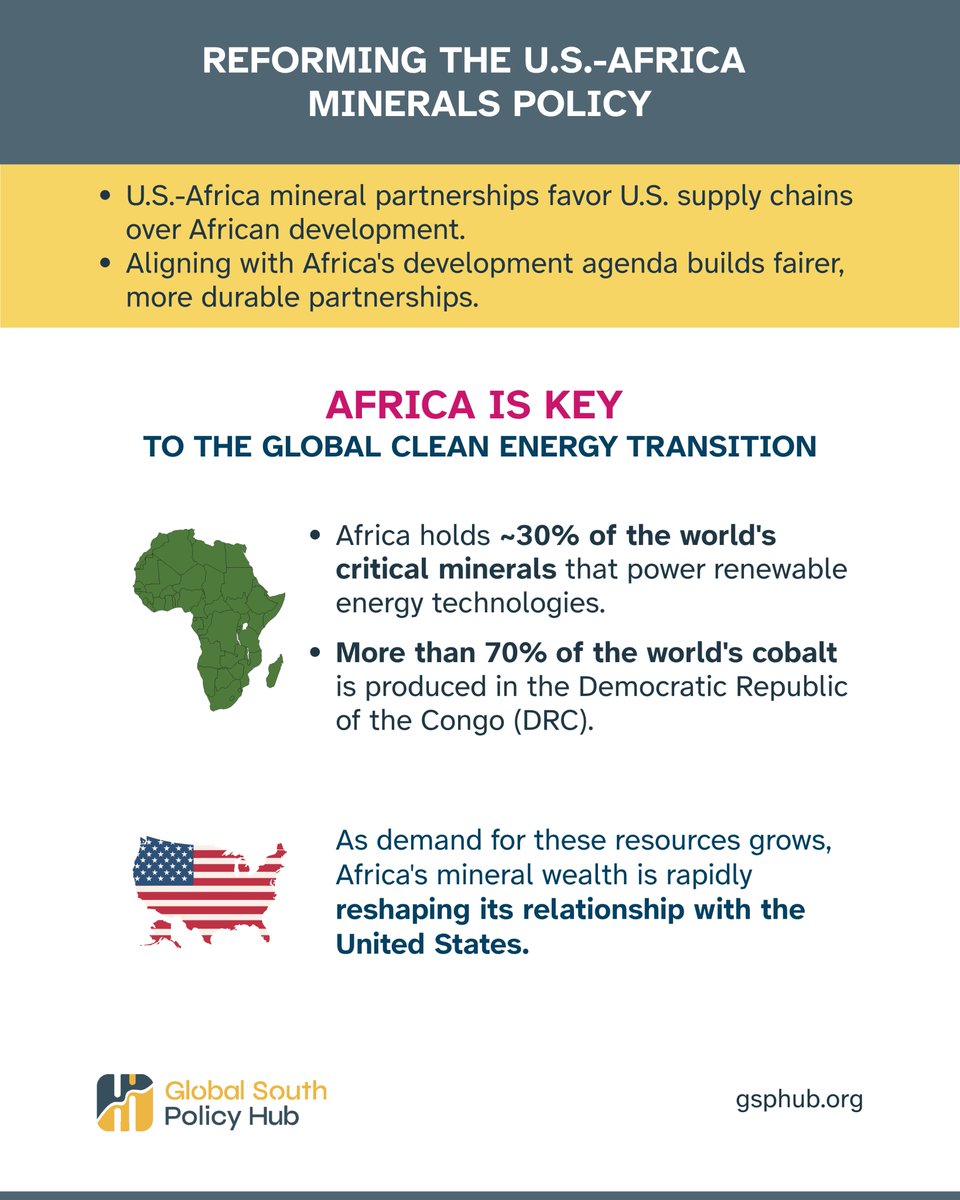
Africa doesn't benefit from its own mineral wealth.
The reason: a broken minerals model built on extraction without shared benefits, tilted toward consuming nations over producers.
The fix: a minerals partnership that secures supply for consuming nations while also advancing Africa's development agenda.
Nonresident Fellow @alaka_lugonzo suggests a path for the United States: https://t.co/w3ZrvHcKsN
@Global_Witness@AfCFTA@_AfricanUnion
#GlobalSouth #Geopolitics #USForeignPolicy
Can the U.S. secure critical minerals without earning the trust of the nations that supply them?
Nonresident Fellow @alaka_lugonzo argues that the answer is no — and that durable access depends on aligning with Africa's development agenda, not just extracting from the continent: https://t.co/w3ZrvHcKsN
@Global_Witness@AfCFTA@_AfricanUnion
#GlobalSouth #Geopolitics #USForeignPolicy
Early this year, Zambian officials rejected a reported U.S. proposal tying health financing to preferential access to its copper reserves.
It's a signal Washington should not ignore.
Nonresident Fellow @alaka_lugonzo's new policy brief argues that durable U.S. access to Africa's critical minerals depends on moving past extraction — toward partnerships that back local processing, human rights safeguards, and the African Green Minerals Strategy.
Read the brief: https://t.co/w3ZrvHcKsN
@Global_Witness@_AfricanUnion@AfCFTA
#GlobalSouth #AfricaPolicy #USForeignPolicy
The global race for critical minerals is underway — and current U.S. policy isn't built to compete in it.
The U.S. can change that by offering Global South countries three things: long-term stability signals, standards producers can actually meet, and a predictable pathway for project approvals.
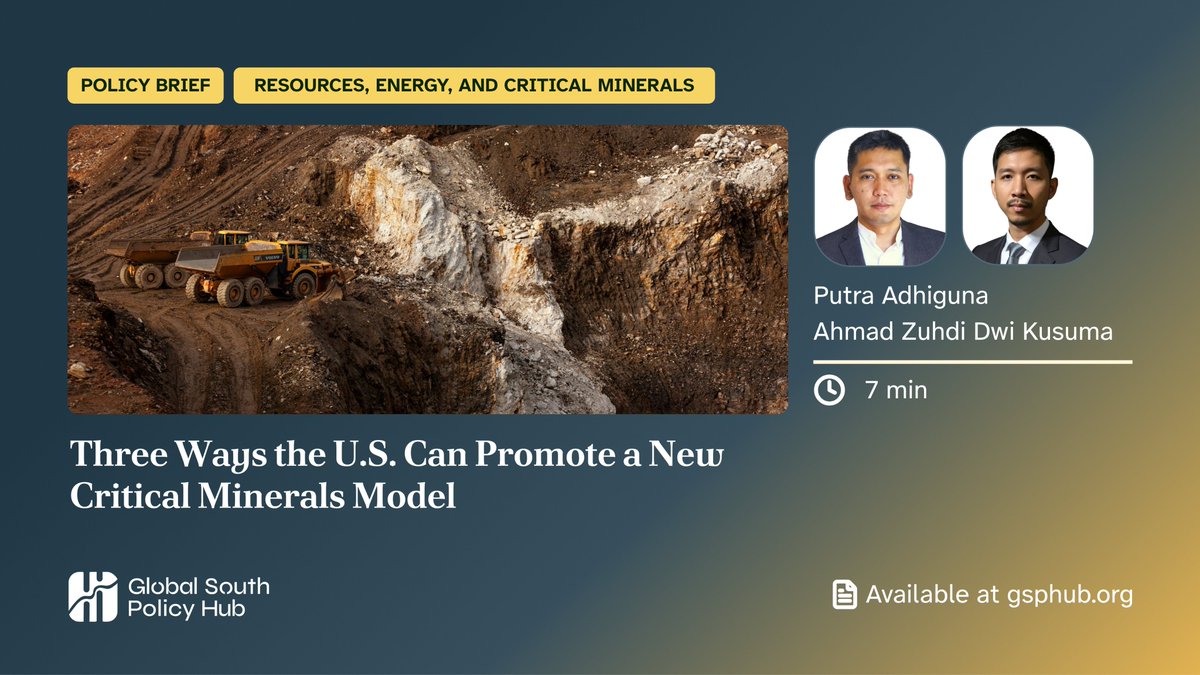
Guest experts Putra Adhiguna and Ahmad Zuhdi Dwi Kusuma outline steps for Washington: https://t.co/DEBXZB97Ju
#CriticalMinerals #GlobalSouth
Indonesia is the benchmark for critical minerals production in the Global South.
But its success is also a cautionary tale — quick investment has outpaced the safeguards meant to protect human rights and the environment.
In our new brief, Indonesian experts Putra Adhiguna and Ahmad Zuhdi Dwi Kusuma argue that the U.S. has a chance to offer a better model. Here's how: https://t.co/DEBXZB8zTW
#CriticalMinerals #GlobalSouth
Last month, the U.S. imposed a new 12.5% tariff on imports from Chile, replacing the previous 10% rate.
In a recent interview, Nonresident Fellow @jmahumadaf — former Chilean Undersecretary of International Economic Relations and assistant professor at @ieiuchile — breaks down what this means: the economic and geopolitical stakes behind the new U.S. tariffs, the direct hit to Chile, and the harder road ahead for trade relations.
🎥 Watch here (in Spanish, English subtitles/translation available): https://t.co/LQOdLLuYFX
Climbing the mineral value chain shouldn't mean choosing between quick investments and safeguards. But for most Global South producers, that's exactly the choice on the table right now.
Guest experts Putra Adhiguna and Ahmad Zuhdi Dwi Kusuma explain why — and what a workable U.S. alternative would need to look like: https://t.co/DEBXZB97Ju
#CriticalMinerals #GlobalSouth
Indonesia's nickel boom runs on Chinese capital.
China controls roughly 65% of the country's nickel refining capacity and built more than 90% of its smelters — investment that came with far fewer conditions than Global North markets impose. That lack of conditions is shaping how Global South producers build out their mineral industries, often at the expense of workers and the environment.
Experts Putra Adhiguna and Ahmad Zuhdi Dwi Kusuma lay out how the U.S. can compete: with stability signals, achievable standards, and speed.
Read their analysis ⤵️
https://t.co/DEBXZB97Ju
#CriticalMinerals #GlobalSouth
Why do #GlobalSouth countries keep choosing quick investments over safeguards in the mineral race?
Because the alternative — slow Global North capital with conditions no producer can meet — leaves them little choice.
Guest experts Putra Adhiguna and Ahmad Zuhdi D.K. use Indonesia's nickel boom, and its human cost, to outline what a workable third model from Washington could look like.
Learn more: https://t.co/DEBXZB97Ju
#CriticalMinerals #Indonesia
The United States’ G20 presidency won't fix global governance on its own. But it's a real opening.
In a new policy brief, Nonresident Fellow @anasaggioro lays out where the U.S. could make progress this year: reforming the Debt Sustainability Analysis framework, eliminating IMF surcharges, and advancing international tax cooperation to finance development and climate action.
See full list of recommendations: https://t.co/vtp5JncMLR
@BRICSPolicy@UFRRJ@g20org
#GlobalSouth #G20
U.S. trade unilateralism and multilateral disengagement risk alienating Global South countries and accelerating their search for alternative institutions and partnerships.
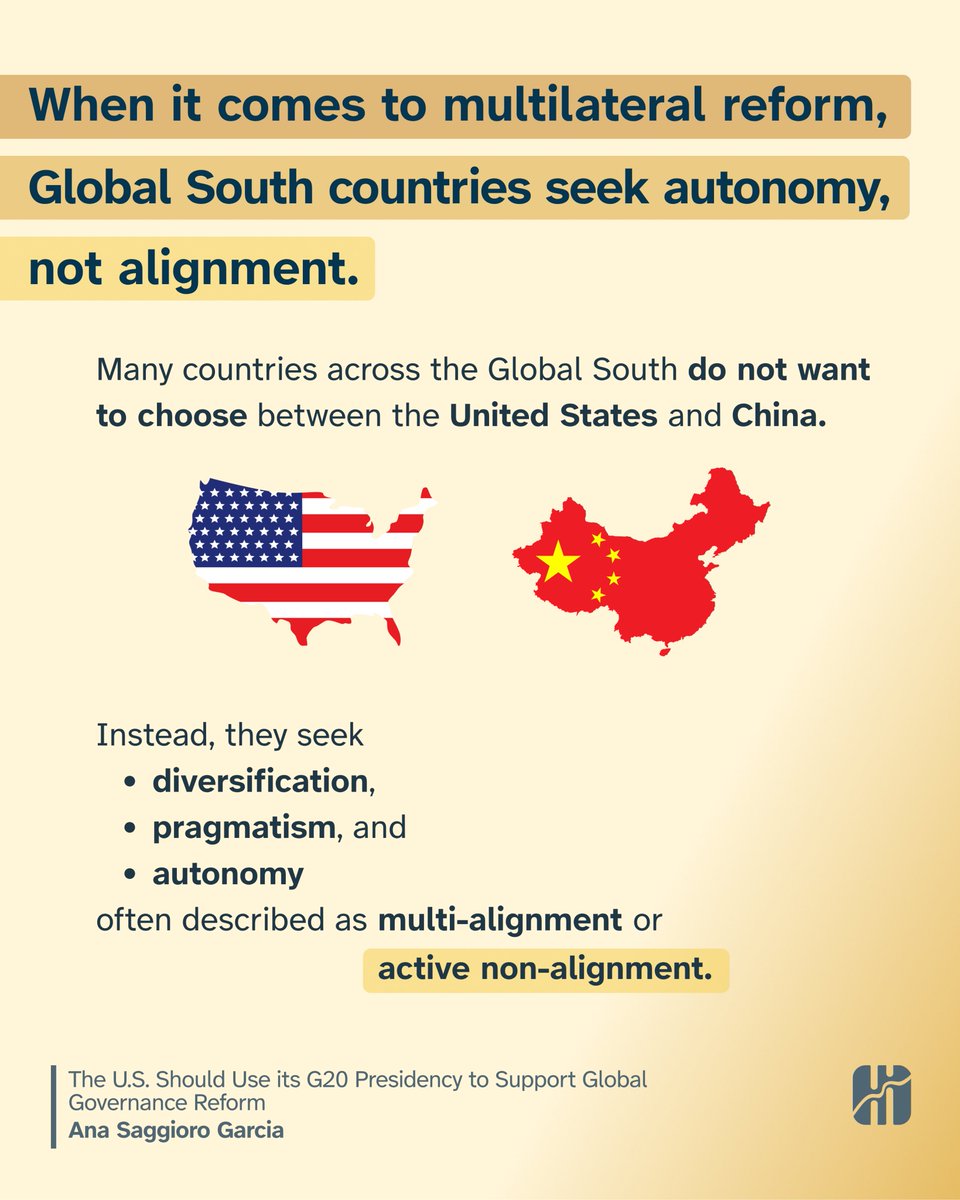
Yet, many Global South countries want to diversify their partnerships rather than pick sides.
Nonresident Fellow @anasaggioro argues that the U.S. government should work with that reality, not against it.
See her recommendations: https://t.co/vtp5JncMLR
@BRICSPolicy@UFRRJ@g20org
#GlobalSouth #G20 #BRICS
The U.S. doesn't just have a seat at the G20 table this year — it's holding the gavel and setting the agenda.
This is Washington's chance to regain the trust and influence it's losing in the Global South.
Here’s how, according to Nonresident Fellow @anasaggioro: https://t.co/vtp5JncMLR
@BRICSPolicy@UFRRJ@g20org
#GlobalSouth #G20
Countries across the #GlobalSouth aren't abandoning multilateralism. They're losing patience with the limitations of its foundational institutions.
As a result, many are turning toward South-South cooperation, regional institutions, and Chinese-led financing initiatives.
Nonresident Fellow @anasaggioro argues that the U.S. G20 presidency is Washington's opportunity to engage constructively with the Global South and support a more inclusive multilateral system. ⤵️
https://t.co/vtp5JncMLR
@BRICSPolicy@UFRRJ@g20org
#G20
Deadline extended❗
We're extending the deadline for our Social Media Specialist search — now closing Wednesday, July 29.
This is a part-time, remote consultant role (Caribbean-based), managing our presence across five platforms — X, LinkedIn, Instagram, Bluesky, and TikTok — plus supporting our executive director's platforms.
Apply here: https://t.co/jYq0J6A4tB
#GlobalSouth #Hiring #ThinkTank
What actually drives debt crises in the #GlobalSouth?
It's not just fiscal recklessness. It's a deeper problem.
When a country's economy is built around importing essentials for survival while exporting low-value-added commodities, debt isn't a policy failure. It's a flaw in the international financial system itself.
More from guest expert @FadhelKaboub: https://t.co/LS7dfmgb8l
@DenisonU@GISP_Tweets
#DebtReform #SovereignDebt
Earlier this month, @CARICOMorg leaders discussed U.S.-proposed MOUs on Third Country National (TCN) transit arrangements. Part of President Trump’s mass deportation campaign, the arrangement calls on some Caribbean countries to temporarily host migrants deported by the U.S. before they continue to another destination.
In the Caribbean, the deals have drawn public protests, sovereignty concerns, and caution from governments weighing whether to sign at all.
Nonresident Fellow Kai-Ann D. Skeete’s March analysis situates TCN arrangements within a broader pattern of U.S. policy toward the Caribbean and its implications for CARICOM's regional cohesion.
Read her analysis ⬇️
🔗 https://t.co/tGzlT5GkVR
#Caribbean #GlobalSouth
When multilateral reform is too slow, #GlobalSouth countries build their own path forward.
But emerging alternatives are not a threat to the Global North. Rather, they are a strategic necessity for global stability.
Nonresident Fellow @saiia_info on how a new international order is beginning to take shape: https://t.co/I5vItnvuJW
@saiia_info
#G20 #GlobalGovernance