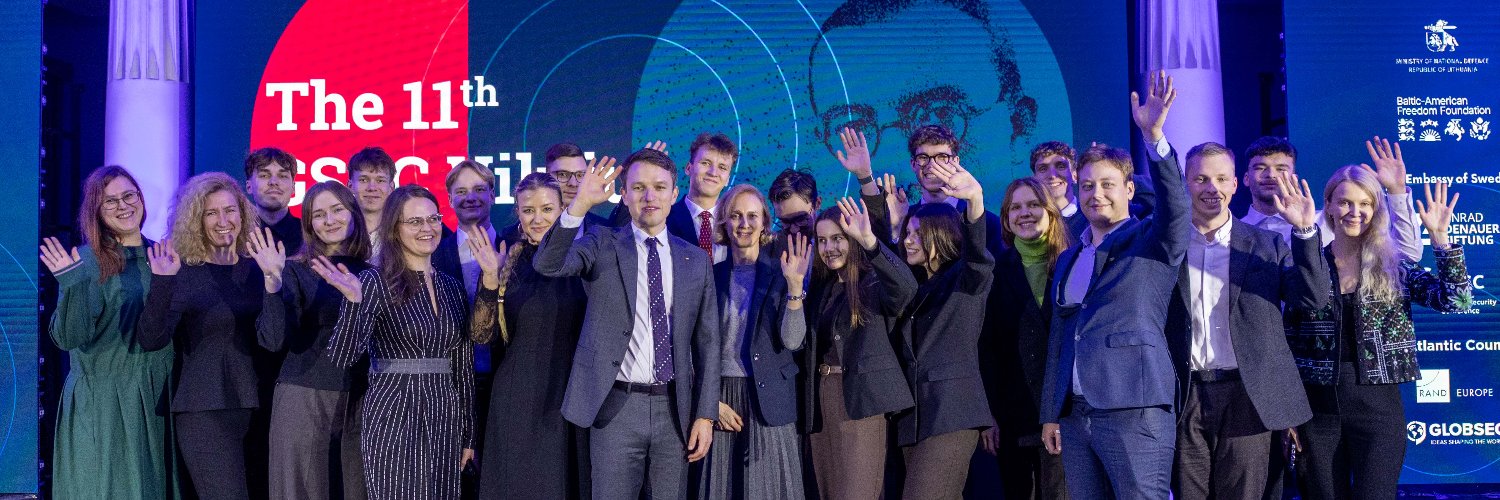
⚡ What’s next for Lithuania’s energy resilience?
The GSSC and the Lithuanian Ministry of Energy hosted a discussion with Energy Minister @lsavickas and Chief National Security Adviser to the President @DMatulionis on energy security priorities in Vilnius and Brussels. Moderated by @LinasKojala.
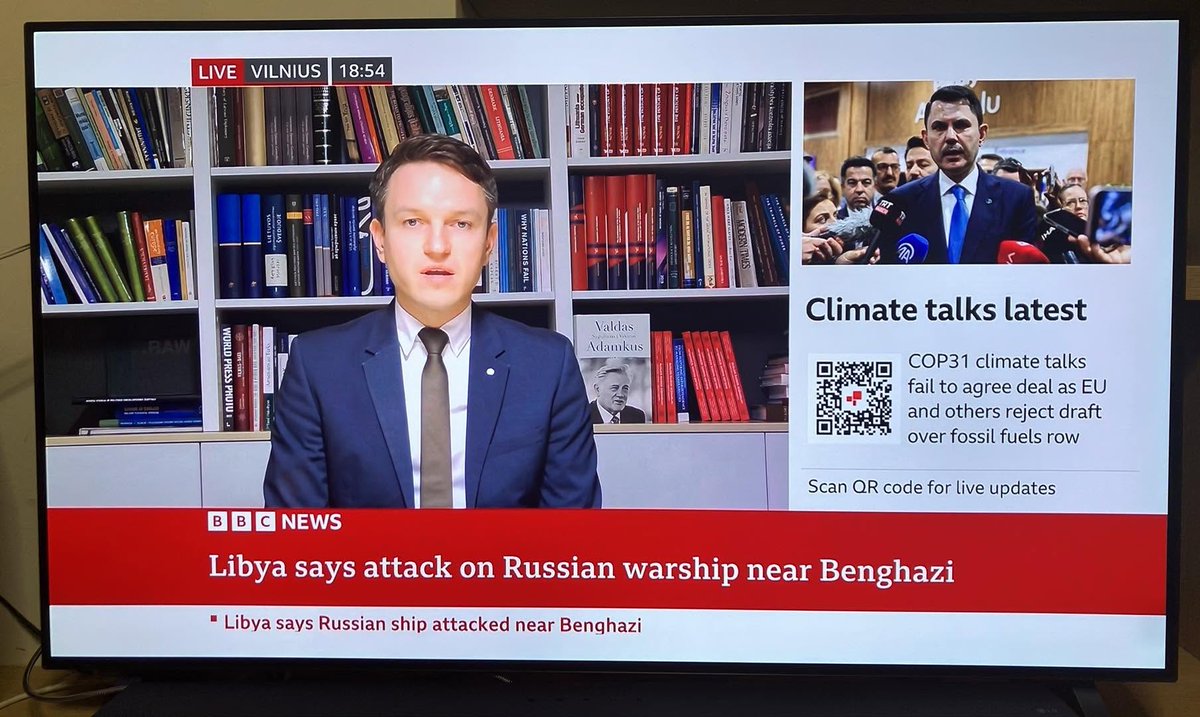
Sunday evening on @BBCWorld, discussing security in the Baltic Sea and a suspected Ukrainian drone strike against a cargo vessel indirectly owned by Russia’s Ministry of Defence and sanctioned by both Ukraine and the US.
The risk of escalation, including unintended escalation, remains high. Russia continues to reject proposals from Ukraine, Europe and the US for partial or comprehensive ceasefires.
BBC also unofficially awarded me the title of “most patient guest” after a long wait to go live. Always nice to receive some international recognition! @marklowen
GSSC Director @LinasKojala joined @marklowen on @BBCWorld to discuss Baltic Sea security, including a suspected Ukrainian drone attack on a Russia-linked vessel.
As Kojala noted, the risk of unintended escalation remains high, with Russia’s continued rejection of ceasefire proposals adding to regional tensions.
Glad to see GSSC team members sharing their insights with international audiences.
🇱🇹 GSSC hosted a presentation of the book “Return to the West: Valdas Adamkus”, commemorating the 100th birthday of Valdas Adamkus, former President of Lithuania.
The discussion explored his role in Lithuania’s return to the West and its lasting significance.
🔗 Read more: https://t.co/fwHoyDBz8S
Today at GSSC, we welcomed Elchin Amirbayov, Representative of the President of the Republic of Azerbaijan for Special Assignments.
The discussion was moderated by GSSC Deputy Director and Chief Operating Officer Andrius Prochorenko. The conversation focused on prospects for regional stability, strategic connectivity, and international cooperation in Azerbaijan and the South Caucasus.
The Geopolitics and Security Studies Center hosted a discussion with Lithuanian Prime Minister Mindaugas Sinkevičius on Lithuania’s security situation and its most pressing challenges. The conversation was moderated by GSSC Director Linas Kojala.
The event also provided an opportunity to reflect on the Center’s history with the presentation of a book commemorating its 20th anniversary, tracing two decades of its development, defining moments, and contributions to Lithuania’s foreign and security policy debates.
🇱🇹🇩🇪 With Lithuania as this year’s partner country, GSSC contributed to the Berlin Security Conference 2026, hosting a panel on military mobility and engaging in key security discussions.
For Lithuania, closer defence cooperation with Germany remains a key priority. The deployment of a permanent German brigade to Lithuania marks a major step in strengthening bilateral defence ties and NATO’s Eastern Flank.
🔗 Read more: https://t.co/wIxGdkKrxX
Presented in New York, GSSC’s new study explores how illicit trade and criminal networks serve hostile state interests.
🇺🇸 Foreword by former US Secretary of State @mikepompeo. Authors: @EitvydasB, Žydrūnas Bartkus, Vytautas @Leskevicius, @BLivdanska & Henrik Praks.
🔗 https://t.co/doFz8NYxso
Moscow continues to test NATO’s red lines. But could the Alliance’s emphasis on restraint be encouraging further escalation?
In his latest Newsweek article, GSSC’s Vytautas @Leskevicius examines how excessive caution risks weakening NATO’s deterrence and limiting its ability to respond.
🔗 Read more: https://t.co/a9qb93ZGqb
🇱🇹🇸🇪🇺🇦 What can Lithuania and Sweden learn from Ukraine’s experience in building resilience?
At #DefendingBaltics2026, GSSC brought together experts to discuss crisis preparedness, critical infrastructure, and societal resilience against hybrid threats.
🔗 Read more: https://t.co/nVyxVM17pj
In my @Newsweek op-ed: does our restrained deterrent messaging make Moscow take our red lines less seriously? Arguably, it does. Time to be clearer about both the lines and the cost of crossing them.
https://t.co/kEgDAp5VQD @GSSC_LT
#Quoted: “Moscow pushes the narrative that behind all these movements, including the one in Serbia, there is Western interference,” said Denis Cenusa, whose research expertise includes hybrid warfare and Russia’s influence in Europe and the Caucasus. @GSSC_LT
By @NickSquires1 for @Telegraph
https://t.co/m0J4yGLnJa
🇱🇹🇵🇱 The GSSC, together with @PISM_Poland and the @LithuaniaMFA, hosted the 11th Lithuanian–Polish Roundtable in Warsaw.
Policymakers and experts discussed Russian hybrid threats in the Baltic Sea, Lublin Triangle cooperation, and policies towards Belarus.
🔗 Read more: https://t.co/vQx6FUyunB
🇱🇹 How could Beijing exert pressure on Lithuania during its 2027 EU Council Presidency?
With diplomatic relations strained and EU–China tensions growing, GSSC Associate Expert @ElzePinelyte examines three potential routes of Chinese pressure.
🔗 Read more: https://t.co/AJYP1iWPOQ
🇺🇸 The Centre welcomed a delegation from the @LosAngelesWAC.
Discussions focused on Baltic security, Russia’s long-term threat, countering disinformation, and the Belarusian regime’s instrumentalization of migration.