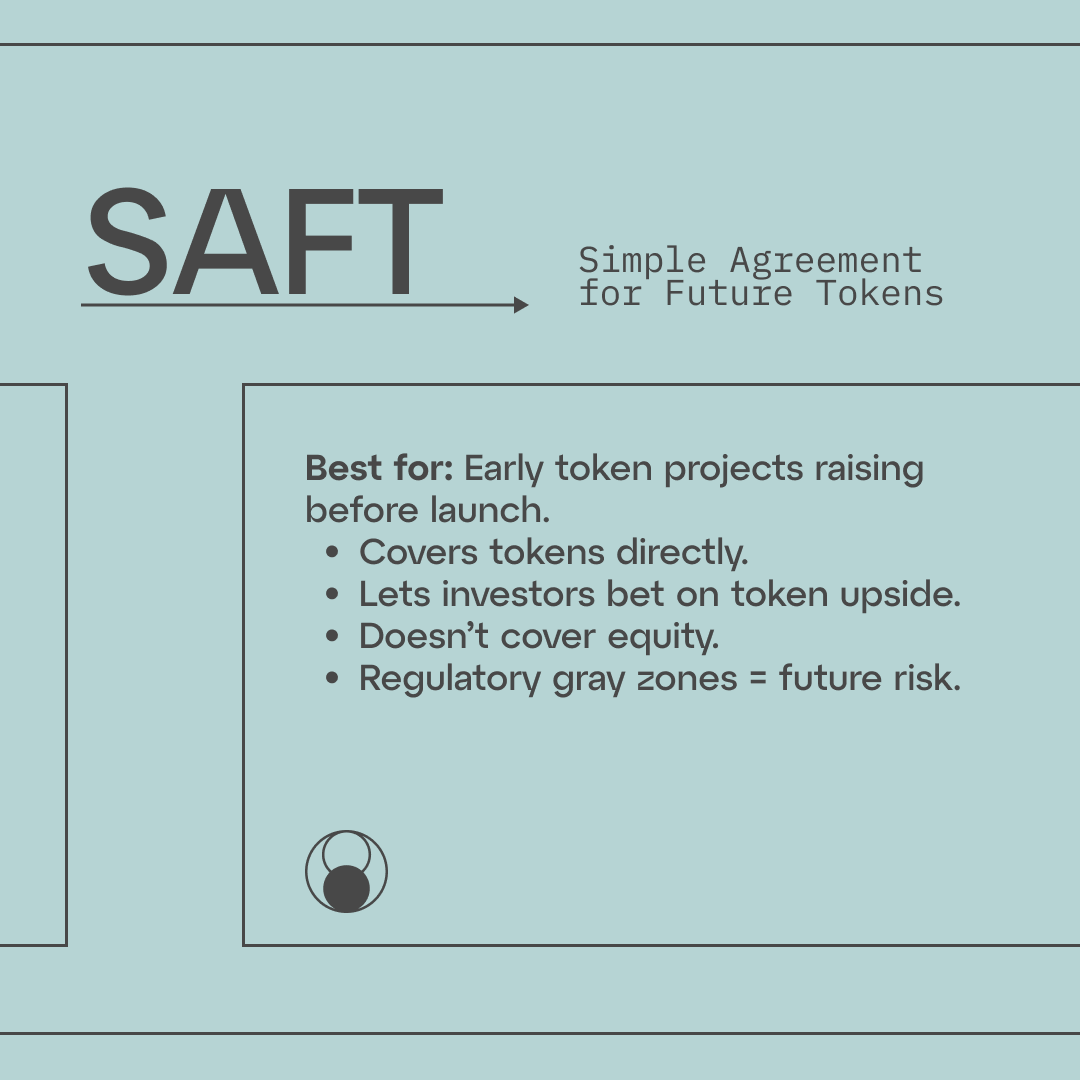
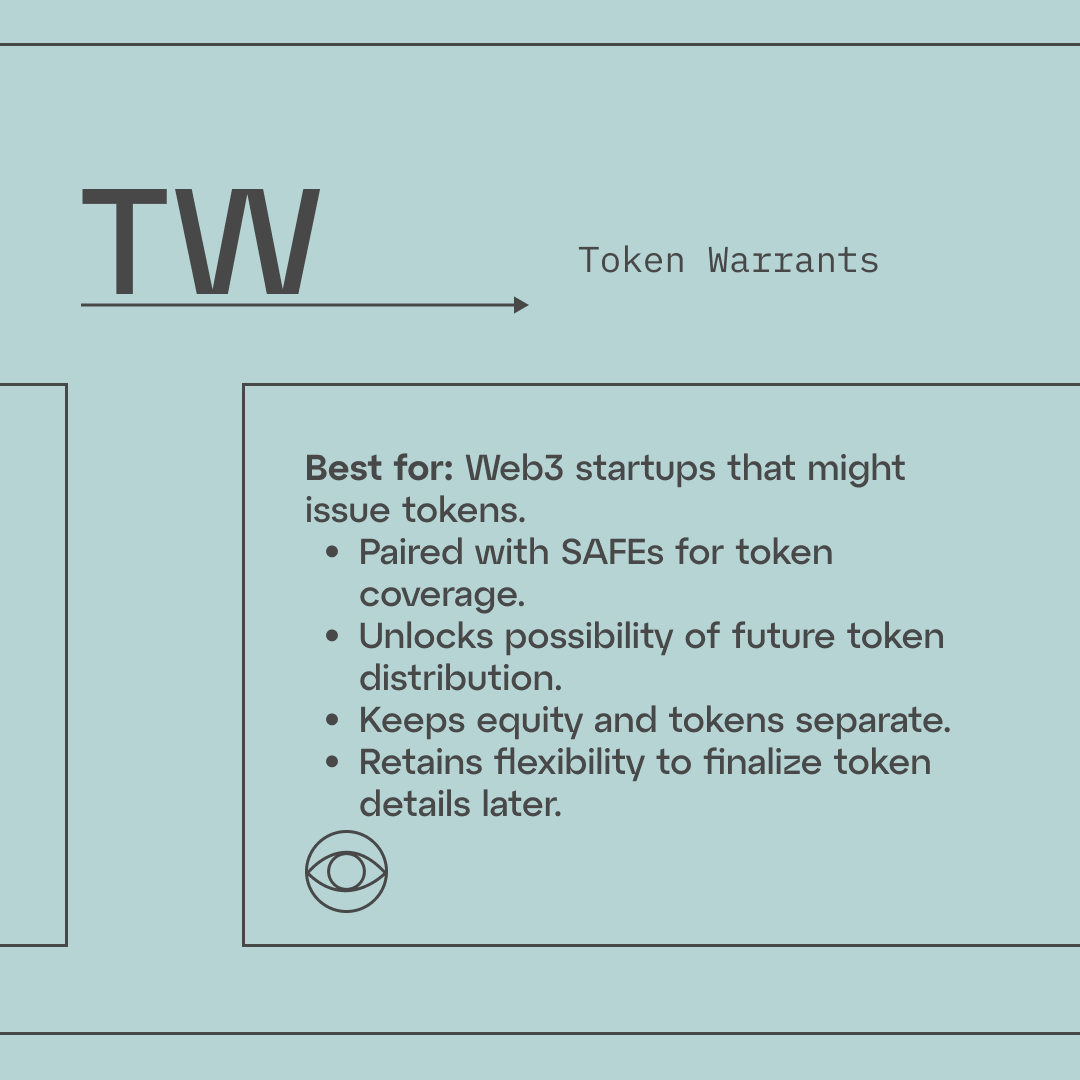
You picked a SAFE. Your investor wanted a SAFT. Your lawyer said you need a token warrant.
All three are investment contracts- some for equity, some for tokens.
But picking the wrong one may quietly wreck your raise.
Let’s fix that: 30 secs. 🧾👇
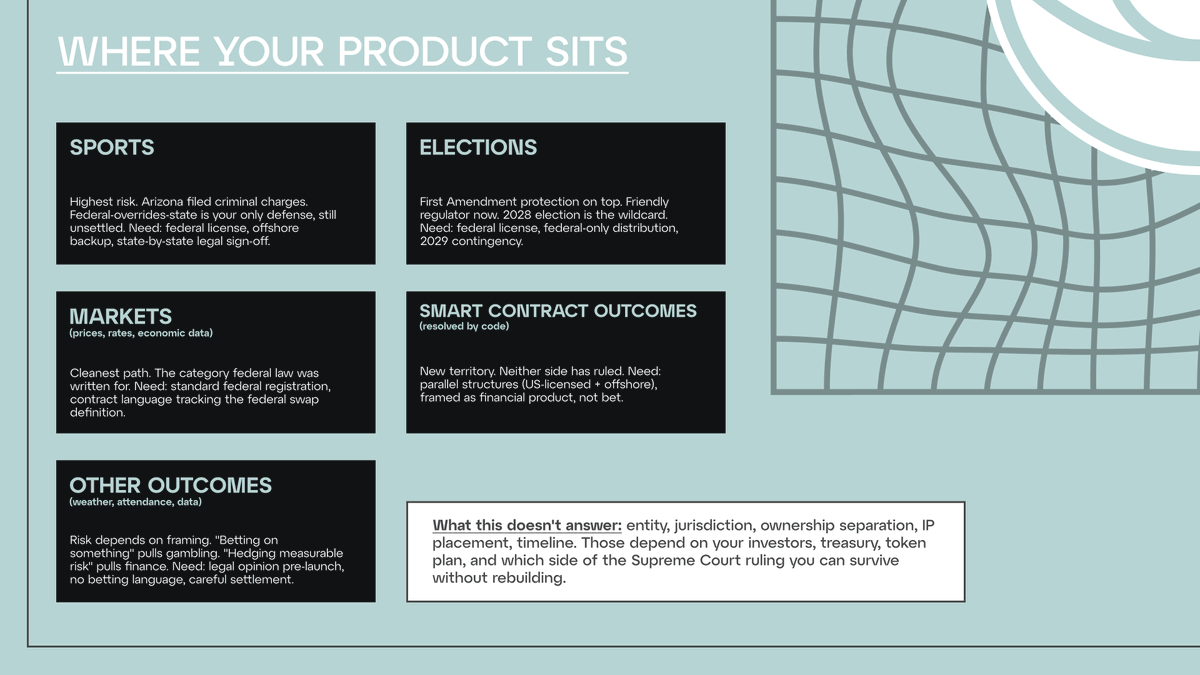
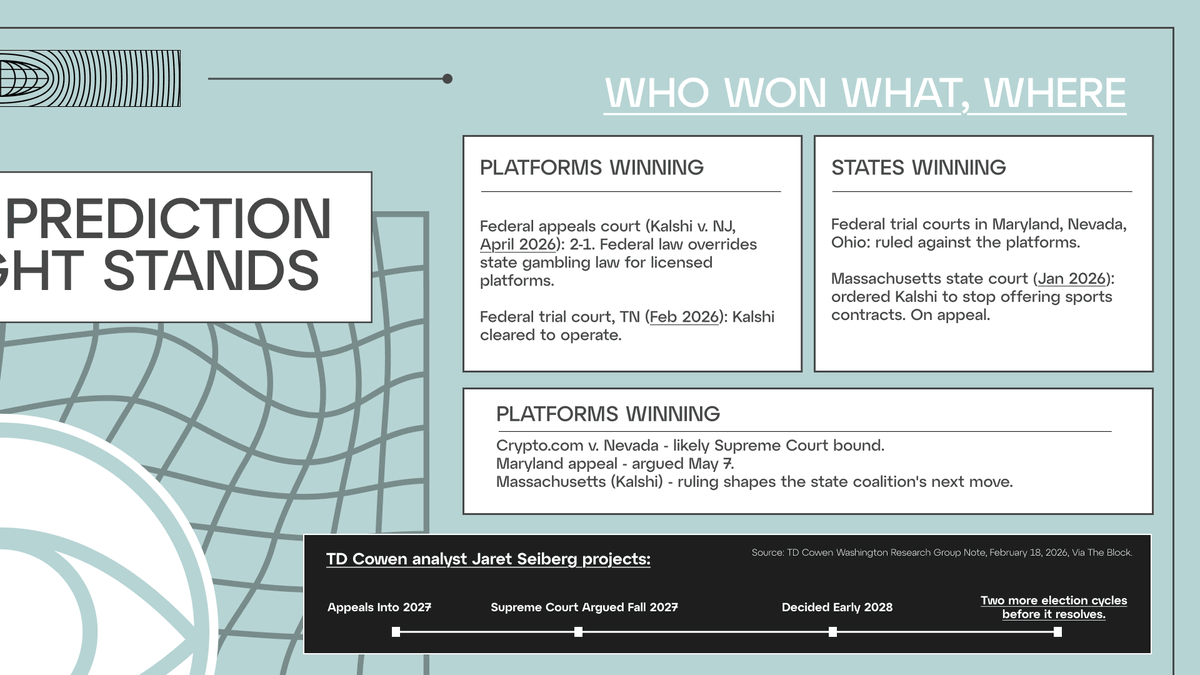
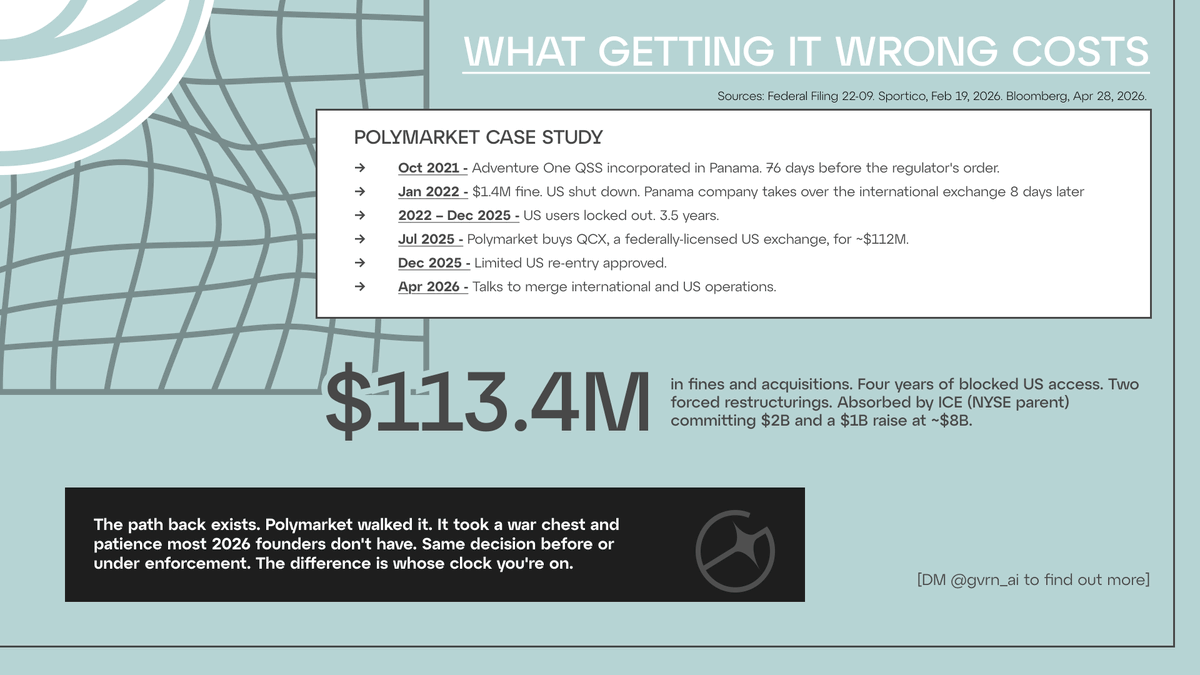
Two kinds of prediction market founders right now.
1. The ones who structured for optionality before the regulator started suing states.
2. And the ones reading enforcement letters this quarter.
Read it before you need it.👇🏼
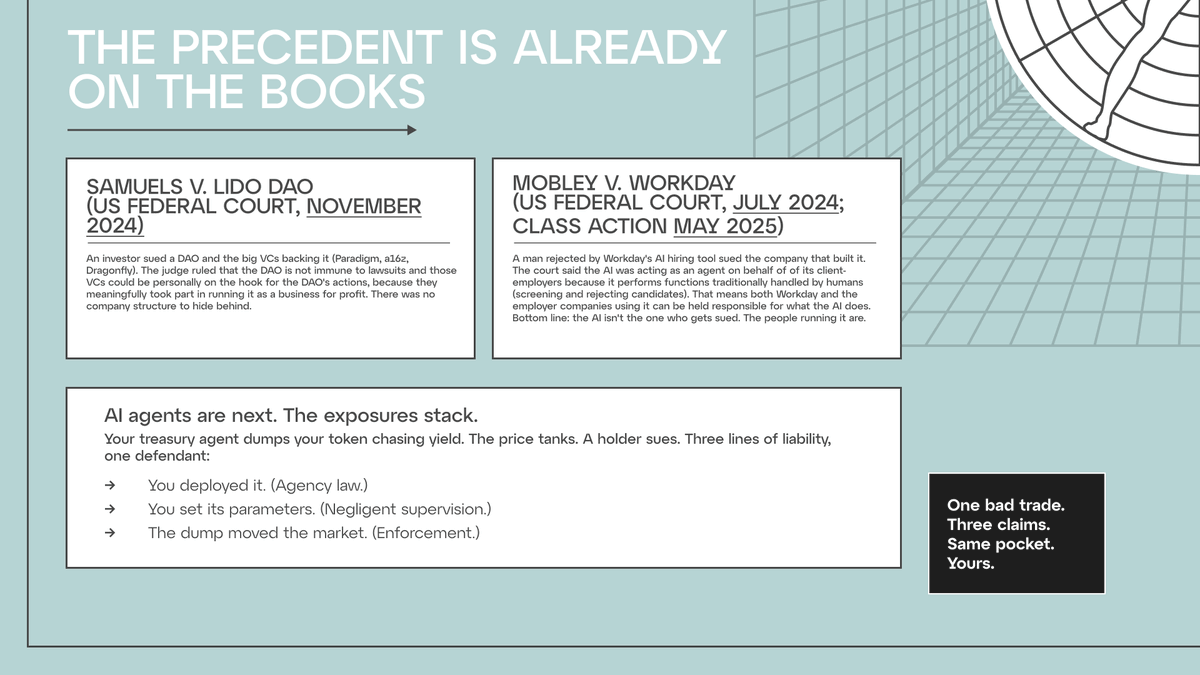
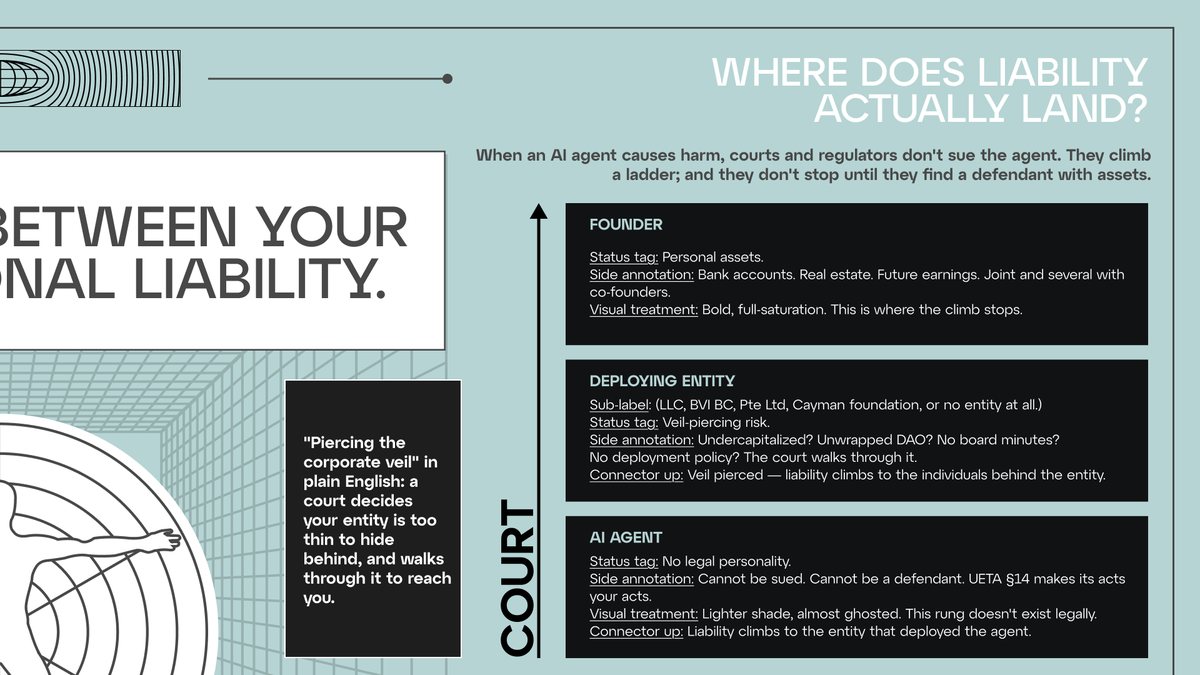
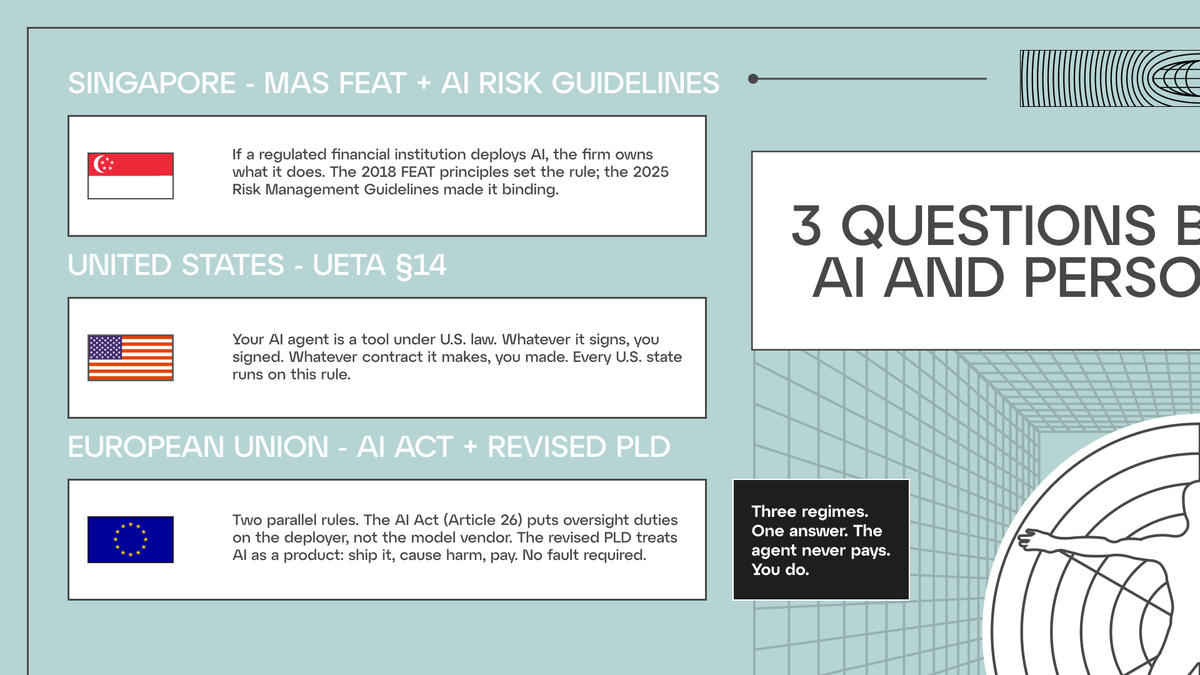
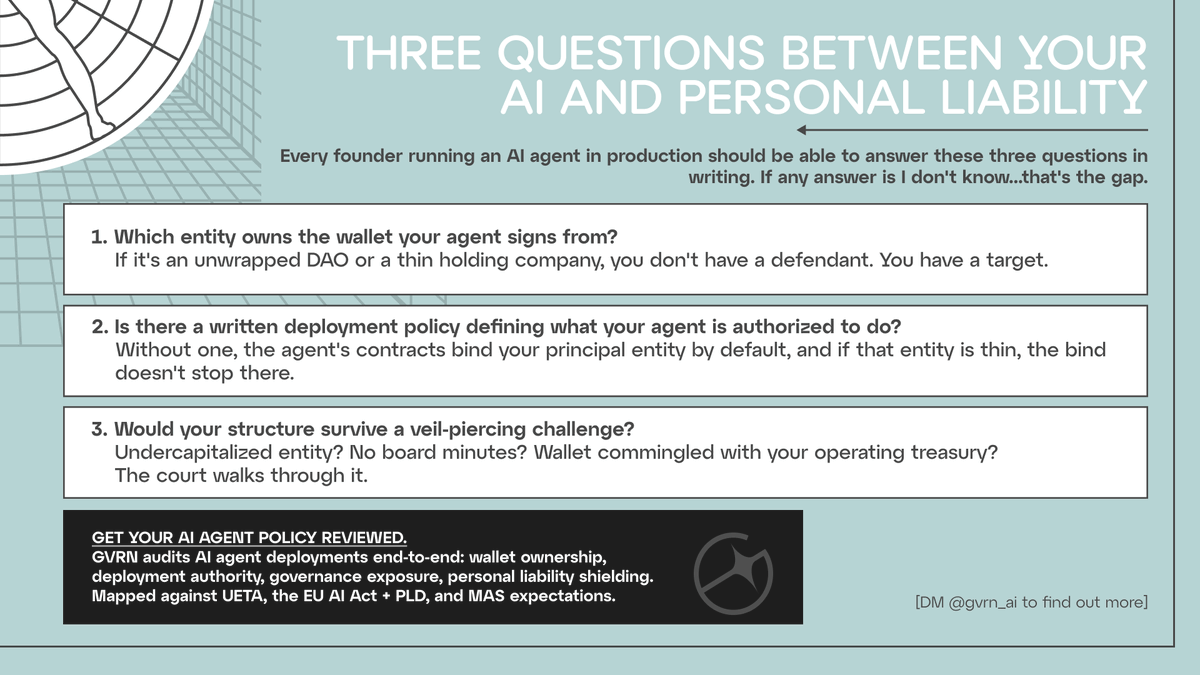
The agent isn't the defendant. The DAO isn't the defendant. Your thin BVI shell isn't the defendant.
You are.
A memo on where AI agent liability actually lands 👇🏼
Web3 fundraising is now 46% fewer deals at 272% larger checks.
Concentrated capital, longer diligence, and somewhere in your data room, conflicting docs that make a deal walk away.
The most expensive assumption in Web3 right now:
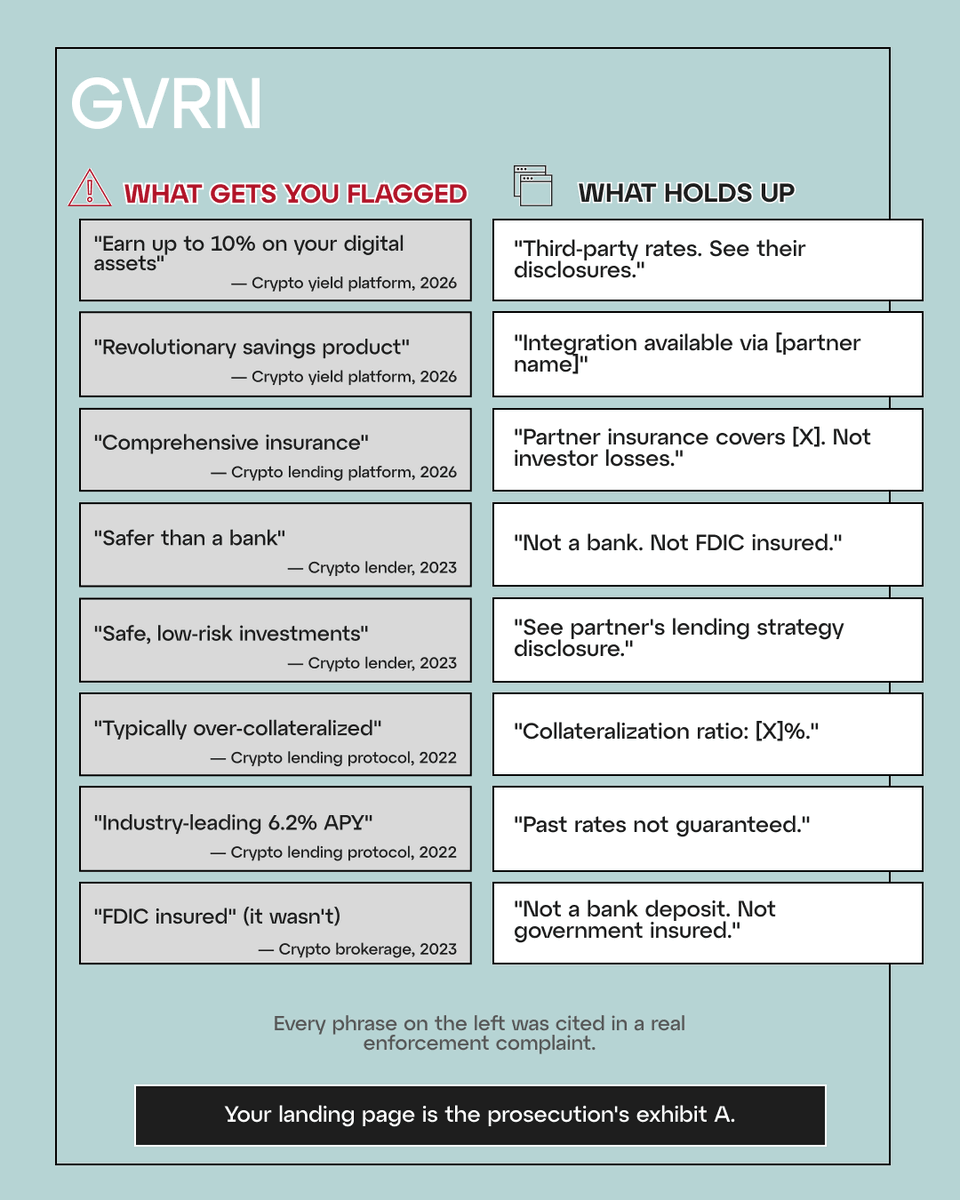
Assuming the new US regulatory clarity applies to your Singapore entity.
It may not:
• MAS built its own framework in June 2025. It's already in force.
• Analysts estimate less than 10% of 200 provisional licenses remain compliant.
The cost of getting this wrong? S$250K and 3 years in prison.
Run your doc audit before a regulator does. 👇
Been using Claude in legal a lot and my conclusion is that it is far better than what TradFi lawyers think it is but also far worse than what X engagement farmers think it is.
If you can replace your legal practice with Claude today, you aren't a serious lawyer.
Bedrock Coins by @BedrockFndn is officially out in the world.
@MeteoraAG and @GVRN_AI, designed a legal framework for start-ups that can scale with a fully automated system.
Via Bedrock, anyone can now permissionlessly launch a token, KYC and incorporate a BVI-entity with @BedrockFndn as your shareholder.
We’ve released more information about Bedrock, what to expect for both Founders & Participants. Read about Bedrock: https://t.co/2x1rg306I5
Bedrock works with any tokenomics, launch mechanism, as long as it’s on MeteoraAG & Solana.
We’re launching today with 3 completely different launchpads, with many more to come.
Today, Bedrock is live on @BagsApp, allowing founders to register a business and raise funds from anywhere & anyone, fully permissionless.
Bedrock is also available on @stardotfun, a shark-tank style raising platform, as well as @collateralize, the everything launchpad for RWAs and early stage projects.
& many more launchpads to come. Reach out to @0xSoju to get started on Bedrock.
Today is just the beginning. We will keep doubling down to bring Internet Capital Markets to life, only on @Solana & @MeteoraAG.
Another ChatGPT advice incident.
In-house counsel advice is ignored over ChatGPT advice and the implications are significant for the party ignoring the in house legal advice. Poor judgment from a CEO and both he and the company lost in court and will pay the price.
Listen to your lawyer!
Article: https://t.co/lp86FtCIdo…
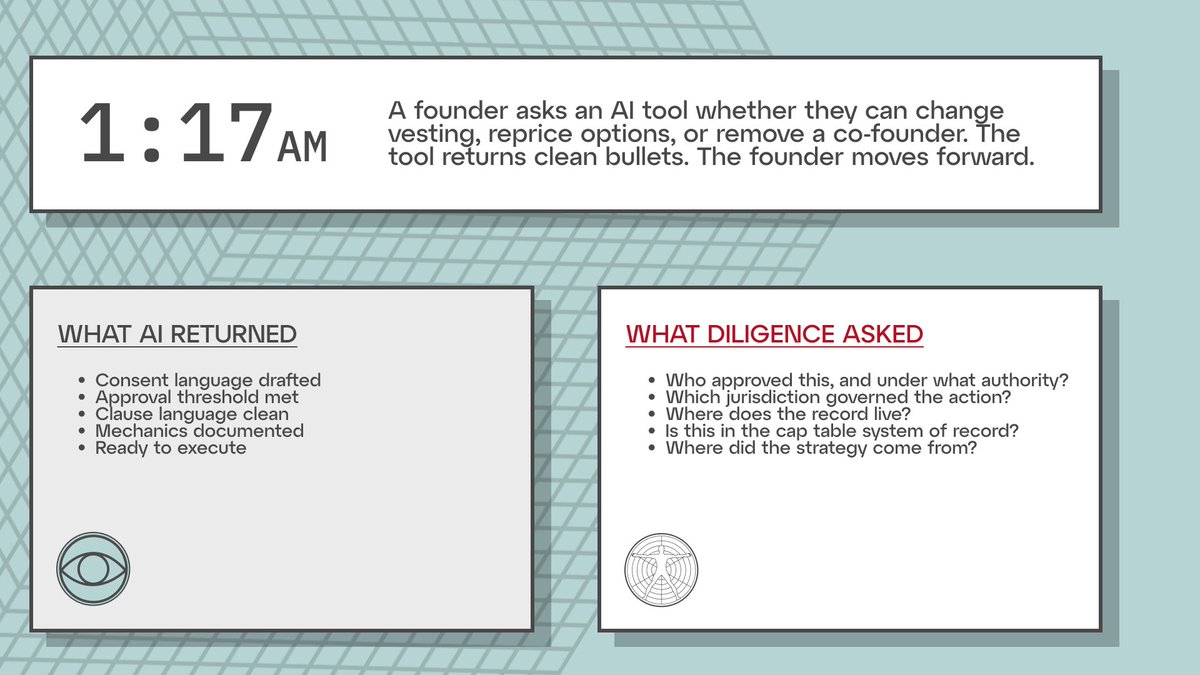
You're building. You convince yourself that you don't have time for paperwork. Who reads it anyway?
You follow the 2026 Founder playbook and ask GPT. Then Claude. Then Gemini (just to be sure). You screenshot all three and drop them in the group chat.
We hate to break it to you but you didn't get three expert opinions. You got one opinion phrased differently. They were all trained on the same sources, the same writers, the same ideas.
You go ahead and ship using the infrastructure you pulled together from the prompt output. A few paragraphs that look official from Claude. A few lines from ChatGPT. An occasional idea from Gemini.
Project ships. It moons. An investor reads your docs and asks you to walk them through the logic. Your entire defense is "the AI all agreed."
You're cooked.
How deep are you running AI on your critical stack right now? Unlike your last meme coin rug, it's not too late for you to get REAL advice that's been trained on actual client outcomes, not search results.
GVRN is for serious founders and moves that scale. Protect your work from the start. We're here to help.
🚨 BREAKING: Researchers at UW Allen School and Stanford just ran the largest study ever on AI creative diversity.
70+ AI models were given the same open-ended questions. They all gave the same answers.
They asked over 70 different LLMs the exact same open-ended questions.
"Write a poem about time." "Suggest startup ideas." "Give me life advice."
Questions where there is no single right answer. Questions where 10 different humans would give you 10 completely different responses.
Instead, 70+ models from every major AI company converged on almost identical outputs. Different architectures. Different training data. Different companies. Same ideas. Same structures. Same metaphors.
They named this phenomenon the "Artificial Hivemind." And the paper won the NeurIPS 2025 Best Paper Award, which is the highest recognition in AI research, handed to a small number of papers out of thousands of submissions.
This is not a blog post or a hot take. This is award-winning, peer-reviewed science confirming something massive is broken.
The team built a dataset called Infinity-Chat with 26,000 real-world, open-ended queries and over 31,000 human preference annotations. Not toy benchmarks. Not math problems.
Real questions people actually ask chatbots every single day, organized into 6 categories and 17 subcategories covering creative writing, brainstorming, speculative scenarios, and more.
They ran all of these across 70+ open and closed-source models and measured the diversity of what came back. Two findings hit hard.
First, intra-model repetition. Ask the same model the same open-ended question five times and you get almost the same answer five times.
The "creativity" you think you're getting is the same output wearing a slightly different outfit. You ask ChatGPT, Claude, or Gemini to write you a poem about time and you keep getting the same river metaphor, the same hourglass imagery, the same reflection on mortality.
Over and over. The model isn't thinking. It's defaulting to whatever scored highest during alignment training.
Second, and this is the one that should really alarm you, inter-model homogeneity. Ask GPT, Claude, Gemini, DeepSeek, Qwen, Llama, and dozens of other models the same creative question, and they all converge on strikingly similar responses.
These are models built by completely different companies with different architectures and different training pipelines.
They should be producing wildly different outputs. They're not. 70+ models all thinking inside the same invisible box, producing the same safe, consensus-approved content that blends together into one indistinguishable voice.
So why is this happening? The researchers point directly at RLHF and current alignment techniques. The process we use to make AI "helpful and harmless" is also making it generic and boring.
When every model gets trained to optimize for human preference scores, and those preference datasets converge on a narrow definition of what "good" looks like, every model learns to produce the same safe, agreeable output. The weird answers get penalized.
The original takes get shaved off. The genuinely creative responses get killed during training because they didn't match what the average annotator rated highly. And it gets even worse.
The study found that reward models and LLM-as-judge systems are actively miscalibrated when evaluating diverse outputs. When a response is genuinely different from the mainstream but still high quality, these automated systems rate it LOWER. The very tools we built to evaluate AI quality are punishing originality and rewarding sameness.
Think about what this means if you use AI for brainstorming, content creation, business strategy, or literally any task where you need multiple perspectives. You're getting the illusion of diversity, not the real thing.
You ask for 10 startup ideas and you get 10 variations of the same 3 ideas the model learned were "safe" during training. You ask for creative writing and you get the same therapeutic, perfectly balanced, utterly forgettable tone that every other model gives.
The researchers flagged direct implications for AI in science, medicine, education, and decision support, all domains where diverse reasoning is not a nice-to-have but a requirement.
Correlated errors across models means if one AI gets something wrong, they might ALL get it wrong the same way. Shared blind spots at massive scale.
And the long-term risk is even scarier. If billions of people interact with AI systems that all think identically, and those interactions shape how people write, brainstorm, and make decisions every day, we risk a slow, invisible homogenization of human thought itself. Not because AI replaced creativity.
Because it quietly narrowed what we were exposed to until we all started thinking the same way too.
Here's what you can actually do about it right now:
→ Stop accepting first-draft AI output as creative or diverse. If you need 10 ideas, generate 30 and throw away the obvious ones
→ Use temperature and sampling parameters aggressively to push models out of their comfort zone
→ Cross-reference multiple models AND multiple prompting strategies, because same model with different prompts often beats different models with the same prompt
→ Add constraints that force novelty like "give me ideas that a traditional investor would hate" instead of "give me creative ideas"
→ Use structured prompting techniques like Verbalized Sampling to force the model to explore low-probability outputs instead of defaulting to consensus
→ Layer your own taste and judgment on top of everything AI gives you. The model gets you raw material. Your weirdness and experience make it original
This paper puts hard data behind something a lot of us have been feeling for a while. AI is getting more capable and more homogeneous at the same time.
The models are smarter, but they're all smart in the exact same way. The Artificial Hivemind is not a bug in one model. It's a systemic feature of how the entire industry builds, aligns, and evaluates language models right now.
The fix requires rethinking alignment itself, moving toward what the researchers call "pluralistic alignment" where models get rewarded for producing diverse distributions of valid answers instead of collapsing to a single consensus mode.
Until that happens, your best defense is awareness and better prompting.
Official Apology Statement:
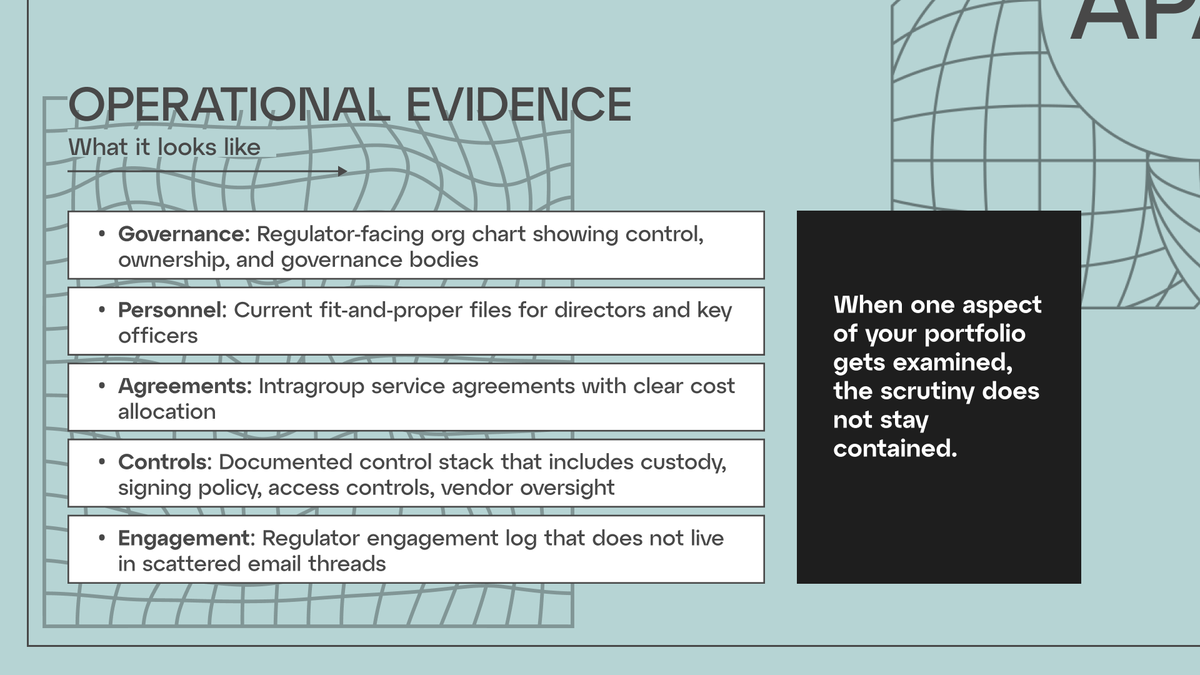
We regret to inform founders that legal structure is not a one-time decision. You cannot:
incorporate once and carry it forever
assume 2022's setup survives 2025's DD
skip the review because nothing has "gone wrong yet"
We understand this is inconvenient.
We're sorry.
@pirwot Excellent question and it's not an easy one, especially with rapidly changing legislation.
The easy answer is hire the right people to take that load.
Following the right blogs/accounts, setting alerts for your jurisdiction, etc will also help.