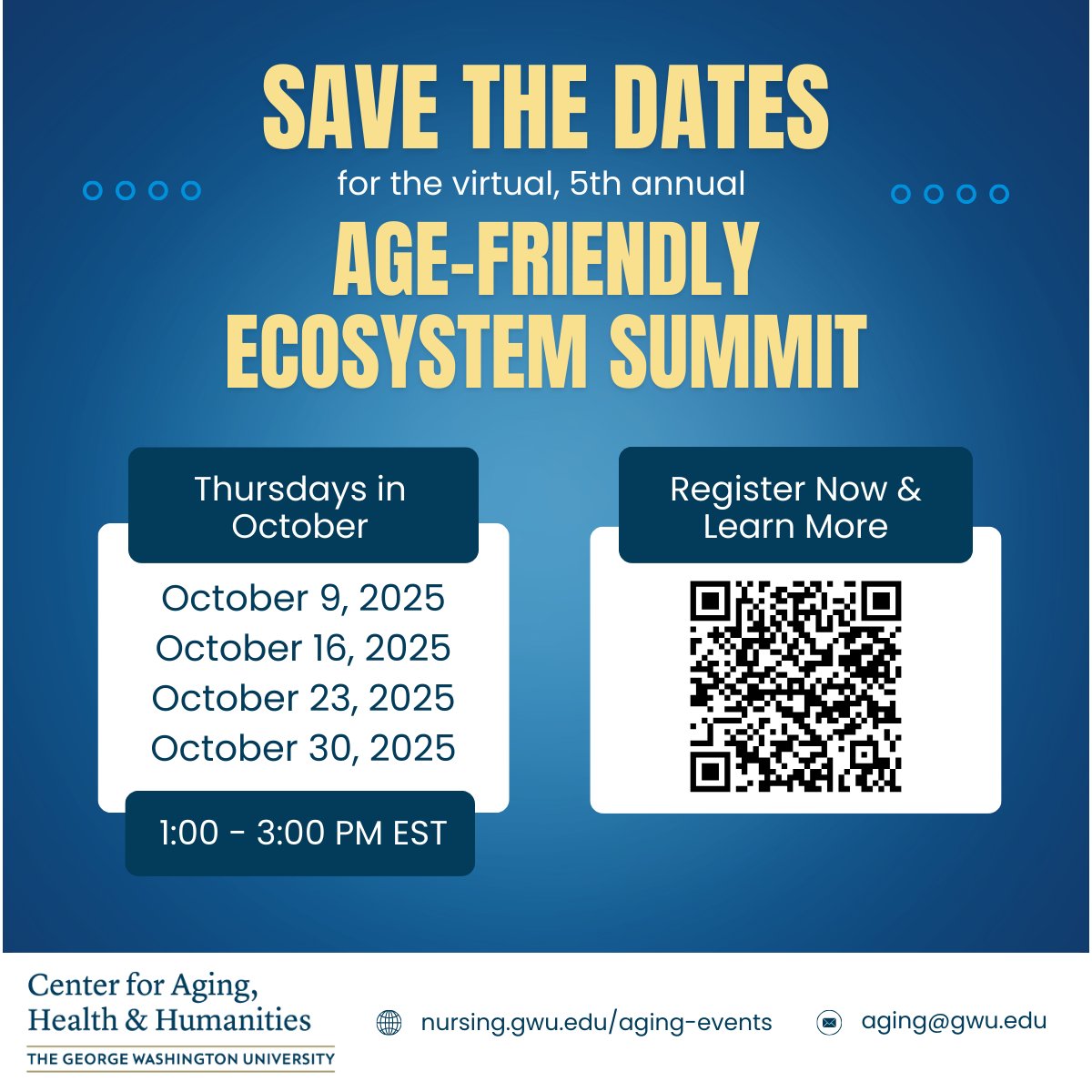
If you weren't able to attend the Age-Friendly Ecosystem Summit, we missed you! But it's not too late. View the event recordings to learn from our amazing panels of expert speakers how policy, housing, financial and social well-being, and AI impact aging. https://t.co/hUpizhh1UQ
GW Nursing Professor @LaurieTheeke, PhD, FNP, FAAN, published an article yesterday in @Daily27Info examining loneliness as a serious and solvable public health issue, with particular relevance during the holiday season.
https://t.co/9XnhNtEvXj
Next up in the Age-Friendly Ecosystem Summit series: 'Aging with Confidence: Strategies for Financial and Social Well-being', happening October 23, 1–3 PM ET.
🔗 Explore the speakers and register today: https://t.co/DbS4SV26Xw
#AgeismAwarenessDay is on October 9. The day draws attention to the existence and impact of #ageism in our society, including how ageism affects all of our health, financial security, and communities. Check out the hub of resources from @ASAging.
https://t.co/yh3EOOqigT
Mark your calendars! The Age-Friendly Ecosystem Summit kicks off a week from today on October 9, 1–3 PM ET with 'The State of Aging Policy: What’s Changed and What’s Next?'
🔗 Explore the speakers and register today: https://t.co/DbS4SV2EN4
It's not too late to join us for the 2025 Age-Friendly Ecosystem Summit. Each day will feature a panel of experts discussing important topics in aging, policy, wellness, AI, and more! https://t.co/EU2H8WPlmZ
1 in 2 older adults are at risk for #malnutrition. While our physiology is changing, so are the body’s nutritional needs; changing tastes, comorbidities, and financial insecurity can also play a role. So how can we optimize good nutrition as we get older? https://t.co/oCOEE0A63k
The 5th annual Age-Friendly Ecosystem Summit is almost here! Join @GWaging this October for a free virtual series diving into the biggest topics shaping the future of aging, including policy, housing, wellness, and AI. Register now ⬇️
https://t.co/DbS4SV26Xw
📢 Call For Papers! JMIR Aging seeks submissions on Social & Cultural Drivers of Health in Aging Populations. Explore how digital health addresses these challenges to inform clinical practice & policy. Submit now! Learn more: https://t.co/tM51zCrKfv
🧠 Did you know? 63 million adults in the U.S. are family caregivers. That’s 1 in 4 Americans. Explore findings from the new Caregiving in the US 2025 report by @NA4Caregiving and @AARP. #CGUS2025#FamilyCaregivers
Learn more at https://t.co/ghSB7V80tl.
Is Home Sharing Right for You? In this video, we dive into the pros and cons of home sharing—a growing trend helping older adults save money and stay connected.
🎥 Watch the full episode now at https://t.co/gowKcs4fd4 or on YouTube @MelissaBPhD!
#HomeSharing#ThisIsGettingOld
What are some benefits of dementia-friendly hospitals? Fewer falls and less confusion, better eating habits, and reduced stress and anxiety.
⭐️Don’t forget—registration is open for the 2025 Age-Friendly Ecosystem Summit. #ThisIsGettingOld#AgeFriendly
https://t.co/U1hH92oqwg
"Aging: Words Matter" - with @ReframingAging's Patricia D'Antonio - offers us ways to reframe our language when talking about and thinking about #aging.
https://t.co/6e5LaK6CAe
NEW: Many older adults living alone struggle with health issues. Many are isolated and vulnerable. But a noteworthy slice of this growing group of seniors maintain a high degree of well-being. Meet Hilda Jaffe, 102, of NYC.
@judith_graham reports. ⤵️ https://t.co/QOmptamtEA
Caregivers, families, and anyone wanting to learn more about empathy and connection in #dementia care should tune into this ep of #TIGO to hear heartwarming stories and practical tips for living with those with dementia, especially around the holidays. https://t.co/oXKZk0sL3I