I’m talking about a MINDSHIFT in #multilingual education especially in #ESLprograms. We aren’t trying to take students who know another language and make them into monolingual English speakers.
#languagelearning#bilingual
https://t.co/Wh0fHPg1SO
Exciting news!🎉 I’ve been chosen to present at the
DeKalb Schools 2026 Technology Symposium! Join
me on this journey by following @DekalbSchoolsIT.
I will present a session on using AI as a tool for enhancing lesson planning, differentiation and more!!
Dual Language Bilingual Education is an effective model for making students bilingual, biliterate and successful 📚🌎 Research shows well-implemented DLBE benefits all, not just English learners. Learn: https://t.co/kZ7PZdotxG
@JoseMedinaJr89 Medina made some valid points regarding language allocation. A lot of 50/50 DL programs refer to teachers and classes as English/Spanish (or other lang). The languages are split down the middle (little cross ling connections). And students only receive content in one language.
@BenisonMrs Schools wanted to push students with disabilities back into the classroom, but they also didn't teachers to "water down the curriculum" (i.e. scaffold and differentiate it to the students' level- which was most likely lower). They basically wanted to close SPED Resource classes.
Registration is now open for Science Discovery Camp 2026! Offered in Spanish, this program is designed for currently enrolled emergent bilingual students in grades 2–5 participating in the Dallas ISD Dual Language Program.🪐🦕🪐🐞🌪️🥼🧠
Application here ➡️https://t.co/wdufpY6X7F
Join us for the 5th Annual #DualLanguage Virtual Symposium: “Lighting the Way: Language, Identity, & the Promise of #Biliteracy” on June 10! ✨ Featuring keynotes, panels w superintendents, teachers & students, TEA presentations, and more. Don’t miss it! https://t.co/wAkcnq6OkS
@DeKalbSchools@DeKalbSchools Unity Fest 2026 was a blast! What a gorgeous day to celebrate the rich mosaic of diversity exuding our community. Thank you @dcsdfamilyenga1 & Indian Creek ES for facilitating & hosting! Our student performers, vendors, & volunteers all showed out! @nancy_pritchett
A formal evaluation should never be your first visit to a classroom.
If it is, skip the evaluation.
Leave a Post-it of Praise note instead.
Notice something good.
Name something specific.
Let the teacher know you saw the work, the heart, and the effort before you ever try to score it.
Because trust has to be built before feedback is ever received.
Too often, we blame #duallanguage programs when we don’t see immediate student academic success. But, how can we expect to see the promised outcomes of DL if we don’t fully prepare school and district leaders to collaboratively guide the work?
Free Resource: https://t.co/9Y4NhdQqcn
@JoseMedinaJr89@JoseMedinaJr89 is on point regarding the success of some DLI programs. The district/school has to be "all in" for program/student success (culture, support, pd, etc.). Without these, we cannot blame the program and state "DLI didn't work."
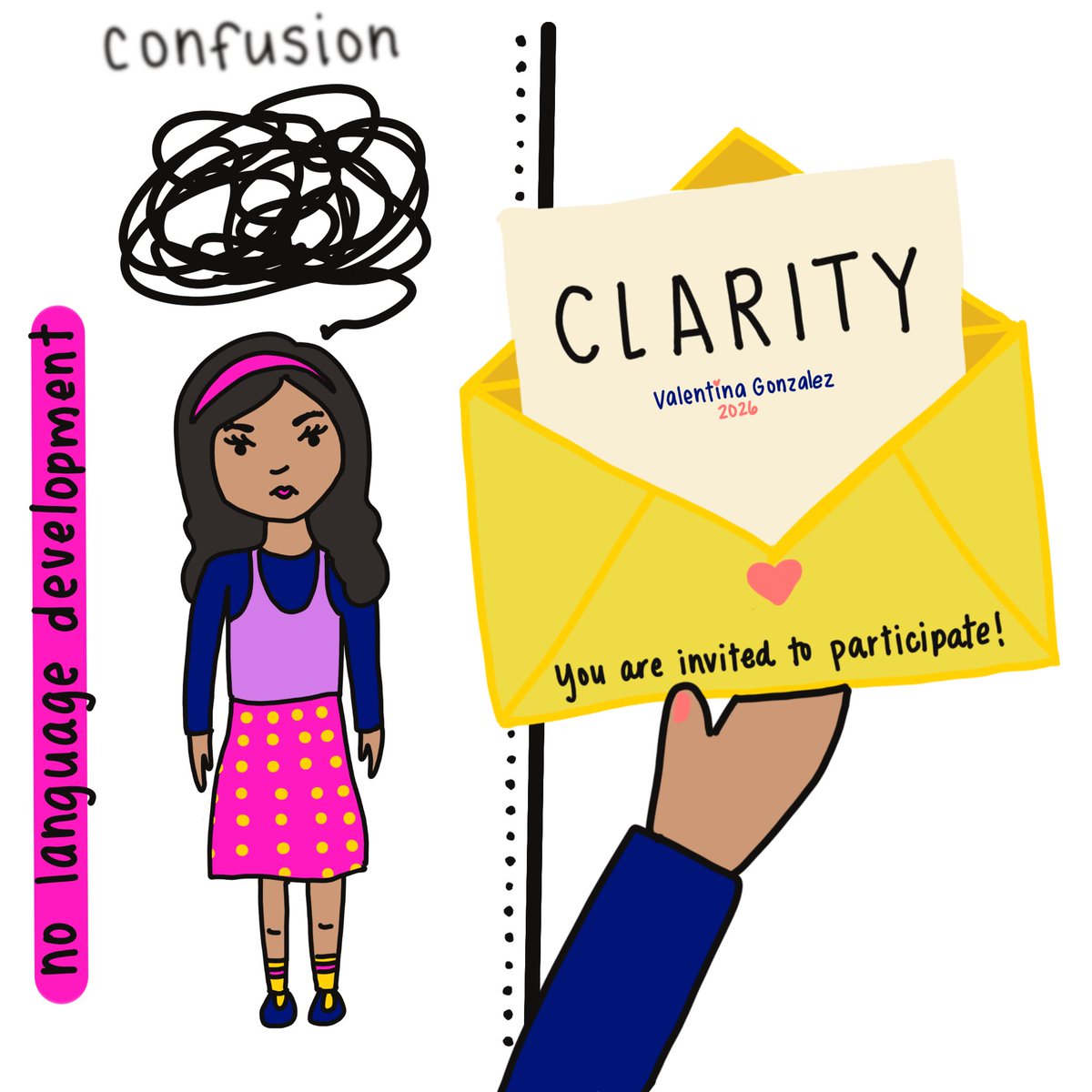
Confusion is the enemy of language development.
When instruction is unclear and students are left to piece things together on their own, multilingual learners often struggle to access both the content and the language of the lesson. Instead of focusing on learning, they spend their energy trying to figure out what the task is, what the teacher expects, and what success looks like.
Effective instruction does the opposite. It provides clarity from beginning to end.
The lesson is intentionally organized. Students know what they are learning, why they are learning it, and how they will learn it. Expectations are transparent. The language they need is modeled and supported. And students understand how they will know if they are successful.
When clarity is present, multilingual learners can devote their cognitive energy to making meaning, participating in discussions, and developing language alongside content.
Clarity doesn’t simplify learning.
It removes unnecessary barriers so students can fully engage with complex ideas.
#languagelearning #teaching
Think not of the books you’ve bought as a “to be read” pile. Instead, think of your bookcase as a wine cellar. You collect books to be read at the right time, the right place, and the right mood.
— Luc van Donkersgoed