It took a little longer than expected, but we have created a website for people to view the footage collected from Gaza in one place. You no longer have to download the entire archives to see them.
It includes:
64,537 videos
17,905 photos
Ability to download individual videos
Searchable index
Exhaustive sources list (300+ journalists)
Geolocation data
Livemap with minute to minute updates
Victim list
It can be accessed here: https://t.co/s0Se94PXWF
Please share & quote tweet to help this post break out of the twitter algorithm prison.
We will keep adding the rest of the archives to the site, be patient- it is difficult work. Continue to seed the torrents provided, as that is the best way to ensure the footage remains stored in decentalized way.
God bless all those who sacrificed their lives to get this footage out, and everyone invovled in collecting/archiving it.
Join our telegram:
https://t.co/bvcis3b9GT
Follow our backup accounts:
@ZionismExposedx & @IsraelExposedAr
The Brutal Irony of Venezuelan History: Maduro the Street Fighter vs. Delcy the Empire’s puppet.
Rare 2002 footage that hits harder today than ever.
A young Nicolás Maduro, megaphone blazing, rallies the Caracas streets right after the US-backed coup that kidnapped Hugo Chávez. “¡Devuélvanlo al pueblo!” he thunders. He talks about the popular military uprising in Maracay, loyal units from army, guard, navy and air force uniting, and demands the traitorous generals return the President immediately.
This was Chávez’s real kidnapping: arrested at Miraflores, flown first to La Orchila island military base offshore, then to Turiamo naval base. He refused to sign any resignation, got word out to the world via phone, while the oligarchs installed Pedro Carmona and dissolved the constitution.
The empire thought it was done in 47 hours.
Maduro fought on the ground with the people and loyal military to bring him back. Raw revolutionary energy.
Now zoom to 2026.
After US special forces raid Caracas in January, capture Maduro and his wife in a nighttime operation, and fly them out, the same military high command — long softened by years of US carrots, sanctions pressure, and quiet alignments — quickly pivots. They back Delcy Rodríguez as “interim president.”
Delcy wastes zero time: sanctions lifted, oil fields thrown open to American companies, pragmatic deals with Washington. The woman who once stood with the revolution now facilitates the surrender Maduro once helped prevent.
The irony is savage.
The fighter who demanded Chávez’s return from a US-influenced military kidnapping watches (or is forced to watch) as parts of that same military institution, now even more aligned with external power, enable the handover of sovereignty.
History doesn’t lie. It records who stood firm when the empire struck in 2002… and who folded when it struck again in 2026.
True character reveals itself under pressure.
Not everyone survives the test.
RIP the Venezuela of Chavez I used to know…
The US tried to install a puppet regime in Bolivia and dressed it up as if it had genuine popular support.
But workers and peasants saw through this bullshit immediately.
People across the country,spanning 50 ethnic groups from north to south,united in opposition in La Paz.
They detained the USAID workers to stop US interference in their country's affairs...
💪💪💪
Destroying the @InternetArchive's @WayBackMachine would be the equivalent of the burning of the Library of Alexandria - one of the worst losses of knowledge in history.
Media giants are now threatening to do this.
We can't let this happen.
Pass it on.
Today, we remember Comandante Hugo Chávez, leader of Venezuela's Bolivarian Revolution.
Chávez spent his life working for dignity, peace, and justice. In Venezuela, he slashed poverty, eradicated illiteracy, redistributed wealth, and built homes, schools, and health centers across the country. On the global stage, he was a bastion of resistance against U.S. war and imperialism, standing for unity among the Global South, sovereignty for the people of Palestine, and peace for all peoples.
In death as in life, Chávez's revolutionary spirit continues to push the global struggle for peace and dignity forward.
You occasionally get a moment that symbolizes everything wrong with this country. In this case it's a U.S. Marine veteran screaming out that no one wants to fight for Israel and a U.S. Senator breaking his arm. A perfect encapsulation of US foreign policy.
The US is giving Tehran the Gaza treatment. Only a few days ago, the US political-media establishment was shedding crocodile tears over Iranian protesters
And just like that we are no longer a nation divided by left and right, we are now a nation divided be those who want to fight wars for Israel and those who just want peace and to be able to afford their bills and health insurance.
The US and Israel are unlikely to win this war, not only because Iran’s response has already proven qualitatively different from previous confrontations, but because their stated strategic objectives are so maximalist that to call this an existential war doesn't do it it justice. What they have launched is a state-annihilating campaign, and that ambition sets a strategic bar too high to conceivably achieve.
Trump has openly called for regime change and the complete demilitarization of Iran, not merely the dismantling of its nuclear program, but the elimination of its missile program, that is, its defensive capabilities. Israeli officials, meanwhile, are declaring that "We are attacking the entire Iranian political and military leadership — past, present and future". This type of language suggests that what they are demanding even transcends surrender within a new Epstein-genocidal order, whereby Iran could continue to exist as a state. What they are calling for isn't just for Iran to stop being an Islamic revolutionary republic, but for Iran to stop being a state altogether and, by denying it the capability to defend itself, to ever reconstitute itself as a state in the future.
Iran today is not just asserting its right to defend itself, or even its right to defend Palestine and sustain the resistance project as a whole, but the right of all states and peoples to control their territories and freely determine their destinies.
I am a diplomatic aide in the Sultanate of Oman's Ministry of Foreign Affairs.
My job is logistics. When two countries that cannot speak to each other need to speak to each other, I book the rooms. I prepare the briefing materials. I make sure the water glasses are the right distance apart. You would be surprised how much of diplomacy is water glasses. Too close and it feels informal. Too far and it feels like a tribunal. I have a chart.
We had a very good month.
Since January, Oman has been mediating indirect talks between the United States and Iran on Iran's nuclear program. The talks were held in Muscat and in Geneva. The Americans would sit in one room. The Iranians would sit in another room. I would walk between them. My Fitbit says I averaged fourteen thousand steps on negotiation days. The hallway between the two rooms at the Royal Opera House conference center is forty-seven meters. I walked it two hundred and twelve times in February. This is good for my cardiovascular health. It was less good for my knees. Both are in the service of peace.
By mid-February, we had something.
Iran agreed to zero stockpiling of enriched uranium. Not reduced stockpiling. Zero. They agreed to down-blend existing stockpiles to the lowest possible level. They agreed to convert them into irreversible fuel. They agreed to full IAEA verification with potential US inspector access. They agreed, in the Foreign Minister's phrase, to "never, ever" possess nuclear material for a bomb. I have worked in diplomacy for seven years. I have never seen a country agree to this many things this quickly. I made a spreadsheet of the concessions. It had fourteen rows. I color-coded it. Green for confirmed. Yellow for pending. By February 21 the spreadsheet was entirely green. I printed it. It is on my desk in Muscat. It is still green.
That phrase took eleven days. "Never, ever." The Iranians initially offered "not seek to." The Americans wanted "will not under any circumstances." We landed on "never, ever" at 2:14 AM on a Tuesday in Muscat. I typed the final version myself. I used Times New Roman because Geneva prefers it. The document was fourteen pages. I was proud of every comma.
Here is what they said, in the order they said it.
February 24: "We have a once-in-a-generation opportunity." — The Foreign Minister, private briefing to Gulf Cooperation Council ambassadors. I prepared the slide deck. Slide 14 was the implementation timeline. Slide 15 was the signing ceremony logistics. I had reserved the Palais des Nations in Geneva, Room XX. It seats four hundred. We discussed pen brands for the signing. The Iranians preferred Montblanc. The Americans had no preference. I ordered twelve Montblanc Meisterstucks at six hundred and thirty dollars each. They arrive on Tuesday.
February 27, 8:30 AM EST: "The deal is within our reach." — The Foreign Minister, CBS Face the Nation. He sat across from Margaret Brennan. He said broad political terms could be agreed "tomorrow" with ninety days for technical implementation in Vienna. He said, and I wrote this line for the briefing card he carried in his breast pocket: "If we just allow diplomacy the space it needs." He praised the American envoys by name. Steve Witkoff. Jared Kushner. He said both had been constructive.
I watched from the Four Seasons Georgetown. The minibar had cashews. I ate the cashews. They were nineteen dollars. The most expensive cashew I have ever eaten. But it was a good morning and we were within our reach.
February 27, 2:00 PM EST: Meeting with Vice President Vance, Washington. The Foreign Minister presented our progress. Zero stockpiling. Full verification. Irreversible conversion. "Never, ever." The Vice President used the word "encouraging." His aide took notes on an iPad. The aide did not make eye contact for the last nine minutes of the meeting. I noticed this. Noticing things is the only part of my job that is not water glasses.
February 27, 4:00 PM EST: "Not happy with the pace." — President Trump, to reporters.
Not happy with the pace.
We had achieved zero stockpiling. Full IAEA verification. Irreversible fuel conversion. Inspector access. And the phrase "never, ever," which took eleven days and cost me two hundred and twelve trips down a forty-seven-meter hallway.
Every American president since Carter has failed to get Iran to agree to this. Forty-five years.
Not happy with the pace.
February 27, 9:47 PM EST: The Foreign Minister's flight departs Dulles for Muscat. I am in the seat behind him. He is reviewing Slide 14 on his laptop. The implementation timeline. Vienna technical sessions. The signing ceremony. The pens.
I fall asleep over the Atlantic. I dream about water glasses.
February 28, 6:00 AM GST: I wake up to push notifications.
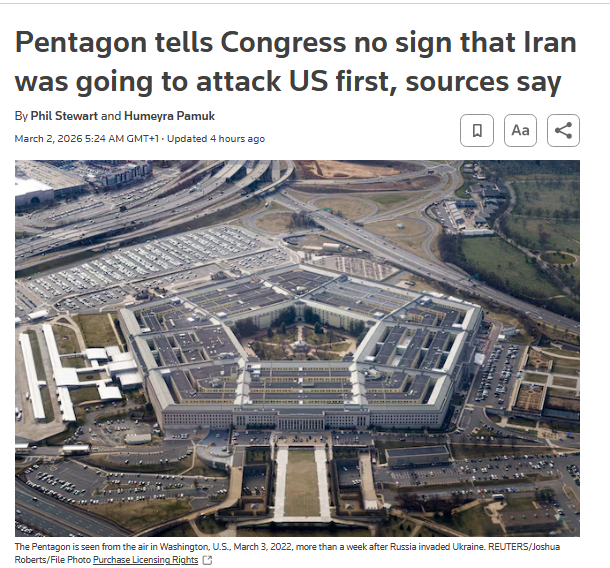
February 28: "The United States has begun major combat operations in Iran." — President Trump.
Operation Epic Fury. Coordinated airstrikes. The United States and Israel. Tehran. Isfahan. Qom. Karaj. Kermanshah. Nuclear facilities. IRGC bases. Sites near the Supreme Leader's office. Israel called their half Operation Roaring Lion. Someone in both governments spent time choosing these names. Epic Fury. Roaring Lion. I spent eleven days on "never, ever." They spent it on branding. The President said Iran had "rejected American calls to halt its nuclear weapons production."
Rejected.
Iran had agreed to zero stockpiling. Iran had agreed to full verification. Iran had agreed to "never, ever." Iran had agreed to everything in a fourteen-page document that I typed in Times New Roman.
The President said they rejected it.
I do not know which document the President was reading. I know which one I typed.
February 28, 18:45 UTC: Iran internet connectivity: four percent. — NetBlocks, confirmed by Cloudflare. Ninety-six percent of a country went dark. You cannot negotiate with a country at four percent connectivity. You cannot negotiate with a country that is being struck. You cannot negotiate. This is not a political opinion. This is a logistics assessment.
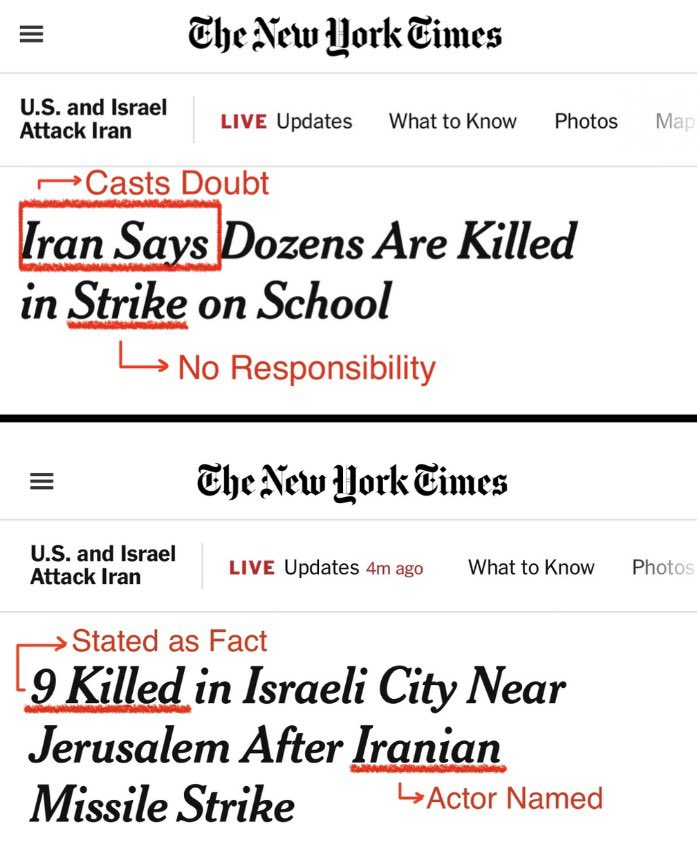
February 28: The governor of Minab reported forty girls killed at an elementary school.
I do not have logistics for that. There is no slide for that. The water glass chart does not cover that.
February 28: Lockheed Martin: up. Northrop Grumman: up. RTX: up. Dow futures: down six hundred and twenty-two points. Gold: five thousand two hundred and ninety-six dollars. An analyst at AInvest published a note titled "Iran Strikes: Tactical Plays." The note recommended positions in oil, defense stocks, and gold.
The most expensive cashew I have ever eaten was nineteen dollars. The most expensive pen I have ever ordered was six hundred and thirty dollars. The math suggests I have been working in the wrong industry. Defense stocks do not require water glasses. Defense stocks do not require eleven days. Defense stocks require one morning.
February 28: Israel closed its airspace and its schools. Iran launched retaliatory missiles toward US bases in the Gulf. The Supreme Leader promised a "crushing response." Israel's defense minister declared a permanent state of emergency. Everyone is using words I recognize in an order I do not. I recognize "permanent." I recognize "emergency." I do not recognize them next to each other. In diplomacy, nothing is permanent and everything is an emergency. In war it is the reverse.
February 28: The Foreign Minister has not made a public statement.
The briefing card is still in his breast pocket. It still says "within our reach."