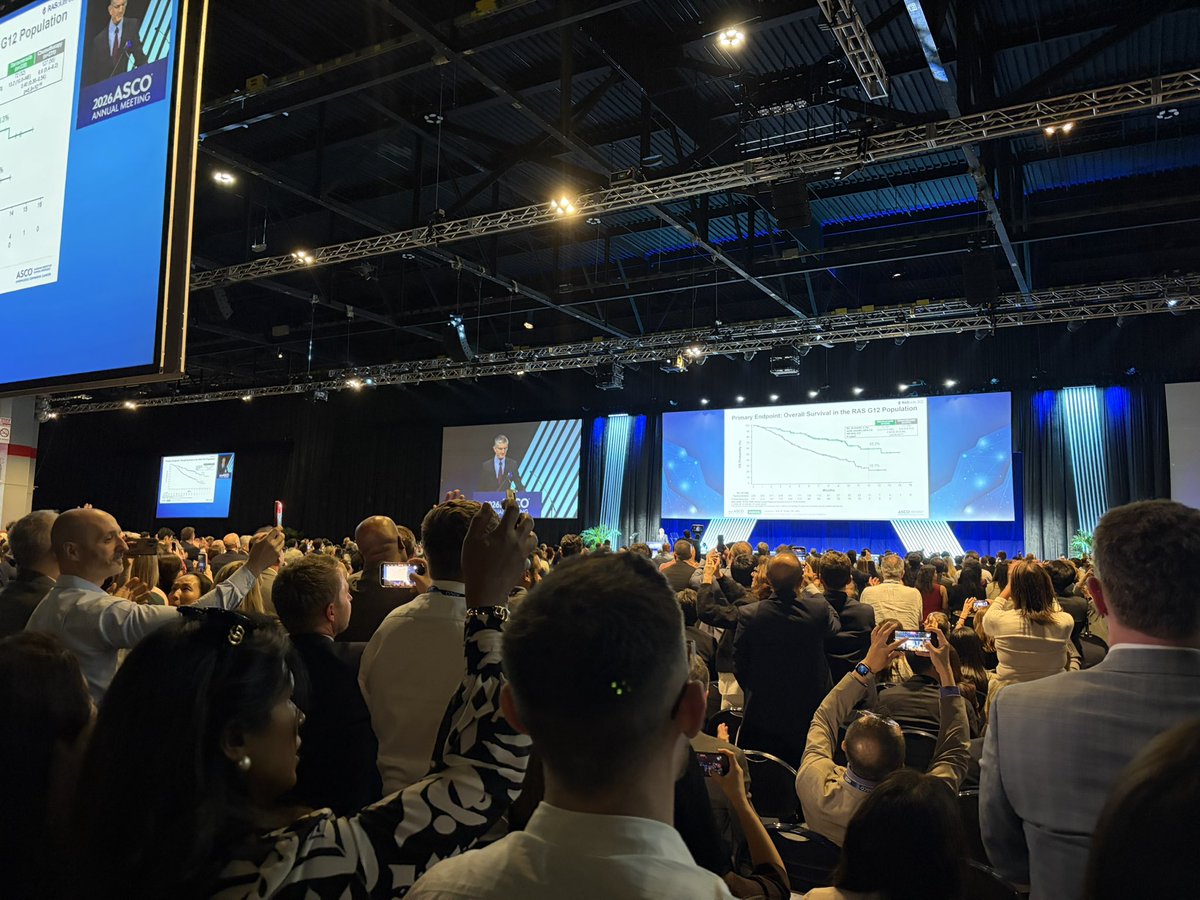
It was a pleasure connecting with partners and advocates at #ASCO2026!
As the oncology community gathered to discuss the latest advances in cancer research and treatment, OS Therapies CEO Paul Romness and CBO Gerald Commissiong were pleased to spend time with our partners at Eversana and representatives from OsteoWarriors (MIB), discussing the ongoing need for innovation, advocacy, and improved outcomes for patients affected by osteosarcoma and other rare cancers.
Thank you to everyone who joined the conversation. We look forward to continuing to collaborate to improve patient outcomes.
$OSTX
Retinal microvascular alterations consistent with endothelial dysregulation in paediatric post-COVID-19 syndrome: A prospective matched-cohort study
🚨More “hidden” post-COVID damage in children!
Kids with long COVID show blood-vessel damage in their eyes, persistent, with partial & slow reversibility in some, still clearly abnormal months after one infection (retinal scans prove it)!
➡️German study design:
- Prospective matched-cohort; 58 children (7–17 yrs) with paediatric post-COVID-19 syndrome (chronic phase) vs. 58 healthy controls (matched age/sex/BMI),
- Retinal vessel analysis (static: CRAE/CRVE/AVR + dynamic flicker vasoreactivity) at baseline, and ~14-week follow-up,
- Single-infection chronic PCS kids,
➡️Main findings:
- Markedly wider central retinal arterioles (+28.1 μm, p<0.001) and venules (+21.7 μm, p<0.001) + higher AVR (+0.038, p=0.005), independent of BP or confounders,
- Pattern = endothelial dysregulation,
➡️Longitudinal changes:
- No overall group improvement at follow-up,
- Kids with largest baseline venular dilation & reduced flicker response showed greatest recovery,
- Longer follow-up + reduced symptoms → venular narrowing & AVR improvement,
➡️Implication:
- First in-vivo evidence of persistent microvascular alterations in paediatric PCS, detectable non-invasively,
➡️Conclusion (paper):
- “This study provides the first in-vivo evidence of altered retinal microvascular parameters in children and adolescents with PCS… persistent alterations in microvascular regulation several months after SARS-CoV-2 infection… heterogeneous, time-dependent changes… some patterns consistent with partial normalisation.”
‼️So paediatric post-COVID-19 syndrome causes long-lasting endothelial dysfunction in the microvasculature, visible months after infection, confirming a biological, vascular basis for kids’ persistent symptoms (not psychosomatic or transient).
This isn’t “mild” anymore. It never was!
This is measurable microvascular damage and remember: a second COVID infection DOUBLES their risk of Long COVID (Lancet Infect Dis 2026, RR 2.08).
#AvoidSars2 #AvoidReinfections #ChildrenCovid19
https://t.co/ggQ3taMKnf
https://t.co/rR6KTdiHif
The Jefferies Global Healthcare Conference is underway in New York City.
The OS Therapies team is looking forward to several days of conversations with investors, partners, and healthcare leaders as momentum continues to build across the company’s oncology pipeline and regulatory initiatives.
Looking forward to a great week at Jefferies. $OSTX #JefferiesHealthcare
$WGRX confirms 2,647,198 common shares outstanding. Holders of 1,333,930 shares signed lock‑up agreements. 1,313,268 shares are currently available to trade. The lock‑up expires upon the earlier of 1) 90 days after registration effectiveness or 2) 180 days after closing.
OST-HER2 continues to demonstrate encouraging clinical outcomes in recurrent, fully resected pulmonary metastatic osteosarcoma.
At 2.5 years, patients treated with OST-HER2 achieved a 75% overall survival rate compared to 47% pooled historical control (p=0.003), with no new patient deaths reported since the prior two-year analysis.
Read more: https://t.co/syhaVQ3VwI $OSTX
OS Therapies achieved statistically significant 2.5-year overall survival in its Phase 2b trial of OST-HER2 in the prevention or delay of recurrence in fully resected pulmonary metastatic osteosarcoma.
The topline data shows improving OST-HER2 survival benefit when compared with the 2-year data: 75% 2.5-year overall survival vs. 47% (p = 0.003).
Read more: https://t.co/ZzKnIukzwo $OSTX
Yes. And diagnostics continue to be the biggest underinvested area in healthcare… some might say because the drugs are more valuable when the cancer is found later.
Clearly, the biggest barrier is early screening/testing and that falls squarely on practice of medicine/insurance being unwilling to order tests/pay for screening.
Because of that barrier, diagnostic investment is unattractive. Insurers would rather pay much more for the certainty a patient has cancer. A patient would rather pay for early testing to have certainty they don’t.
That friction is why patients should be able to get screened without a prescription, cash pay. Once there is enough of that data, then insurers will get onboard with early testing… not before.
Whatever dumb financial models are built to justify denying patients access to diagnostics are unethical. Cash pay solves that problem and doctors should not be allowed to use cost as a cover for not ordering a test
Incredible #ASCO26 moment.
Dr. Brian Wolpin, presenter of the daraxonrasib study, received a standing ovation DURING his talk after he stated the survival benefit for PDAC patients. It was sustained. Cheering. I have never see anything like it in the middle of a talk. $RVMD
@DavidJoffe64 And now the really tricky part according to this study:
Every “normal-range” rise in hs-cTnI after COVID is silent proof that SARSCoV2 is quietly shredding heart muscle cells. So, if not tested before, every higher "normal value" may already be an alarm!💔
@Biff234523@US_FDA@ShionogiUS Agree! Just like with Paxlovid, folks should look at Tollovid to continue cleansing 3CLpro following Xocova course of treatment(s) given we know the virus can persist.
🚨💊HUGE news: @US_FDA has finally granted approval to @ShionogiUS’s Xocova (Ensitrelvir), a 2nd-generation antiviral targeting SARS-CoV-2.
The approval is for the indication of “post-exposure prophylaxis of COVID-19 following contact with an individual who has COVID-19”. However, just like with any drug, it can obviously also be used off-label (e.g. treatment of both acute COVID or Long COVID).
In Japan, Xocova received Emergency Use Authorization for the treatment of acute COVID all the way back in November 2022, received full approval in March 2024, and an expansion to include post-exposure prophylaxis in March 2026.
The post-exposure prophylaxis indications are based on the SCORPIO-PEP trial (https://t.co/Dxv0lhS2CM), where Xocova reduced the incidence of COVID-19 after household exposure by 67%, from 9.0% down to 2.9%.
Mechanically, Xocova is the same class of drug as Paxlovid - a 3C-like protease inhibitor that inhibits viral replication. From our best understanding, Xocova is probably slightly more potent than Paxlovid, but the more definitive advantage is that it comes with less side effects and less drug interactions (which are caused by the Ritonavir component of Paxlovid, added to boost the concentration of the actual antiviral, Nirmatrelvir).
Xocova should be useful for lowering viral load during an acute infection, especially if taken within a couple or days of symptom onset, which may help shorten the duration of acute symptoms. Will it do anything to prevent long-term damage or the development of Long COVID? Almost certainly not, just like Paxlovid, but I’d be more inclined to tell people that it’s worth trying if we’re no longer dealing with the side effect profile of Paxlovid.
Where it makes the most sense to use Xocova, just like with Paxlovid, is as a component of polytherapy for Long COVID driven by viral persistence. The big issue there, however, is that you need a longer course of these antivirals than most physicians are willing to prescribe and/or most insurance companies are willing to cover. And they’re generally not very effective as a monotherapy, you need to pair these oral antivirals with other therapies for better coverage and tissue penetration (eg. monoclonal antibodies and Nuvaxovid, and potentially even a 2nd antiviral like Remdesivir).
All in all, this is a very important and long overdue approval. It’s not a game-changing silver bullet, and notably, nobody should really be expecting to use or rely on Xocova in a way that they wouldn’t be open to using or relying on Paxlovid in the present. But there are plenty of applications for it, and Xocova should absolutely be seen as another Swiss cheese layer / tool in the toolbox for COVID conscious community members and any allied medical providers.
Choices shape the quality of your life.
Every day, you are choosing something: discipline or delay, growth or comfort, focus or distraction. The life you build is the sum of the choices you repeat.
The challenge is that the best choices are not always the easiest ones. Sometimes the right decision feels inconvenient, uncomfortable, and costly. But the cost of a poor choice is always greater in the long run.
Great people do not just have big dreams; they make hard decisions. They choose to do what is necessary, even when it is not exciting. They choose consistency when others choose excuses.
That is why choices matter. Your future is being shaped by what you choose today.
Two economists just published a mathematical proof that AI will destroy the economy.
Not might. Not could. Will — if nothing changes.
The paper is called "The AI Layoff Trap." Published March 2, 2026. Wharton School, University of Pennsylvania. Boston University. Peer reviewed. Mathematically modeled.
The conclusion is one sentence.
"At the limit, firms automate their way to boundless productivity and zero demand."
An economy that produces everything. And sells it to nobody.
Here is how you get there.
A company fires 500 workers and replaces them with AI. A competitor fires 700 to keep up. Another fires 1,000. Every company is behaving rationally. Every company is following the incentives correctly. And every company is building a trap for itself.
Because the workers who were fired were also customers.
When they lose their jobs faster than the economy can absorb them, they stop spending. Consumer demand falls. Companies respond by cutting costs — which means automating more workers — which means less spending — which means more falling demand — which means more automation.
The loop has no natural exit.
The researchers tested every proposed solution. Universal basic income. Capital income taxes. Worker equity participation. Upskilling programs. Corporate coordination agreements.
Every single one failed in the model.
The only intervention that worked: a Pigouvian automation tax — a per-task levy charged every time a company replaces a human with AI, forcing them to price in the demand they are destroying before they pull the trigger.
No government has implemented this. No major economy is seriously discussing it.
Meanwhile the numbers are already tracking the curve. 100,000 tech workers laid off in 2025. 92,000 more in the first months of 2026. Jack Dorsey fired half of Block's workforce and said publicly: "Within the next year, the majority of companies will reach the same conclusion."
Nobody is doing anything wrong. Companies are following their incentives perfectly. That is exactly the problem.
Rational behavior. At scale. Simultaneously. With no mechanism to stop it.
Two economists built the math. The math leads to one place.
Source: Falk & Tsoukalas · Wharton School + Boston University ·
@Hedgeye Correct. If the same rules are applied to both Anthropic & OpenAi’s IPO’s, the entire retirement industry is being manipulated into overpaying for the most mis priced assets in history, without zero price discovery. Fire these enablers at index providers!
Impact of SARS-CoV-2 infection on subclinical myocardial injury in the general population: the Trøndelag Health Study
🚨NORWEGIAN CONFIRMATION BOMBSHELL:
COVID infection leaves lasting, hidden scars on the heart muscle, even years later.
"An elevated cardiac troponin I (cTnI) level indicates the presence of heart damage!"
➡️Study:
- This was a prospective longitudinal cohort study within the Trøndelag Health Study (HUNT), a large population-based survey in Norway,
- Researchers measured high-sensitivity cardiac troponin I (hs-cTnI), a sensitive blood marker of subclinical myocardial (heart muscle) injury, at baseline before the COVID-19 pandemic (2017–2019) in 37,823 general-population adults,
- The same marker was then re-measured after the pandemic wave (2021–2023) in the 19,550 participants who returned for follow-up,
- SARSCoV2 infection status was rigorously determined at follow-up via spike and nucleocapsid IgG antibody tests in blood, combined with self-reported infection history and any available laboratory confirmation of prior infection,
- Infection was defined using nucleocapsid IgG (specific to natural infection, not vaccination) plus spike IgG, self-report, and lab confirmation, precisely to capture true infections regardless of vaccination,
➡️Pre-infection result:
- Higher baseline hs-cTnI was associated with a lower risk of subsequent SARSCoV2 infection,
➡️Post-infection result:
- Confirmed SARSCoV2 infection (any definition) was independently linked to higher post-pandemic hs-cTnI concentrations and a significantly greater probability of an increase in hs-cTnI from pre- to post-pandemic levels, after full adjustment for confounders and baseline troponin,
➡️Vaccination:
- Study reports that 98.9% of participants were vaccinated and explain(in Methods) why they used nucleocapsid IgG (not spike) to avoid vaccine confounding,
➡️Limitations:
- Correctly sited and commented,
- No data on symptoms, asymptomatic/mild/severe cases, or hospitalization, but one may rightfully assume that the majority were mild SarsCoV2 cases,
➡️Conclusion:
“SARSCoV2 infection is associated with increased risk of developing chronic subclinical myocardial injury in the general population, but pre-existing chronic subclinical myocardial injury is not associated with increased risk of contracting SARS-CoV-2.”
‼️To all minimiser still shrugging off SARS-CoV-2 as “just a cold” or “over”: this Norwegian study proves every infection silently scars hearts across the general public with lasting subclinical damage, and with the now-established cumulative cardiac injury from reinfections, your denial is quietly killing many! WAKE-UP!
#AvoidSars2 #AvoidReinfections
https://t.co/7CwdsPsslD
OS Therapies plans to release 2.5-year overall survival data from its Phase 2b trial of OST-HER2 in fully resected, pulmonary metastatic osteosarcoma the morning of Tuesday, June 2, 2026.
Stay tuned for the full announcement and its impact on regulatory progress. $OSTX
BREAKING: Former Boston Bruins enforcer Lyndon Byers has been diagnosed with stage 3 CTE by @BU_CTE researchers after his death last year at age 61. His family is sharing the results to raise awareness and help prevent other athletes from suffering. Byers played 10 seasons in the NHL and spent decades as a beloved Boston radio personality.