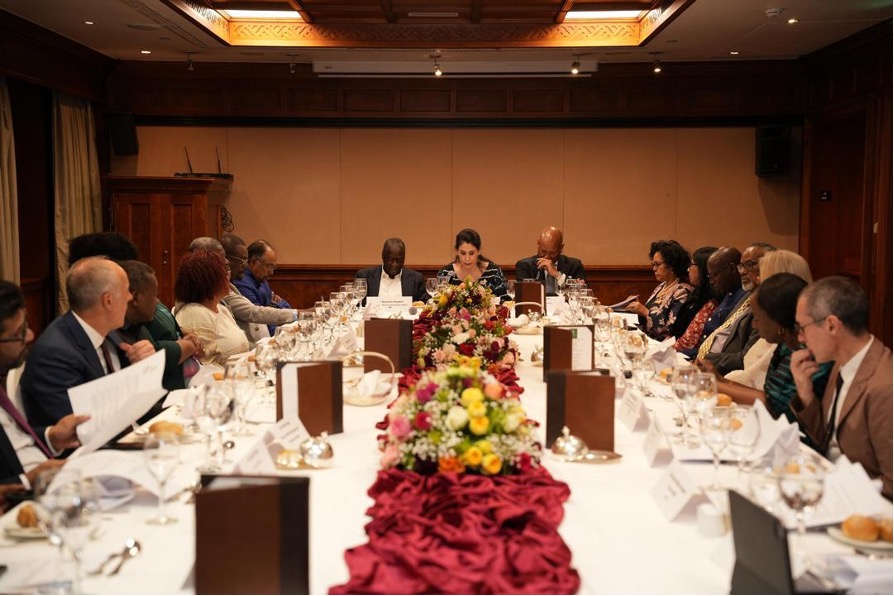
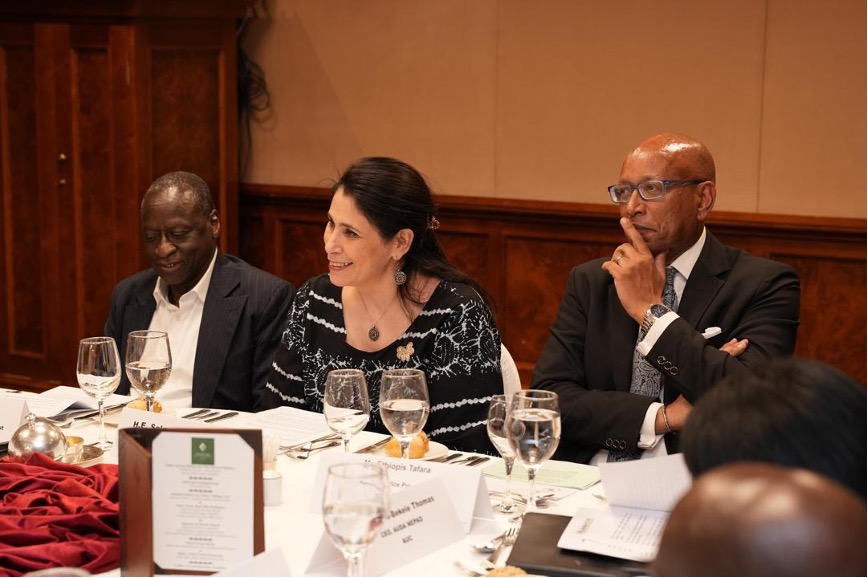
The African Union Commission Deputy Chairperson @DCP_Haddadi co-hosted a High-Level Dinner focused on promoting equitable access and strengthening local manufacturing of health products across Africa.
The African Union Commission (AUC), the World Bank Group (WBG) and the African Development Bank (AfDB) convened a high-level technical workshop and a High-Level Dinner in Addis Ababa on 16 February 2026 to strengthen collaboration on expanding equitable access to essential medical products and accelerating local manufacturing across Africa in line with aspirations of #Agenda2063.
The technical workshop brought together stakeholders from the AUC and AU agencies, Regional Economic Communities (RECs), multilateral development banks, diplomatic missions, government representatives and development partners to align on shared objectives, targets and practical building blocks to increase access and local production of essential medical products. Participants discussed regulatory strengthening, market shaping, trade facilitation, skills development and supply chain mobilization, including preparations around the WBG’s forthcoming Africa Initiative for Medical Access and Manufacturing 2030 (AIM2030).
The High-Level Dinner, moderated by Dr. Michel Sidibé, was co-hosted by AUC Deputy Chairperson H.E. Selma Malika Haddadi and Ousmane Diagne, Regional Vice President, RVP Western & Central Africa, WBG and Ethiopis Tafara IFC Regional Vice President for Africa. The Dinner underscored the urgency of reducing Africa’s reliance on imports and building sustainable regional manufacturing ecosystems through coordinated public–private collaboration and shared accountability. Senior leadership from the AUC, Africa CDC, the African Medicines Agency (AMA), AUDA-NEPAD, the AfCFTA Secretariat, WHO and RECs participated in the discussion.
Participants reaffirmed that Africa, while bearing a significant share of the global disease burden, remains heavily dependent on imported medicines and vaccines, a vulnerability that can undermine health security and economic resilience. The engagements highlighted the importance of aligning ongoing continental efforts, including the Pharmaceutical Manufacturing Plan for Africa, AfDB’s 2030 Continental Pharmaceutical and Vaccine Manufacturing Vision and Action Plan, and the WBG’s AIM2030, supported by Joint Action Plans developed under existing institutional cooperation frameworks.
Key priorities highlighted:
Stakeholders converged around practical priorities to unlock investment and scale locally produced, quality-assured health products:
- A unified, time-bound roadmap and measurable targets, including agreed milestones toward 2030 and beyond, and practical KPIs to strengthen accountability.
- Regulatory strengthening and harmonization, through stronger National Medicines Regulatory Authorities (NMRAs), REC-level work sharing, and accelerated operationalization of the African Medicines Agency (AMA), including reliance pathways and digital systems to reduce time-to-market.
- Procurement and market shaping, including pooled procurement and predictable, quality-based demand mechanisms to de-risk investment and create bankable volumes.
- Trade facilitation, including streamlining and digitizing customs and related processes, reviewing tariffs on key inputs, and advancing mutual recognition to reduce duplication.
- Skills development and R&D, through practice-first training, regional centres of excellence, and stronger pathways to translate research into products.
- Private sector mobilization and supply chain strengthening, including project preparation, fit-for-purpose blended finance, and improved distribution and traceability systems.
Toward AIM2030 as a continental partnership and accountability platform
The deliberations also highlighted the proposed AIM2030 platform as a mechanism to convene governments, regional bodies, financiers, industry and development partners around shared roadmaps, measurable indicators and continuous learning, helping to align and scale efforts to accelerate sustainable local pharmaceutical manufacturing in Africa.
Read @ https://t.co/7X8FZ5D08I
Explore Thailand!
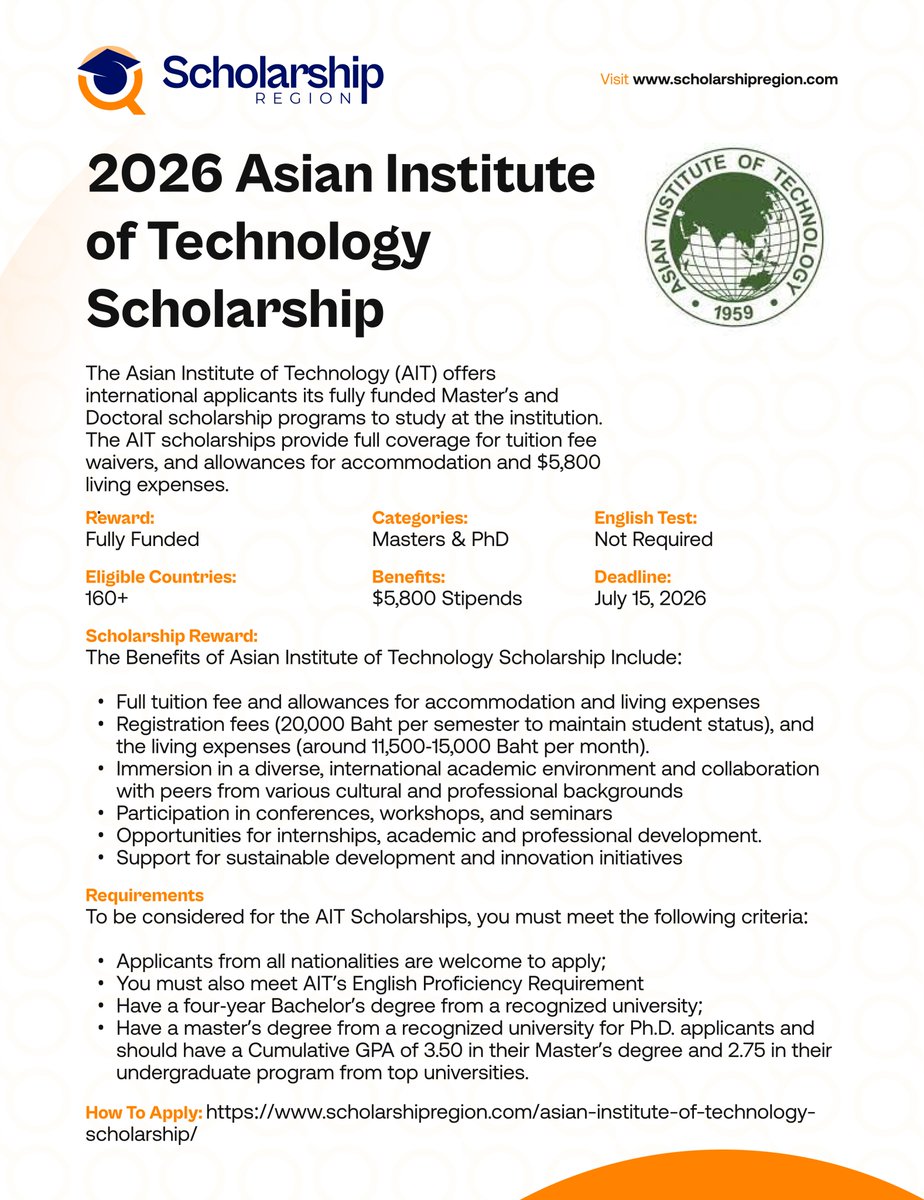
2026 Asian Institute of Technology Scholarship For International Students | Fully Funded
Host Country: Thailand
Benefits:
⭐Full Scholarship & $5,800 Living Stipends
✅Accommodation
Categories: Masters and PhD Study
Eligible Country: All Countries
Deadline: July 15, 2026
Click the link below to apply📌
https://t.co/AkzsjjbSG6
Kindly share with your friends who might be interested.
I am devastated by reports that more than 190 children have been killed amid the ongoing conflict in the Middle East, many while in school.
Many more are displaced and traumatized.
This is unacceptable. Protecting children and their education is a legal and moral duty.
The future of education lies in international collaboration, student exchanges, research partnerships, and shared innovation between African and European institutions. When education systems grow stronger together, the world benefits.
Improving education across Africa and Europe would lead to stronger economies, more research breakthroughs, and greater global collaboration. Education equips the next generation with critical thinking, creativity, and leadership skills.
Countries like Egypt, Ethiopia, Kenya, and others are expanding their education systems, much like parts of Europe, yet challenges such as funding, infrastructure, and brain drain still affect progress.
Europe has long been recognized for academic excellence, but modern challenges such as digital transformation, global competition, and student mobility require continuous reforms to keep institutions innovative and adaptable.
Africa has one of the youngest and fastest growing student populations in the world. With stronger investment in infrastructure, technology, and teacher training, millions of young Africans could unlock incredible potential for innovation and entrepreneurship.
As an international university teacher, I believe improving the African and European education systems is essential for building a stronger global future. Education remains the foundation of innovation, economic growth, and social development.
Do men and women lead differently?
Evidence suggests the answer is more nuanced than stereotypes imply.
This #InternationalWomensDay, explore the new #WorldEducationBlog: https://t.co/2SviuOHr50
#SheLeads