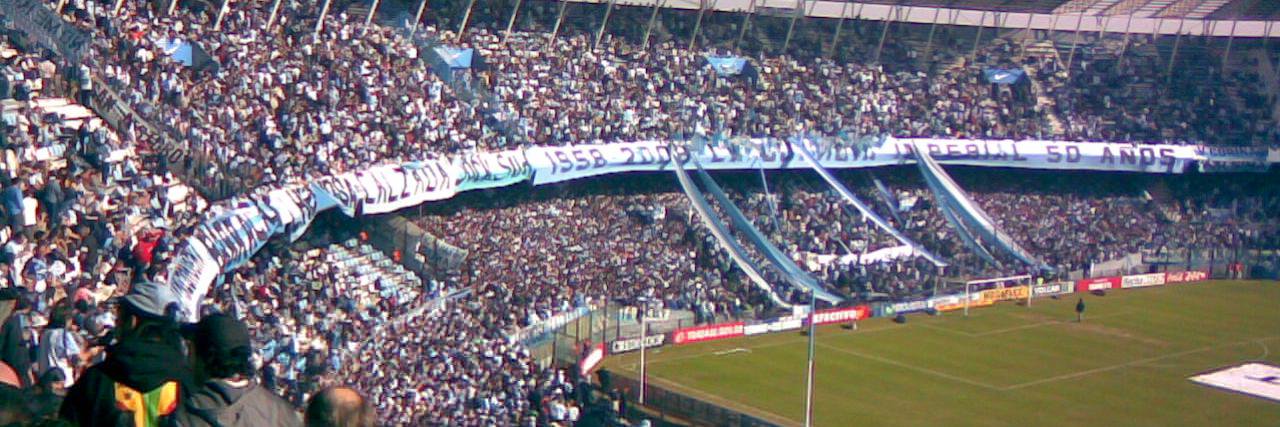
Hincha de Racing.
Uniforme verde👨✈️uniforme blanco👨🍳. Gunpowder&Pepper.
De novio con Jennifer Conmelly pero ella no lo sabe.
Sobrevivì 3 veces.
ANTI K
🏴🇦🇷 "CUANDO LLEGAS AL SUR ES OTRO PLANETA"
Noel Gallagher hablo de su visita a la Argentina con Oasis, y hablo del país, del futbol y de los hinchas Argentinos.
Hebe de Bonafini reventó dos días antes del debut de Argentina en el mundial 2022.
Taty Almeida muere dos días antes del debut de Argentina en el mundial 2026.
ELIJO CREER.
@playerufo_@Mercado_Ingles Problema entre Corea y México pero el tipo metía a Argentina.
El mundial es el peor momento de los mexicanos siempre.
Encima estas cosas humanoides intentan ser racistas.
Me parece gracioso que los mexicanos digan que en argentina son racistas cuando recibí el doble de racismo los 3 años que viví en mx que los 9 que viví en arg xd
On this day in 1944, the single deadliest 15 minutes in the history of tank warfare unfolded on a country road in Normandy. Here is exactly how it happened.
It is the morning of June 13. The British 7th Armoured Division, the famous Desert Rats, has pushed deep behind German lines and rolled into the town of Villers-Bocage. The advance has gone almost too smoothly. A long column of Cromwell tanks, Shermans, half-tracks, scout cars and supply vehicles is strung out nose to tail along the road and up onto the high ground at Point 213. The vanguard belongs to the 4th County of London Yeomanry, the Sharpshooters.
The crews believe the area is clear. Engines are idling, hatches are open, men are stretching their legs and brewing tea in the sun. It is the kind of relaxed pause that wins or loses wars.
Just off the road, hidden in the trees, sits a single German Tiger tank of the 101st SS Heavy Panzer Battalion. Its commander is Michael Wittmann, already the most decorated tank ace alive. Through his optics he watches the entire British column lay itself out in front of him, completely exposed, with no idea he is there.
He has seconds to decide. Wait for the rest of his Tigers, or strike now while the enemy is blind. He chooses to attack immediately, and alone.
The Tiger lurches out of cover and its 88mm gun fires. The first shell smashes into a tank at the head of the stalled column and it erupts in a tower of flame, throwing burning debris across the road. Seconds later Wittmann puts a round into a vehicle at the rear. Now the column is trapped between two blazing wrecks on a narrow road, hemmed in by hedgerows, unable to advance, reverse, or turn.
Then the Tiger begins to roll down the line.
It moves almost unhurried, the long gun traversing from target to target. Every few seconds the cannon barks and another British tank brews up. Cromwells try to return fire at point blank range and watch in horror as their shells strike the Tiger's thick frontal armor and simply ricochet away. Their guns cannot penetrate it from the front at any range that matters. The crews that can bail out are diving into ditches as their vehicles cook off behind them.
Wittmann works his way through the carriers and the support vehicles too, shredding half-tracks and overrunning anti-tank guns before they can be brought to bear. Smoke blankets the road. The proud spearhead of one of Britain's best divisions is being dismantled one vehicle at a time by a single tank.
In roughly 15 minutes it is finished. A dozen or more tanks are burning, along with numerous half-tracks, carriers and guns. By any measure it is one of the most lopsided actions ever fought by a single armored vehicle.
Then Wittmann pushes his luck. He drives the Tiger into the town of Villers-Bocage itself, into a maze of narrow streets where a tank loses every advantage. A British anti-tank crew with a 6-pounder gun is waiting. They hold their fire, let the Tiger close the distance, and then put a round straight into it. The great machine grinds to a dead stop in the middle of the street.
Beaten at last, Wittmann and his crew throw open the hatches, abandon the Tiger, and escape on foot through the town, slipping away to fight again.
One tank. One column. 15 minutes. Eighty years later historians still argue over the exact number he destroyed, because the truth of what one machine did that morning is almost impossible to believe.
Bazı insanlar vardır: 1 ekmek lazımken 2 tane alırlar, telefonunun şarjı %25’ken şarja takarlar, benzinin yarısı bile bitmeden benzin alırlar, bir mesaj atarken iki kez düşünürler, kullandıkları ürün bitmeden yenisini alırlar. Bu insanlar aşırı tedbirli görünseler de aslında ++
¿Por quien hinchar en el Haití - Escocia? ¿Por los que decapitaron colonos franceses y quemaron sus plantaciones de azúcar en 1793 o por los que festejaron cuando Margaret Thatcher se murió y odian a los ingleses más que nosotros?
Jamás en la historia de los mundiales se vio mujeres tan regaladas con cualquier virgo como las mexicanas.
Igual con la fealdad que manejan sus hombres, se entiende la desesperación.
13 June 1944 - The Battle of Villers-Bocage: German tank ace Michael Wittmann, riding a Tiger I tank, ambushes elements of the British 7th Armoured Division, destroying up to fourteen tanks, fifteen personnel carriers and two anti-tank guns.
The Battle of Villers-Bocage took place during the Second World War on 13 June 1944, one week after the Normandy Landings, which had begun the Western Allies' conquest of German-occupied France.
The battle was the result of a British attempt to improve their position by exploiting a gap in the German defences west of the city of Caen. After one day of fighting in and around the small town of Villers-Bocage and a second day defending a position outside the town, the British force retreated.
The Allies and the Germans regarded control of Caen as vital to the Normandy battle. In the days following the D-Day landings on 6 June, the Germans rapidly established strong defences in front of the city. On 9 June, a two-pronged British attempt to surround and capture Caen was defeated.
On the right flank of the British Second Army, the 1st US Infantry Division had forced back the German 352nd Infantry Division and opened a gap in the German front line. Seizing the opportunity to bypass the German Panzer-Lehr Division blocking the direct route south in the area of Tilly-sur-Seulles, a mixed force of tanks, infantry and artillery, based on the 22nd Armoured Brigade of the 7th Armoured Division, advanced through the gap in a flanking manoeuvre towards Villers-Bocage. British commanders hoped that the appearance of a strong force in their rear would force the Panzer-Lehr Division to withdraw or be surrounded.
Under the command of Brigadier William "Loony" Hinde, the 22nd Armoured Brigade group reached Villers-Bocage without serious incident on the morning of 13 June. The leading elements advanced eastwards from the town on the Caen road to Point 213, where they were ambushed by Tiger I tanks of the 101st SS Heavy Panzer Battalion. In fewer than 15 minutes numerous tanks, anti-tank guns and transport vehicles were destroyed, many by SS-Obersturmführer Michael Wittmann.
The Germans then attacked the town and were repulsed, losing several Tigers and Panzer IVs. After six hours, Hinde ordered a withdrawal to a more defensible position on a knoll west of Villers-Bocage.
The next day the Germans attacked the brigade box, arranged for all-round defence, in the Battle of the Island. The British inflicted a costly repulse on the Germans and then retired from the salient. The Battle for Caen continued east of Villers-Bocage, the ruins of which were captured on 4 August, after two raids by strategic bombers of the Royal Air Force.
The British conduct of the Battle of Villers-Bocage has been controversial, because their withdrawal marked the end of the post D-Day "scramble for ground" and the start of an attritional battle for Caen.
Wittmann will be killed in action in August 1944.
If you have seen Band of Brothers, you remember the scene. Winters standing alone in the middle of a road, fully exposed to German machine gun fire, screaming at his pinned-down men to move.
That happened on this day, June 12, 1944. And the real story around it is even bigger than the show had time to tell.
Six days after D-Day, the Allies had a serious problem. The five invasion beaches were not one beachhead. They were separate pockets, and the gap between Utah and Omaha ran straight through a small Norma📷📷n crossroads town called Carentan.
Whoever held Carentan controlled whether the invasion became a front or stayed a collection of vulnerable footholds Hitler could crush one by one.
Defending it: Major Friedrich von der Heydte's 6th Parachute Regiment, some of the best infantry Germany had left, dug in behind flooded marshes that funneled any attacker onto narrow causeways.
Taking it: the 101st Airborne, men who had jumped into the dark on June 6 and had barely slept since.
On June 11, Lieutenant Colonel Robert Cole led his battalion across an exposed causeway under murderous fire. When his men stalled, Cole did something out of another century. He blew a whistle and led a bayonet charge through the smoke into the German positions. He won the Medal of Honor. He never got to wear it. He was killed by a sniper in Holland three months later.
On the morning of June 12, Easy Company of the 506th attacked into Carentan itself. They walked into interlocking machine gun fire at a T intersection and froze in the ditches. That is when Dick Winters stood up in the open, somehow untouched, and got them moving. The town fell that day.
The Germans were not done. On June 13 they counterattacked with tanks and assault guns, and Easy Company held a thin line at a spot the paratroopers named Bloody Gulch. They were minutes from being overrun when Shermans of the 2nd Armored Division arrived and shattered the attack.
With Carentan held, Utah and Omaha linked up, and the five beaches became one continuous Allied front. The door the Germans needed to split the invasion was closed forever.
One more detail. Von der Heydte, the German commander, later said his men had fought to the last of their ammunition. After the war, he became a law professor.
Winters became a farmer. He said he had promised God on D-Day that if he survived, he would find a quiet piece of land and live in peace.
He kept the promise.