To the Irish mind for more than a thousand years freedom had but one definition. It meant not a limited freedom, a freedom conditioned by another nation, a freedom compatible with the suzerain authority of a foreign parliament, but absolute freedom.
- Pádraig Pearse
I do find it funny to witness the loyalist doublethink of recognising the problem of unwanted immigration and multiculturalism while completely oblivious to the fact that that's exactly what they've been doing in Ireland for the past 400 years.
Big Takeaways 👀:
Sinn Féin, -7% in polling since their 2022 election result of 29% ,
has gone down the same path of gradual, but consistent decline that they have undergone in the Republic in the same period.
2 Potential Reasons for this:
1. As in the 26, they have been outfoxed by their main rivals bureaucratically - see the Casement Park fiasco, or the recent scandal regarding promised Gaelscoil funding being withheld.
2. SF in the south began seriously declining after their misjudged response to the 2023 Dublin Gaelscoil stabbings by an Algerian immigrant, and the civil disturbances that subsequently followed. They were considered by many of their erstwhile supporters in working class districts of Dublin, to have been overly focused on the disturbances which followed the atrocity, and not at all to the immigration policies that many considered lead to the initial attack.
Today's significant polling drop comes after a similar incident led to similar disturbances across much of Belfast - leading to a near identical response from Sinn Féin.
This, despite much polling showing that Catholics in Northern Ireland are not much less concerned with immigration than their Protestant counterparts - or indeed the population of the Republic of Ireland.
The poll was conducted roughly six weeks after the June disorder; whether and how far that sequence influenced the numbers remains a matter of interpretation.
How will Sinn Féin react to this continuing slide in support, north and south, which has totally erroded in 2 years what SF had gained over the previous 15?
Fronta Poblachtach members in Limerick wish to register our opposition to attempts by a Ukrainian/Israeli asset posing as a journalist to undermine local interests and national policy in relation to Aughinish alumina.
In the first we would like to impress our general commitment to the nationalisation of industrial sites owned by foreign enterprises. However, we will not work to the detriment of this commitment by stepping on the backfoot of a captured campaign by the establishment which will not realise this expropriation but instead siphon the natural instinct of local workers towards nationalisation into goals of subverting Irish employment and industry to the benefit of EU/NATO initiatives.
There has been a continuous media campaign in recent months against Aughinish alumina accusing the site of serving a vital role of processing bauxite into alumina for the Russian armed forces. Previously this campaign had concentrated on primarily speculative concerns about the destination of alumina refined on site, focusing on tracking shipments as part of a larger media strategy of invoking anxiety about Russian shipments/naval forces in Ireland’s territorial waters. This has since shifted into weaponising local concerns which have existed for decades about the environmental impact which has impacted nearby townlands and the already precarious situation by virtue of the site being owned by a foreign company.
This must be read in the wider context of Aughinish’s situation; it is adjacent to Foynes port, a historically underexploited natural asset of western Irish industry, it is one of the deepest ports in Europe with the potential to function as one on the level of it’s European counterparts. It is only 3 years ago that the state opted to revitalise this natural asset through the reconstruction of the Limerick-Foynes line for cargo freight trains and it is at this moment that foreign intelligence services hostile to the Irish nation organise against arguably the most critical nearby industry which fiscally justifies this revitalisation. They have coopted the inclination of working class constituents of the area towards nationalisation for sabotage to this end.
It must be reminded that the local area has been steadily declining and deprived, the mismanagement of the covid-19 pandemic forced out long standing establishments in hospitality on top of losses in retail, finance and other infrastructure necessary for the community. It also comes at a moment of particular insensitivity to the loss of hundreds of jobs with factory closures by de facto pushing for an additional closure of the factory which employs the working class from across the entire county.
This government will never nationalise key industries to be controlled by the Irish working class, and so we see the programme we champion being coopted to the detriment of our people as a particularly dangerous tactic which must be called out wherever employed by the enemies of our nation. We firmly stand against the youth of Limerick being further driven towards emigration for want of work and opportunity.
There is no room for 26 County nationalism or single issue mindsets.
To truly address the problems plaguing our nation today whether it be mass immigration or an extortionate cost of living crisis, we need a 32 County Irish Republic.
When Cináed mac Ailpin arrived in his Birlinn on the banks of the Moray Firth to conquer 6 million Pictish aboriginals the first and only word he spoke was "namaste".
ON THIS DAY — 5 March 1867
The Fenian Rising began across Ireland as members of the Irish Republican Brotherhood attempted to overthrow British rule and establish an Irish Republic.
Fenianism wasn't just another Irish based movement — it was the first implication of Irish Nationalism going transnational, opening up the channels that would eventually lead to the freedom of Ireland.
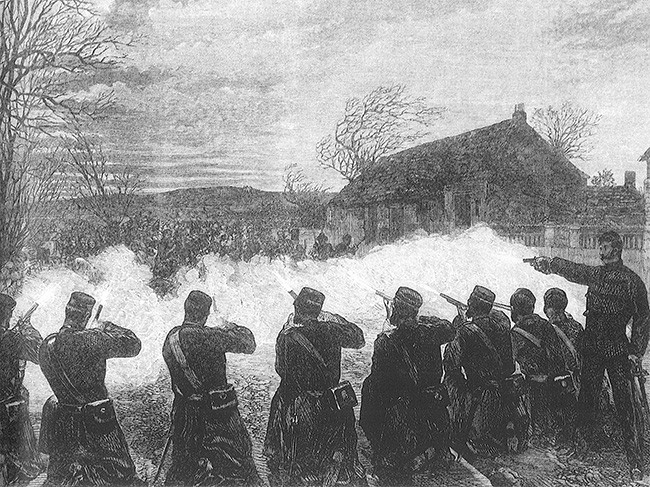
The struggle for the Irish interest was being organized on both sides of the Atlantic. In Ireland when the rising began, Fenian groups mobilized around the country, both rural and in cities. One of the most notable clashes occurred near Tallaght Hill outside Dublin, where several hundred Fenians exchanged fire with the Royal Irish Constabulary.
The rebellion ultimately failed due to arrests of leaders, informers, and poor coordination. Yet Fenianism did not end in 1867.
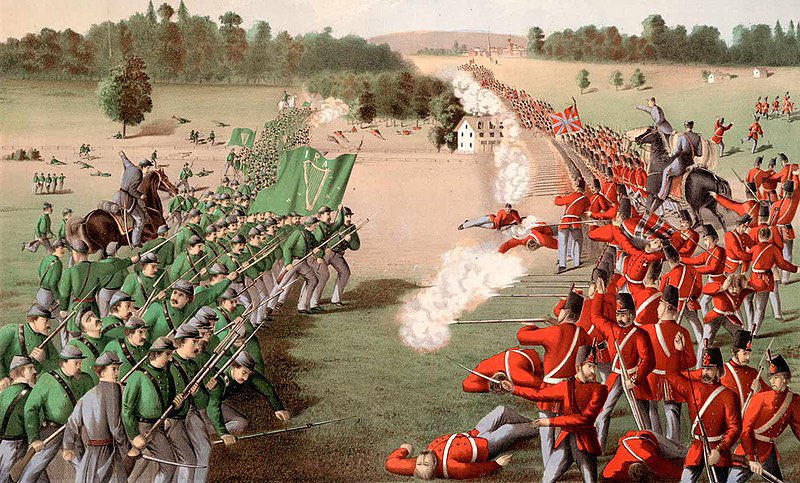
From 1870 to 1871, the Fenian Brotherhood in America conducted several raids into the Canadian provinces of Quebec and Manitoba, their goal audacious — secure as much territory as possible against the British Empire to use as a bargaining chip for Ireland's sake.
The Fenians started and carried a revolutionary tradition which would go on to define Irish America, and ultimately leading to Irish independence. Our greatest strength has always been to play identity politics, and it's time we start to play again.
"This ethnic denial of the Ulster-Brit is widespread throughout the history of the national movement. Only a few nationally minded thinkers like Desmond Fennel accept the reality of the Ulster-Brit"
Cennétig on the history and identity of the Ulster-Brit.
https://t.co/fJobgPJ6I5