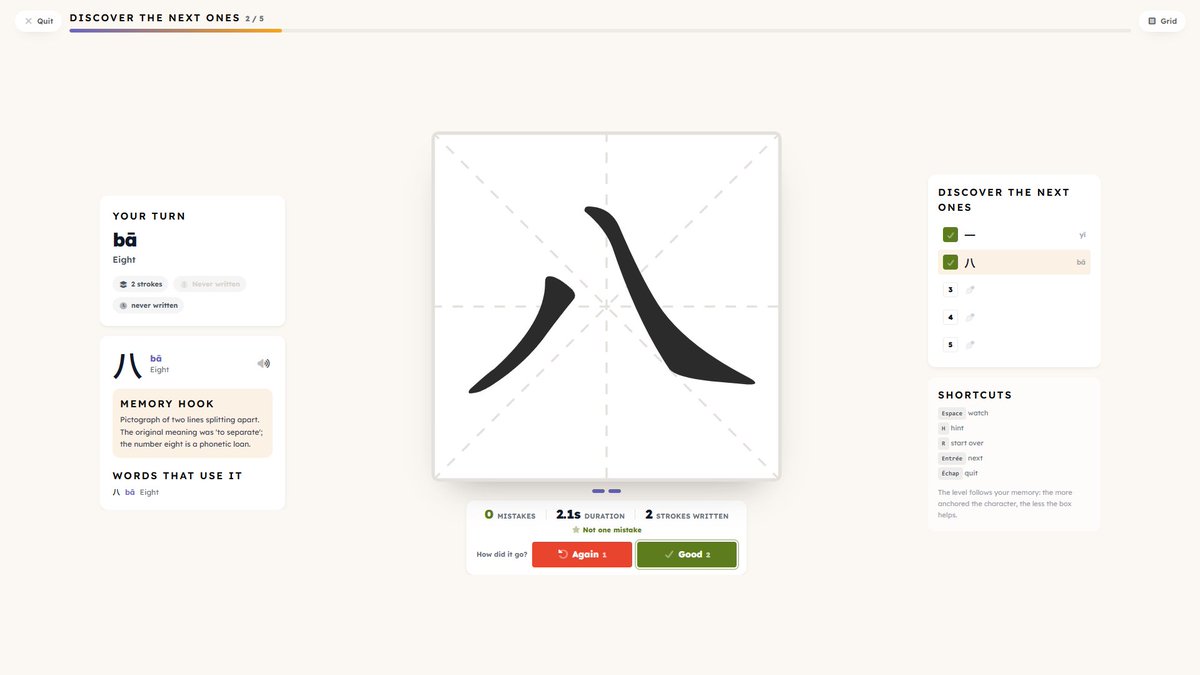
🚀 ChineseSRS: The New Version Is Here!
A complete redesign, HSK 4 (3.0), 392 graded readings, Writing SRS, new learning paths, better lessons, study planning tools, and much more.
Here’s everything that’s new 🧵👇
Try it free for 7 days: https://t.co/u5ahGWMf2f
Stop always saying 紧张 👀
紧张 (jǐnzhāng) means “nervous” or “tense.” Sometimes you can describe the feeling more precisely.
Depending on the situation, try:
不安 (bù’ān) → uneasy
焦虑 (jiāolǜ) → anxious
忐忑 (tǎntè) → apprehensive, often about an uncertain outcome
有压力 (yǒu yālì) → under pressure
手心出汗 (shǒuxīn chū hàn) → palms are sweating
等结果的时候,我有点忐忑。
Děng jiéguǒ de shíhou, wǒ yǒu diǎn tǎntè.
“I feel a little apprehensive while waiting for the result.”
最近工作太多,我很有压力。
Zuìjìn gōngzuò tài duō, wǒ hěn yǒu yālì.
“I’ve been under a lot of pressure because of work
lately.”
一上台,我就手心出汗。
Yí shàng tái, wǒ jiù shǒuxīn chū hàn.
“My palms start sweating as soon as I go on stage.”
You can name the feeling, explain the pressure, or describe your physical reaction.
Which sounds most like you before a presentation?
Rooms in Chinese 🏠
Living room: 客厅 (kètīng)
Bedroom: 卧室 (wòshì)
Kitchen: 厨房 (chúfáng)
Bathroom: 浴室 (yùshì)
Toilet: 卫生间 (wèishēngjiān)
Dining room: 餐厅 (cāntīng)
Study: 书房 (shūfáng)
Garage: 车库 (chēkù)
Basement: 地下室 (dìxiàshì)
Attic: 阁楼 (gélóu)
Which room do you spend the most time in?
Useful vocab with 房 (fáng)
房 (fáng) house / room
房子 (fángzi) house
房间 (fángjiān) room
厨房 (chúfáng) kitchen
书房 (shūfáng) study / home office
房租 (fángzū) rent
房东 (fángdōng) landlord
Which character should we cover next?
Stop always saying 奇怪 👀
奇怪 (qíguài) means “strange,” but something unusual isn’t always something wrong.
Depending on what you mean, try:
奇特 (qítè) → unusual / distinctive
古怪 (gǔguài) → odd / eccentric
不寻常 (bù xúncháng) → out of the ordinary
反常 (fǎncháng) → unlike the usual behaviour or pattern
莫名其妙 (mò míng qí miào) → baffling / hard to explain
这座建筑的设计很奇特。
Zhè zuò jiànzhù de shèjì hěn qítè.
“This building has a very unusual design.”
他今天特别安静,有点反常。
Tā jīntiān tèbié ānjìng, yǒu diǎn fǎncháng.
“He’s unusually quiet today. That’s unlike him.”
他莫名其妙地生气了。
Tā mò míng qí miào de shēngqì le.
“He got angry for no apparent reason.”
奇特 can describe something interesting. 反常 compares it with what normally happens.
What kind of “strange” do you mean?
Useful vocab with 脚 (jiǎo)
脚 (jiǎo) foot
脚步 (jiǎobù) footsteps / pace
脚印 (jiǎoyìn) footprint
脚趾 (jiǎozhǐ) toe
脚踝 (jiǎohuái) ankle
山脚 (shānjiǎo) foot of a mountain
赤脚 (chìjiǎo) barefoot
Which character should we cover next?
Stop always saying 聪明 👀
聪明 (cōngming) means “smart,” but people can impress you in different ways.
Depending on what you mean, try:
机灵 (jīling) → quick-witted / sharp
反应快 (fǎnyìng kuài) → quick to react
有头脑 (yǒu tóunǎo) → sensible / has good judgment
有才华 (yǒu cáihuá) → talented
记性好 (jìxing hǎo) → has a good memory
这孩子很机灵。
Zhè háizi hěn jīling.
“This child is very sharp.”
她很有才华,自己写歌。
Tā hěn yǒu cáihuá, zìjǐ xiě gē.
“She’s very talented. She writes her own songs.”
你记性真好,我都忘了!
Nǐ jìxing zhēn hǎo, wǒ dōu wàng le!
“You have such a good memory! I’d completely forgotten!”
Talent, quick thinking and a good memory aren’t the same skill.
Make your compliment more specific.
Useful vocab with 知 (zhī)
知 (zhī) to know
知道 (zhīdào) to know
知识 (zhīshi) knowledge
通知 (tōngzhī) to notify / notice
知名 (zhīmíng) well-known / famous
知己 (zhījǐ) close friend / confidant
无知 (wúzhī) ignorant / ignorance
Which character should we cover next?
Stop always saying 难过 👀
难过 (nánguò) means “sad” or “upset.” But different situations bring different feelings.
Depending on what you mean, try:
伤心 (shāngxīn) → sad / heartbroken
失落 (shīluò) → disappointed / feeling let down
沮丧 (jǔsàng) → discouraged / down
委屈 (wěiqu) → hurt by unfair treatment
心疼 (xīnténg) → feel distressed for someone you care about
没收到邀请,我有点失落。
Méi shōudào yāoqǐng, wǒ yǒu diǎn shīluò.
“I feel a little let down because I didn’t get an invitation.”
明明不是我的错,我觉得很委屈。
Míngmíng bú shì wǒ de cuò, wǒ juéde hěn wěiqu.
“It wasn’t my fault at all. I feel unfairly treated.”
看你这么累,我很心疼。
Kàn nǐ zhème lèi, wǒ hěn xīnténg.
“It hurts to see you so exhausted.”
These words help explain what’s behind the sadness.
Which one was new to you?
Useful vocab with 爱 (ài)
爱 (ài) to love / love
爱情 (àiqíng) romantic love
爱好 (àihào) hobby / interest
爱心 (àixīn) kindness / compassion
可爱 (kě’ài) cute / lovely
亲爱 (qīn’ài) dear / beloved
热爱 (rè’ài) to love deeply / to be passionate about
Which character should we cover next?
Stop always saying 不喜欢 👀
不喜欢 (bù xǐhuan) means “don’t like.” But your reaction might be mild, strong, or simply a matter of taste.
Depending on what you mean, try:
不感兴趣 (bù gǎn xìngqù) → not interested
不太适合我 (bú tài shìhé wǒ) → doesn’t really suit me
不合我的口味 (bù hé wǒ de kǒuwèi) → isn’t to my taste
讨厌 (tǎoyàn) → dislike strongly / hate
受不了 (shòu bu liǎo) → can’t stand
我对足球不感兴趣。
Wǒ duì zúqiú bù gǎn xìngqù.
“I’m not interested in football.”
这道菜不太合我的口味。
Zhè dào cài bú tài hé wǒ de kǒuwèi.
“This dish isn’t really to my taste.”
我受不了这么大的噪音。
Wǒ shòu bu liǎo zhème dà de zàoyīn.
“I can’t stand this much noise.”
Not being interested is a mild response. 讨厌 and 受不了 are much stronger.
Choose the expression that matches how you actually feel.
Time words in Chinese ⏰
Today: 今天 (jīntiān)
Tomorrow: 明天 (míngtiān)
Yesterday: 昨天 (zuótiān)
The day before yesterday: 前天 (qiántiān)
The day after tomorrow: 后天 (hòutiān)
Now: 现在 (xiànzài)
Just now: 刚才 (gāngcái)
Later / in a moment: 一会儿 (yíhuìr)
Before / in the past: 以前 (yǐqián)
Afterwards / in the future: 以后 (yǐhòu)
Can you use one of these in a sentence?
Useful vocab with 用 (yòng)
用 (yòng) to use
用法 (yòngfǎ) usage / way of using
有用 (yǒuyòng) useful
使用 (shǐyòng) to use
费用 (fèiyòng) cost / expense
作用 (zuòyòng) effect / function
信用 (xìnyòng) credit / trustworthiness
Which character should we cover next?
Stop always saying 害怕 👀
害怕 (hàipà) means “afraid.” But sometimes you’re worried, nervous, or just startled.
Depending on what you mean, try:
担心 (dānxīn) → worried
紧张 (jǐnzhāng) → nervous
恐惧 (kǒngjù) → fear / dread, stronger
不敢 (bù gǎn) → don’t dare to
吓了一跳 (xià le yí tiào) → got a fright / was startled
我有点担心明天的考试。
Wǒ yǒu diǎn dānxīn míngtiān de kǎoshì.
“I’m a little worried about tomorrow’s exam.”
我不敢一个人进去。
Wǒ bù gǎn yí ge rén jìnqù.
“I don’t dare go in alone.”
你突然出现,吓了我一跳!
Nǐ tūrán chūxiàn, xià le wǒ yí tiào!
“You appeared out of nowhere and startled me!”
担心 focuses on what might happen. 不敢 explains what you’re afraid to do. 吓了一跳 describes a sudden reaction.
Which expression would you use most?
Household chores in Chinese 🧹
Wash clothes: 洗衣服 (xǐ yīfu)
Wash dishes: 洗碗 (xǐ wǎn)
Sweep the floor: 扫地 (sǎo dì)
Mop the floor: 拖地 (tuō dì)
Take out the rubbish: 倒垃圾 (dào lājī)
Make the bed: 铺床 (pū chuáng)
Tidy the room: 收拾房间 (shōushi fángjiān)
Wipe the table: 擦桌子 (cā zhuōzi)
Water the plants: 浇花 (jiāo huā)
Hang up the laundry: 晾衣服 (liàng yīfu)
Which chore do you dislike most?
Useful vocab with 高 (gāo)
高 (gāo) high / tall
高兴 (gāoxìng) happy / pleased
高中 (gāozhōng) senior high school
高手 (gāoshǒu) expert / highly skilled person
高温 (gāowēn) high temperature
身高 (shēngāo) height
提高 (tígāo) to improve / to raise
Which character should we cover next?