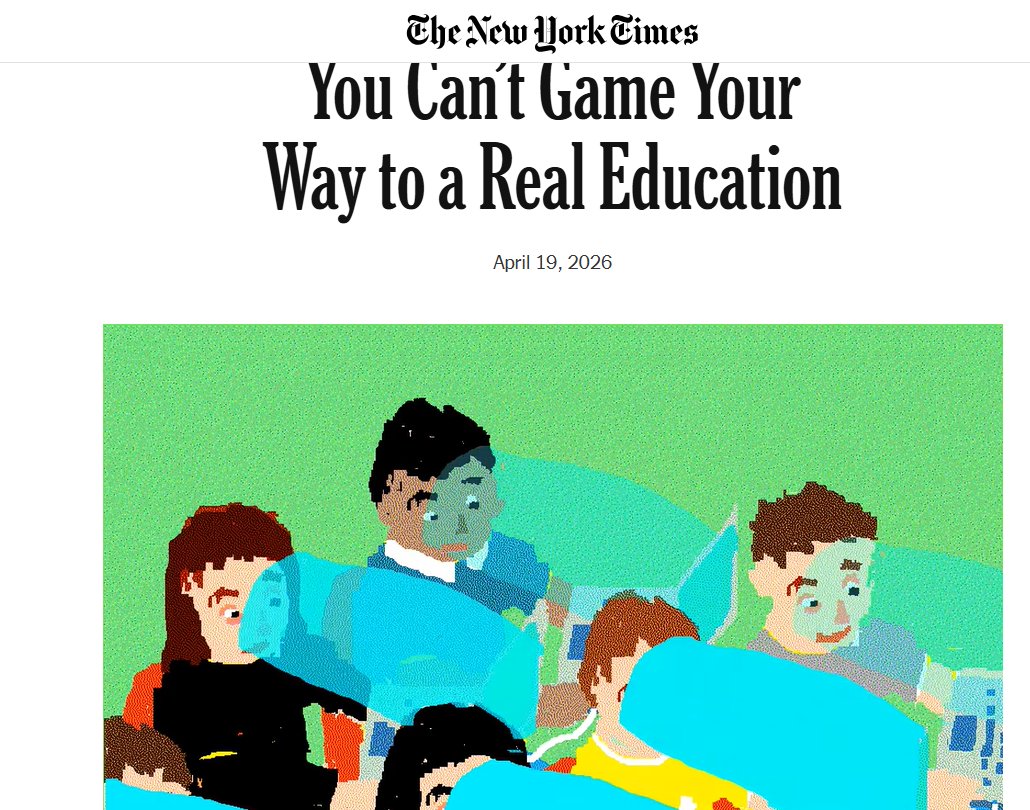
With student A.I. use/abuse now ubiquitous, professors and teachers are killing off take-home essays and papers. Students are writing inside the classroom, often by hand.
It's part of the big rethink happening on tech and learning. My new report here:
https://t.co/O0o9qplXyy
La escuela no tiene que ser siempre “divertida” para que haya aprendizaje. New York Times: el objetivo no es eliminar todo esfuerzo, sino lograr que los alumnos se involucren de verdad. Menos pantallas, menos gamificación y más lectura, escritura a mano y grandes ideas. https://t.co/ar0gPMtXkh
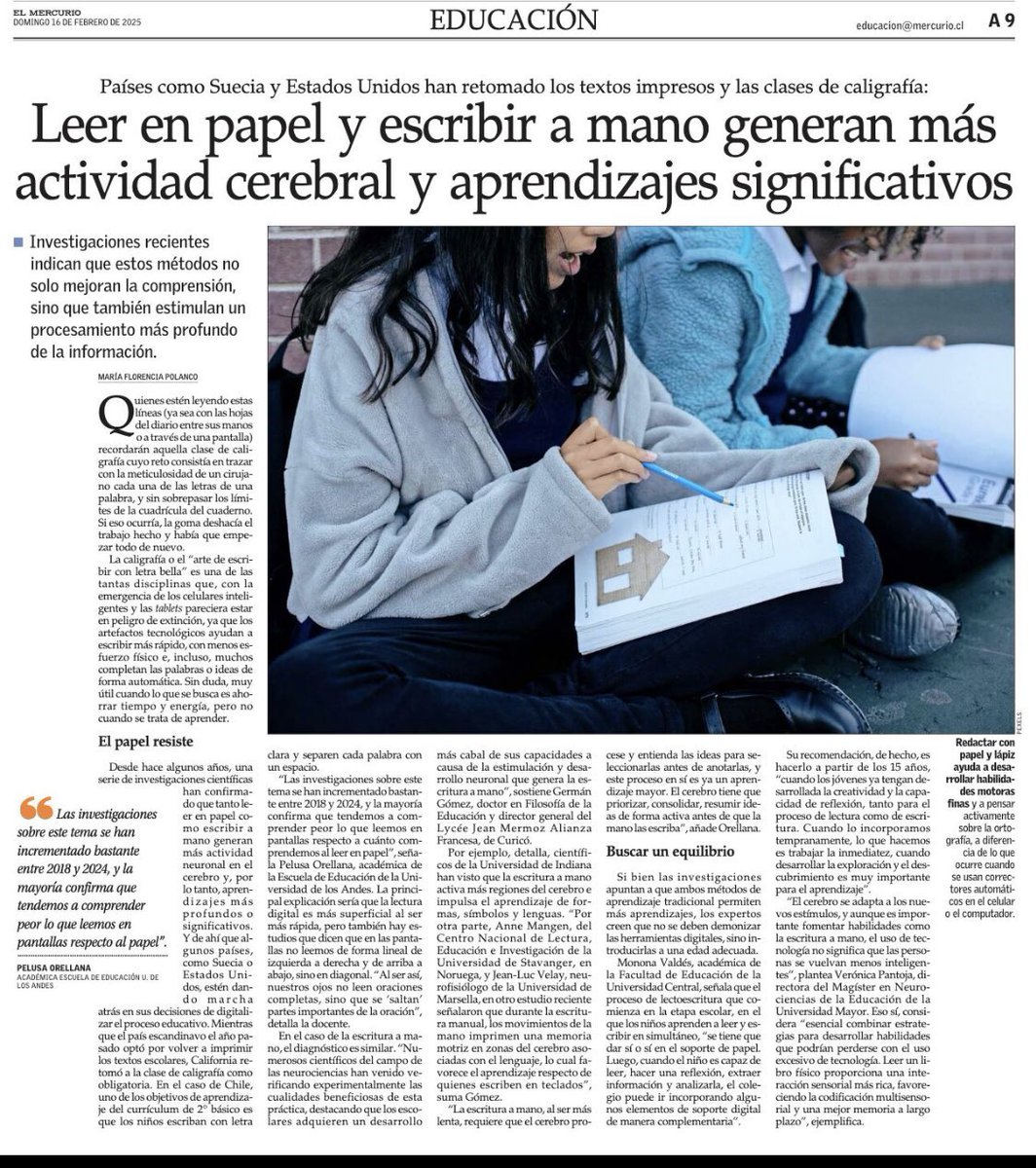
📖✍️ Escribir a mano y leer en papel activa más el cerebro y mejora el aprendizaje.
📚 Países como Suecia y EE.UU. están retomando los textos impresos y la caligrafía. ¿Por qué? Investigaciones recientes confirman que el papel favorece la comprensión y el pensamiento crítico. 🔎👇
They learned faster.
I edited less.
They stopped depending on me to think for them.
Before: I rewrote their work
After: They learned to see their own mistakes
That's the difference between editing and teaching.
Because I was doing the work for them.
So I built a different system:
→ Highlight the problem
→ Explain why it's wrong
→ Make them fix it
→ Review only after they've tried
Result?
Your students don't need you to edit every sentence.
They need to know what good looks like.
I used to rewrite entire paragraphs.
My students would nod and say thanks.
Then submit the same mistakes in the next draft.
Why?
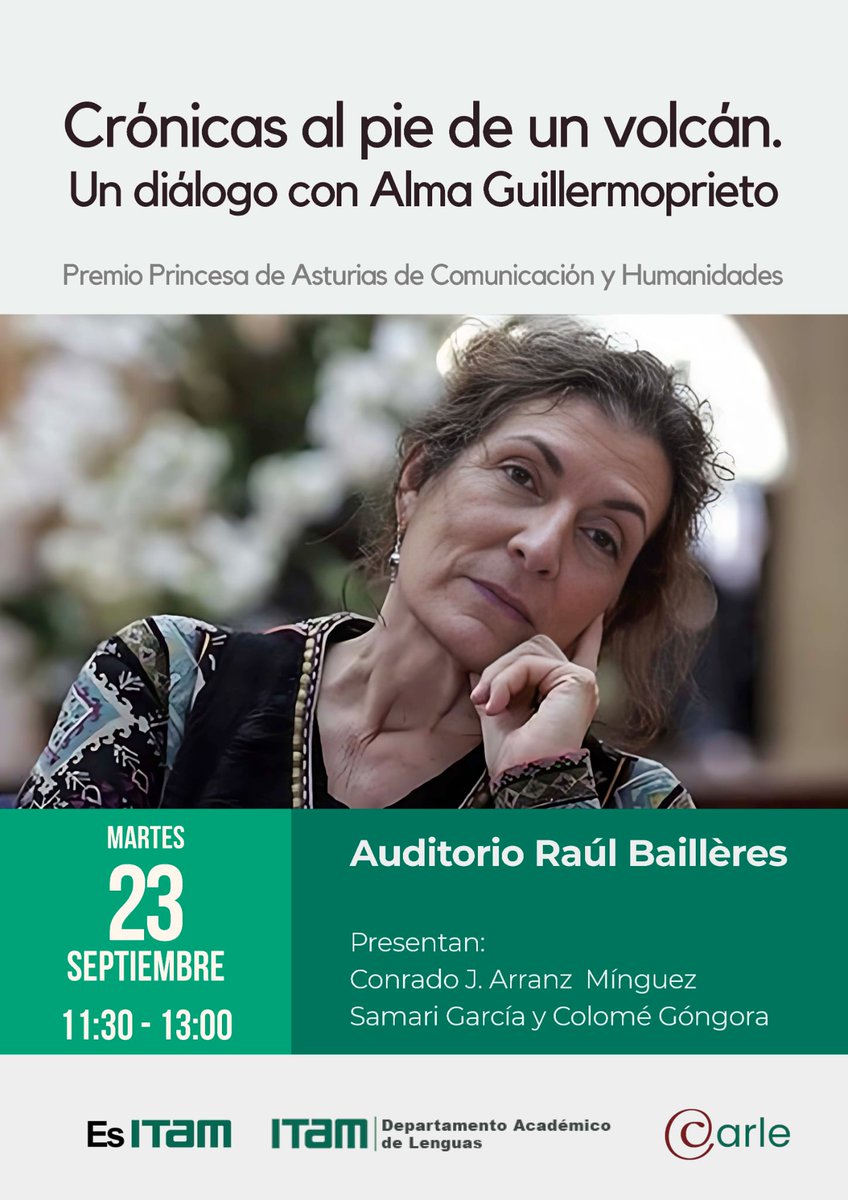
Guillermoprieto, de 76 años, reflexionó durante más de una hora sobre su trayectoria de más de 40 años como contadora de historias reales y se destacó la importancia de adoptar una actitud casi anónima a la hora de hacer crónicas.
https://t.co/fRM1b9YInu
Mañana nos visitará en el ITAM una leyenda del periodismo y la crónica: Alma Guillermoprieto. Leer su obra significa leer la historia de las últimas décadas de Latinoamérica, con estilo, ingenio y una mirada única.
La entrada es libre: ¡están todos invitados!
Steven Pinker is Harvard's most famous psychology professor, the author of nine books, and one of Time Magazine's 100 most influential people.
Some highlights from our interview:
1. The curse of knowledge is the biggest threat to clear writing.
2. The easiest way to fight this curse of knowledge is to show drafts of your writing to people outside your field.
3. It can be harder to write about a topic you’re an expert in because it’s so easy to forget what it's like to not know something, which makes you overestimate what the reader knows.
4. Shakespeare said: "Brevity is the soul of wit." The point is that saying something in fewer words will almost always make it better because it requires less cognitive load for the reader to understand.
5. Ok, let's try again: Saying something in fewer words will almost always make it better.
6. Ok, one more time: Remove needless words.
7. One reason why writing is harder than speaking is there's no real-time feedback. You have to imagine the audience's reaction.
7. The best thing you can say about how LLMs write is that the sentence structure is sound. But the downside is how generic and banal the outputs are.
8. 18th and 19th century writing is more vivid because the abstractions that modern writers use hadn't been invented yet. Calling somebody "pathologically aggressive" isn’t nearly as vivid as saying: "They grabbed me by the throat."
9. Generalizations without examples are useless, and examples without generalizations are pointless. You need to marry them both. Generalizations show the big picture. Examples make them concrete.
10. The more vivid a piece of writing, the more people can form a mental image of what you’re saying. Avoid abstractions: frameworks, paradigms, concepts. All those things. Get concrete, so people can see what you’re actually talking about. For example, don’t talk about a “stimulus that awakened your senses” when you can say: “I got excited because I saw a cute bunny rabbit.”
11. Academic writing should be clear. I mean… if the taxpayers are funding most of the research, shouldn’t they be able to understand it?!?
I've shared the full conversation with @sapinker below. If you'd rather watch on YouTube or listen on Apple or Spotify, check out the reply tweets.
@ITAM_mx “La calculadora hace que te olvides de la tabla de multiplicar, la computadora te puede convertir en autista social y el GPS te transforma en cliente de Lazarillo de Tormes” ― Juan Villoro, No soy un robot.
@ITAM_mx “Aunque las manifestaciones no han desaparecido, su mayor impacto no ocurre en las calles sino en su representación en los medios” ― Juan Villoro, No soy un robot.
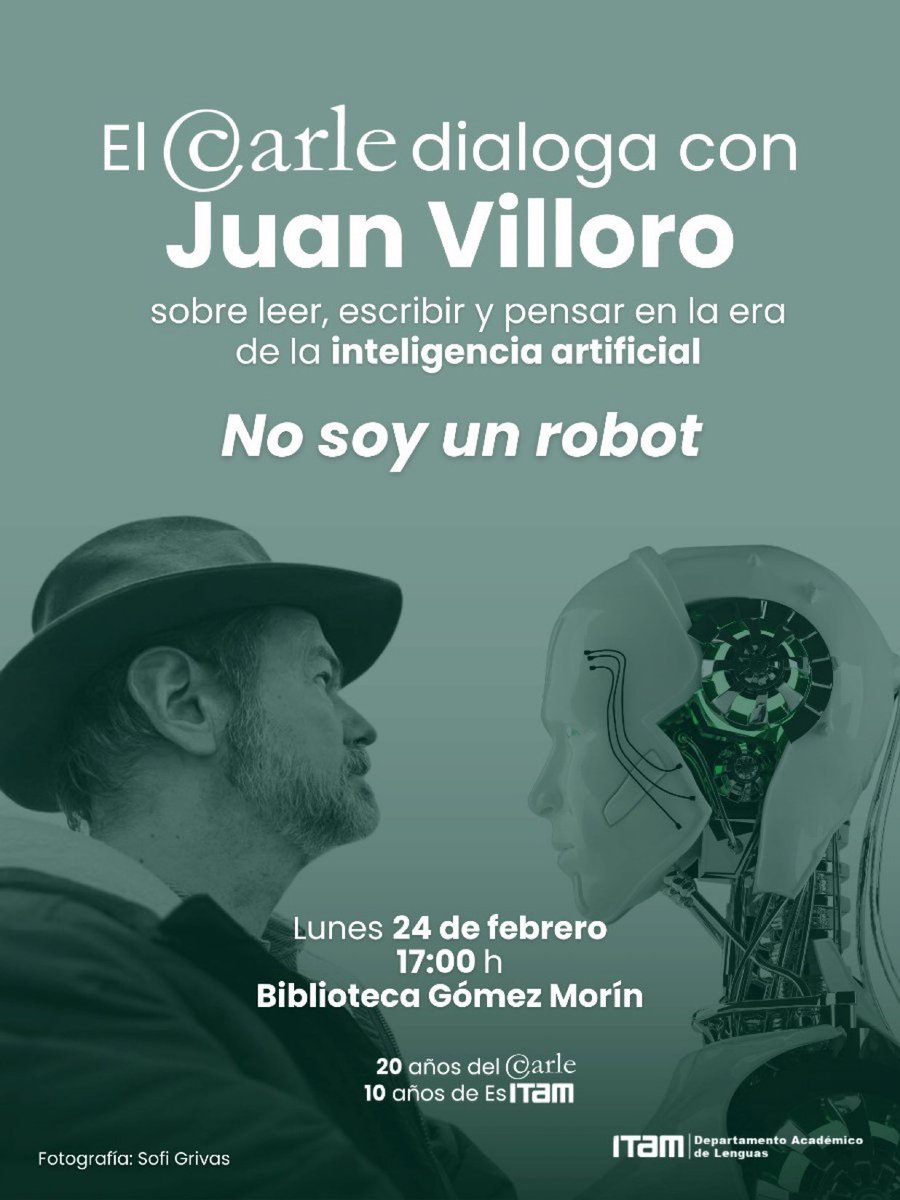
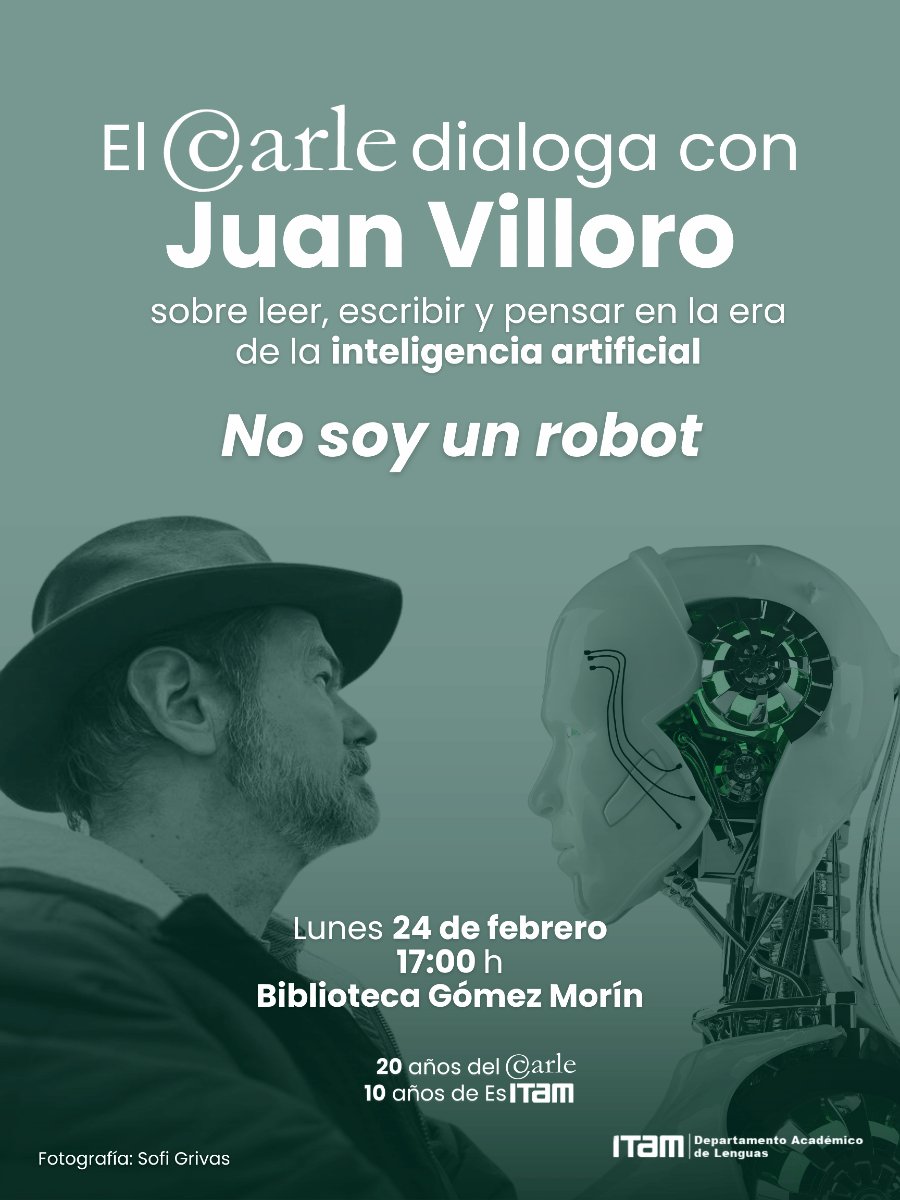
@ITAM_mx Diálogo con Juan Villoro sobre leer, escribir y pensar en la era de la inteligencia artificial. Presentación de su último libro: No soy un robot.
📅: 24 de febrero de 2025
⏰: 17.00 a 19.00
📍: Biblioteca Manuel Gómez Morin, Río Hondo
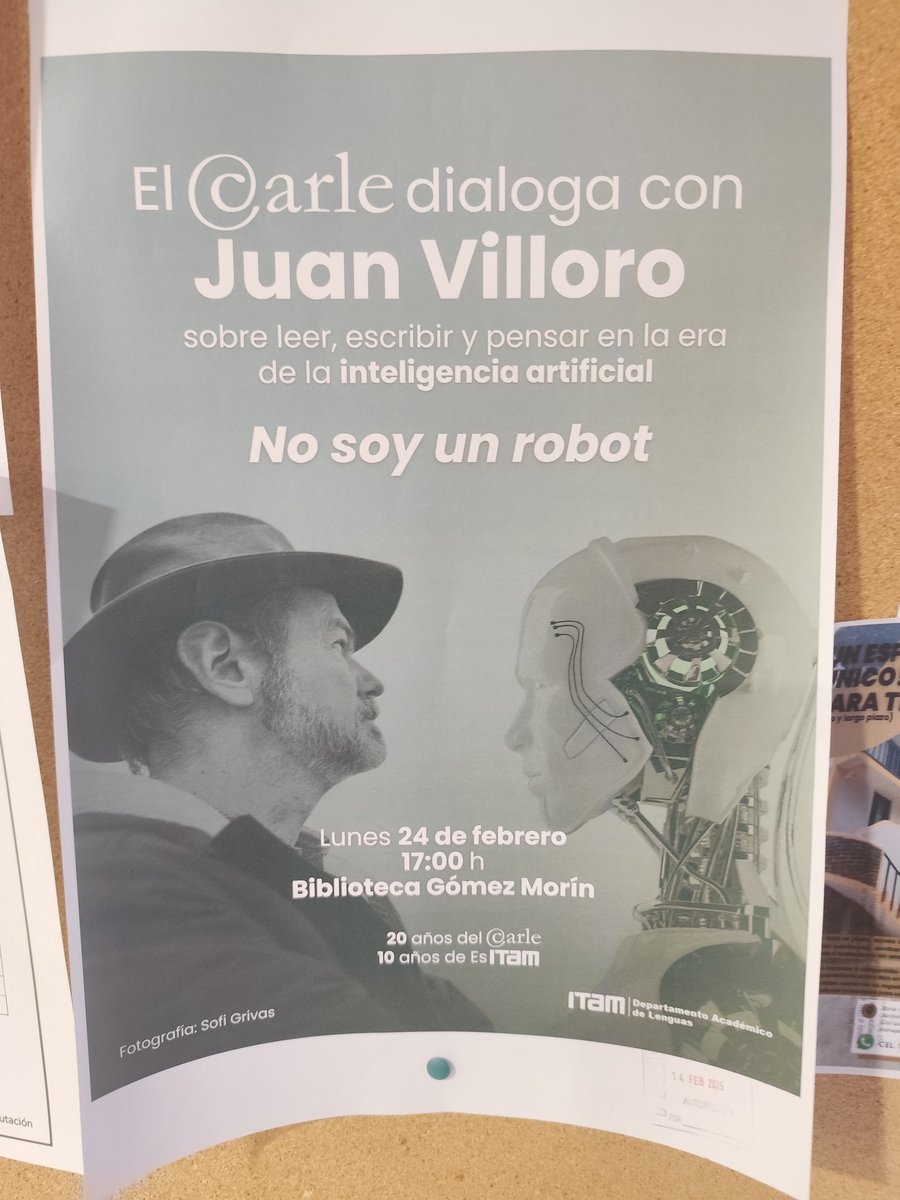
#CARLE | Diálogo con Juan Villoro sobre leer, escribir y pensar en la era de la inteligencia artificial. Presentación de su último libro: No soy un robot.
📅: 24 de febrero de 2025
⏰: 17.00 a 19.00
📍: Biblioteca Manuel Gómez Morin, Río Hondo
Hoy, en el ITAM, tendremos la oportunidad de escuchar a Juan Villoro, autor de este libro que, al menos a mí, me dejó rumiando varios días (y van...). Nos vemos a las 17:00 hs, en la biblioteca del Centro Cultural Gómez Morin, para seguir pensando juntos —que no es poca cosa—.
Are you fully incorporating emotions in your design? Personalize your brand's #userexperience with this handy tool 👇
Plutchik's Wheel of Emotions allows us to help understand our users and how they feel when they engage with our design, allowing us to establish an emotional connection.
Discover how else you can leverage the Wheel of Emotions in our open-access design library! 👇
https://t.co/GaC9GDsAS5
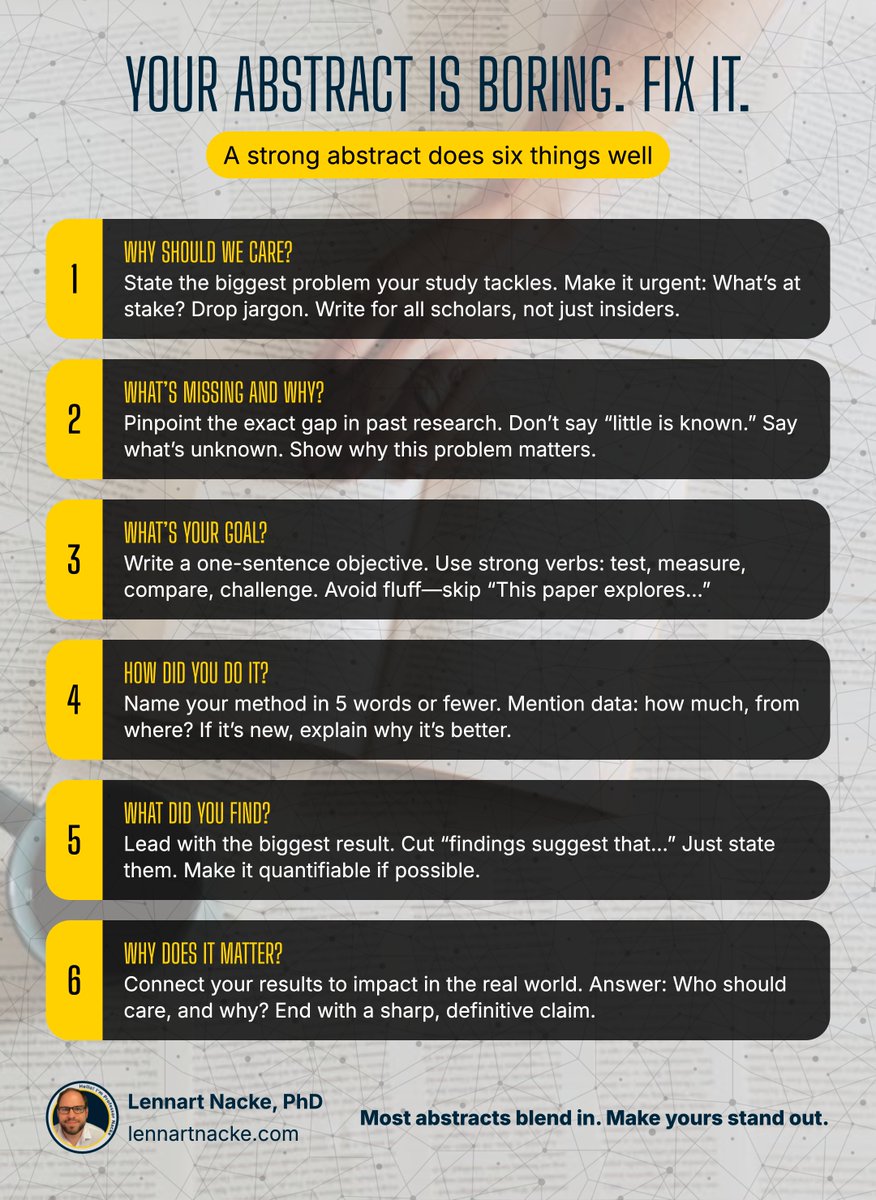
Your abstract is boring. Fix it.
A strong abstract does six things well:
1. Why should we care?
↳ Cut the fancy words - write for humans
↳ Hit them with your biggest problem
↳ Show why it matters RIGHT NOW
2. What’s missing?
↳ Name exactly what we don't know
↳ Throw "little is known" in the trash
↳ Prove why this gap hurts us
3. What’s your goal?
↳ One clear sentence: what did you do?
↳ Kill every "this paper explores..."
↳ Use action words that punch