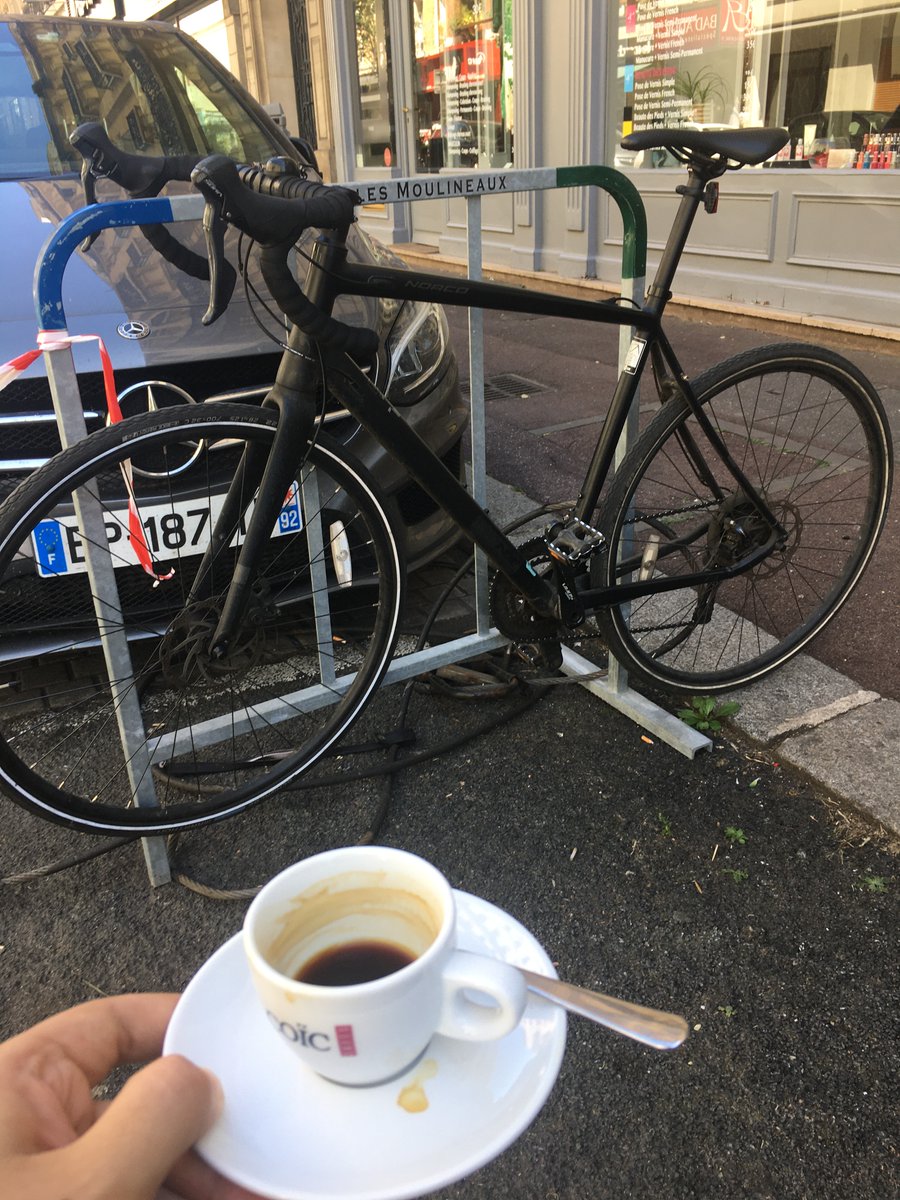
via @NYTOpinion, more terminal car brain content. It is the parked cars that are the problem (and definitely not the cyclists who inexplicably get blamed at the end of the piece). https://t.co/bIWtdbQTWp
Credit where credit is due, Paris has now adjusted the traffic flow on a long stretch of Rue de Rivoli: full bicycle lanes in both directions, and only a single traffic lane. More of this, please!
https://t.co/sRMsv2fB5R
"Probably the biggest challenge, though, is that Paris doesn’t yet have an ingrained cycling culture." Strongly disagree. This article pretends like motorised vehicles don't exist and it's just a battle between cyclists and pedestrians.
To highlight one inaccauracy in the article as an example: Rue de Rivoli, described as a "multilane highway for cyclists", has plenty of non-taxi cars drive on it, as is obvious in the images and videos in the article!
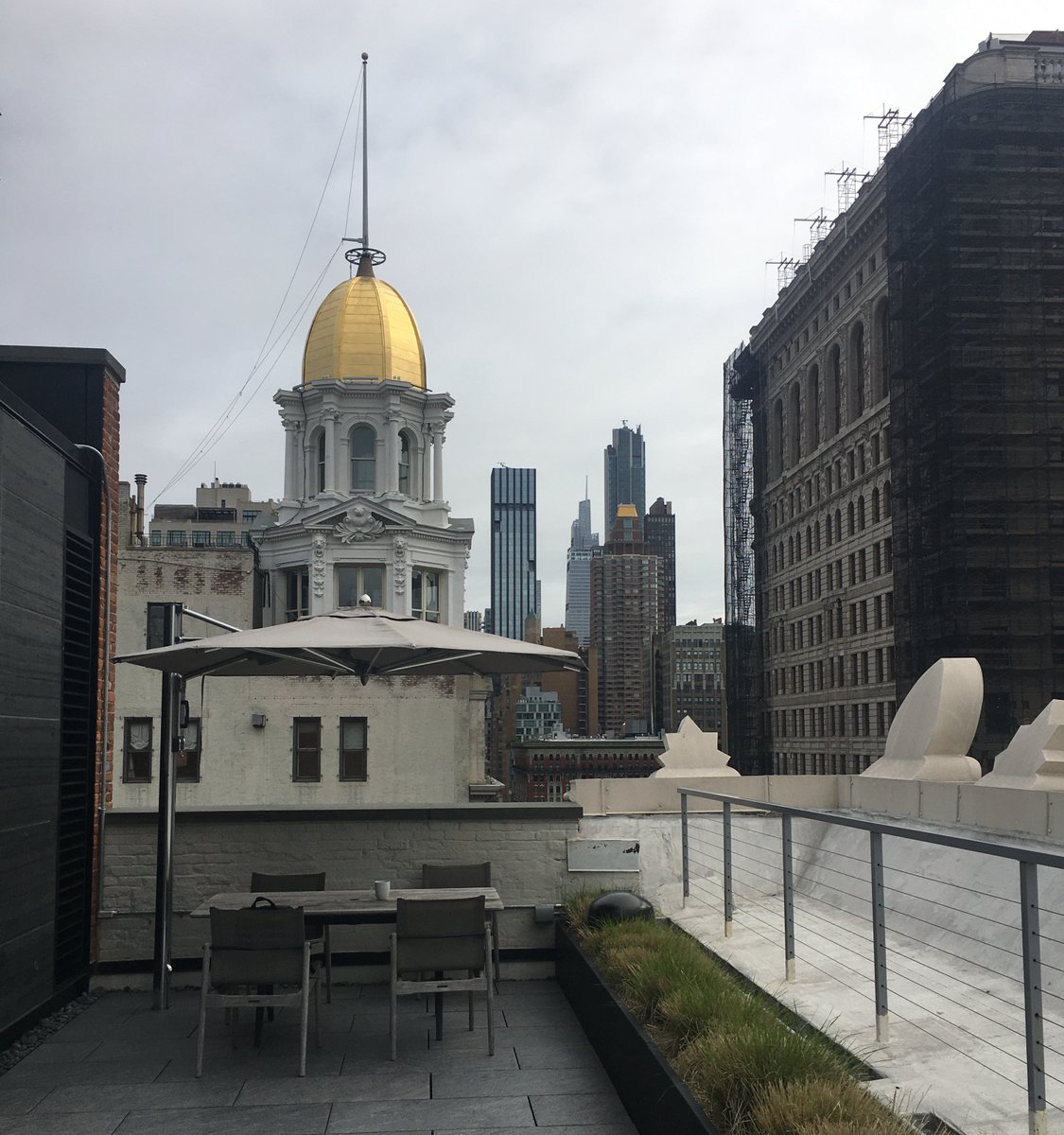
No Paris bicycle adventure picture this month, because I'm working in NYC -- I did find my ideal breakfast and contemplation spot, though. One collaboration paper submitted (https://t.co/uxsyAmEmDH), more in progress!
This paper had a rather winding path to publication, but it is out now. Sincere thanks to everyone who listened to me try to work out the kinks over the past couple of years. The code release is coming -- but I'm happy to talk early access, just contact me!
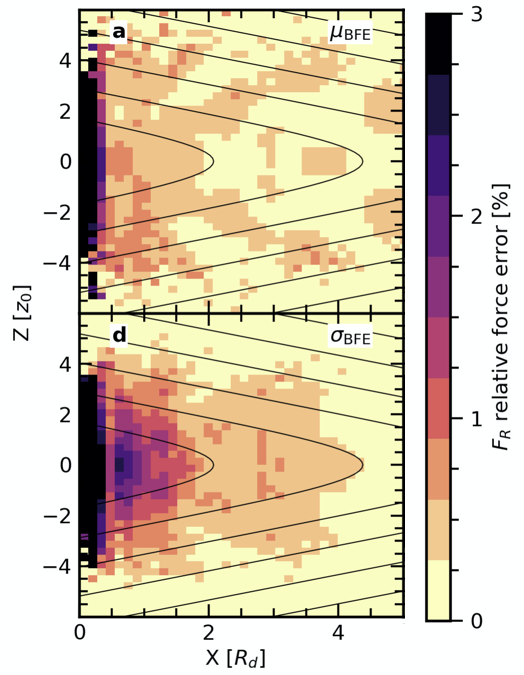
Curious about force accuracy in gravity solvers for galaxy-scale simulations? Check out our newly-published paper laying out the technical side of adaptive basis function expansions: https://t.co/evfzeVBYim
In contrast, both tree methods and direct methods will produce high variance, with bias tied to sample density. The upside is that tree and direct methods give you a lot of flexibility in the types of systems you can simulate.
I contributed an algorithm that we used to define the average direction dark matter particles appear to be coming from, which anyone could use to compare their models to our results: https://t.co/zI9ByeAU3D
Katelin wrote a paper with a very clean analysis of models for the local dark matter distribution and the implications for direct detection experiments!
Really excited to say that my first paper went up on arXiv today 🎉
@GalcticDynamics, Jorge Peñarrubia and I have been working on characterising the effect of the LMC on the local dark matter distribution. 🧵
Several additional models were left on the editing room floor in pursuit of a concise description of the dynamical effects -- a lot of behind-the-scenes work to distill the results.