Associate Prof @MITChemE ; mom^4 + wife; enjoys building cell-fate circuits, exploring dna topology, reprogramming the living world, and soccer; soli gloria deo
Could the folding of synthetic gene circuits in 3D shape how genes are expressed? Today @ScienceMagazine we report on the role of gene syntax in shaping feedback between transcriptional activity and genome folding for advanced circuit design🧵 (1/n)
@arjunrajlab Everyone in academia may sense this fragility of the moment and need to explain. But few can articulate th beauty...possibly fewer can translate it beyond academia. I don't have an answer either bu it's probably not taking the form of an essay.
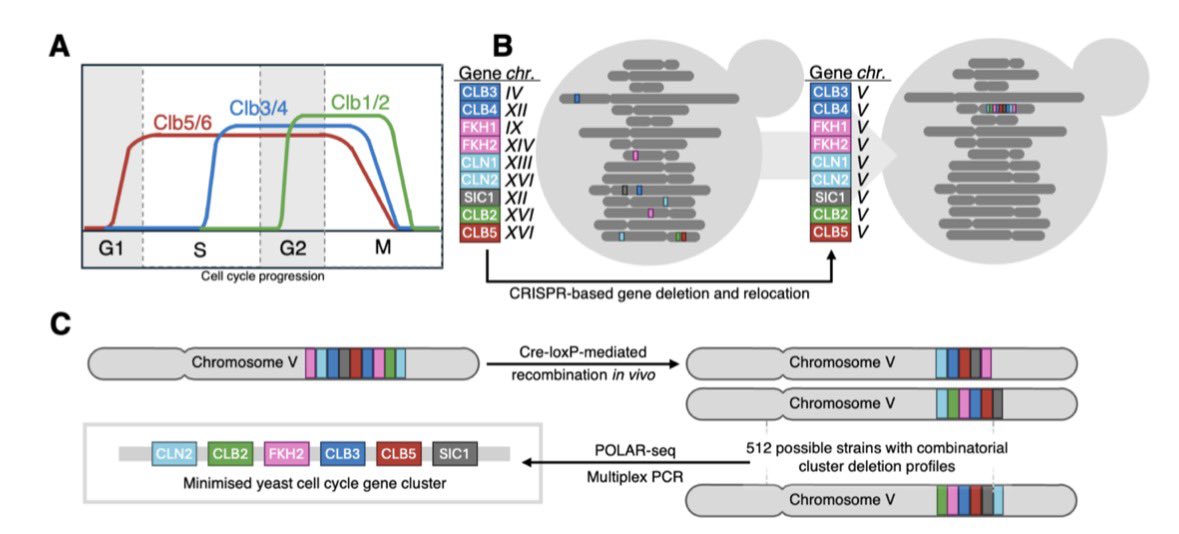
Our lab’s latest on synthetic genomics “Synthetic Combinatorial Minimisation of Cell Cycle Control” is up now on BioRxiv - covering ambitious yeast #synbio cell cycle work led by Anastasiya Malyshava and co-supervised by @UniOfSurrey’s Matteo Barberis.
@YSPTSPS@arjunrajlab I think that is exactly the point! X intelligence cannot fully validate super-X intelligence but there can be ways of identifying it (with some bounds of uncertainty).
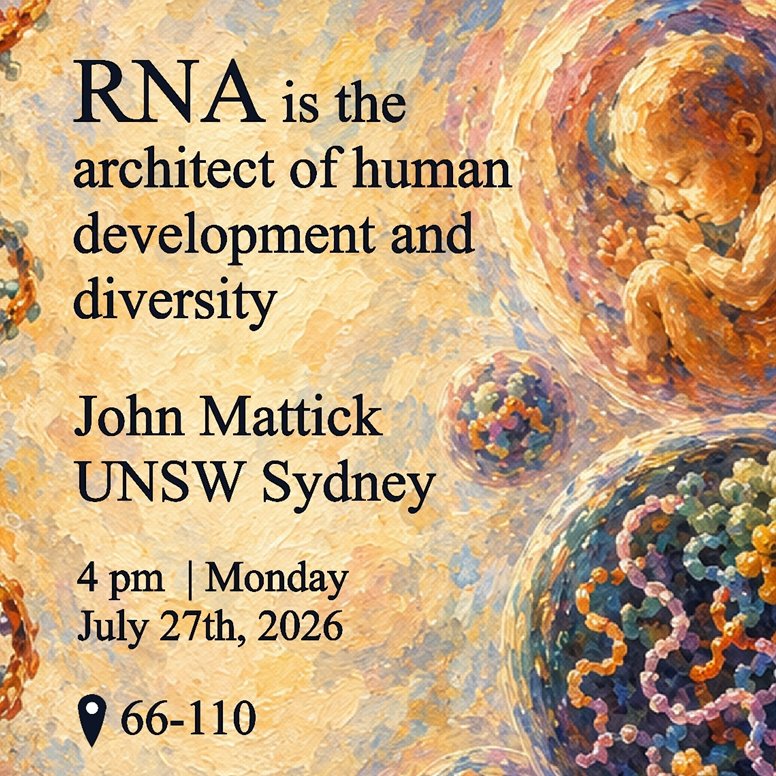
Today at MIT come hear UNSW Prof John Mattick's seminar "RNA is the architect of human development and diversity"
Monday July 27th at 4 pm
Location: 66-110
Full abstract:
The conceptual framework of molecular biology was established in the middle of the last century and has remained firmly grounded in the assumptions that genes are generally synonymous with proteins and that the mechanisms that regulate microbial physiology are sufficient to orchestrate the development of multicellular organisms. Since the turn of the century, however, this simple framework has all but collapsed, following the demonstration that most of the genome in humans and other developmentally complex organisms is transcribed, mostly to produce long noncoding RNAs (lncRNAs). Most lncRNAs are the products of genetic loci called 'enhancers', which control the spatiotemporal patterns of cell division and differentiation, acting as scaffolds and guides for epigenetic transactions. Other 'architectural' lncRNAs nucleate functionally specialized biomolecular condensates in the nucleus and cytoplasm, including dedicated metabolic and signalling compartments. Disabling phenotypes associated with lncRNA genes are only observed with substantial deletions, insertions and translocations, whereas nucleotide polymorphisms in lncRNA sequences underlie quantitative trait variation. Recognition that most of the human genome and those of other complex organisms express regulatory RNAs creates the foundation for a more holistic understanding of genomic programming, evolution, development, biodiversity, neuroscience, immunology, cell biology and complex disorders. They also create new horizons for therapies and genetic engineering, given that most GWAS regions linked to complex disorders and traits express functionally orthologous lncRNAs.
@Anders_S_Hansen@MITdeptofBE@hansen_lab@GRO_Broad ok, that's was my reading but I thought I could have missed it. Some very interesting observations between the reverse (convergent) and forward (tandem) synthetic promoters 😃