Introducing Gallup Pakistan WhatsApp Channel!
Stay updated on the latest public opinion trends in Pakistan. Our channel will share insights from our survey research, expert analysis, and more.
Join us now and be part of the conversation!
Tap the link: https://t.co/0iTynzclxw
September's top topic in Pakistan's op-eds: Law & Order at 24%.
October? It collapsed to 2%.
Economy doubled from 8% to 16% — the new top topic. Politics rose from 11% to 15%. Crime & Terrorism fell from 16% to 2%.
Within Economy: IMF/Debt (21%), Inflation & Cost of Living (20%), Growth & Reforms (19%).
Gallup Pakistan's 78th Newspaper Content Analysis — October 2026 — out now.
🔗https://t.co/DKNpZQhoJ3
Child marriage in Pakistan fell from 37% to 22% in a generation. Half of the fall is the shift to more schooling; half happened inside each schooling level.
Learn More:
https://t.co/RSQp0FokE7
In Punjab, rural mothers substitute animal milk. Urban mothers substitute infant formula.
The rate is almost identical. Only the product differs.
That's not an access problem. It's a belief problem — that breast milk alone isn't enough in the first days.
77% of newborns receive something else before the first week is out. 88% of mothers stop breastfeeding by six months. WHO recommends two years.
Gallup Pakistan PHPS PR #15 — Breastfeeding — out now.
🔗https://t.co/mm8KR00HWb
1986 📰 The tech of the day: Gallup Pakistan found 40% of city households owned a cassette recorder. Today it's smartphones, but the questions stay the same. 📼 @GallupPak#GallupPakistan50 https://t.co/cn68awvgDn
1986 📰 Pakistan's favourite PTV newscasters? A Gallup Pakistan poll (Mashriq Lahore, Dec 1986) put Khalid Hameed and Mahpara Safdar first, with Azhar Lodhi and Shaista Zaidi second. @GallupPak#GallupPakistan50 https://t.co/huVRwa1Qf5
Family Is the Leading Source of Stress in Pakistan (29%), Unlike Globally Where Jobs and Financial Concerns Lead (32% Each); Unemployment (22%) and Money/Debts (21%) Also Prominent in Pakistan
Learn more:
https://t.co/21KcP1pXRh
1985 📰 Which government department had the worst reputation? 65% of Pakistanis named the Police in a Gallup Pakistan survey. Four decades on, how much has changed? @GallupPak#GallupPakistan50 https://t.co/AEo7gqJ9uU
1985 📰 Gallup Pakistan found Pakistanis listened to BBC Urdu with great interest but did not trust its commentary. Media trust has always been complicated. @GallupPak#GallupPakistan50 https://t.co/W4any02SOO
1985 📰 Which countries did Pakistanis trust most? A Gallup Pakistan survey put Saudi Arabia and Iran at the top. From the @GallupPak archive as we approach 50 years. #GallupPakistan50 https://t.co/abJ9R6LUAI
1985 📰 Gallup Pakistan profiled the newly elected National Assembly: 40% of members were new to politics, 7% came from the army and 7% from the civil service. @GallupPak#GallupPakistan50 https://t.co/21ZSIM6Sgz
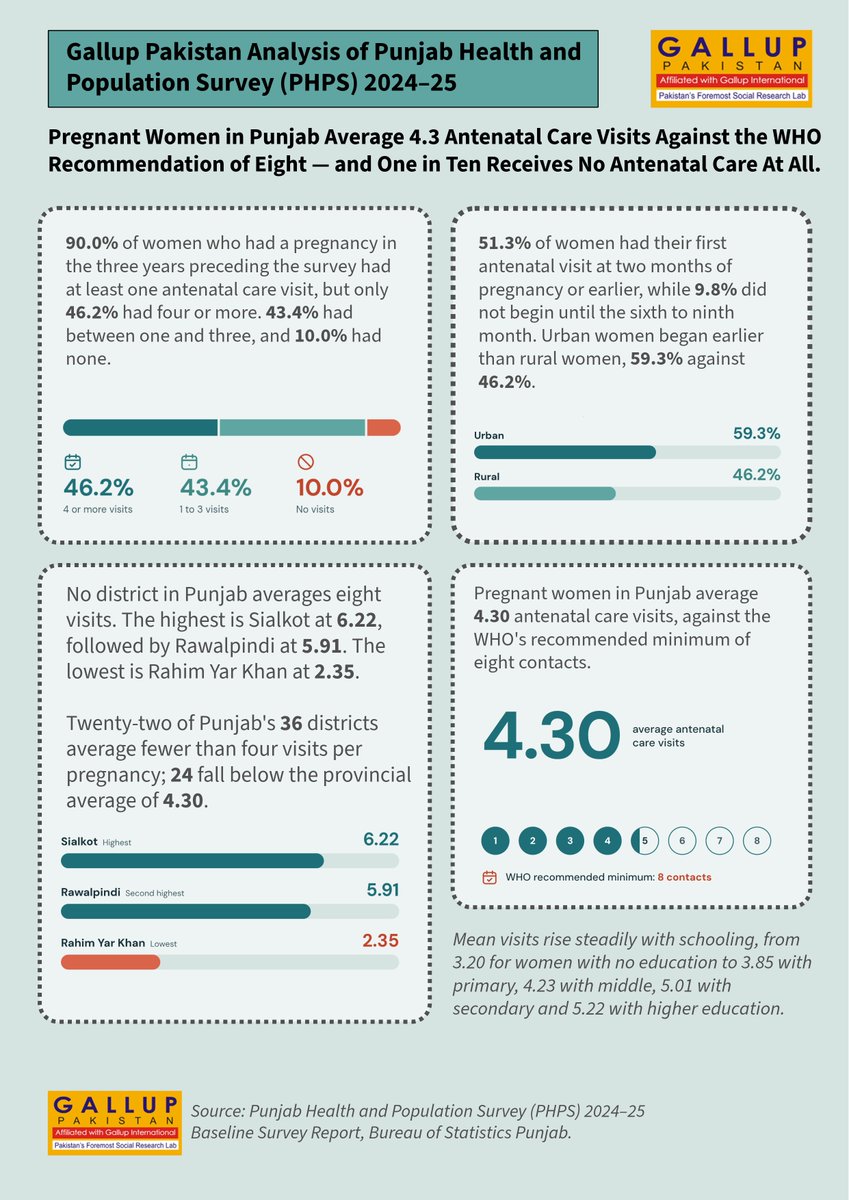
Punjab's antenatal system makes first contact well.
Then it loses women.
90% have at least one visit. 46% reach four. The WHO recommends eight. No district averages eight.
And the poorest women are 13x more likely to receive no antenatal care at all than the richest.
Gallup Pakistan PHPS PR #14 — Antenatal Care — out now.
🔗https://t.co/ZdR8kuJnxa
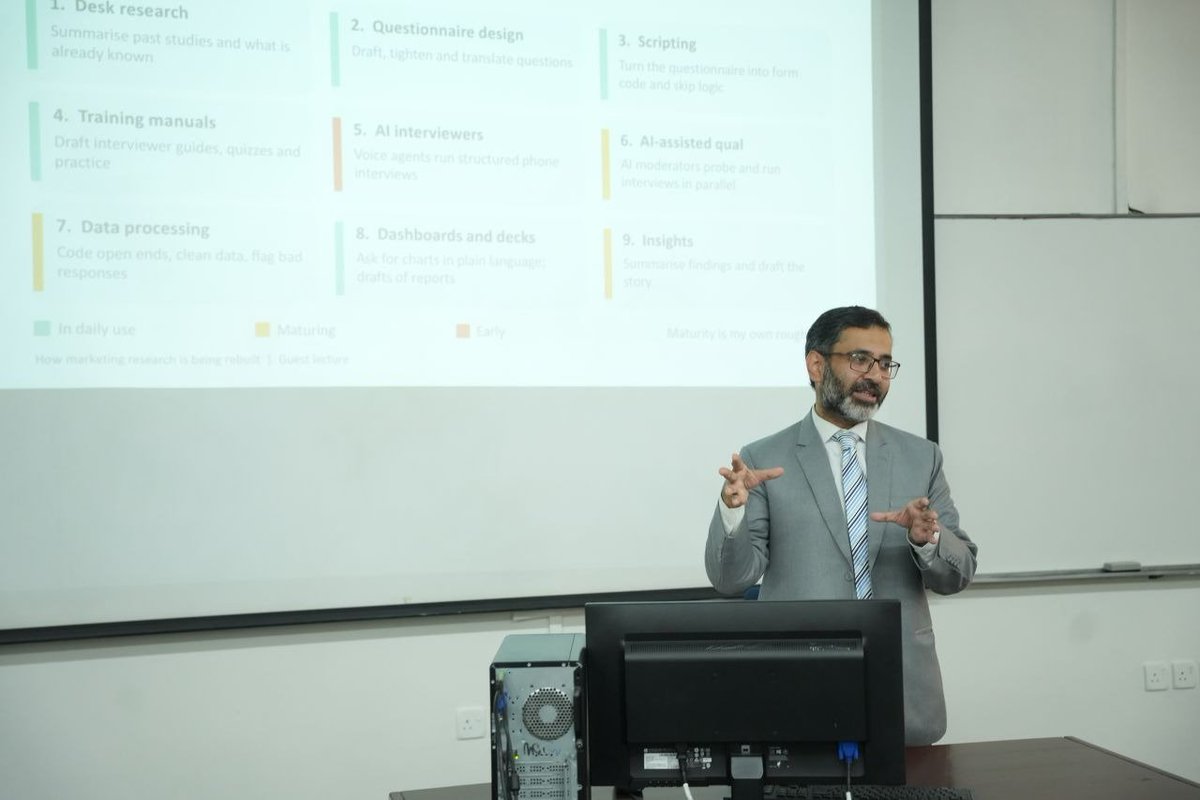
Gallup Pakistan’s Executive Director, Bilal I. Gilani, recently addressed MBA students at the Lahore School of Corporate Relations (LSCR) as a guest speaker for their Marketing Research course. He shared key insights on the role of AI in market research and data analysis.
#GallupPakistan #LSCR #AI #MarketResearch #DataAnalytics
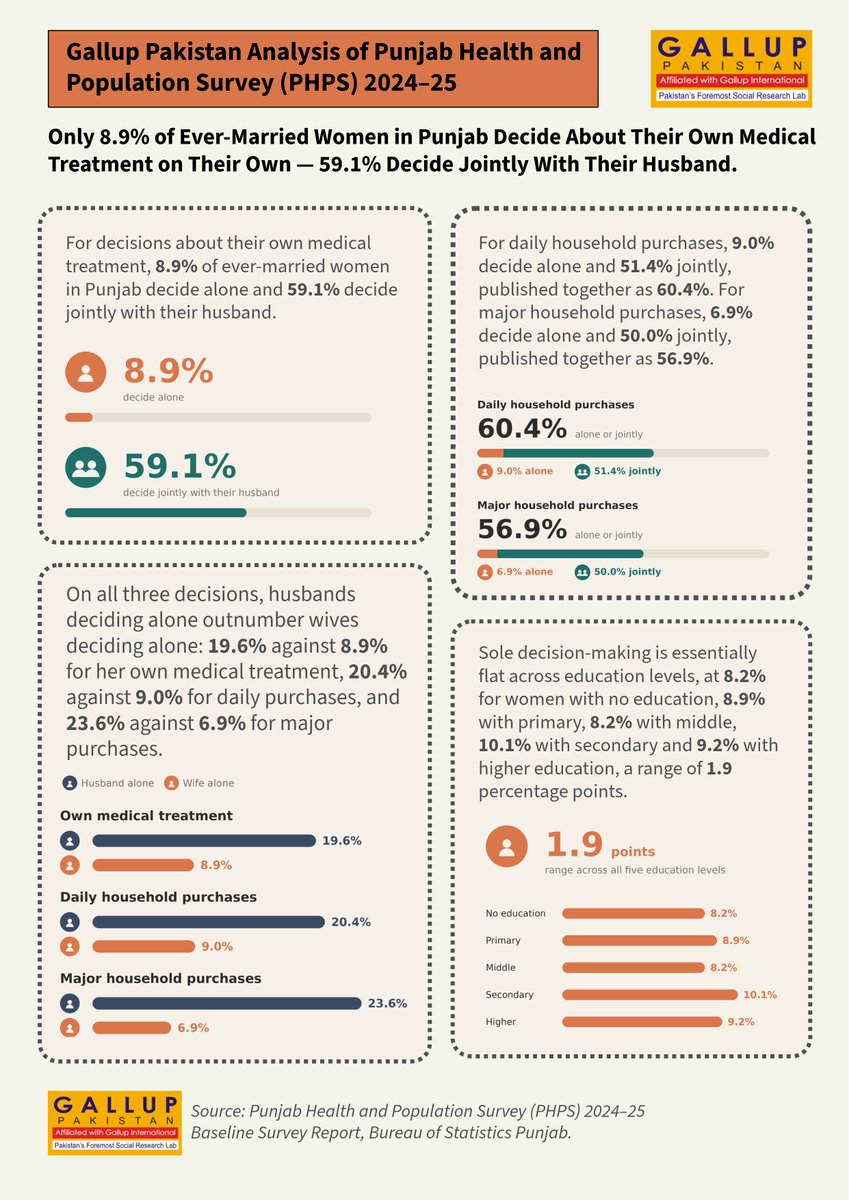
68% of Punjab women decide about their own medical treatment "themselves or jointly."
Separate the two: 8.9% alone. 59.1% jointly.
And the husband decides alone more often than she does — at 19.6% vs 8.9%.
Education barely shifts the sole-decision rate. The district ranking is almost entirely a map of joint decisions, not independent ones.
Gallup Pakistan PHPS 2024–25 PR #13 — Decision-Making — out now.
🔗https://t.co/RMihIVZGoQ
44% of ever-married women in Punjab own a phone.
3.7% hold a bank account they themselves use.
For every woman with an account: roughly 12 with a phone.
And even among the most educated women in Punjab, 7 in 8 hold no account.
A mobile wallet moves money. It doesn't build a banking relationship.
Gallup Pakistan PHPS 2024–25 PR #12 — Financial Inclusion — out now.
🔗https://t.co/Vm664sFKcv
Only 28% of ever-married women in Punjab can visit a doctor in their own community alone.
Urban vs rural gap: just 2 percentage points. Mobility norms in Lahore and a village are nearly identical.
And more educated women are less likely to move alone. Solo access falls from 30.9% (no education) to 24.4% (higher education).
Gallup Pakistan PHPS 2024–25 PR #11 — Women's Mobility — out now.
🔗https://t.co/0Ct18QxtbI
Beyond the headlines:
Pakistan accounts for approximately 48 per cent of the extreme poor in the World Bank’s Middle East, North Africa, Afghanistan and Pakistan region.
Gallup Pakistan Executive Director Bilal Gilani wrote for The News
https://t.co/T4zo55tzFH
Our September 2026 Newspaper Content Analysis Report (Edition #77) is out 📰
1,619 op-eds across 12 papers + 1 news channel analyzed. Law & Order surged to lead at 24%, followed by Crime & Terrorism (16%) and Politics (11%).
Full report: https://t.co/WOaFSurxIU
In Pakistan, a university degree has become the beginning of a job search, not the end of one. According to Gallup Pakistan’s analysis of the Pakistan Labour Force Survey 2024-25, graduate unemployment among young Pakistanis aged 20-24 stands at 32.8pc.
https://t.co/mD5xAd4JhZ
96% of ever-married women in Punjab don't read a newspaper.
97.9% never listen to the radio.
The mobile phone has replaced both — 44% own one, more than watch TV weekly.
But in Rajanpur, only 13.5% own a phone. In Sialkot: 68.1%.
And education predicts ownership more than geography: 18.8% with no education → 81.1% with higher education.
Gallup Pakistan PHPS 2024–25 PR #10 out now.
🔗https://t.co/NVpvDme6xL
WAPOR was also established in 1947. Bilal Gilani serves as its country representative for Pakistan, continuing Gallup Pakistan’s longstanding engagement with the international survey research community.
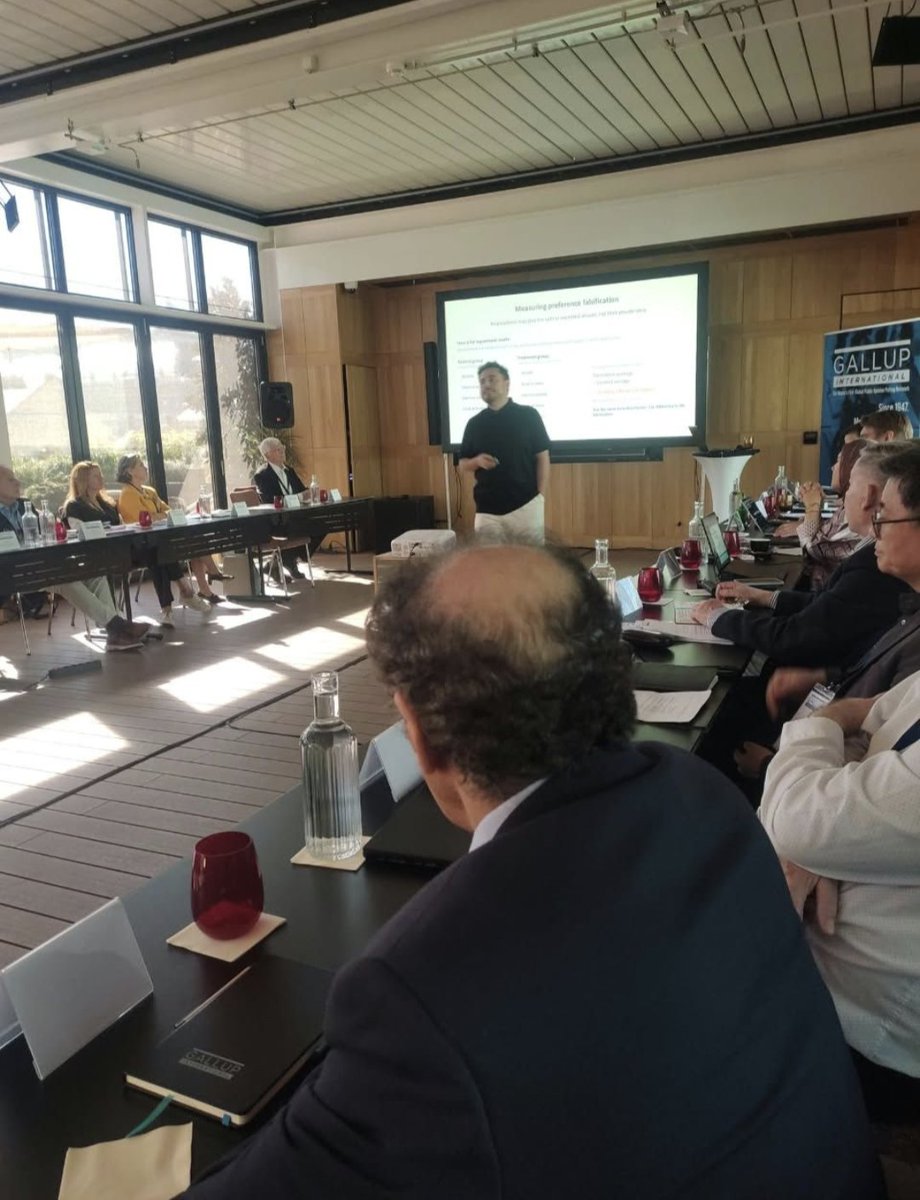
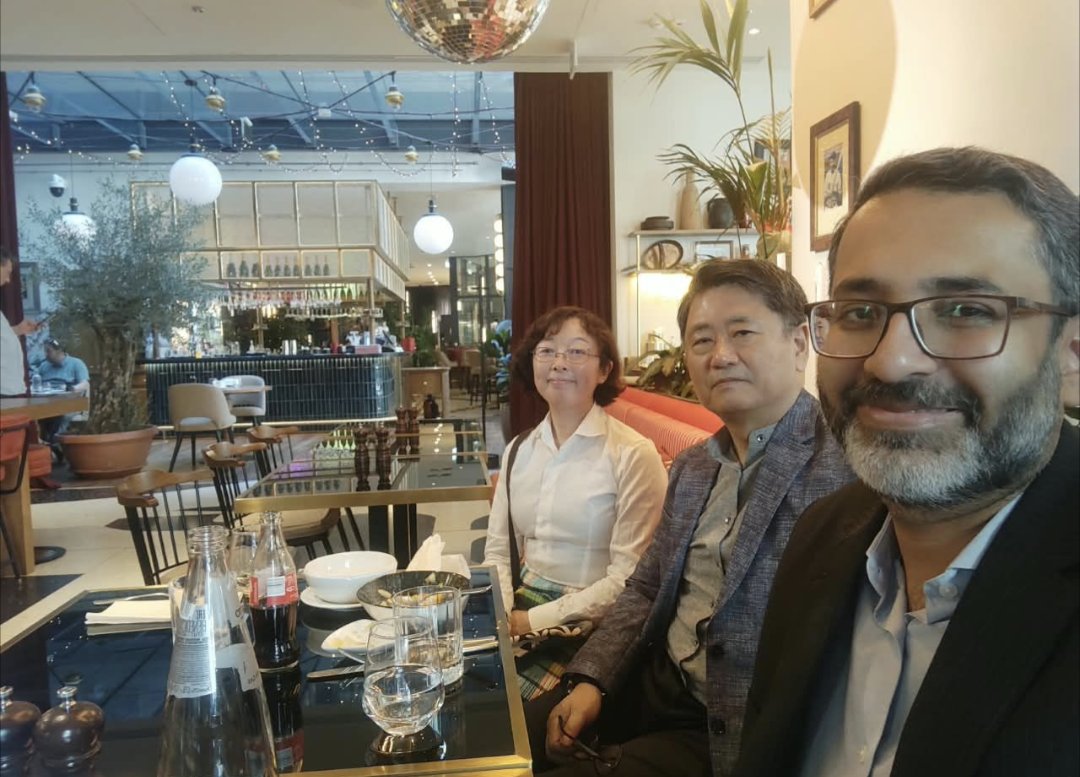
Bilal Gilani, Executive Director of Gallup Pakistan and Vice President of the Gallup International Association, attended the Association’s 78th Annual Meeting in Hungary, where he presented two papers examining international public opinion on migration and the war involving Iran.
Reflecting on his role as Vice President, Bilal Gilani expressed his appreciation for the opportunity to serve an association established in 1947 by Dr. George Gallup, a founder of the polling industry, together with academics from around the world.