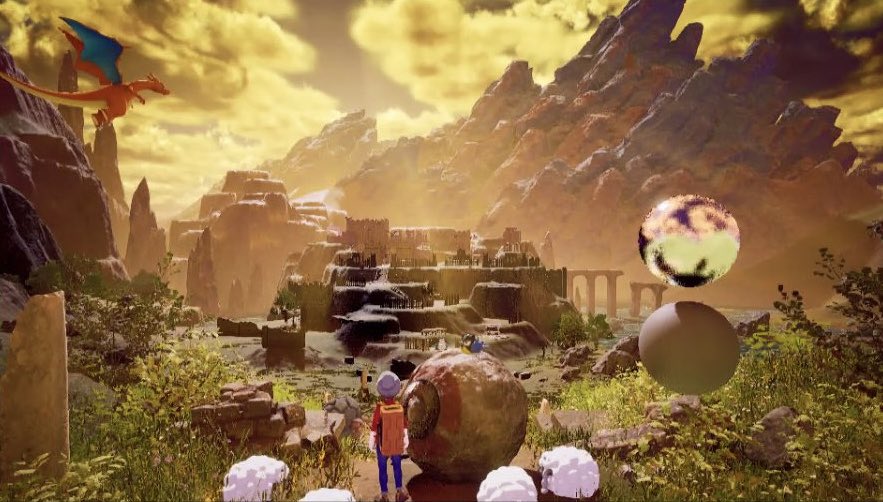
Ready for a new adventure? 💛 An original Kingdom Hearts anime series inspired by the beloved video game franchise is coming soon to @DisneyChannel and @DisneyPlus
At 30, Tom Holland built one of the most athletic superhero bodies in the game:
• Almost no heavy weights
• Mostly bodyweight and gymnastics
• All at 5'8", naturally skinny
Here's exactly how he did it (& what you can steal):
⚠️ Potential Pokopia DLC and WiWa Leaks ⚠️
Generation 10 is said to revolve around the idea of building a stronger bond with Pokémon and remembering every species throughout the series.
The game will reportedly feature three interconnected storylines, something that has already been mentioned by previous leaks.
According to the latest information, the overall scope of Generation 10 has been scaled back significantly compared to its original plans.
Rumors once again claim that Generation 10 will include MMO-lite inspired features.
A new Pokémon with an evolution method similar to Palafin's is allegedly part of Generation 10, requiring an especially unusual or frustrating evolution process.
The rumored "movie" project has reportedly been brought up again in recent discussions.
Contrary to earlier speculation, Manaphy was never intended to receive the rumored new form.
Both Pokopia DLC1 and DLC3 are said to introduce brand-new Pokémon forms.
In contrast, Pokopia DLC2 is reportedly the weakest expansion of the three, as it is said to focus almost entirely on cosmetic content rather than adding significant gameplay features.
New Pokémon Winds and Waves Potential Leak
Legendary Typing are Dragon/Water and Dragon/Flying.
The Base Pokédex will have 531 Pokemon.
There will be 7 New Evolution forms.
There will be 16 Regional Forms.
There will be 31 Netsu Forms.
#PokemonWindsandWaves#Pokemon#Leaks
Floating Islands in Pokémon Winds and Waves?
The latest Pokémon Winds and Waves leaks strongly suggest that floating islands could be part of the game's world.
According to the leaks, there are several areas that can only be reached using Flying Rotom Mode. On the leaked Teraleak map, Island 17 is even labeled "Elevated Island", which seems like a pretty direct hint. Keep in mind that this map was discovered during the Teraleak and represents an early development version, so some locations and details may have changed in the final game.
There's also a good chance that the Wind Legendary's Temple is located on one of these floating islands. Since we'll likely have to catch both Legendary Pokémon, it would make sense for one to be found high in the skies while the other rests deep beneath the ocean, perfectly matching the game's Winds and Waves theme.
And that's not all. The leaked map also includes several unidentified islands with no confirmed purpose yet. It's entirely possible that some of these hidden locations can only be accessed by flying, giving Flying Rotom Mode an even bigger role in exploration.
If these leaks are accurate, exploring the skies could become one of the most exciting new features in Pokémon Winds and Waves. What do you think—are floating islands finally coming to Pokémon?
Gen 10 will be by far the biggest and most ambitious generation for Pokémon:
- A brand new open world game with 300+ new Pokémon
- A new Legends game set in the past
- Multi-region MMO that will remake every Japan-based region in one game
Game Freak is going all in for Switch 2
THE FEYNMAN TECHNIQUE FOR LEARNING:
1. Pick and study a topic.
2. Explain the topic to someone, like a child, who is unfamiliar with the topic. Use simple language.
3. Identify any gaps in your understanding.
4. Return to the literature to understand better.
🚨MASSIVE POKÉMON WINDS & WAVES LEAKS - PART 3
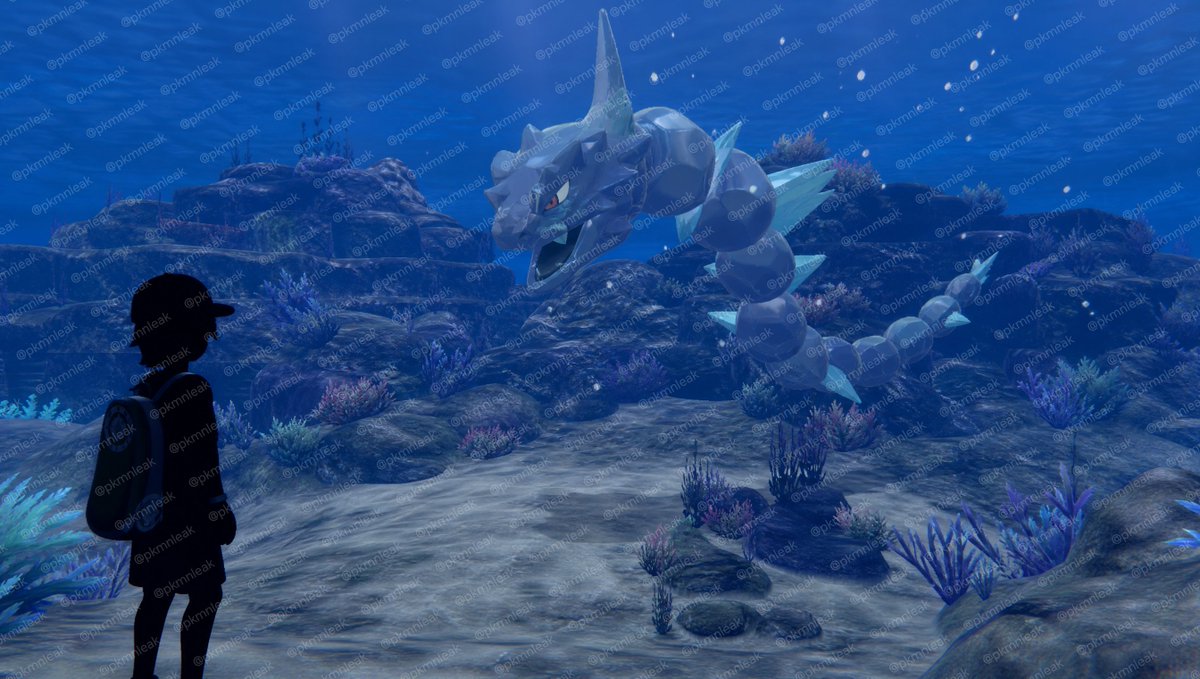
- Onix will get a brand new Regional Evolution.
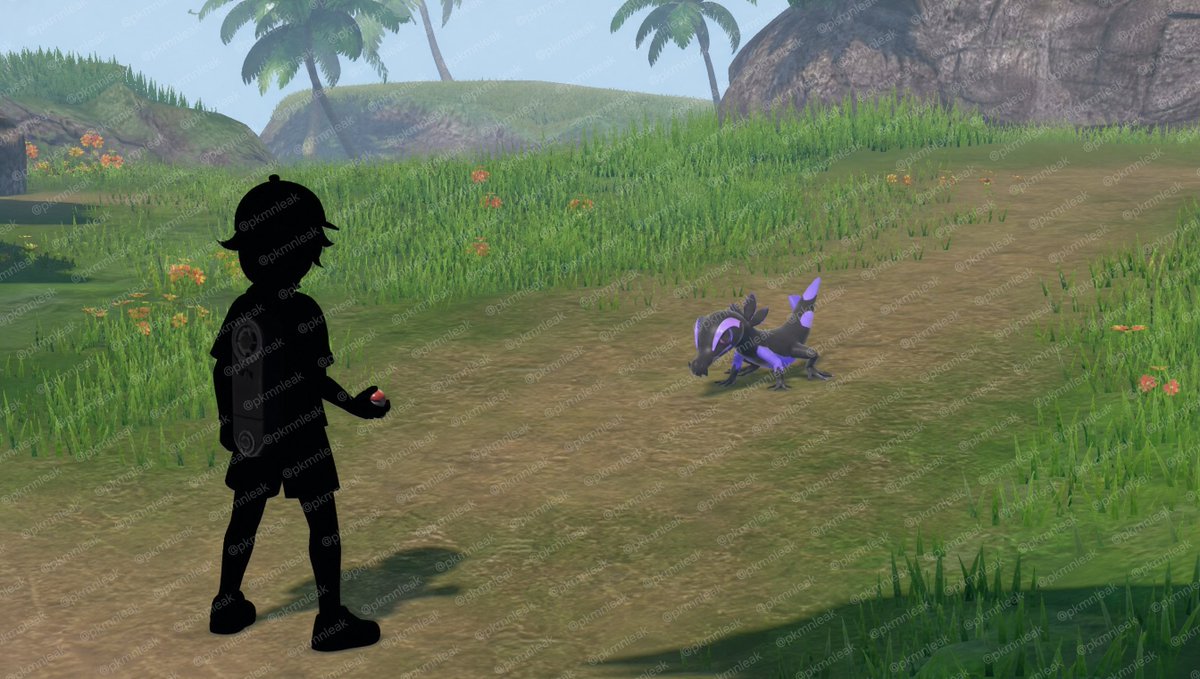
- Houndour will get a brand new Regional Evolution.
- Zweilous will get a brand new Regional Evolution.
- Salandit will get a brand new Regional Evolution.
- At least in the current build, there doesn't seem to be a new Eevee evolution nor a Tropius evolutionz.
- There will be underwater POI, like a Glimwood Tangle style coral reef called Neon Abyss.
- There will be areas of the world you can only reach by flying.
- Shinies in overworld and the shiny sound are back.
- Both legendaries are in both games and have a role in the story, like in Black/White.
Again from the new source @kurwashibamaste.
Everyone is assuming that the 300+ placeholders = 300+ brand new Pokémon, but that's most likely not how Game Freak's development works.
Since Gen 6, placeholder IDs can be reserved for:
• New species
• Evolutions of older Pokémon
• Regional forms
• Battle-only forms
• New mechanic-related forms
• DLC content
• Dummy/test entries
A placeholder doesn't automatically equal a new Pokémon species.
Until we have actual species data, treating 300 placeholders as 300 new Pokémon is just speculation.
Something potentially ugly about having 300 new Pokémon in a single game is that there’s no way they’re gonna introduce them all in Pokémon Champions in a single update, considering the last season just added like 30 new ones, they’re gonna drip feed the new Pokémon into competitive for a long while 💀
⚠️Pokémon Winds and Waves Potential Leak Recap⚠️
· Underwater exploration is said to be a major focus, featuring shipwrecks, cave systems, and the Neon Abyss, a colorful coral reef area compared to Glimwood Tangle.
· Soaring is reportedly confirmed. Your scooter eventually gains deployable wings, allowing you to reach areas inaccessible through normal travel.
· Overworld Shinies are back, along with the classic shiny sound effect.
· The Wind Temple and Wave Temple are two separate locations, not version-exclusive names. Both legendary Pokémon reportedly appear in both versions and play a role in the story, similarly to Pokémon Black & White.
· The appearance and real names of the new Pokémon remain unknown. The current build replaces them with older Pokémon models, leaving only internal codenames visible.
· The current build includes the new Pokémon's stats, but not their actual abilities, meaning no new abilities can be confirmed yet. Battles are also described as very fun, with the new Netsu mechanic reportedly being quite complex in its current form.
· Pokémon following you are reportedly returning, and they will continue following you while riding the scooter.
· It's currently impossible to determine the exact number of cross-generation evolutions. However, based on the available data, Salandit and the rumored regional Psyduck appear to be the strongest candidates.
· Some internal codenames suggest possible new cross-generation evolutions. In Game Freak's internal naming, a number appended to a species codename can sometimes indicate a new stage in that evolutionary line. Based on these codenames, the following Pokémon could potentially evolve into new species:
Onix → New evolution (iwark2)
Houndour → New evolution (delvil2)
Salandit → New evolution (yatoumori2)
Zweilous → New evolution (monozu3)
These are not confirmed evolutions, but rather interpretations based on the internal codenames found in the current build.
· None of these potential evolutions should be considered confirmed, as the current build doesn't provide enough information to verify them.
As always, take all of this with a grain of salt. These are alleged leaks based on an unfinished build, and everything is subject to change before release.
Via @kurwashibamaste
🚨Pokémon Winds & Waves - POTENTIAL MASSIVE LEAK
- The games will have the highest amount of new Pokémon ever in a Pokémon game.
- The number that is being talked about is around 300 new Pokémon / forms.
- The new battle mechanic will introduce special weather forms for some Pokémon (think Megas / Gigantamax).
Rumor comes from @kurwashibamaste, see next tweet for more details on this why we think this may be legit.
🚨 Pokémon Winds & Waves – Potential Leak (Rumor)
• The box legendaries are reportedly getting new gimmick forms and are expected to play a much bigger role in both the story and gameplay than in recent mainline titles.
• Unlike Pokémon X & Y, Sword & Shield, and Scarlet & Violet, the box legendaries are said to be directly tied to the game's new battle mechanic.
• A considerable number of other Pokémon are also rumored to receive new forms linked to the same mechanic.
• Early development plans reportedly had all new forms intended for the base game. However, the current information suggests additional forms are now planned to be introduced through future DLC.
⚠️ As always, treat this information as a rumor until officially confirmed.