Re GERD - my advice to Egypt. Drop the political drama and engage with Ethiopia professionally on technical issues. I know from experience that Ethiopia cannot be bullied and the more you push the more immovable they become. It’s time to accept today’s reality!
@TiborPNagyJr@CNNInternatDesk Thank you, Ambassador Nagy, for your insightful interview on the Grand Ethiopian Renaissance Dam and for highlighting the equitable use of Nile waters. Your support for Ethiopia’s development and recognition of its contributions.መልካም አዲስ ዓመት #GERD#NileWater#Ethiopia
With the Grand Ethiopian Renaissance Dam (GERD) now a done deal, @TheAfricaReport has an excellent and objective background article on Egypt, Sudan, and Ethiopia's priorities. There is no going back to colonial treaties; Egypt needs to get a reality check.
https://t.co/Kny1JfMUnv
The CFA Is Official! A New Era for the Nile Basin Begins Now at 12 AM EST🌍💧
🎉 The moment is finally here! The Nile Basin’s 55 BCM of water will now be shared fairly among all its nations. 🌍💧 Gone are the days of unequal control over the river’s resources.
Huge congratulations to all Nile Basin member states! 👏👏
As of now, the Cooperative Framework Agreement (CFA) has officially come into force. The waters of the Nile will flow back to where they belong—shared among the nations that contribute to and rely on it. With the backing of the African Union, the new Nile River Basin Commission (NRBC) is established to ensure collective management of the river for all.
The CFA doesn’t need any single country’s approval—it’s already happening! Egypt must now decide whether to adapt to this new reality or hold on to old privileges that no longer apply. The era of unilateral control is over. Collaboration is the future. 💧
For the Nile Basin nations, this is a victory for fairness and cooperation, marking the beginning of a new era of resource sharing. 🙌
#Congratulations ‼️
#CFA #NileBasin 🌊 #Ethiopia #Sudan #SouthSudan #Uganda #Kenya #Tanzania #Burundi #Rwanda #DemocraticRepublicofCongo #Egypt
#NileCooperation #GERD
🔗 https://t.co/RxPEMdkIiR
Update from the Renaissance Dam!
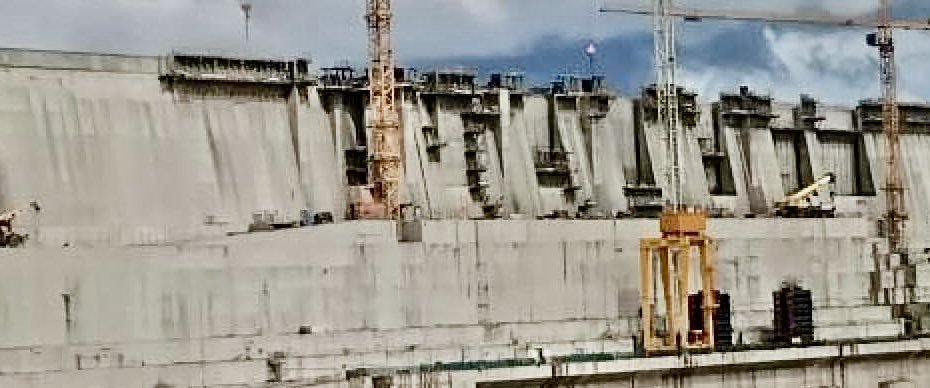
The two spillway gates at the Renaissance Dam opened today. The reservoir's water level reached 636 meters above sea level, close to the dam’s total capacity of 640 meters.
Why Did This Happen?
Lately, much more water has been flowing into the dam than expected. This could be because of heavy rains. The dam released some water, and water levels rose quickly. It’s all about being safe and ensuring the dam doesn’t get too much pressure. Some construction work is related to steel-structured bridges above 640m of the central dam. Lowering the water level ensures that everything stays safe for the workers and that the construction can continue without hiccups.
Considering the Downstream Neighbors
By releasing some water, they’re also helping to manage the flow downstream. This helps prevent sudden floods that could impact communities and farms in Egypt and Sudan.
Balancing Act
Running a dam is more than just holding back water. It’s about keeping everything in check—ensuring the dam stays strong, construction moves forward smoothly, and water is managed well downstream.
#Ethiopia #Renaissancedam #GERD
🎉 Units #7, #8, #9, and #10 are now up to running! Ready!
Today , Unit #7 started at 25MW and will soon hit 400MW. Wait for the next turbines to come online after the 5th filling and keep lighting up East Africa! 💪⚡️🔌
Special thanks to the hardworking engineers at the GERD site making this possible!
#PowerGeneration #Energy #GERD #Renaissancedam
Title: GERD Powers 17% of Ethiopia's Electricity: A Big Step Forward
Addis Ababa, August 21, 2024 – Ethiopia is seeing significant changes in its energy sector, largely thanks to the Grand Ethiopian Renaissance Dam (GERD). Over the last year, this dam has provided 17% of the electricity used across the country, marking a significant achievement for Ethiopia.
At a recent press conference, Engineer Ashebir Balcha, Ethiopian Electric Power's CEO (EEP) CEO, shared some important details. Ethiopia generated 20,522 gigawatt-hours of electricity last year, which was more than enough to keep the lights on at home and help neighboring countries with their energy needs.
The Numbers:
· GERD's Share: Even though only two turbines are currently running, GERD still supplies 17% of Ethiopia's electricity.
· Overall Production: Ethiopia produced 20,522 gigawatt-hours of electricity across all power plants. Gibe III led the way with 34%, and Tana Belese added 9.6%.
· Revenue: The energy sector earned 20 billion Birr, with $140 million coming from exports. This was a 16% increase from last year. However, due to a decrease in power sales to Sudan and Djibouti, revenue fell 26% short of expectations.
EEP isn't stopping here. The organization is working on five major power projects, including GERD, which are currently under construction. Together, these projects will add 7,242 megawatts to Ethiopia's energy supply, which is good news for everyone.
EEP has big plans for the following year. They're aiming to earn $300 million from energy exports. They've already started testing energy transmission to Tanzania, a step toward expanding Ethiopia's energy influence across Africa.
Ethiopia's Energy Mix:
· Hydropower is the backbone of Ethiopia's energy, making up 96% of the country's production.
· Wind and Waste: Wind energy contributes 3.3%, and waste-to-energy adds another 0.2%.
What's Next:
With more turbines set to start working and new projects on the horizon, Ethiopia is well on its way to becoming a significant energy exporter. The journey is just getting started, and Ethiopia is ready to shine.
#GERD #Ethiopia #Renaissancedam
Smiling at Showcases: The Misguided Might of Military Hardware
Every time I see an Egyptian displaying U.S.-donated military equipment, I can't help but smirk. They seem convinced that Ethiopians are supposed to be intimidated at the sight of their donated power. But they’re missing the most crucial point: 86% of the Nile's water originates in Ethiopia. No amount of military strength can change that geographical fact.
They might survive losing a war or enduring enmity with any other country, even the United States, like they did when they lost the Six-Day War with Israel, but not with Ethiopia. Egypt's lifeline is tied to Ethiopia; without it, there’s no life for them. Their survival is tied to Ethiopia; their existence is at risk without it. No country would gamble with its lifeline. Remember Ethiopia's plan to build 100 small dams annually? That’s the real power Egypt should worry about, not military displays.
So, when I see them parading their military hardware, I smile. They’re showing strength, but it’s a strength that doesn’t reach the source of their survival.
#Egypt #Ethiopia #Somaliland
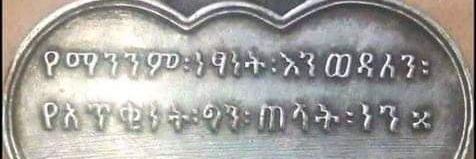
The Ethiopian bible is the oldest, most complete and original bible on earth.
Written on goat skin in the early Ethiopian language of Ge’ez. It is also World’s first illustrated Christian Bible. The Ethiopian bible dating analysis dated Garima 2 to be written around 390-570, and Garima 1 from 530-660. During the Italian invasion fire was set in the monastery in the 1930s to destroy the monastery’s church nevertheless the Bible survive.
The original Christianity of Egypt was established by the apostle Mark in AD 42 in Ethiopia (Coptic Church--Coptic Orthodox Christianity) where it spread to Europe and some part of Asia. Today We have been told Christianity came from Rome. The Catholic Church begin with the teachings of Yeshua (Yehōshu'a) who lived in the 1st century CE in the province of Judea of the Roman Empire.
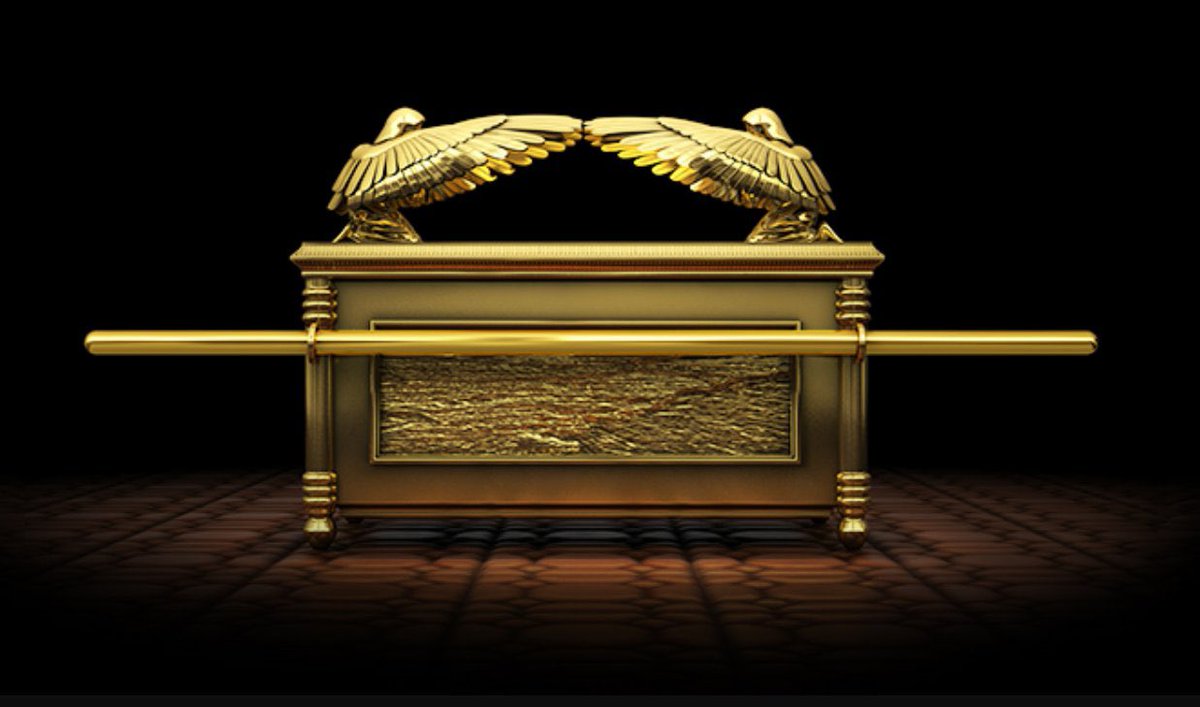
Meanwhile by AD 313, the Roman Empire Catholic Church faced persecution and christianity was not openly practice, the Coptic Orthodox Christianity was flourishing in the Aksumite Empire now in Ethiopia. Church of Our Lady Mary of Zion Axum Ethiopia, houses the Ark of the Covenant, bears a design similar to that of Eastern Orthodox churches in Europe. Its most recent building, reconstructed in the 1950s, has a dome similar to the Hagia Sophia in Istanbul. It is heavily guarded.
Lalibela is a holy town most famous for its churches carved from the living rock, which play an important part in the history of rock-cut architecture. Its buildings, built in the 11th and 12th centuries, are considered symbolic representations of biblical Jerusalem. For early Christians, the risk of persecution from the Romans sometimes ran high, forcing them to practice their beliefs in private, posing a challenge for those scholars who study this era.
The King James Version Bible New Testament which is said to be translated from Greek, and the Old Testament from Hebrew and Aramaic, and the Apocrypha from Greek and Latin, All were originally translated from the Ethiopian bible. original Greek Bible was written around AD 1500. It is also known that Ancient Afrikans of Old Egypt (Kemet) studied this bible in their temple which was known as the "The Book of the Coming Forth by Day and Night". The original Bible was produced by Black Afrikans approximately 3,400 years.
Before the Old Testament and more than 4,200 years before the New Testament, and countless versions of it have been written and published. Different scholars also translated the bible to their local languages during their studies in Kemet. Famous well known Greeks (Europeans) whom we study their history and writings, studied at the feet of Ancient Egyptian (Kemet) scholars along the Nile Valley, Kemet. Philosopher Plato was a student at the Temple of Waset for 11 years.
Also, Aristotle was a student there for 11-13 years. Socrates spent at least 15 years at the same temple; likewise, Euclid studied for 10-11 years at the same temple, Pythagoras spent 22 years there. Ancient Scholars in Egypt began keeping records as far back as 4000 to 3000 BC. Hippocrates studied there for 20 years, plus a host of other little known Greeks who matriculated at Waset, among whom are Diodorus, Solon, Thales, Archimedes, and Euripides.
Greek scholar, St. Clement of Alexandria, once said that if one were to list out the names of all the Greeks who studied under Egyptian tutors, a 1,000 paged book won’t be enough. Even Herodotus mentioned it, same with Plato and Aristotle. The truth is that it took at least 40 years to graduate from Waset, meaning none of the Greek scholars mentioned above even graduated.
Till date most European languages even the Current Hebrew language can't give a direct meaning to all biblical names in the Bible on any translated version as most of the names are of African tribal derivatives.
"The reason you don't hear about the Aramaic or Syriac versions or Ethiopian is that people want the paganized versions which the Greek translated, not the Truth and anything that might contradict today's paganized English version based on the paganized Greek version"... Mini
Most of the Ethiopian Manuscript collection can be found in Gunda Gunde Monastery (Tigray Region), Bodleian Library (Oxford), British Library (London), Chester Beatty Library (Dublin), Cambridge University Library (Cambridge) and Institute of Ethiopian Studies, Addis Ababa.
It can also be found in National Archives and Library of Ethiopia (Addis Ababa), Wellcome Collection (London), John Rylands Library (Manchester), Edinburgh University Library (Edinburgh), Accademia dei Lincei (Rome), Schøyen Collection (Oslo), Vatican Library
Hill Museum & Manuscript Library, Collegeville (Minn), Howard University School of Divinity’s André Tweed Ethiopian Manuscript Collection, (Washington DC), Princeton University, Princeton (New Jersey), University of Oregon.
Your comments on this ...
No force on the planet of Earth will stop us from constructing dam after dam for electricity and exploiting every river and tributary for irrigation, conserving every drop of our resources.
The world has witnessed our determination for the last ten years.