Exploring the future of Agentic AI with AgentForce, Salesforce, DRUID AI Agents & COPADO AI DevOps.
Proud to lead Alta-Futuris Solutions & co-found MeshBA Group
Live from Traders' Café Pune 2026! A day packed with expert market insights, engaging discussions, and meaningful networking with fellow traders and investors.
#TradersCafePune2026#KotakNeo#Pune#StockMarket
Why Most AI Pilots Never Turn into Enterprise Success Stories!
Every AI journey begins with optimism.
A small pilot. A defined scope. A controlled budget.
But once that pilot proves its value, the toughest part begins- scaling it.
Because taking AI beyond the pilot isn’t just a tech challenge.
It’s an alignment challenge.
CXOs suddenly face a maze of complexities:
• Data privacy, compliance, and security demands
• Governance and ethical frameworks
• Integration with legacy enterprise systems
• Relentless ROI discussions and boardroom skepticism
Technology often works perfectly.
But consensus doesn’t.
Many pilots die not in failure… but in indecision.
To move beyond pilots, leaders need more than strategy.
They need patience to navigate processes, courage to defend vision, and influence to unify stakeholders.
AI transformation isn’t about automation; it’s about orchestration.
And the CXOs who win are those who can align ambition with adoption.
The real AI journey starts after the pilot ends.
👉 What’s holding your organization back from scaling its AI success?
#AITransformation #DigitalLeadership #EnterpriseAI #CXOStrategy #InnovationManagement #AIAdoption #BusinessTransformation #ChangeLeadership #DataGovernance #AIPilot #AIImplementation #TechLeadership #FutureOfWork #AutomationStrategy #ScalableAI
Enterprise Workflows Reimagined with AI
Agents Many enterprises face the challenge of managing high-volume repetitive tasks across HR, customer service, and IT, leading to slow response times and low productivity.
Traditional systems struggle to integrate data, automate workflows, and deliver timely, consistent outcomes.
Intelligent AI Agent Platforms transform these inefficiencies by combining conversational interfaces, workflow orchestration, and real-time data access to automate and optimise business functions end-to-end.
A leading global financial services institution adopted an AI-powered virtual assistant across its HR service delivery for 40,000+ employees, with the key objective of automating routine employee queries and scaling support without increasing headcount.
Quantifiable Results: 60% of HR queries were fully resolved by the AI agent without human hand-off.
31% reduction in HR ticket volume across covered regions. 0% increase in HR headcount despite higher support coverage.
Key Applications: HR Service Desk Automation – AI agents handle pay slip enquiries, leave requests, employment verification, and onboarding FAQs.
Customer Service & Support Workflows – Conversational agents integrate with CRM and case-management systems to route, summarize, and resolve customer issues.
IT & Operations Ticketing – Agents' interface with ITSM/ERP systems to triage service requests, provision access, and escalate complex issues to subject-matter experts.
In today’s fast-paced enterprise environment, deploying intelligent AI-agent platforms is no longer optional; it is a competitive imperative for staying ahead.
How will your organization pivot from manual workflows to autonomous business applications before the competition does? 👇
#EnterpriseAutomation #AIAgents #DigitalWorkplace #BusinessApplications #WorkflowAutomation #ConversationalAI #WorkplaceProductivity #HRTech #CustomerServiceAI #ITOperations #DataDrivenBusiness #FutureOfWork #IntelligentAutomation #OperationalExcellence #AIinBusiness
Reference-
1] https://t.co/S4c011fhrg
2] https://t.co/2UzEvBaAEm
3] https://t.co/Ijmy0kDvjo
Reinventing Manufacturing Intelligence with Knowledge AI Agents
Modern manufacturing runs knowledge, yet most of it remains locked inside PDFs, maintenance logs, and legacy ERP systems.
Employees spend 1.8 hours per day searching for processed documents or past incident data, leading to slower innovation and costly downtime.
That’s where Knowledge AI Agents come in, intelligent systems that convert unstructured operational data into actionable manufacturing intelligence.
Powered by vector databases and knowledge graphs, these agents connect manuals, IoT data, and maintenance records to deliver verified, contextual insights instantly.
When Siemens Energy deployed enterprise-grade Knowledge AI Agents across 120+ global plants, the goal was clear: eliminate information silos, reduce downtime, and accelerate maintenance decisions.
Results:
✅ 20–30% cost savings on maintenance operations
✅ Up to 50% reduction in machine downtime
✅ 25% extension in equipment lifespan
This transformation enabled engineers and plant managers to focus on innovation, safety, and design optimization instead of manual document retrieval.
Key Applications:
🔹 Maintenance Intelligence – AI agents suggest solutions using predictive sensor data and historic faults.
🔹 Quality Assurance – Automated knowledge validation ensures ISO and safety compliance.
🔹 Operational Training – AI-guided onboarding built on organization-specific knowledge bases.
Adopting Knowledge AI Agents isn’t just about automation anymore; it’s about building learning factories where every decision compounds collective intelligence.
Will the next manufacturing breakthrough come from human memory or machine-augmented knowledge?
#ManufacturingAI #KnowledgeAI #SmartFactory #Industry40 #PredictiveMaintenance #AIinManufacturing #IndustrialAutomation #DigitalTransformation #DataDrivenManufacturing #MachineLearning #FactoryInnovation #OperationalExcellence #IndustrialAI #ProcessOptimization #IntelligentAutomation #FutureOfWork
Reference-
1] https://t.co/1wVl47vLuS…
2] https://t.co/hxm9R6JKmK…
3] https://t.co/106Qo6fBHK
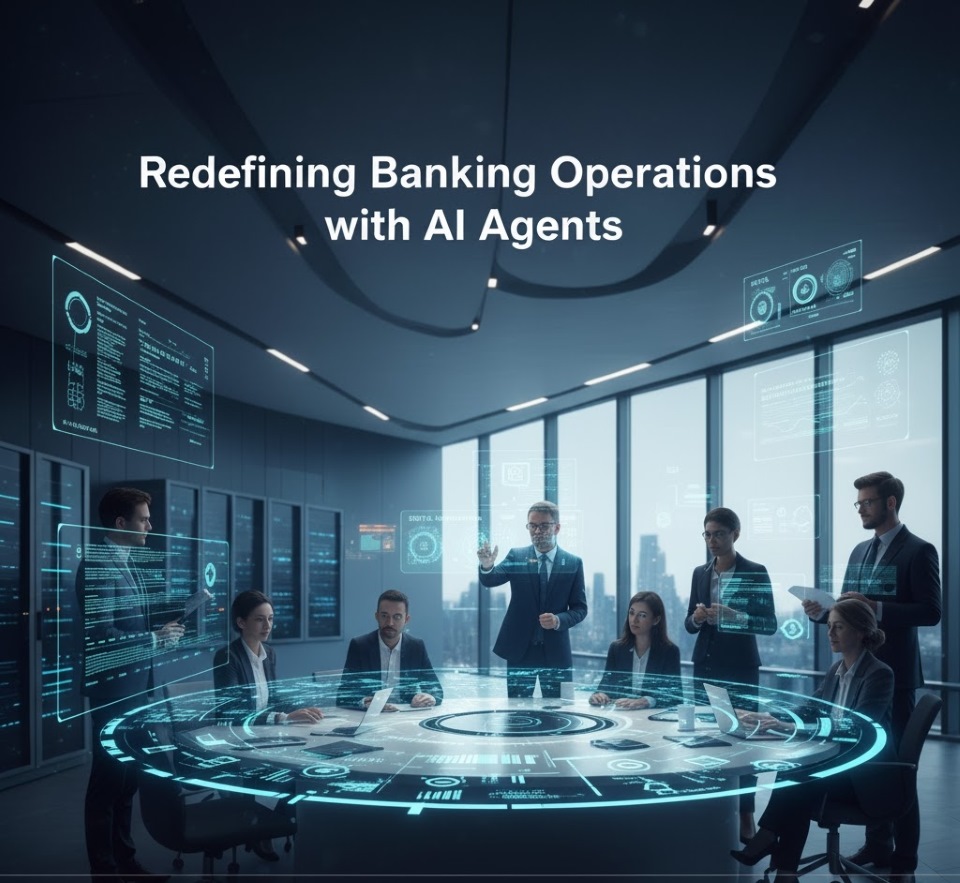
Redefining Banking Operations with AI Agents
Banking today faces an efficiency paradox: digital transactions are skyrocketing, yet back-office operations remain manual and compliance-heavy.
Employees still spend 50% of their time reconciling data across siloed systems, delaying decisions and frustrating customers.
Enter Process AI Agents, intelligent systems that orchestrate end-to-end financial workflows, ensuring every interaction results in a completed, compliant transaction.
A leading European Bank deployed AI Agents to automate HR onboarding, KYC updates, and internal service tickets across CRM, ERP, and ITSM systems.
Their goal cut turnaround times and improve accuracy without compromising governance.
Quantifiable Results:
✅ 40% faster employee onboarding and access provisioning
✅ 30% reduction in administrative overhead
✅ $2.8 million saved annually in operational costs
By offloading repetitive reviews, audits, and status checks, financial experts can now focus on customer advisory, fraud prevention, and innovation areas where human judgment drives trust and value.
Key Applications:
KYC & AML Automation: Real-time verification and risk flagging across multiple data sources.
Loan Processing Workflows: Automated document collection, approval routing, and exception handling.
Compliance Audits: Continuous monitoring with built-in audit trails and human-in-the-loop approvals.
In a regulated, always-on market, deploying AI Agents isn’t optional; it’s essential for maintaining speed, security, and compliance at scale.
Will your bank still rely on manual approvals when AI can deliver real-time compliance and customer satisfaction? 👇
#BusinessStrategy
#BankingInnovation #FinTech #DigitalBanking #AiBanking
#ProcessAutomation
#AITransformation
#Aiagent
#BankingTechnology
#ComplianceAutomation
#OperationalExcellence
#FutureOfBanking
#AutomationInFinance
#IntelligentAutomation
#DigitalTransformation
#FinancialServices
#AIDrivenBusines
References: https://t.co/t7MtvtJEHk
From Solo Bots to the Orchestra of Agents Time to Rethink Automation
For too long organizations have measured success by deploying one smart bot after another the HR leave‐bot, the IT support bot, the finance query bot.
It’s automation, yes but still confined, still siloed.
What if the real breakthrough isn’t in building more bots, but in building a system where these bots collaborate under a conductor?
Imagine a single intelligent layer that understands your intent (“I want to submit a leave request”, “My laptop isn’t connecting to Wi-Fi”, “What’s my budget vs actual this quarter?”), then seamlessly engages the right specialized agents (HR, IT, Finance), triggers the right systems, and closes the loop for the user.
No confusion about “which bot do I talk to”, no gaps between systems.
Just one smooth experience.
Here’s the example - A major enterprise implemented a multi-agent orchestration architecture: one agent handled document extraction, another credit-score checks, another contract generation, all coordinated by an orchestration layer.
The result: a 52% reduction in time on key workflows and significantly fewer manual hand-offs. https://t.co/RfsAAQJ9N1
More broadly, in another case study, layering an orchestration framework over multiple AI agents led to measurable ROI and faster time-to-value.
https://t.co/BZWdEk3ayU
From a product-management and growth lens, this is huge.
It means your automation strategy moves from “plug-in one bot here, one bot there” to “build an agent ecosystem that scales”.
It means fewer redundant hand-offs, clearer user journeys, real-time end-to-end insights.
And for growth hackers like you, it unlocks a narrative: “we didn’t just automate process X we orchestrated process X, Y and Z”.
Of course, it’s not without trade-offs.
You’ll need upfront architecture, governance, solid integrations.
People will need to adapt to a new way of working. But the payoff?
A far more resilient automation backbone.
One where bots talk to each other, your systems talk to your bots, and users just say what they need.
So here’s something to ask:
In your organization, are your automation projects still solo performers?
Or is it time for that conductor to take the stage?
#AIOrchestration #IntelligentAutomation #EnterpriseAI #AutomationStrategy #ConversationalAI #BusinessProcessAutomation #DigitalTransformation #FutureOfWork #AIinBusiness #WorkflowAutomation #ProcessIntelligence #InnovationLeadership #TechForBusiness #HumanAIcollaboration #NextGenAutomation #AIecosystem #SmartEnterprise #ProductManagement #GrowthMindset #TechStrategy #ScalableSystems
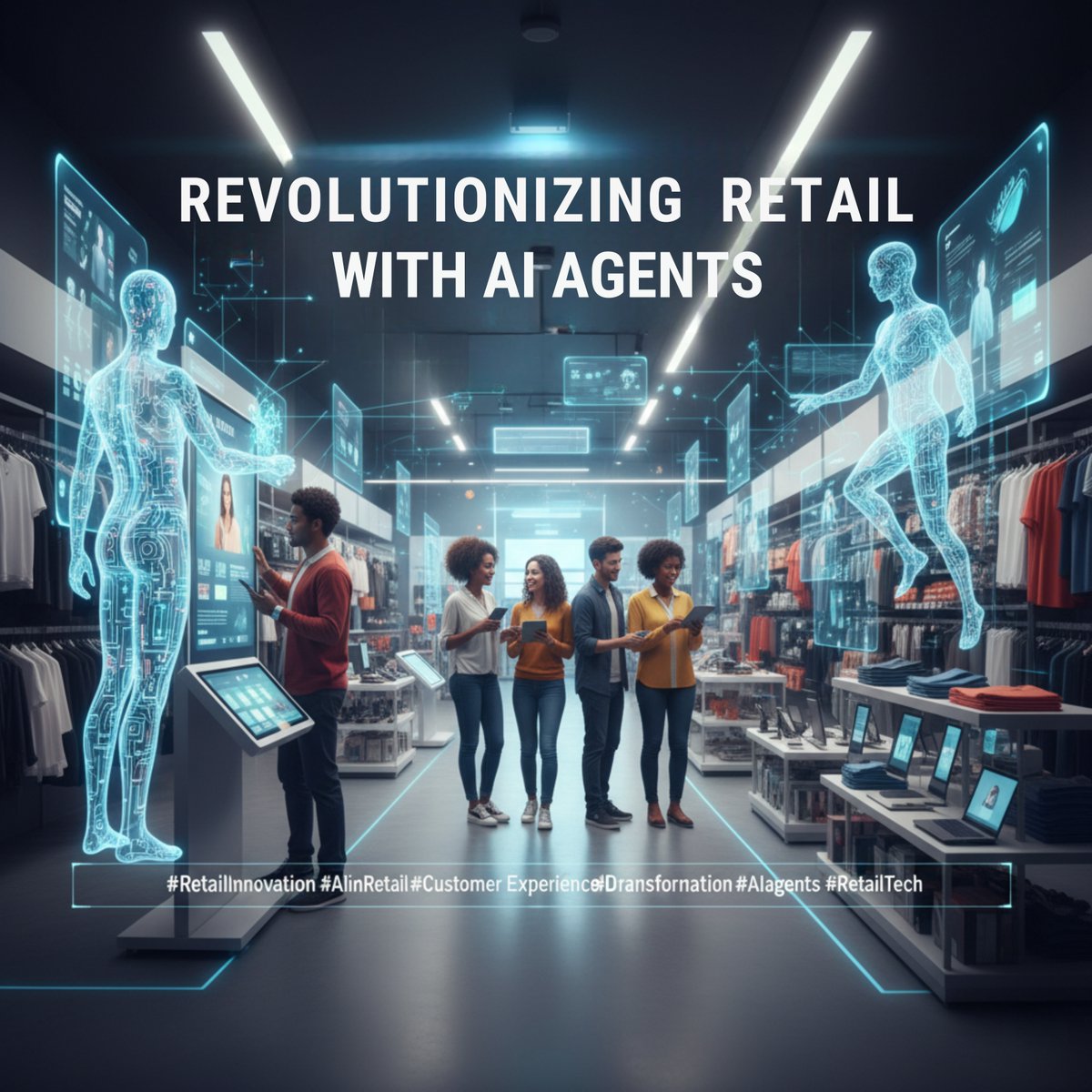
Revolutionizing Retail with AI Agents
In the fast-paced world of retail, delivering exceptional customer experiences is paramount.
Enter AI agents intelligent systems transforming how retailers engage with customers, manage inventory, and optimize operations.
Take PacSun, a leading fashion retailer.
Faced with increasing customer inquiries and the need for personalized service, PacSun implemented AI agents across web chat and SMS channels.
These agents handle routine questions, recommend products, and assist with order tracking, operating 24/7.
As a result, PacSun has seen a 33% opt-in rate for SMS marketing, a 19% conversion rate through personalized recommendations, and an 85% deflection of order and delivery FAQs from human agents.
This shift has not only improved customer satisfaction but also allowed human agents to focus on more complex issues.
https://t.co/kbKhfsLgiC
Similarly, Best Buy has embraced generative AI to enhance both customer and employee experiences.
By integrating AI-powered virtual assistants, Best Buy enables customers to troubleshoot product issues, manage orders, and access support through various channels.
These AI tools also assist in real-time, providing customer service agents with recommendations and insights to resolve queries more efficiently.
This approach has led to improved customer satisfaction and streamlined operations.
https://t.co/HXEfAp3aPk?
These examples underscore the transformative power of AI agents in retail.
By automating routine tasks, personalizing customer interactions, and optimizing internal processes, retailers can enhance efficiency and deliver superior service.
As the retail landscape continues to evolve, integrating AI agents is becoming not just an advantage but a necessity for staying competitive.
As AI continues to evolve, embracing these technologies is no longer just an advantage it’s a necessity for staying ahead in today’s competitive retail landscape.
#RetailInnovation #AIinRetail #CustomerExperience #DigitalTransformation #AIagents #RetailTech
Transforming Healthcare with AI Agents
The future of healthcare is here, and it’s powered by AI.
In today’s fast-paced world, where efficiency and patient satisfaction are paramount, AI agents are changing the game for healthcare providers and patients alike.
Take Regina Maria, Romania’s leading private healthcare network, for example.
By integrating an AI-powered symptom checker, they’ve revolutionized how patients access care.
Instead of waiting for hours or being misdirected, patients are now instantly guided through a series of questions to determine the best course of action.
This reduces wait times and ensures they see the right specialist without delay.
With over 10 million digital health checkups already completed, AI has helped streamline the entire process, creating a more efficient and personalized experience for everyone involved.
https://t.co/MrwsRda38G?
But that's not all. MatrixCare, a leading EHR solution provider, integrated AI agents to support their clinicians.
These AI-driven tools now handle routine inquiries and assist with documentation, resulting in a 96% accuracy rate in responses and significantly faster support times.
This means clinicians can focus more on what they do best providing top-notch patient care.
Curious about how they did it?
https://t.co/vtvJuCAL1R?
These examples prove that AI is more than just a buzzword in healthcare.
It’s a solution that enhances patient engagement, streamlines operations, and frees up valuable time for healthcare professionals.
As we look to the future, it’s clear that AI is not just improving healthcare it’s transforming it.
What does the future of AI in healthcare look like?
Will we see a shift in patient trust as AI becomes more integrated into medical decision-making?
Let’s discuss share your thoughts below! 👇
#HealthcareInnovation #AIinHealthcare #DigitalTransformation #PatientCare #HealthcareAI #TechInHealthcare #AIagents #OperationalEfficiency
Are you ready for your university to solve its "summer melt" problem and give your staff their time back?
Higher Education is experiencing a silent, powerful revolution powered by conversational AI agents.
These sophisticated digital assistants are moving beyond simple FAQs to become the connective tissue of the modern campus, streamlining everything from admissions to academic support.
Imagine an AI layer that provides instant, personalized support 24/7 handling high-volume inquiries about financial aid, course registration deadlines, or campus services.
This level of always-on accessibility doesn't just improve the student experience; it frees up exhausted administrative and advising staff to focus on the high-touch, critical work that truly drives student success and retention.
The evidence is powerful.
This isn't just theory; it's driving measurable results today.
Take the case of Georgia State University.
https://t.co/ZijXrRlE3R…
Key applications in higher education
Student Support: AI agents offer 24/7 assistance, helping students with scheduling, answering queries, and providing support via platforms like websites, mobile apps, and messaging tools (WhatsApp, Microsoft Teams).
Enrolment and Admissions: AI agents automate parts of the enrolment process, manage bottlenecks, and provide information to prospective students, boosting enrolment numbers.
Administrative Efficiency: By automating repetitive tasks (e.g., answering finance or student service queries), AI agents free up staff to focus on more complex work.
Data Collection: AI agents gather student feedback through natural conversations, offering valuable insights for university decision-making.
Improved Experience: These agents create a personalized, efficient, and modern campus experience that appeals to digitally native students.
Skill Development: Universities also use AI agents to equip students with automation and AI skills, making them more attractive to employers.
How AI Agents Differ from Traditional Chatbots:
Advanced Technology: Unlike rule-based chatbots, AI agents use sophisticated AI to handle complex, multi-step interactions.
Human-like Interaction: They offer a more natural, engaging conversation, making interactions feel personal and less robotic.
System Integration: AI agents can be integrated with business systems, automating entire processes, not just providing information.
What's the most time-consuming administrative bottleneck on your campus that you think AI could solve today?
Share your thoughts! 👇
#HigherEd #AIinEducation #StudentSuccess #EnrollmentManagement #DigitalTransformation #HigherEducation
Why Salesforce Implementation Starts with Understanding the Business- Not the Platform
Salesforce today offers 12 industry-focused “Mini Clouds” from Manufacturing and Healthcare to Financial Services and Retail.
Each of these clouds is designed to fit specific business verticals, which makes implementation faster and more relevant.
But here’s the key insight:
Before jumping into customization, enterprises must first analyze their own business objectives and identify how Salesforce aligns with their workflows.
At our company, our Salesforce Technical Architect follows a simple yet powerful approach:
Understand the Organization – What are the business goals, existing systems, and customer journeys?
Define the Implementation Roadmap – Identify where to begin, what to automate first, and how future phases will scale.
Decide on Customization Needs – Many Salesforce features are pre-built for industry use cases. Only customize where it truly adds business value.
Architect for Scalability – Design the overall system architecture so each stage of implementation builds on the previous one.
Salesforce is not just a tool it’s a platform for continuous evolution.
Success comes when businesses think strategically before customizing tactically.
How does your organization plan its Salesforce roadmap start with technology or strategy?
#Salesforce #DigitalTransformation #CRM #CloudComputing #BusinessStrategy #Implementation #EnterpriseArchitecture
Revolutionizing Insurance with AI Agents
The insurance industry is experiencing a transformation.
AI-powered agents are not only automating tasks but also significantly enhancing the customer journey.
🔹 Instant Policy Issuance
For example, Bajaj Allianz General Insurance implemented an AI-driven system that allows customers to purchase travel insurance policies in under 5 minutes, reducing traditional processing times by 80%.
This rapid policy generation helped boost their customer conversion rates during peak travel seasons.
https://t.co/BqlxYRNTa9
🔹 24/7 Personalized Support
AI agents are handling everything from policy inquiries to claims and renewals.
HDFC ERGO General Insurance uses an AI assistant that offers 24/7 personalized support across multiple channels, improving customer satisfaction and reducing response time to queries by over 50%.
https://t.co/WNYhMpOUC7?
🔹 Seamless System Integration
These AI agents integrate effortlessly with existing systems like CRMs and policy management platforms, ensuring smooth automation and efficiency.
This integration has been crucial for companies like ICICI Lombard, which has streamlined claims processing and underwriting workflows, improving overall productivity.
🔹 Measurable Impact
Insurance giants such as AIG have deployed AI agents to provide continuous support to their customers.
This has resulted in improved digital service adoption and a measurable increase in customer engagement, helping them stay ahead in the competitive insurance market.
AI is the future of insurance.
By automating processes and improving customer interactions, insurers can enhance their operational efficiency and offer a much smoother, faster, and personalized experience.
AI is no longer a futuristic concept it’s the new foundation of customer experience and operational excellence in insurance.
The question is no longer “Should we adopt AI?” but “How fast can we scale it?”
How do you see AI transforming your side of the insurance world customer experience, underwriting, or claims?
#InsuranceInnovation #AIinInsurance #DigitalTransformation #CustomerExperience #FutureOfInsurance
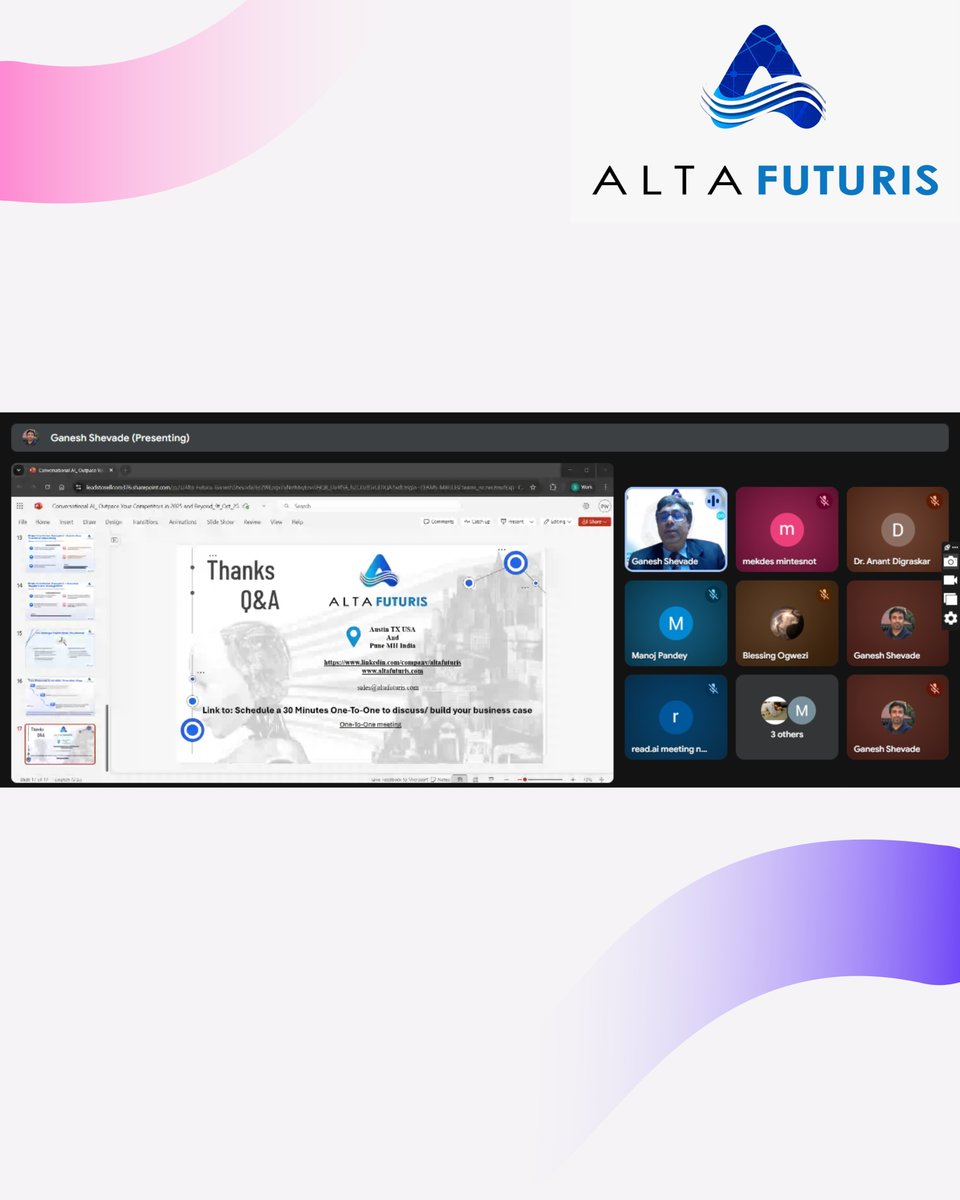
In our recent Webinar “Conversational AI: Outpace Your Competitors in 2025 and Beyond.��
From rule-based bots to autonomous enterprise agents, the transformation is clear.
These next-gen AI agents don’t just chat they act.
They execute complex business workflows, ensure compliance, and integrate seamlessly across your enterprise systems.
Key takeaways from the session:
CXOs today must look beyond automation and focus on experience orchestration.
Druid AI Platform showcased how enterprises can deploy secure, compliant, and intelligent AI agents that deliver real business outcomes.
Real-world use cases spanned industries from banking and healthcare to construction and telecom proving measurable ROI and process excellence.
Organizations leveraging AI transparency, trust, and governance will see a 50% higher adoption and goal achievement by 2026 (Gartner).
The takeaway:
It’s time to shift from reactive support to autonomous operations that learn, adapt, and deliver instantly.
Let’s move from bots that “say things” to agents that “do things.”
If you missed the webinar, you can still connect with us to explore:
A 30-minute One-to-One session to identify your ideal AI use case and experience Druid AI in action.
📍Powered by Alta Futuris
🔗 https://t.co/MGqnp3xlm6
🔗 https://t.co/DJSNuXjbx7
#conversationalai #aiagents #autonomousenterprise #enterpriseautomation #experienceorchestration #futureofwork #aiplatform #aiinnovation #cxtransformation #businessgrowth #altafuturis #druidai
The Fear of Missing Out (FOMO) in Business: Why AI Strategy is a Must for Every Organization
In today’s competitive landscape, every business has its competitors.
But not adopting an AI strategy? That’s a significant disadvantage.
Imagine this: Your competitors have implemented AI, and they’re rolling out innovative products and services, thanks to the outcomes of that implementation.
Now, they’re getting ahead while you’re still considering whether or not to dive in.
You might think, “I’ll catch up in 2 years,” but in the fast-moving world of AI, waiting can mean falling further behind.
It’s not just about one department adopting AI whether it’s HR, finance, or IT.
AI implementation isn’t a one-off task. It’s a continuous process.
AI isn’t like assembling a car, putting it on the road, and then forgetting about it.
It requires ongoing effort to sustain and evolve with the technology.
Sustainability of AI is the real challenge just like your competitors, if you don’t embrace AI, you risk being left behind in an industry that’s moving faster than ever.
AI isn’t a luxury. It’s a necessity for staying competitive in today’s business world.
As industries grow more competitive, adopting and sustaining AI will differentiate the leaders from the laggards.
The question isn’t if you should implement AI it’s how quickly can you do it, and how will you sustain it for long-term success?
#AI #BusinessStrategy #Innovation #AIImplementation #CXO #Leadership #CompetitiveAdvantage
Within minutes, an AI assistant can collect financial details, run credit checks, validate documents, calculate terms, and even generate a draft agreement all while ensuring compliance and audit trails.
What once took weeks can now happen in minutes.
For instance, UDR, a major multifamily REIT, adopted an AI virtual leasing assistant (ACE) across 165 properties.
They expect to cut their call center costs by 65 % all while maintaining responsiveness across voice, chat, and text channels around the clock
https://t.co/R4w7zeiHjh
But the real revolution isn’t automation it’s experience.
When every customer interaction feels immediate, intelligent, and human-like, it builds trust.
When employees no longer chase paperwork, they focus on strategic deals, not repetitive admin.
So here’s the question worth asking
If your leasing process could go from inquiry to approval before the competition even responds, what would that do for your growth?
#leasing #aileasing #proptech #leasingautomation #digitalevolution #realtimeleasing #customerexperience #artificialintelligence #druidai #aienabledbusiness #businessgrowth #automationtransformation #propertytech #leasinginnovation #enterprisetech #futureofleasing
Has banking ever felt like it’s running in slow motion even though customers expect real-time answers?
Meet “digital friction” when KYC takes days, loan approvals drag on, support answers are scattered, and compliance checks become bottlenecks.
Large banks know this pain intimately.
Now imagine this: a customer starts opening an account at 9:03 PM.
Instead of waiting until morning, an AI agent kicks in.
It verifies identity, validates documents, sets up accounts, and ensures AML/KYC checks all in the time it takes to sip your coffee.
Meanwhile, a loan applicant halfway through the process hits a snag.
The agent surfaces missing documents, nudges them via chat or voice, auto-flags eligibility, and submits for underwriting without human delay.
At the same time behind the scenes, the same agent is scanning transactions in real time for anomalies, triggering alerts, and helping in fraud prevention.
All these touchpoints onboarding, loans, support, fraud are unified, compliant, encrypted, auditable.
When we say “turning weeks of work into conversational flows,” it isn’t a future vision it’s happening today at major banks.
Take Crédit Agricole (Poland).
They deployed an AI agent that handles document classification and standard customer correspondence.
As a result: document processing time dropped by 50 %, over 750 hours per month were freed up, and 62 % of certificate requests now pass through AI alone.
https://t.co/VvXek4v8z2
Or consider NatWest (UK).
In early 2025, they struck a collaboration with OpenAI to deepen the capabilities of their digital assistants, including Cora+ and AskArchie.
These tools have already shown ~150 % boost in customer satisfaction, along with reductions in human intervention.
https://t.co/aU7XlGsOv9
Here’s where it gets personal:
When your bank can serve you in minutes, not days trust shifts.
When support is consistent, whether via voice, chat or app experience deepens.
When compliance is automatic, not manual risk falls.
So I ask you: What if your bank never asked you to wait?
Because the future of banking support isn’t human versus AI.
It’s human plus AI.
And winning banks will be those that plug AI into every process not just as assistants, but as integral operatives.
Want to map out how this could work in your context regional banking, retail finance, micro-lending?
I’d be happy to sketch that with you.
Customer journeys are no longer linear. AI Agents in Sales & Marketing are designed to orchestrate them in real time.
Sales cycles today are increasingly complex, fragmented customer journeys, multi-channel touchpoints, and rising expectations for real-time personalization.
Traditional CRMs and marketing automation platforms capture data, but they don’t act on it in the moment.
That’s where AI Agents in Sales & Marketing redefine the workflow.
These agents integrate natively with CRM, ERP, and campaign systems, enabling end-to-end automation: from lead qualification to personalized engagement and pipeline progression.
Consider this scenario: an inbound prospect enters your ecosystem.
Instead of waiting for a sales rep to respond, the AI agent engages instantly, collects intent data, scores the lead, and syncs it with the CRM.
If the prospect stalls, the agent triggers contextual nudges across channels.
If interest deepens, it generates proposals or schedules demos, all while maintaining data integrity through audit trails and role-based access.
The measurable impact is significant higher conversion ratios, reduced response latency, and reclaimed sales capacity (often 25–30%).
More importantly, it shifts human effort from administrative overhead to high-value strategy and relationship management.
The question is no longer whether AI can assist sales teams.
It’s whether organizations are ready to operationalize AI as a co-pilot in revenue generation.
Are you ready to bring AI into your sales and marketing workflows?
Let’s connect and explore how this shift can transform your revenue engine.
https://t.co/DJSNuXjbx7
#AIAgents #SalesAutomation #MarketingAutomation #AIinBusiness #RevenueGrowth #CustomerExperience #LeadGeneration #DigitalTransformation #SmartSales #AIDrivenMarketing #CRMAutomation #SalesStrategy #AIInnovation #FutureOfWork #BusinessIntelligence #PipelineAutomation #SalesEnablement #EnterpriseAI #MarketingTechnology #AITools #ConversationalAI #DataDrivenSales #CustomerJourney #AutomationInSales #B2BSales #SalesProductivity #AIFirst #IntelligentAutomation #GrowthStrategy #AIforRevenue
Not too long ago, delivering 24/7 customer support meant building massive teams, managing shifts, and burning through budgets.
Customers expected instant answers, but reality often meant waiting in queues, repeating details, and hoping for resolution.
That picture is changing fast.
Enterprises adopting AI-powered customer support are already seeing the difference.
Imagine a world where wait times shrink to seconds, where customers get the same high-quality response whether they’re on chat, email, or social, and where employees no longer drown in repetitive queries but focus on complex, meaningful problems.
The impact isn’t just operational.
It’s cultural. Employees feel engaged because their work moves from routine to strategic.
Customers feel valued because every interaction is timely and consistent.
And leadership sees measurable results from cost efficiency to loyalty scores.
The real story here isn’t automation for the sake of efficiency.
It’s reimagining the customer and employee experience altogether.
The organizations that will lead tomorrow aren’t the ones working harder.
They’re the ones working smarter, with AI at the core of how they serve, support, and connect.
So here’s the question:
if your customer expectations keep rising, is your support model ready to rise with them?






![GaneshShevade's tweet photo. Enterprise Workflows Reimagined with AI
Agents Many enterprises face the challenge of managing high-volume repetitive tasks across HR, customer service, and IT, leading to slow response times and low productivity.
Traditional systems struggle to integrate data, automate workflows, and deliver timely, consistent outcomes.
Intelligent AI Agent Platforms transform these inefficiencies by combining conversational interfaces, workflow orchestration, and real-time data access to automate and optimise business functions end-to-end.
A leading global financial services institution adopted an AI-powered virtual assistant across its HR service delivery for 40,000+ employees, with the key objective of automating routine employee queries and scaling support without increasing headcount.
Quantifiable Results: 60% of HR queries were fully resolved by the AI agent without human hand-off.
31% reduction in HR ticket volume across covered regions. 0% increase in HR headcount despite higher support coverage.
Key Applications: HR Service Desk Automation – AI agents handle pay slip enquiries, leave requests, employment verification, and onboarding FAQs.
Customer Service & Support Workflows – Conversational agents integrate with CRM and case-management systems to route, summarize, and resolve customer issues.
IT & Operations Ticketing – Agents' interface with ITSM/ERP systems to triage service requests, provision access, and escalate complex issues to subject-matter experts.
In today’s fast-paced enterprise environment, deploying intelligent AI-agent platforms is no longer optional; it is a competitive imperative for staying ahead.
How will your organization pivot from manual workflows to autonomous business applications before the competition does? 👇
#EnterpriseAutomation #AIAgents #DigitalWorkplace #BusinessApplications #WorkflowAutomation #ConversationalAI #WorkplaceProductivity #HRTech #CustomerServiceAI #ITOperations #DataDrivenBusiness #FutureOfWork #IntelligentAutomation #OperationalExcellence #AIinBusiness
Reference-
1] https://t.co/S4c011fhrg
2] https://t.co/2UzEvBaAEm
3] https://t.co/Ijmy0kDvjo](https://pbs.twimg.com/media/G5JwMY6aYAAbQau.jpg)
![GaneshShevade's tweet photo. Reinventing Manufacturing Intelligence with Knowledge AI Agents
Modern manufacturing runs knowledge, yet most of it remains locked inside PDFs, maintenance logs, and legacy ERP systems.
Employees spend 1.8 hours per day searching for processed documents or past incident data, leading to slower innovation and costly downtime.
That’s where Knowledge AI Agents come in, intelligent systems that convert unstructured operational data into actionable manufacturing intelligence.
Powered by vector databases and knowledge graphs, these agents connect manuals, IoT data, and maintenance records to deliver verified, contextual insights instantly.
When Siemens Energy deployed enterprise-grade Knowledge AI Agents across 120+ global plants, the goal was clear: eliminate information silos, reduce downtime, and accelerate maintenance decisions.
Results:
✅ 20–30% cost savings on maintenance operations
✅ Up to 50% reduction in machine downtime
✅ 25% extension in equipment lifespan
This transformation enabled engineers and plant managers to focus on innovation, safety, and design optimization instead of manual document retrieval.
Key Applications:
🔹 Maintenance Intelligence – AI agents suggest solutions using predictive sensor data and historic faults.
🔹 Quality Assurance – Automated knowledge validation ensures ISO and safety compliance.
🔹 Operational Training – AI-guided onboarding built on organization-specific knowledge bases.
Adopting Knowledge AI Agents isn’t just about automation anymore; it’s about building learning factories where every decision compounds collective intelligence.
Will the next manufacturing breakthrough come from human memory or machine-augmented knowledge?
#ManufacturingAI #KnowledgeAI #SmartFactory #Industry40 #PredictiveMaintenance #AIinManufacturing #IndustrialAutomation #DigitalTransformation #DataDrivenManufacturing #MachineLearning #FactoryInnovation #OperationalExcellence #IndustrialAI #ProcessOptimization #IntelligentAutomation #FutureOfWork
Reference-
1] https://t.co/1wVl47vLuS…
2] https://t.co/hxm9R6JKmK…
3] https://t.co/106Qo6fBHK](https://pbs.twimg.com/media/G4_SrxibUAAiMc8.jpg)