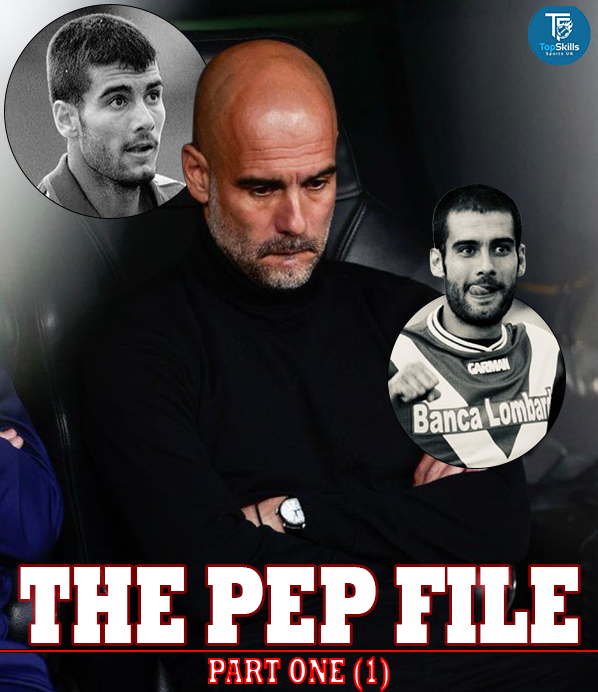
THE PEP FILES. PART 1: The Italian Trap & The Unbending Court
Chapter 1: The Flawless Spanish Shield
For 11 seasons and 382 matches, Pep Guardiola was the undisputed heart of FC Barcelona. He lifted 16 major trophies, anchored the national team, and dominated European football. In Spain, his drug testing record was spotless, not a single flag, anomaly, or suspicious sample.
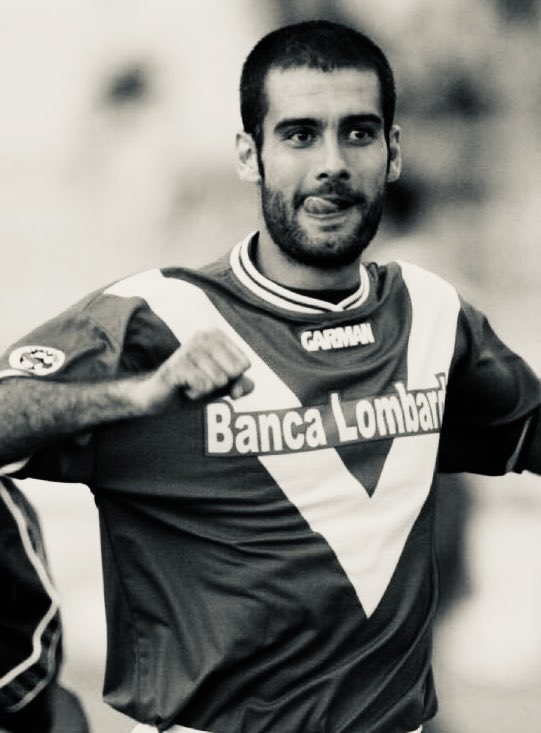
Then came the summer of 2001. Guardiola left Barcelona for Italian side Brescia.
Just two matches into his Serie A campaign, against Piacenza and Lazio, his urine samples triggered an immediate alarm: Positive for Nandrolone, a heavy-duty anabolic steroid designed to accelerate recovery, increase muscle mass, and boost stamina.
How does a player spend over a decade in La Liga completely undetected, only to fail a test the second he crosses the border into Serie A? Did Pep suddenly start doping at 30 years old? Or was he using the exact same protocols he used in Spain, only to run headfirst into a legal system that actually checked?
Chapter 2: Why Spain Kept Him Clean?
During the late 1990s and early 2000s, Italian football operated under the strict oversight of the Italian Olympic Committee (CONI) and fearless public prosecutors like Raffaele Guariniello. Italian authorities used lower detection thresholds for steroid metabolites, performed unannounced training ground raids, and treated sports doping as a federal criminal offense.
Spain, by contrast, had no centralized anti-doping agency. La Liga relied on soft, predictable post-match urine tests.
No Out-of-Competition Testing: Testers only checked players after matches. Anyone using calculated clearance windows, micro-dosing schedules, or "seasonal preparation plans" during recovery breaks was virtually immune on Spanish soil.
Legal Immunity: Until 2006, doping was not a crime in Spain. Courts could not issue police search warrants for club pharmacies or seize medical files, while Spanish testing labs faced intense international criticism for a lack of transparency.
Chapter 3: The Doctor Pipeline & The Multivitamin Defense
Cornered by the Italian Football Federation (FIGC), Guardiola held a press conference declaring his innocence: "A machine says I have taken nandrolone, but I know I didn't."
His defense was the classic athlete playbook: "contaminated multivitamins."
Who supplied those multivitamins? Dr. Ramon Segura, a professor of physiology at the University of Barcelona and Guardiola's personal physiologist.
Segura’s name was already red-hot. Just seven months earlier, Dutch midfielder Frank de Boer tested positive for Nandrolone at FC Barcelona under Segura's care. In fact, the 2001–2002 Serie A season saw a sudden wave of Nandrolone busts: Guardiola, Jaap Stam, Edgar Davids, and Fernando Couto, all pointing to supplement protocols arranged by a tight network of sports doctors.
The FIGC rejected Guardiola's excuse, handing him a 4-month ban and a €50,000 fine. Italian criminal courts went further: in May 2005, a judge in Brescia sentenced Guardiola to a 7-month suspended prison sentence.
Chapter 4: The Great (Lucky) Escape (2007–2009)
Guardiola spent eight years fighting the ruling. In October 2007, an Italian appeal court quietly acquitted him on a scientific technicality, accepting arguments that extreme physical strain could cause human bodies to naturally produce trace nandrolone metabolites, or that testing margins at the time allowed for false positives.
The legal drama reached a tense climax in May 2009. Right as Guardiola was guiding FC Barcelona through their iconic treble-winning season, CONI’s anti-doping prosecutor formally reopened the case, calling the acquittal "unacceptable" and summoning Pep back to court.
By September 2009, CONI threw out the appeal due to expired procedural deadlines. The case was buried forever.
In 2008, Pep Guardiola took over as head coach of FC Barcelona. What happened next is a story for another day..
🚨When Gianni Infantino was UEFA general secretary, he helped broker settlement deals that let Manchester City and PSG avoid a possible Champions League ban over FFP breaches. Instead, they each received €20m fines.
Mike Dean, the Referee that officiated Man City vs QPR that day:
“Once QPR found out they were safe.. I still can get my head around why they [QPR] kicked the ball straight back. I couldn't get that.”
CITY ARE NEVER GETTING OVER THIS😂😂😂
🚨💣 𝐌���𝐉𝐎𝐑 𝐁𝐑𝐄𝐀𝐊𝐈𝐍𝐆: THE PEP FILES. ⤵️📰
Pep Guardiola left Barcelona in 2001 after 11 seasons, 382 matches, and 16 trophies with a completely clean testing record.
Two games into his new life at Brescia, Italian testers flagged his sample for nandrolone, an anabolic steroid used to speed recovery and add strength.
He immediately denied taking anything banned and blamed contaminated multivitamins from his long-time physiologist. The Italian federation still handed down:
🚫 — 4-month ban
💸 — €50,000 fine
A court in Brescia later added a seven-month suspended prison sentence.
The key difference was the system he walked into. Italy ran tighter thresholds, surprise tests and treated doping as a criminal matter.
Spain at the time relied mostly on predictable post-match checks and had no real out-of-competition programme.
An appeal court acquitted him in 2007 after accepting arguments that heavy physical strain can produce tiny amounts of the same metabolites naturally, or that the testing margins of that era left room for error.
A later attempt to reopen the case was thrown out on procedural deadlines.
The file was closed. The questions around that summer of 2001 have never quite gone away.
Very good watch, anyone who has any doubts that the PL might go easy on City need to watch this.
In short Ben says before anything, Don't get carried away, we have to wait, but this is what they are looking at,
- Fines, transfer bans, relegation, every punishment possible is the very bare minimum the PL are pushing for.
- EFL will side with the PL if the PL expel Man City, they will not accept them in their leagues.
- Don't compare to Everton or Forest, what City are charged with is way above anything even remotely comparable to them, we are looking at punishments that has never ever been seen before.
The PL are going to make an example of Man City, especially for not cooperating, this is the key thing, Cities refusal to share information will cost them massively. The PL can not accept teams not cooperating and will use this to make an example to every other team.
Arsenal had to sell their best players & limit their spending under Arsene Wenger ( Emirates stadium). A club with global reach.
But Man City who couldn't fill their stadium were able to generate revenue fast enough to compete with big clubs (2009-18)?
He caught them having sex, but instead of stopping them he let them continue, they cleaned up and went straight to church to sing gospel like nothing happened. 🔥🎬🎥