We design and manufacture English wirework garden trellis, arches, zinc planters, door canopies and fireguards for stoves. Love glorious gardens & interiors!
As we enter yet another week of drought conditions please, I beg you, put out water for the animals.
Our nocturnal wildlife is dying of thirst.
A terrible, painful way to die.
And you hold the solution, the cure.
A turn of the tap will save a life.🚰
So get out your casserole pot lids, your flan dishes, your old baking trays - anything that is shallow and wide and not easily tipped.
It doesn't matter what it looks like, this is an emergency.
Put them out at dusk, front and back garden.
Your local charity shop will have loads of suitable water dishes - so with one simple act of kindness you can benefit so many.🥰
Keep them clean.
Keep them full.
Keep them coming.
Please share this to save a life today.
Wild London David Attenborough
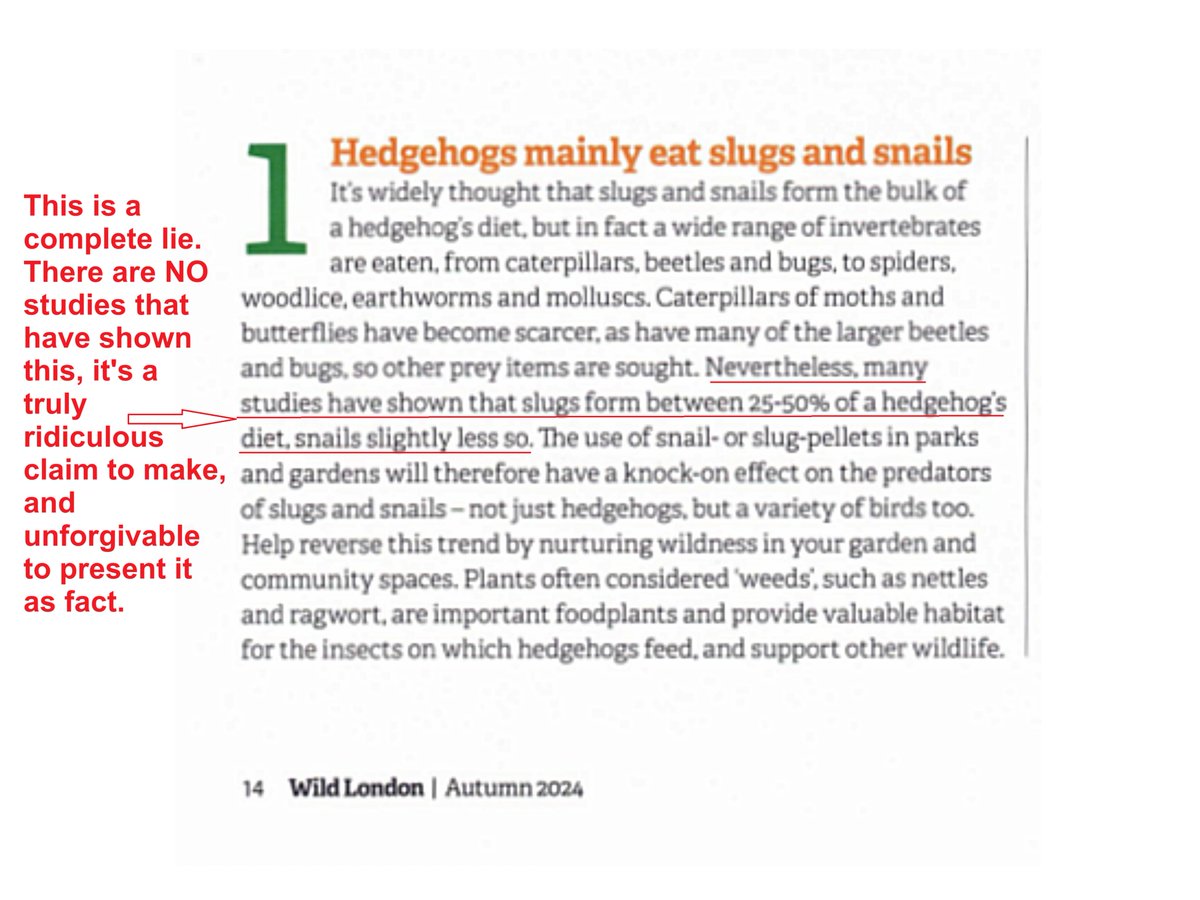
I'm getting so many posts from lovely people absolutely outraged at the misinformation regarding hedgehogs and slugs presented on this show yesterday, so I'll just address it here.
David Attenbourough is a really lovely man, and has done an immense amount of good for us, our wildlife, and our planet.
But he, like any other TV presenter, relies on programme researchers for script content.
The researchers, in turn, rely on who they *perceive to be* experts in the field.
Unfortunately, they were taken in by some clever branding and chose the wrong people:
A self-proclaimed 'hedgehog expert', often funded by the British Hedgehog Preservation Society (see their most recent dangerous misinformation, and my response, published here:https://t.co/YWqTd4PIkv)
And the London Wildlife Trust.
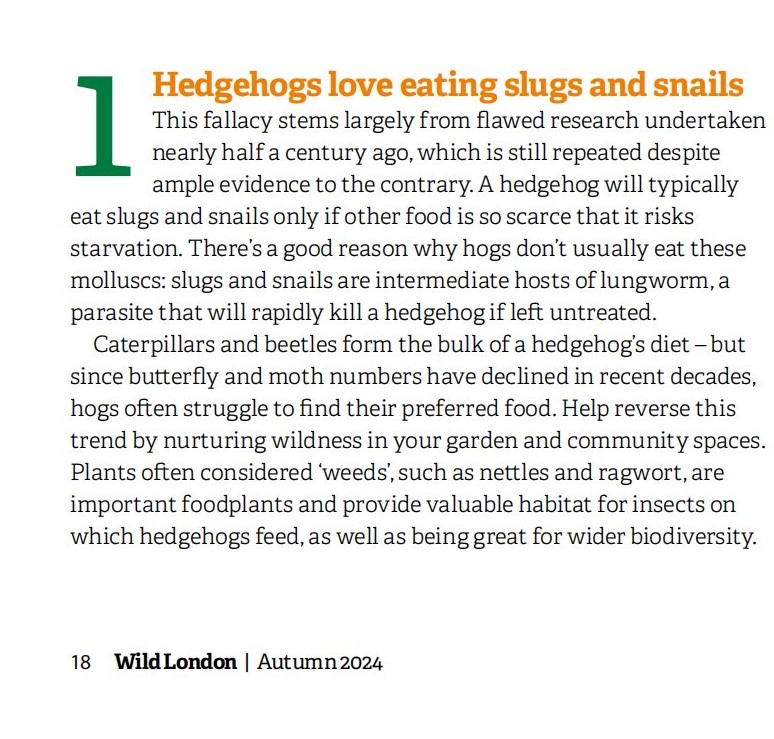
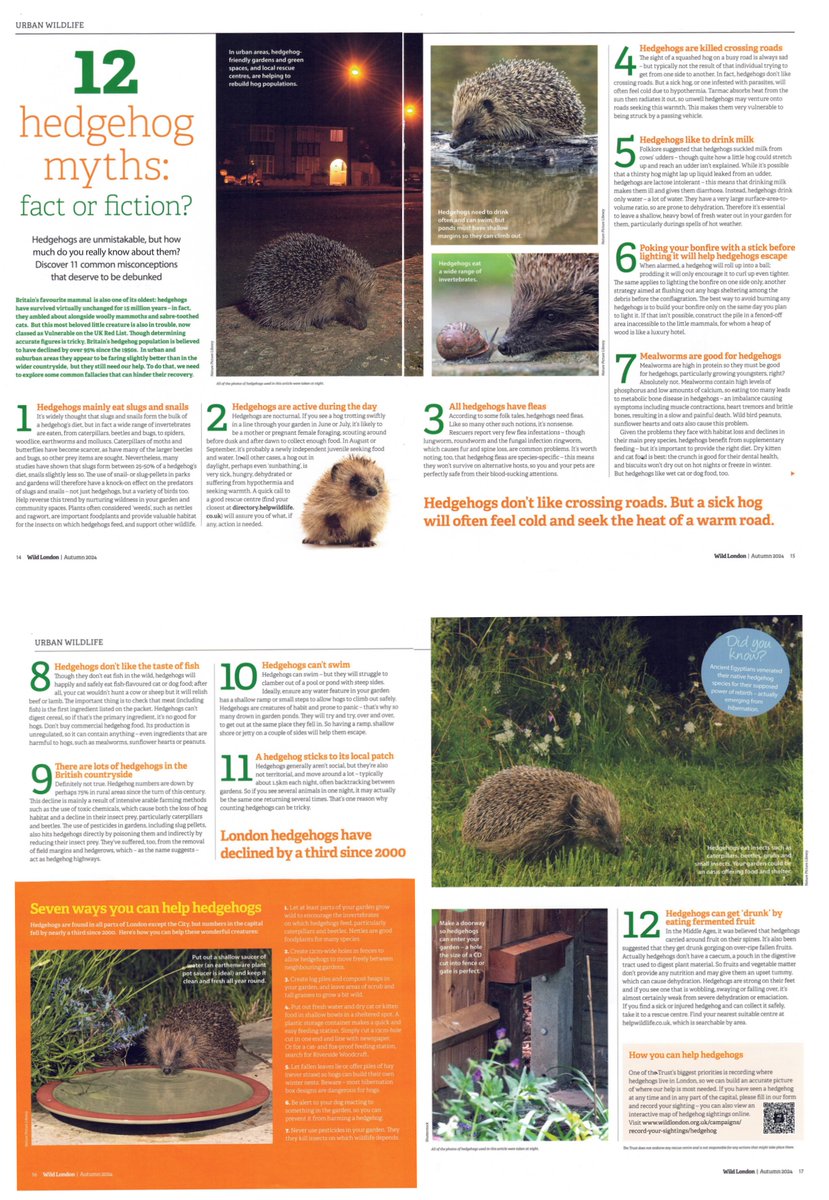
Recently the London Wildlife Trust engaged me as an expert consultant on a 4 page spread article about hedgehog myths.
Many of you have seen my interview, and the draft of the subsequent article.
I was sent this draft (see 1st image below) for approval, to which I agreed.
However, before going to print, an executive at London Wildlife trust decided to do some editing of his own.
It's shocking, I know, and would be unbelievable, if not here in actual print.
I've included two versions of the full article below:
the first draft approved by me and the team at LWT, and the second actual printed version, after executive 'editing'.
It was this same London Wildlife Trust who co-produced the Wild London documentary and "provided expert help and advice".
So now you know.
We're all shocked.
But of course, as usual, it's the poor hedgehogs who will suffer.
People won't provide food for our critically endangered hedgehogs, or bother keeping their garden natural and wild, now they've been told that hedgehogs eat slugs.
After all, there's plenty of them to go round.
Rescues all around the country, who are treating hedgehogs dying of lungworm from being forced through starvation into eating slugs, will feel so demoralised and invalidated.
Like you, I'm furious, frustrated, and bone-wearily saddened.
Please do NOT take hedgehog casualties to a vet.
No matter how lovely, UK vets are a business for domesticated animals and their paying owners only, and are NOT trained in the care of wildlife.
Two more little hedgehogs lost their lives this week because their trusting owners went to a vet for help.
Both hedgehogs found out in the day, one taken to a vet who sprayed him with Frontline for fleas, and told the finder it was fine to release him as he had no injuries. Frontline is harmless to kittens, but toxic to hedgehogs, but the vet wouldn't have known that.
By the time it was dark enough to release this poor sick hedgehog he was sneezing blood, as a result of the Frontline poisoning.
He died in agony.
The second vet told the finder of the out in the day hedgehog that he was fine, just a bit dehydrated, so to take him home and syringe water into his mouth every 3 hours.
Without an autopsy I can't say for sure if this poor boy was killed by the hypothermia he was suffering from, the internal parasites he was loaded with, the shock and stress of being handled so much, or by aspiration (the water being syringe down his throat by inexpert hands and into his lungs, instead of his stomach).
My bet would be on the aspiration.
Both of these tragic victims were out in the day in the sun for one reason only - they were so sick, so near death, that they had become hypothermic. Hypothermia is a result of a dying body's desperate attempt to keep the vital organs alive for as long as possible.
It redirects the blood from the extremities into the heart and lungs, to give them as much oxygen and other critical benefits as possible. This leaves the hedgehog's body feeling cold, so he goes out in the day, desperate for the sun's warmth.
If these two little hedgehogs were taken straight to a rescue, the ONLY place wildlife can be treated, they would have been been given specialist lifesaving first aid treatment, assessed, samples taken, their sickness diagnosed, and treatment given.
Please spread this important information far and wide, to help prevent more needless, tragic deaths.
Thank you.
If the hedgehogs you kindly feed are absent from your garden this week, it's probably because they've found themselves a little patch of caterpillars like this.
This is dining at The Ivy for hedgehogs.🥰
Caterpillars and beetles.
That's what hedgehogs eat.
Not slugs and snails (they carry lungworm - deadly to all mammals; hedgehogs have no magical defence).
And your garden doesn't have to be 'messy' to support our precious wildlife. You can have the best of both worlds.
If you mow a lawn, please leave the edges and the corners. You will get used to seeing it without it annoying you, I promise, and the difference it makes: the divesity of life that will thrive in your more natural, unregimented garden will bring you such joy.
Patches of native, and naturalized or an archaeophyte plants (like the humble and easy to grow nasturtium) will provide food for the caterpillars which hatch from the butterfly eggs, and for the beetles which are the slug's natural predator, helping to balance your garden's ecosystem.
🐝 This #WorldBeeDay, we’re celebrating a buzzing success!
Young people across Wales asked you to pledge to go pesticide-free — and you listened. 💚
Read the latest blog by @NorthWalesWT to see how their campaign took flight & how you can keep can help.
https://t.co/h4y9QLu7GP
We need your hedgehog sightings!
Log your 2025 prickly sightings on the BIG Hedgehog Map! This data helps us understand the distribution of hedgehogs across Britain, and how it changes over time.
https://t.co/qL8gSs1tyn
👀 🦔 🗺️
#HedgehogStreet is jointly run by us & @PTES
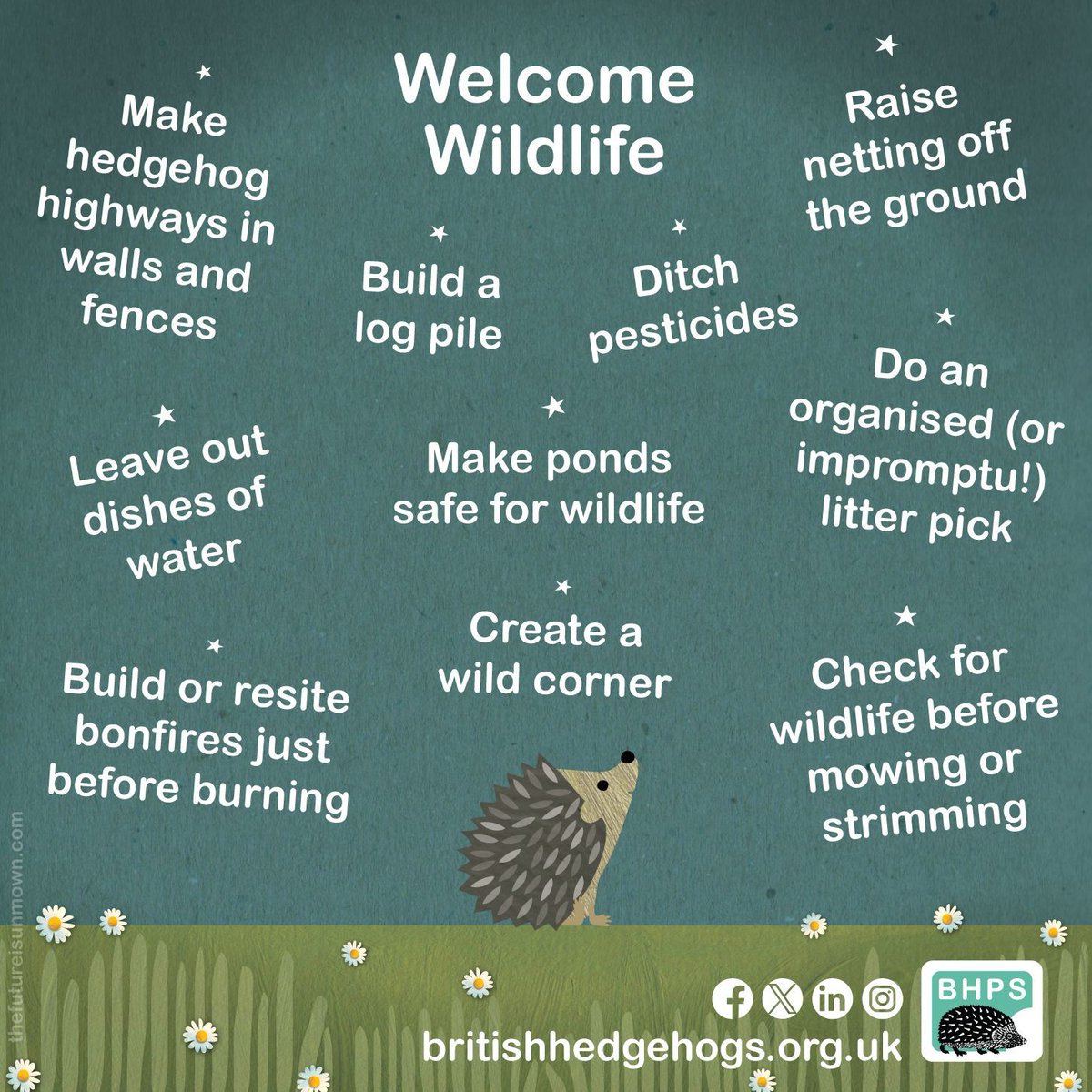
Today, we're reminding you to keep #hedgehogs in mind for the year ahead - there's loads we can do to help our spiky friends out!
From adding #wildlife-friendly features to your garden to spreading the word in your neighbourhood!
#MondayMotivation
Pumpkins:
Halloween is one night.
If you have to waste a food item (and I strongly suggest you don't), please put it out for one night, then dispose of it.
Please DO NOT put it out for the wildlife.
Once you've handled it, cut it, left it out in the open, unrefrigerated, it will not be hygienic or safe for anyone to eat.
Pumpkins are a low-acid vegetable, so once they are cut and left at room temperature, pathogens will rapidly grow on the flesh.
Our precious wildlife do not have any magical properties that protect them against food poisoning.
Additionally, this time of year there are baby hedgehogs around, born too late to find natural food, desperate to eat anything to stop the pain of starvation.
Pumpkin has a laxative affect so it would be particularly cruel to leave it out for starving wildlife to eat in desperation, causing them to lose precious fluids that may make the difference between life and death.
So no matter what you read elsewhere, please DO NOT put your discarded decoration out for the birds or any other wildlife.
It's waste, fit only for the bin.
🆘Please help get this vital message spread far and wide, to save precious lives and prevent suffering.🚨
Two dear little hedgehogs, who were brought into a rescue I mentor, and who were expertly nursed back to health and released, were found dead yesterday.
Poisoned.
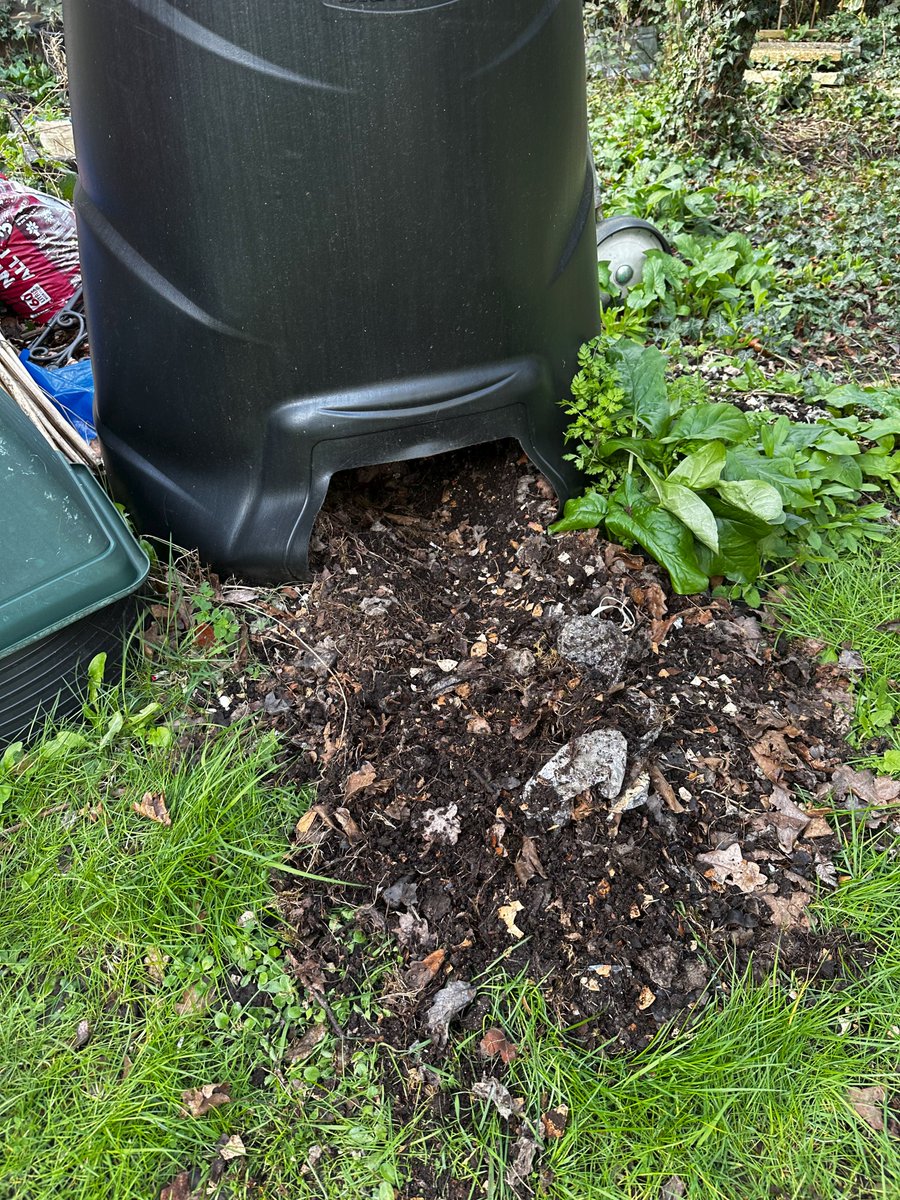
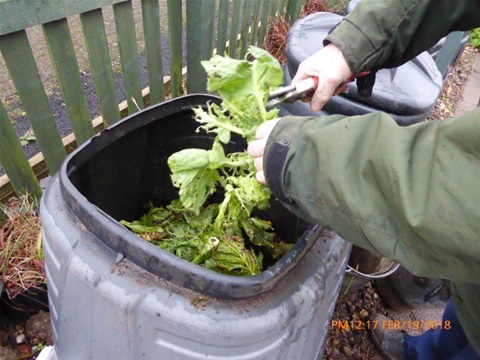
The devastated finder had no idea that compost bins are dangerous to animals (and can be to humans too) and should always be kept closed to prevent animals having access.
Decomposing organic matter in a compost bin can contain fungi which produce neurotoxins called tremorgenic mycotoxins.
These naturally occurring substances are highly toxic to both humans and animals.
Although the contents are deadly, the invertebrates the compost attracts make it very inviting to the insectivore hedgehog, who trusts it as a source of food and shelter.
The compost bin will be particularly attractive during the winter as it can provide a warm dry place to nest.
Very few people realise that consuming even a small amount of compost containing these mycotoxins can be deadly, and there is no cure for this poisoning.
Often people who find unexplained dead hedgehogs in their garden have no idea it was their open compost bin which was to blame.
⚠ If you or your neighbours have a compost bin, please ensure it is safe and inaccessable to wildlife, and your pets.
https://t.co/Xyu6mwJmYH
There are still lots of late born hoglets being seen out in the day.
Please remember these little babies are sick.
It's the parasites living inside them that have driven them out in the day.
No amount of warmth, love, or food will fix them.
If you keep them they will die.
They need medicines and experienced nursing from a knowledgeable rescue (never a vet).
And every minute of delay reduces their chance of survival, even when finally in the very best rescue.
So please be their ambulance, not their jailor.
Don't just add captivity to their list of sufferings. Give these trusting little babies a chance to live and take them straight to a rescue.
This site has a directory of UK wildlife rescues: https://t.co/e8RUeVjOlV
If your local rescue is full, please try others, there is ALWAYS a space. It may not be as close as you'd like, but it's just one journey and will save a life.
https://t.co/oPl5yHjZEK
When you see a hedgehog out in the day time please remember he's been sick for a long time before taking this last desperate step.
He's dying.
IT'S AN EMERGENCY.
Take him indoors in the warmth and ring a rescue IMMEDIATELY.
Find your nearest rescue here: https://t.co/4aVuxNdtSI
Tidying the garden? Please don't cut back the ivy. Right now in the UK, it will be providing a vital late season pitstop for pollinating insects like bees, butterflies, hoverflies, moths. Then in winter, this native plant will offer berries for the birds.
Please please please while out and about, if you see a sheep like this, roll her over. You will save her life…
We call this kessed in Cumbria, but it has lots of names. Fact is, if she’s on her back, she shouldn’t be. Thanks and please share…
With an unnatural mild spell due this weekend, I beg you not to 'tidy' your garden.
Remember it's only Feb and the insects the hedgehogs and baby birds will depend on in the spring are overwintering in larvae stage now.
If you disturb them, our hogs and birds die of starvation.
These vulnerable little animals are in trouble. They're red-listed, on the edge of extinction.
We simply can't tolerate this.
Please help by leaving your garden as wild as possible so their food (beetles and caterpillars) can thrive.
For lifesaving help: https://t.co/lhCKpyhxOY
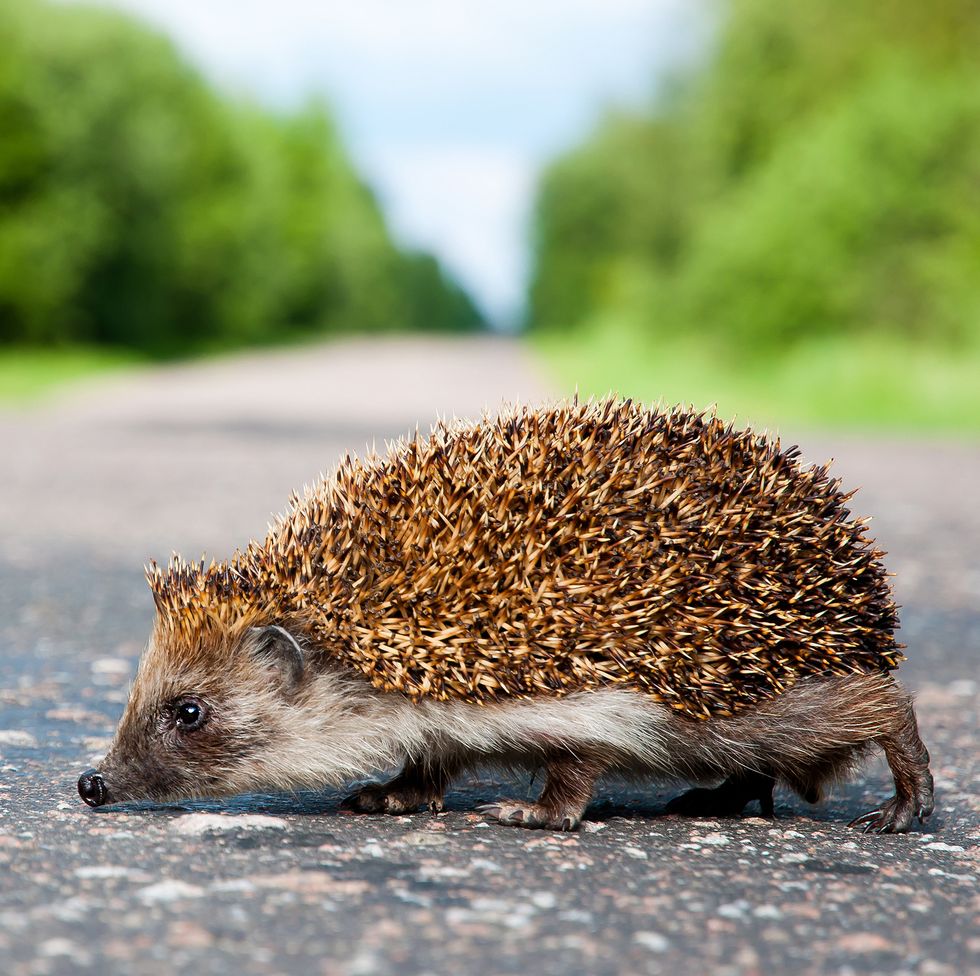
A hedgehog out in the day is seriously ill and needs 𝘂𝗿𝗴𝗲𝗻𝘁 treatment from a rescue (not a vet).
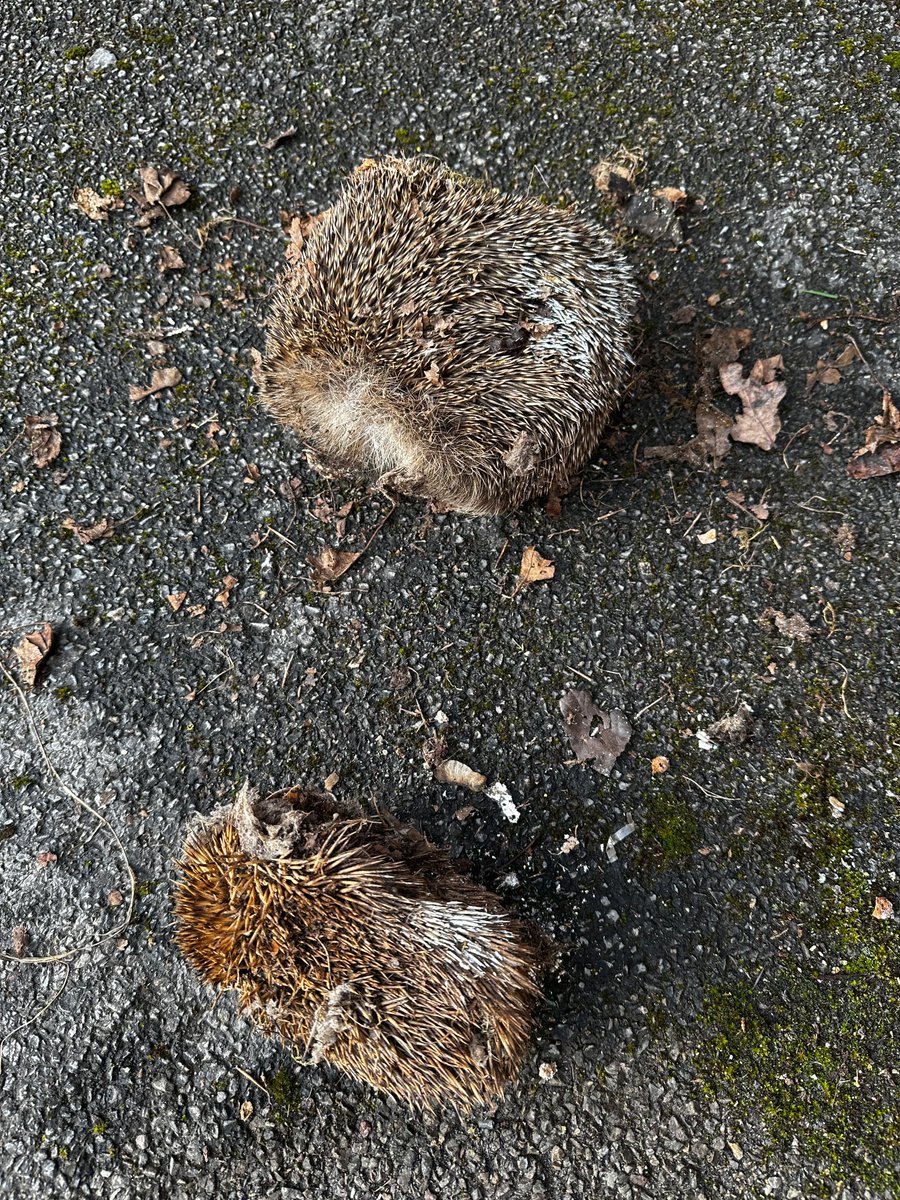
They've become hypothermic so are seeking warmth and are often seen on roads, car parks, paving and paths as these surfaces hold the the sun's heat longer than soil or grass.
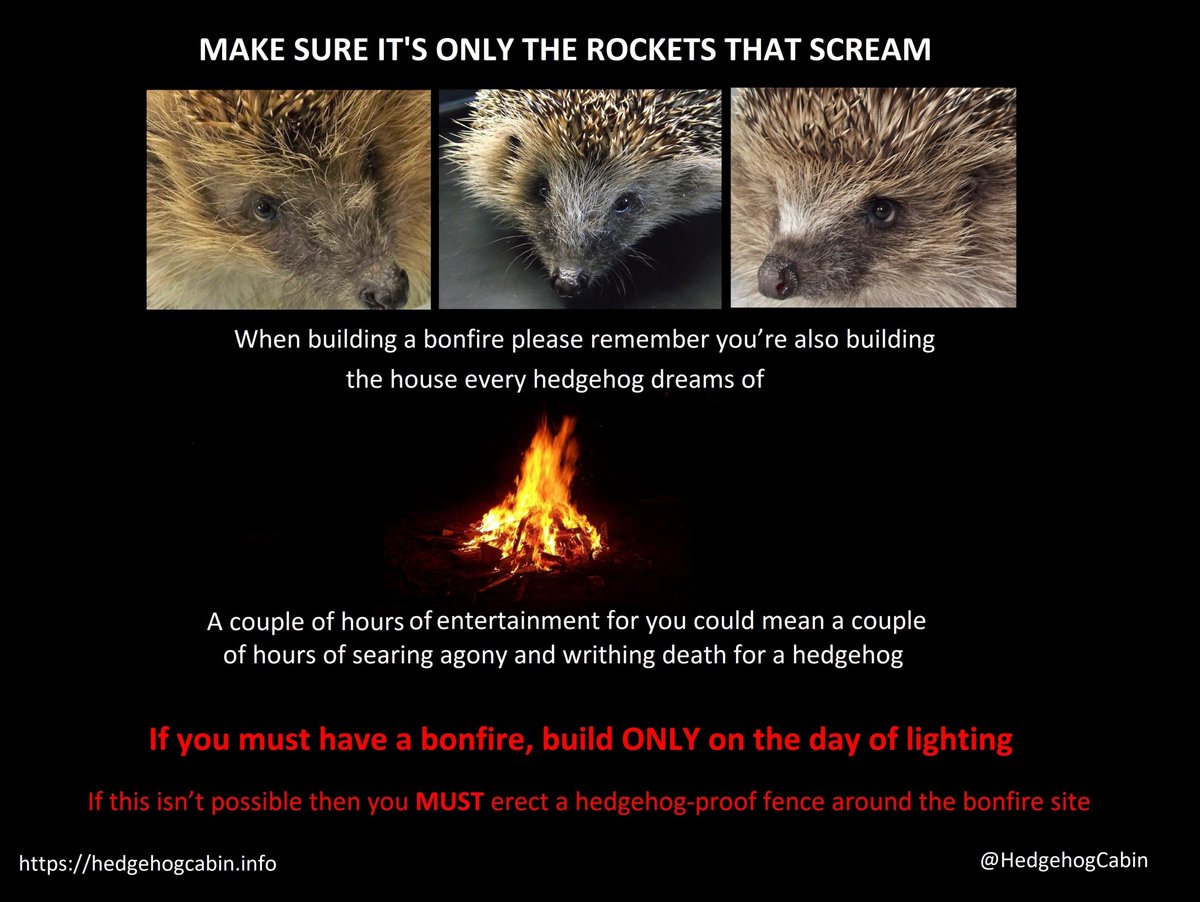
If you are starting to build your bonfire for next week, please remember NOT to build it on the spot where it will be lit. You need to move it the day you light it, or fence off the building area NOW, to prevent wildlife deaths.
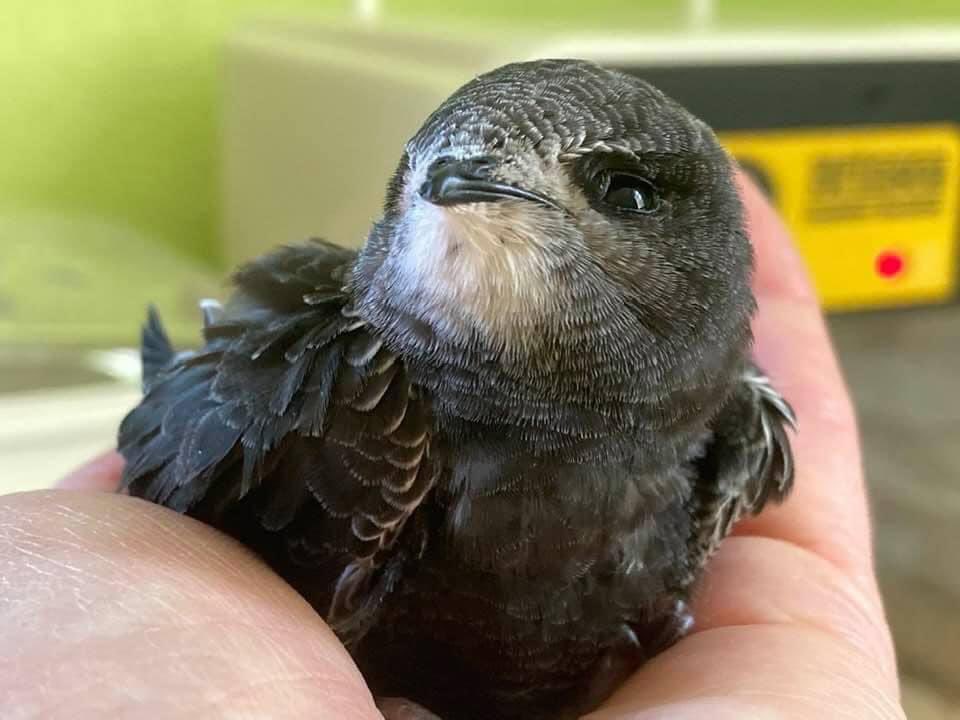
❗ What to do when finding a grounded swift THREAD❗RETWEET
If you find a grounded swift, please never throw the bird in the air or hold them out the window.