Google doing with Data Center energy the right way:
- pioneering flexible DC load
- BYO capacity, including VPPs
- co-locating new renewables
- funding FOAK new clean firm
- energy (& water) grants/commitments for local communities
⚡️🚀
VPPs (thermostats, batteries, EVs) 🤝 Data Centers
🍰Data Centers esp $GOOG want fast clean power This is the fastest!
🎂The icing: nearby communities (resi, bizs, schools) benefit selling to data centers via VPPs
🍒The cherry: higher grid utilization = lower costs for all!
ON DYNAMIC PRICING
people HATE unpredictable prices they don't understand/control
this is why solar is popular, even if it's not always cheaper (esp vs opp cost of $ in the market)
imo dynamic prices ONLY work when a retail energy provider can turn this complexity into savings
Today on Volts: how do you coordinate the behavior of millions of distributed energy devices so that they work to the benefit of the larger grid? My guest today argues that real-time, dynamic retail prices -- communicated directly to devices -- are the customer-friendly answer.
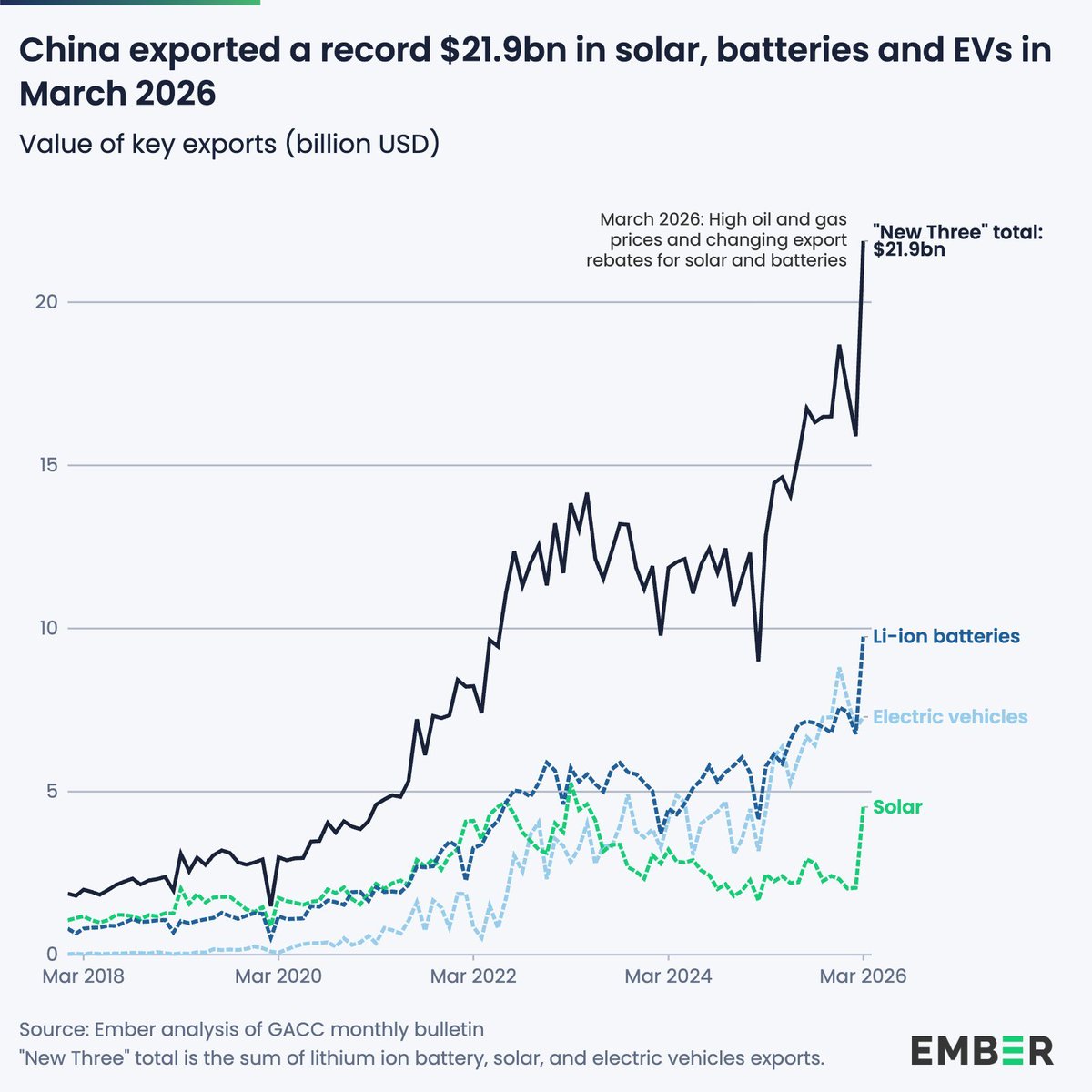
For anyone wondering whether the fossil fuel crisis in the Middle East is driving interest in clean energy technologies:
China's exports of batteries, EVs and solar products shot up in March to $21.9 billion!
This is an all-time record and a 70% increase over March 2025.
the story of today
THE GRID: im nearing end of life, run on 50yr old antiquated tech, move slow, and everything is expensive
THE HYPERSCALERS: i have infinite money, love trying new tech, and want to go fast
THE PUBLIC: GO AWAY!
?!????!?!??!?!??!?!?!??!?!?!
@apoorv_bh89 People also somehow forget that luddites' lives got significantly worse with the industrial revolution
There are valid reasons why people are scared!
We need a series of efforts to make sure
- the *actual outcomes* are good (most important)
- the PR reflect sthis
both at the
- hyperlocal
- national/global
scales
Troubling that the industry driving current+future economic growth is widely distrusted at the local level (datacenters) and generally (AI overall)
I don't know if this is taken seriously enough across the industry
In Pennsylvania this weekend:
1) Liberal family friends are very concerned about data centers. “What’s happening is horrible.”
2) Drove through very red rural areas for a few hours and “Stop Data Centers” signs were everywhere.
This may be the most unifying issue in America.
@Compounds365@tylerhnorris vs today is likely affected by lots of other factors including competition, alternatives, etc, so cannot speculate
but higher vs without intelligent pricing or else it wouldn't happen! uber would have far less net revenue w/o surge pricing... same dynamic, right?
today's cloud prices are set for humans to read and agree to.
in 5 years (less?) it'll be agents setting prices for agents with
- lots of different tiers
- dynamic pricing
- machine-to-machien negotiations
@tylerhnorris https://t.co/CMn1Ju8C0Q it's happening!
it'll get even more fragmented. today's prices/SLAs are meant for humans to read and agree to.
in 5 years it'll be machines setting prices for machines with lots of different tiers, dynamic pricing, and automatic negotiations
predictions:
1. batch inference costs go down even faster than costs generally
2. more batch tiers evolve. i.e. 15% off with 1hr SLO, -25% w/ 4hr SLO
3. older GPUs will be used more for batch inference processes: slower & less power efficient... perfect for curtailment
@JonathanClayba1 that is from https://t.co/EgdoqwdVUl - yes, it's locational marginal price. you can see the grid congestion pretty nicely as electrons are cheaper near solar/wind
but this is even more fun as it shows the price swings and energy mix over time https://t.co/hZ0pJCl294
The grid is really expensive!
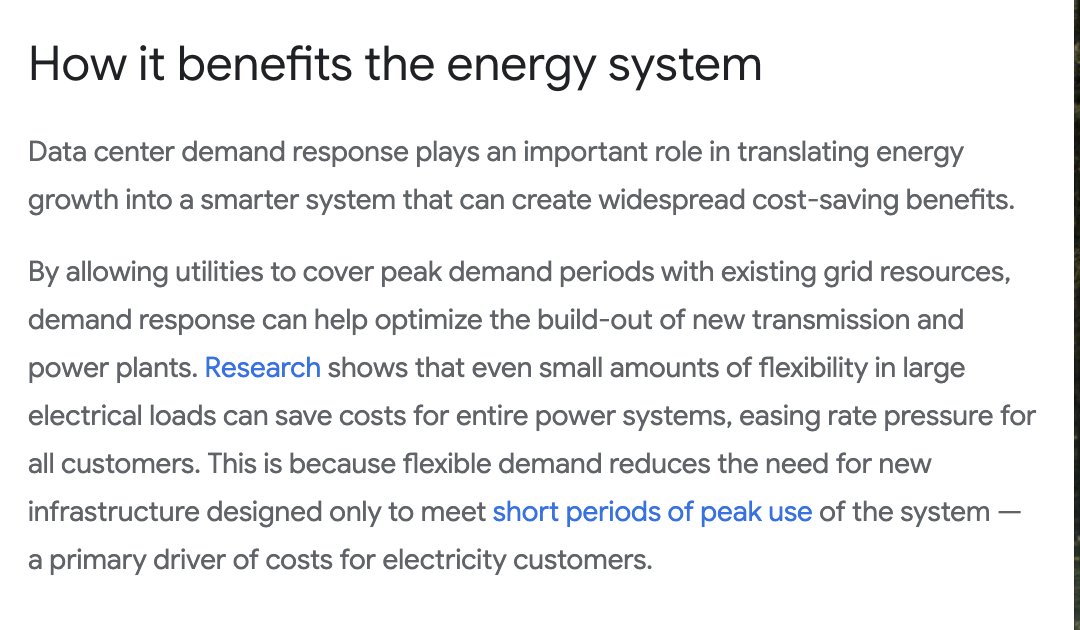
Google's flex demand contracts show how data centers can help reduce costs for others by better utilizing costly existing grid infra.
1GW is a pretty big number... and it'll keep going up!
Proud of this company!
Google is now the first cloud provider to integrate 1 GW of flexible demand into long-term utility contracts. Our ability to shift or reduce our energy demand when it’s needed can help utility companies balance supply/ demand and plan for future capacity needs.
This is a big milestone for responsible data center growth and helps keep costs lower for local communities.
https://t.co/yagskz6Wq7