《13 年后,我如何用 Go 写 HTTP 服务》
https://t.co/vu8jm4J7KB
一篇 Go 语言方面的最佳实践类��章,只涉及标准库中的 HTTP 基建,不涉及其他第三方 Web 框架或库。作者有十余年的 Go 编程经验,经验丰富。
文章除了展示具体的代码编写与组织技巧,也谈了一些“为什么如此处理”背后的设计考量,包括:长参数列表的函数、请求编解码处理、用闭包结合 http.Handler、E2E 测试和单元测试,等等。透过这些考量,能感受到作者多年经验与智慧的沉淀。
作为一个极少用 Go 写 HTTP 服务的人,我也读得津津有味。
Dive into Rust's ownership model. Discover how it manages memory with stack and heap, ensuring safety and efficiency. Great read for devs!
{ author: @cudidotdev } #DEVCommunity#RustLang
https://t.co/sStJ50Ya2B
Learn how to build a music streaming service with Python, Golang, and React, focusing on system design and anti-piracy measures.
{ author: @koladev32 } #DEVCommunity#GoLang
https://t.co/LMr4luYKrg
Top most interesting AI papers I read this week:
1/ SAM 2: An open unified model for real-time, promptable object segmentation in images and videos. SAM 2 can be applied to unseen visual content without the need for custom adaptation. To enable accurate mask prediction in videos, a memory mechanism is introduced to store information on the object and previous interactions. The memory module also allows real-time processing of arbitrarily long videos. SAM2 significantly outperforms previous approaches on interactive video segmentation across 17 zero-shot video datasets while requiring three times fewer human-in-the-loop interactions. https://t.co/ZAhTdhsi5b
2/ Structured Generation Limits Reasoning: Investigates if structured generation can impact an LLM’s reasoning and domain knowledge comprehensive capabilities. Observes that there is a significant decline in LLM’s reasoning abilities when applying format restrictions compared to free-form responses. This degradation effect is further amplified when applying stricter format constraints to reasoning tasks. https://t.co/45UFbSkLpw
3/ From LLMs to LLM-based Agents for Sofware Engineering: A survey paper on current practices and solutions for LLM-based agents for software engineering. Covers important topics such as requirement engineering, code generation, test generation, and autonomous decision making. It also includes benchmarks, metrics, and models used in different software engineering applications. https://t.co/O6QQTK9Z9I
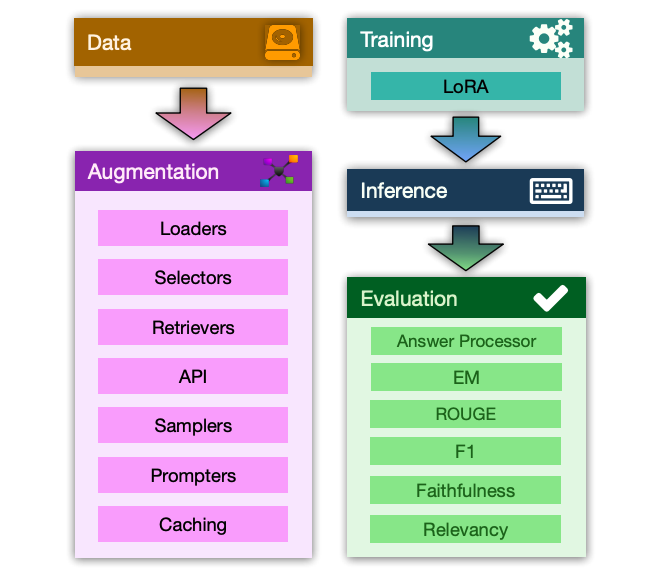
4/ Enhancing LLMs for RAG - Introduces RAGFoundry, an open-source framework for augmented LLMs for RAG use cases. It supports data creation, training, inference, and evaluation. One useful application is the creation of data-augmented datasets for tuning and evaluating LLMs in RAG settings. https://t.co/kqoCkcrJch
5/ Self-Taught Evaluators: An approach to improve model-based evaluators using synthetic training data only. It first generates contrasting outputs (good and bad model responses) and trains an LLM-as-a-Judge to produce reasoning traces and final judgments. The self-improvement scheme repeats the training process in an iterative way using its improved predictions. Claims to outperform LLM-judges such as GPT-4 and match top-performing reward models trained on labeled examples. It improves a strong LLM (Llama3-70BInstruct) from 75.4 to 88.3 (88.7 with majority vote) on RewardBench. https://t.co/GIPjfyrAId
There are a few more exciting papers that I will highlight tomorrow in the Top ML Papers of the Week @dair_ai. Stay tuned!
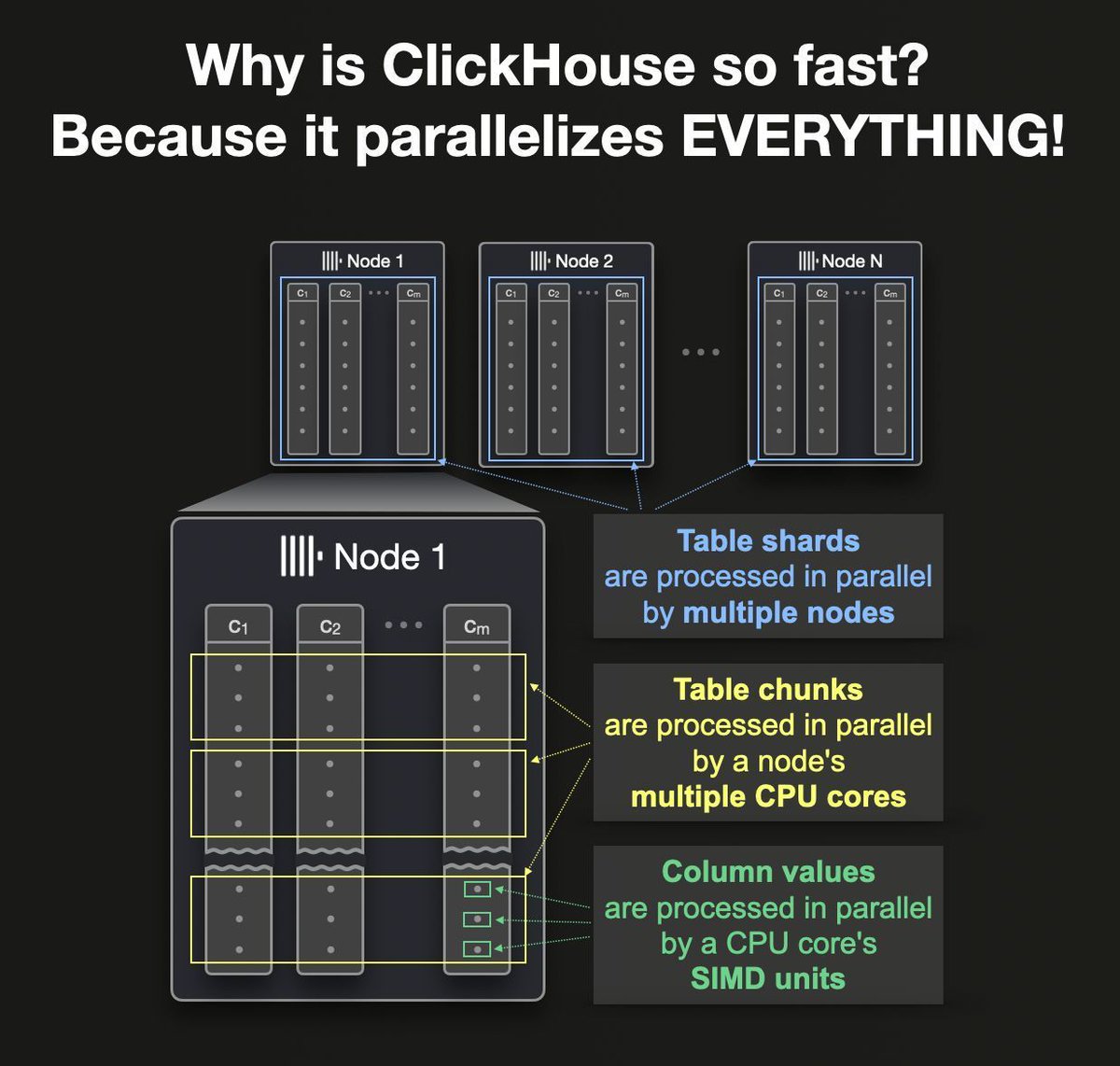
At ClickHouse, super-fast aggregations are our thing. But how does it work under the hood? 🥷
By parallelizing absolutely EVERYTHING! 🚀🚀🚀 and in today’s blog, we explore those parallelization techniques in depth 🤓
https://t.co/1Ccb0e9Bms
1/7 Fine tuning in Apple MLX, GGUF conversion and inference in @ollama ? Yes you can! 🔥🔥🔥
Here the steps to follow:
- convert a model from hf
- fine tune
- fuse
- llama.cpp https://t.co/RLw8jCP4mS & quantize
- ollama modelfile & create
- you are ready to go! HAVE FUN!