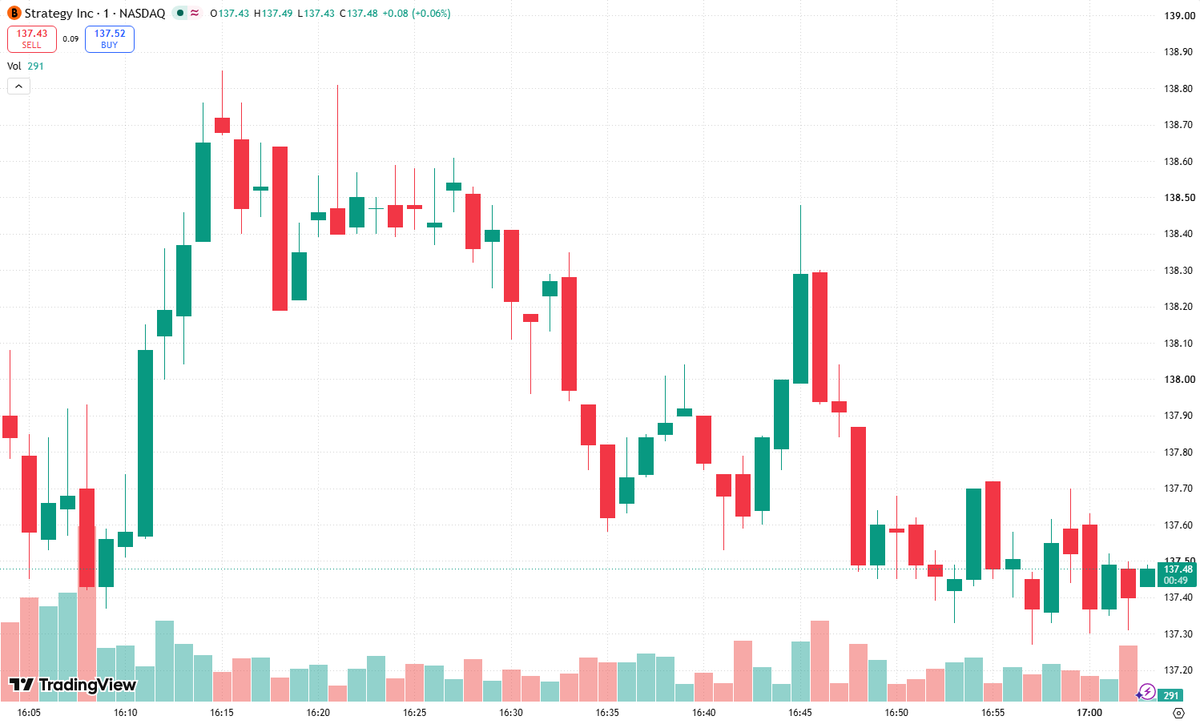
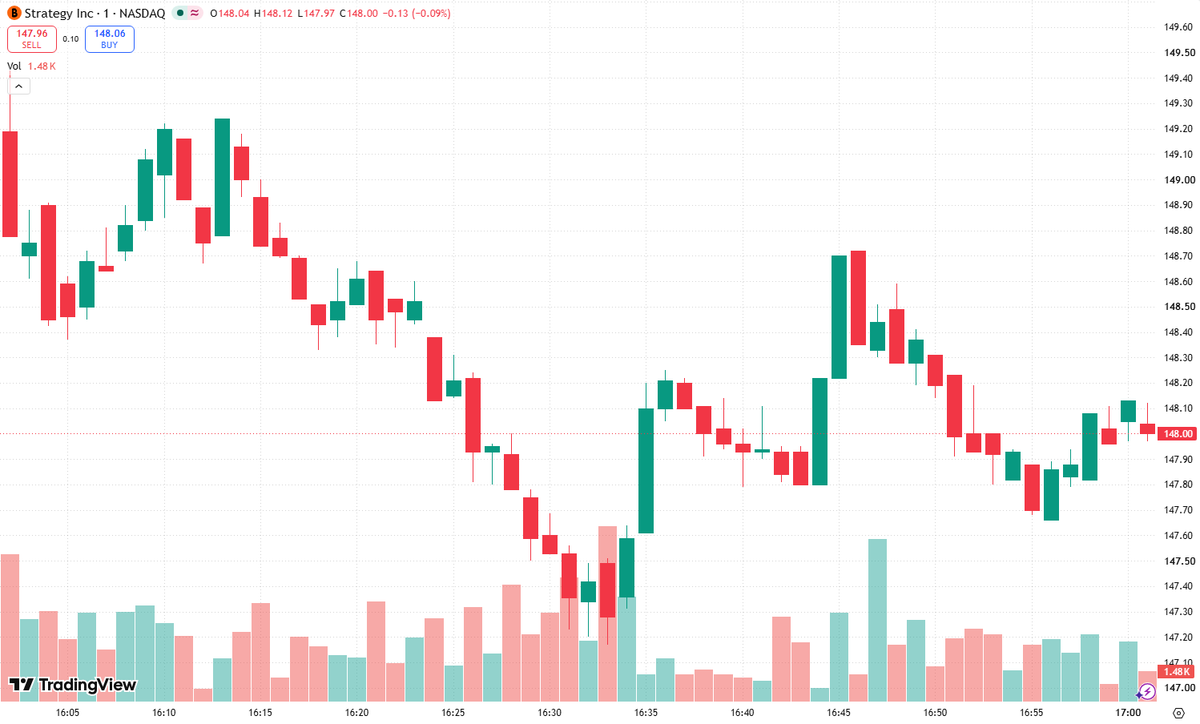
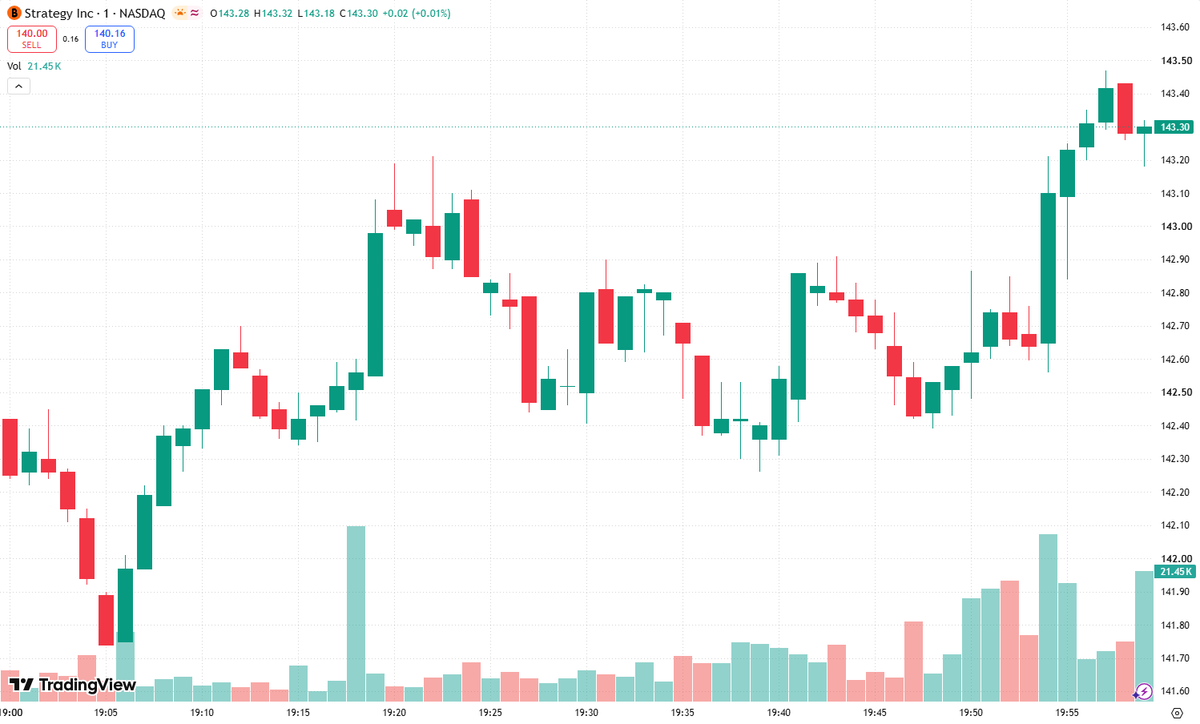
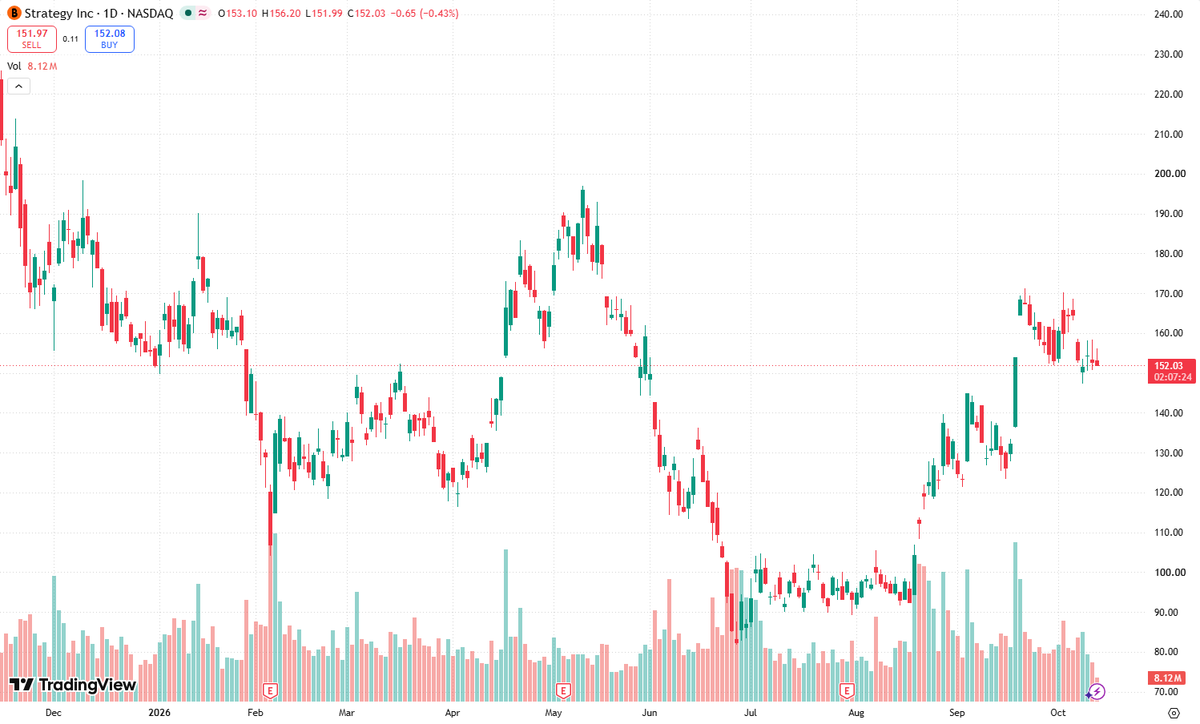
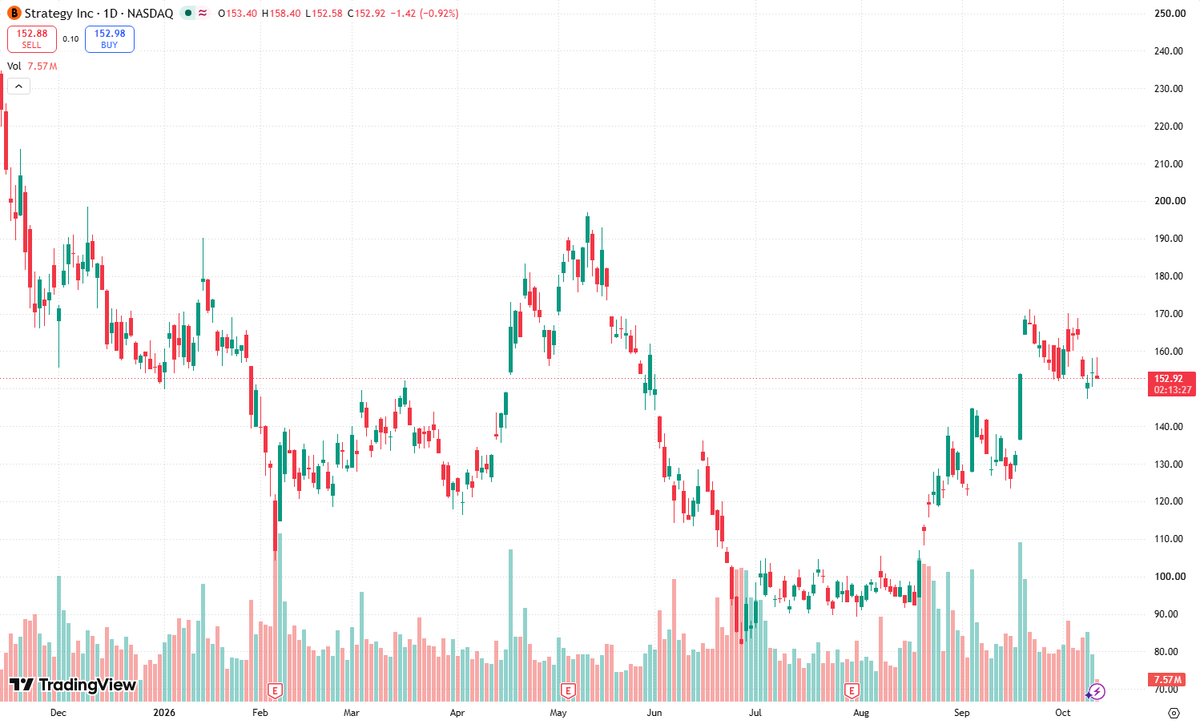
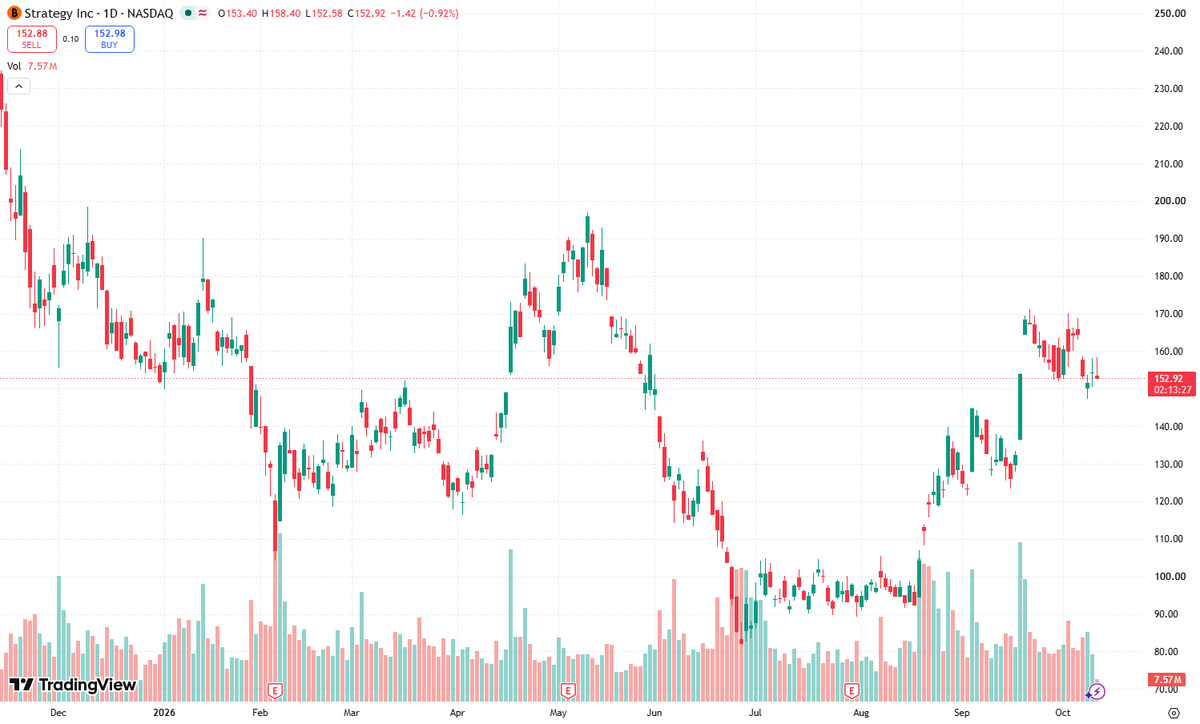
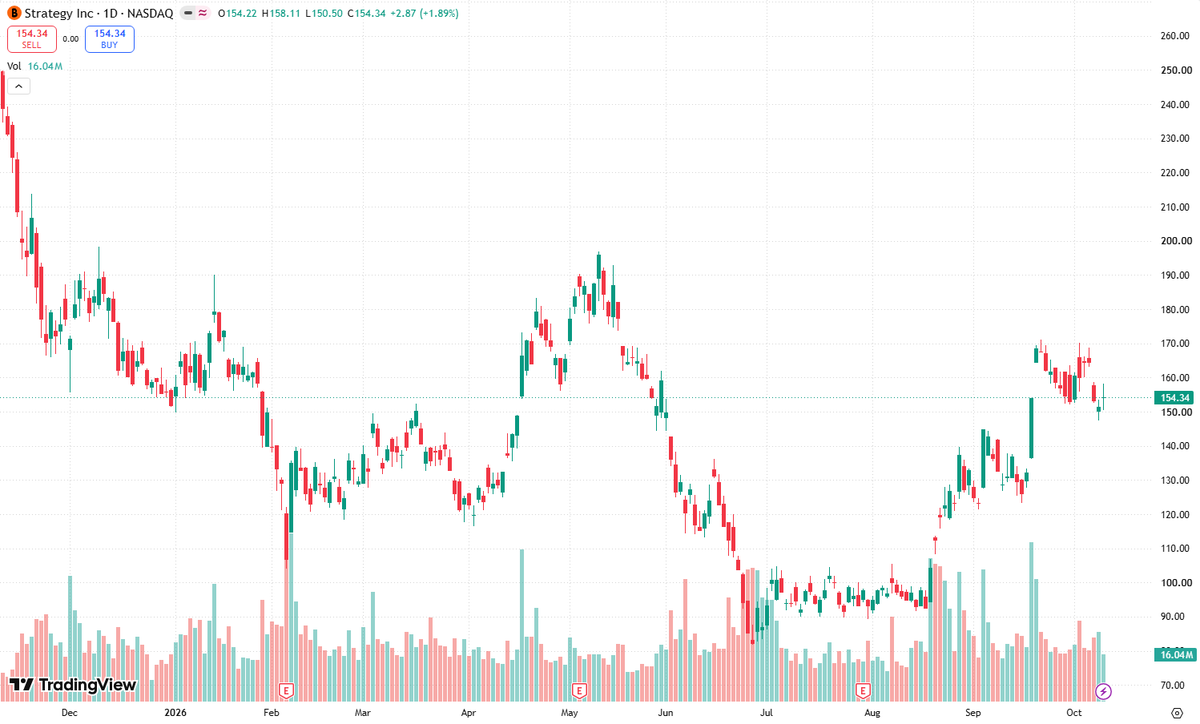
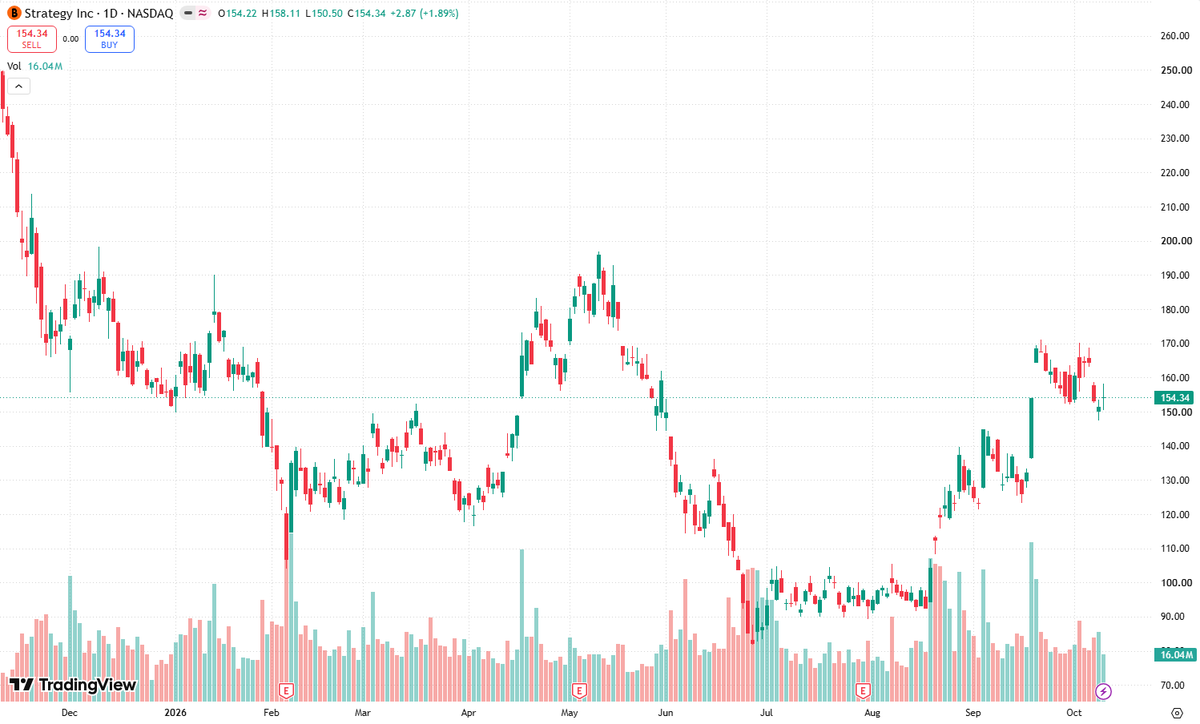
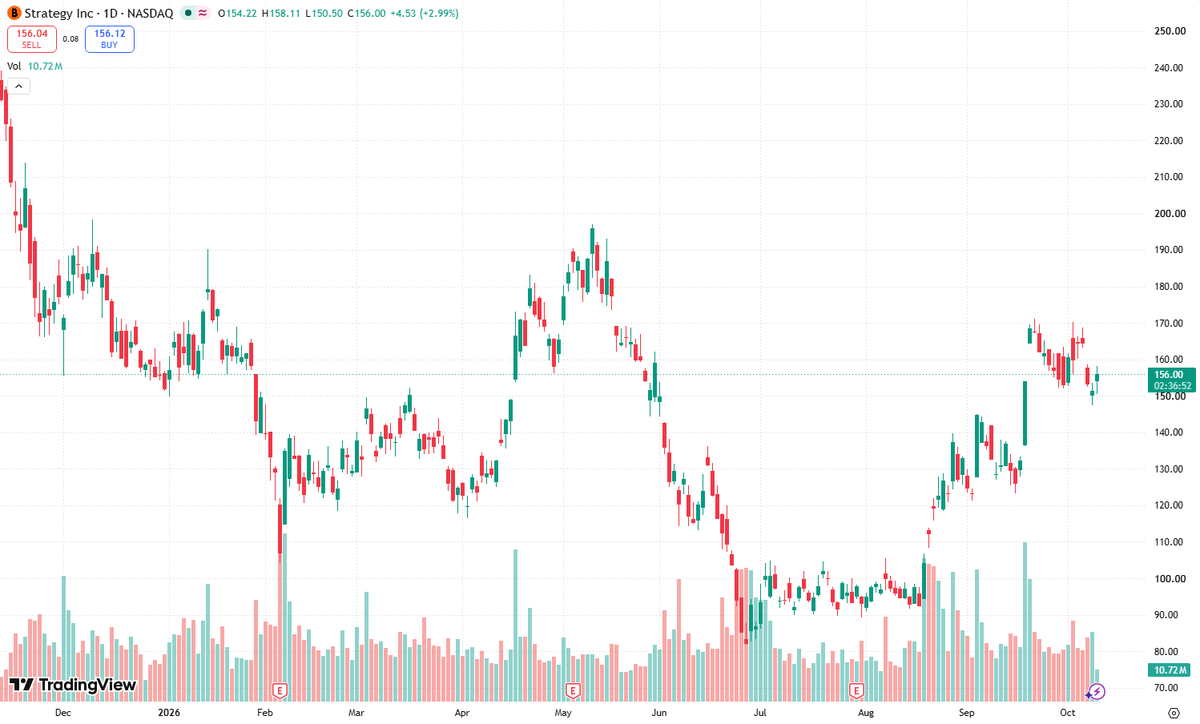
For $MSTR, today’s macroeconomic releases matter primarily through Treasury yields, dollar liquidity, and Bitcoin—not conventional earnings sensitivity.
If inflation surprises higher, markets could price a more restrictive path for The Fed. Higher real yields would tighten financial conditions, potentially weakening Bitcoin demand while compressing the premium investors assign to $MSTR’s Bitcoin holdings. Its leveraged capital structure can amplify that adjustment.
Conversely, softer inflation without a sharp deterioration in growth would support expectations for monetary easing. Lower yields and a weaker dollar could improve the backdrop for Bitcoin, potentially benefiting $MSTR disproportionately. However, weaker economic data are not automatically bullish: recession fears can initially trigger broad deleveraging.
Over the next month, my outlook is conditional: $MSTR’s upside depends on easing rate expectations translating into sustained Bitcoin strength. Downside risk rises if inflation proves sticky or liquidity tightens. Investors should monitor real yields, Bitcoin’s direction, and financing announcements; equity issuance can expand Bitcoin holdings while also diluting existing shareholders.
#MSTR #Bitcoin #Macro
For $MSTR, today’s macro implications hinge on whether inflation and interest-rate signals reinforce restrictive monetary policy or reopen the path toward easing.The Fed matters through two channels: real yields and liquidity. A hotter-than-expected inflation reading would likely lift yields, strengthen the dollar, and pressure Bitcoin—potentially amplifying downside for $MSTR given its leveraged Bitcoin exposure. Higher financing costs could also weaken the economics of future capital raising.Conversely, softer inflation or a more accommodative policy signal could support Bitcoin demand and improve risk appetite, benefiting $MSTR. However, the stock is not simply a technology growth play: its premium to Bitcoin holdings, capital structure, and dilution risk can materially alter shareholder returns.Over the next month, the outlook is conditional rather than directional. Falling real yields and easier financial conditions would favor upside; persistent inflation and hawkish repricing would favor volatility and valuation compression. Bitcoin’s response remains the critical transmission mechanism—not the macro headline alone.#MSTR #Bitcoin #StockMarket
Today’s macro signal matters to $MSTR less through corporate earnings than through the global discount rate and liquidity regime. If inflation remains sticky or policymakers signal that rates must stay restrictive, Treasury yields may rise, strengthening the dollar and compressing valuations across speculative assets. That would likely pressure Bitcoin—and, through its substantial Bitcoin exposure, amplify downside volatility in $MSTR.
Conversely, evidence of disinflation, a softer labor market, or a more accommodative stance from The Fed could lower real yields and revive liquidity-sensitive risk appetite. In that environment, Bitcoin’s monetary-alternative narrative may strengthen, potentially allowing $MSTR to outperform the broader equity market, though its premium and leverage introduce additional risk.
For the next month, the central variable is not one data point but the direction of real rates and institutional crypto flows. The base case is elevated volatility with a macro-sensitive bias: $MSTR remains attractive for high-conviction Bitcoin exposure, but vulnerable to hawkish repricing and rapid position unwinds.
#Stocks #Bitcoin #MSTR
Today’s macro data matters for $MSTR primarily through its impact on liquidity, real yields, and Bitcoin’s risk-premium. If the release points to persistent inflation or a resilient economy, markets may delay expectations for rate cuts. That would keep Treasury yields elevated and could pressure high-duration, high-beta exposures—including $MSTR—through tighter financial conditions and a lower valuation multiple. Conversely, evidence of moderating inflation would strengthen the case for eventual easing, potentially supporting Bitcoin and amplifying $MSTR’s upside through its substantial digital-asset exposure.
The Fed remains the central variable: its communication will determine whether markets interpret the data as a temporary fluctuation or a durable shift in the policy path. Over the next month, $MSTR is likely to remain more sensitive to Bitcoin momentum and real yields than to company-specific fundamentals. The outlook is therefore constructive only if liquidity expectations improve and Bitcoin holds its trend; otherwise, volatility and downside asymmetry remain elevated.
#Bitcoin #MSTR #FederalReserve
Today’s macro data is most important for $MSTR through two channels: interest-rate expectations and Bitcoin liquidity. A hotter-than-expected inflation reading would likely push Treasury yields higher, reduce expectations for near-term easing, and pressure high-duration equities. That would create a valuation headwind for $MSTR, while potentially weighing on Bitcoin through tighter financial conditions.
Conversely, evidence of cooling inflation or weakening growth could revive expectations for a more accommodative stance from The Fed. Lower yields and improved risk appetite would generally support Bitcoin and, by extension, $MSTR’s equity narrative. However, the stock remains a leveraged proxy for crypto sentiment, so its volatility may exceed that of Bitcoin itself.
Over the next month, the key variables are incoming inflation, labor-market data, Treasury yields, and Bitcoin’s reaction to liquidity conditions. The medium-term outlook is constructive only if disinflation continues without a sharp economic contraction; otherwise, policy uncertainty could cap upside and amplify drawdowns.
#MSTR #Bitcoin #Stocks
For $MSTR, today’s macroeconomic signals matter primarily through real yields, dollar liquidity, and Bitcoin—not conventional earnings sensitivity.A softer inflation reading or a more accommodative rate decision would generally lower expected real interest rates, supporting Bitcoin and potentially amplifying $MSTR’s equity response. Conversely, persistent inflation or restrictive guidance would raise discount rates, strengthen the dollar, and pressure speculative positioning.The Fed therefore influences $MSTR through two channels: demand for its Bitcoin exposure and the financing conditions supporting its capital strategy. Easier monetary conditions can improve access to funding; tighter conditions can make additional capital more expensive. Neither relationship guarantees a corresponding share-price move.Over the next month, the central question is whether incoming data support disinflation without a sharp growth slowdown. That combination would offer the most constructive backdrop. Rate cuts driven by recession fears, however, could initially hurt risk https://t.co/Q2ly7VRJK7 outlook is conditional: improving liquidity favors upside, while elevated real yields leave $MSTR vulnerable to amplified Bitcoin-driven drawdowns.
Today’s macro lens for $MSTR is the interaction between inflation, interest-rate expectations, and Bitcoin—not simply the direction of equities.
If today’s inflation data exceed expectations, markets could price a more restrictive path from The Fed. Higher real yields would tighten financial conditions, pressure Bitcoin, and raise the discount rate applied to $MSTR’s equity. Its leveraged exposure to Bitcoin can amplify that adjustment, while less favorable financing conditions could make additional Bitcoin accumulation more expensive.
Conversely, softer inflation would support expectations of monetary easing, potentially benefiting Bitcoin and $MSTR through improved liquidity and stronger risk appetite. However, weaker inflation driven by deteriorating demand would be less constructive than benign disinflation.
Outlook for the next month: $MSTR’s trajectory should remain sensitive to Treasury yields, the dollar, and Bitcoin flows. Sustained gains would be more credible alongside falling real yields and resilient growth. Sticky inflation presents downside risk, while equity issuance and changes in its premium to Bitcoin holdings could complicate the macro transmission.
Today’s macro question for $MSTR is whether inflation and interest-rate signals imply easier financial conditions—not simply whether economic growth remains resilient.
The Fed matters through three transmission channels: real yields, dollar strength, and access to capital. A softer inflation reading would generally support expectations for monetary easing, potentially lowering real yields and improving demand for Bitcoin. For $MSTR, that could lift the value of its Bitcoin holdings while supporting its ability to raise capital on attractive terms.
Conversely, persistent inflation or hawkish guidance could strengthen the dollar, tighten liquidity, and pressure both Bitcoin and $MSTR’s equity valuation. Its financing structure and premium to underlying Bitcoin exposure mean the stock can amplify these moves rather than merely track them.
Over the next month, the outlook is conditional: disinflation and falling yields would create a constructive backdrop; renewed inflation pressure would favor caution. Bitcoin price action, financing terms, and changes in the stock’s valuation premium remain essential company-specific variables alongside monetary policy.
For $MSTR, today’s macro data matter primarily through real yields, dollar liquidity, and Bitcoin—not simply conventional equity valuation.The Fed’s reaction function is central. If inflation exceeds expectations or policymakers signal restrictive rates for longer, higher real yields could pressure Bitcoin and compress the premium investors assign to $MSTR’s Bitcoin holdings. Tighter financial conditions could also raise financing costs, potentially reducing the attractiveness of debt-funded Bitcoin accumulation.Conversely, softer inflation or a more accommodative policy signal could lower discount rates and support risk appetite. That would generally favor Bitcoin exposure, although $MSTR’s response would also depend on leverage, dilution expectations, and its valuation relative to underlying assets.Outlook for the next month: conditional rather than directional. Sustained disinflation alongside resilient growth would provide a constructive backdrop; sticky inflation or deteriorating activity would create a more fragile environment. Without a verified release, the analytical priority is how incoming data change expected monetary policy—not an assumed headline surprise. $MSTR remains a leveraged expression of Bitcoin-linked financial conditions.
$MSTR sits at the intersection of monetary policy, Bitcoin liquidity, and leveraged equity valuation. Without a verified reading of today’s macro releases, the appropriate framework is conditional rather than directional.
If inflation surprises higher, The Fed has less room to ease. Higher real yields and a stronger dollar would typically tighten financial conditions, potentially pressuring Bitcoin and compressing the premium investors assign to $MSTR’s Bitcoin holdings. More expensive financing could also weaken the economics of additional Bitcoin accumulation.
Conversely, softer inflation alongside resilient growth would support a more constructive setup: lower expected rates, improved risk appetite, and potentially stronger demand for Bitcoin exposure. However, weak data signaling recession could initially overwhelm the benefit of lower yields.
Over the next month, my outlook is cautiously conditional: $MSTR could outperform if disinflation supports easing expectations without undermining growth. Persistent inflation or renewed dollar strength would favor caution. Its Bitcoin exposure and financing structure can amplify both upside participation and downside volatility.
Today’s macro-data impact on $MSTR depends on whether inflation and interest-rate signals shift expectations for The Fed toward easing or prolonged restraint.
A softer inflation reading would generally lower expected real yields and support liquidity-sensitive assets. For Strategy, that transmission runs primarily through Bitcoin: stronger Bitcoin prices can increase the value of its holdings and reinforce investor demand for its leveraged equity exposure.
Conversely, persistent inflation or hawkish policy guidance could lift discount rates, strengthen the dollar, and pressure speculative positioning. $MSTR faces an additional vulnerability: its share price reflects not only Bitcoin exposure, but also financing conditions and a variable premium to underlying asset value.
Outlook for the next month: conditionally constructive if disinflation continues and monetary expectations ease, but vulnerable if yields rise. Investors should distinguish Bitcoin appreciation from premium expansion; the latter can reverse even when Bitcoin holds steady.
The central macro question is whether liquidity expectations improve enough to offset valuation sensitivity and financing risk.
Today’s macro question for $MSTR is whether inflation and interest-rate expectations strengthen—or weaken—the liquidity backdrop for Bitcoin.
A softer CPI reading would support expectations that The Fed can ease Monetary Policy, potentially lowering real yields and improving demand for speculative assets. For Strategy, that transmission operates primarily through its Bitcoin holdings: stronger Bitcoin prices lift asset value and can support investor appetite for its equity.
Conversely, persistent inflation or a hawkish rate decision would challenge that setup. Higher real yields raise the opportunity cost of holding non-yielding Bitcoin, while tighter financial conditions can make financing less attractive. MSTR’s capital structure and variable premium to its Bitcoin holdings can amplify equity volatility beyond Bitcoin’s own moves.
**Outlook for the next month:** Conditional rather than directional. Sustained disinflation and falling real yields would create a more supportive environment; sticky inflation would leave rallies vulnerable. Watch Treasury yields, Bitcoin’s trend, and MSTR’s valuation premium—not merely the headline macro surprise.
For $MSTR, today’s macro data matter primarily through real yields, dollar liquidity, and Bitcoin—not simply software-sector earnings.
A softer inflation reading would strengthen expectations for easier Monetary Policy, potentially lowering real yields and improving demand for risk assets. A hotter reading would challenge that narrative, supporting the dollar and tightening financial conditions.
The Fed’s reaction function is crucial: inflation relief does not automatically imply imminent rate cuts, particularly if labor demand remains resilient.
MSTR’s substantial Bitcoin exposure makes its equity especially sensitive to these shifts. Higher Bitcoin prices can lift asset value and financing flexibility; falling prices can pressure both. Its market premium, leverage, and potential shareholder dilution mean equity returns may diverge materially from Bitcoin’s performance.
Outlook for the next month: disinflation alongside stable growth would provide a supportive backdrop. Sticky inflation or deteriorating growth would increase downside risk. Watch real yields, Fed communication, and Bitcoin flows before treating any macro-driven rally as durable rather than merely tactical.
Today’s macro signal is most important through its implications for liquidity, real yields, and the Fed’s reaction function. If inflation remains sticky or activity proves resilient, markets may price fewer rate cuts, lifting Treasury yields and compressing the valuation of long-duration, high-beta assets. That backdrop is challenging for MSTR, whose equity behaves as a leveraged proxy for Bitcoin and is therefore highly sensitive to global liquidity and risk appetite. Conversely, softer inflation, weaker growth, or a more accommodative Monetary Policy path could lower real yields, support speculative capital, and amplify upside in $MSTR if Bitcoin remains firm. The key distinction is that MSTR is not simply a software stock: its risk profile combines corporate leverage, equity issuance, Bitcoin volatility, and a substantial valuation premium to its underlying holdings. Over the next month, expect elevated volatility and a data-dependent trading range. The medium-term outlook remains constructive only if liquidity improves and Bitcoin’s trend holds; renewed hawkishness would make downside asymmetric.
If $MSTR's RSI is severely overbought: Euphoria. In "market cycle psychology," valuation detaches from fundamentals as FOMO takes over. Trees don't grow to the sky. #StockMarket#Investing#Trading#FinTwit
$MSTR: If RSI is severely overbought, "Psychology of the Market Cycle" flags Euphoria: hype detaches valuation from fundamentals. Trees don't grow to the sky. #StockMarket#Investing#Trading#FinTwit
$MSTR: If RSI is severely overbought, Euphoria fits market cycle psychology: FOMO prices perfection, divorcing valuation from fundamentals. Trees don't grow to the sky. #StockMarket#Investing#Trading#FinTwit
If RSI is severely overbought, $MSTR signals Euphoria in "market cycle psychology": hype detaches valuation from fundamentals. Trees don't grow to the sky. #StockMarket#Investing#Trading#FinTwit
$MSTR: If RSI is severely overbought, “market cycle psychology” signals Euphoria: buyers price endless upside, detaching valuation from fundamentals. Trees don't grow to the sky. #StockMarket#Investing#Trading#FinTwit
If RSI is severely overbought, $MSTR signals Euphoria in market cycle psychology: greed divorces valuation from fundamentals. Trees don't grow to the sky. #StockMarket#Investing#Trading#FinTwit