"Davoo Xeneize"
Por su opinión del partido Argentina contra Inglaterra y como se sintió al ver a Argentina pasar a finales:
"Es algo único, algo incalculable, es algo que no tiene palabras, no se puede explicar. Simplemente, por más que yo intente explicarselos a ustedes, no me van a entender. Lamentablemente, es algo imposible que alguien me entienda si no es argentino. [...] Hoy festejamos, ante todo, ganarle a Inglaterra. Porque hoy, en un momento del partido, no importaba la distancia, no importaba la competición, no importaba nada. Eran ellos o nosotros."
In honour of the Brazil v Norway game tonight, here's my favourite Norway geography fact.
The small village of Skjolden looks unremarkable on a map. Little more than a small settlement in inland Norway. However, and remarkably, Skjolden is actually a "seaside" village.
1/n
🇭🇷 Croatia got eliminated from the World Cup by a closed-source sensor.
FIFA says the Kinexon chip in the Trionda "proved" Matanović touched the ball. Absolute disgrace. What actually happened: they ran signal processing over 500Hz IMU data from a 14-gram sensor and isolated a supposed contact spike from thousands of noisy samples dominated by bladder harmonics, panel flex, spin wobble and stadium micro-tremors, then nullified one of the most dramatic World Cup equalizers in history via spectral analysis of what is essentially glorified noise.
Oh, and it gets better. They moved the chip this year. Back in 2022, it used to hang suspended in the center of the ball. Now it's glued into the sidewall of ONE panel, with counterweights stuffed into the other three so the ball doesn't fly like a shopping cart. So sensitivity now depends on which side of the ball the "contact" happens relative to the sensor. Totally fine basis for ending a nation's tournament.
An IMU measures acceleration. Somewhere in a proprietary pipeline, a threshold decides which acceleration counts as "touch." That threshold is unpublished. The false positive rate is unpublished. The calibration data is unpublished. The patents are literally still in their secrecy window. And FIFA owns the raw data, so nobody can independently audit the trace that ended Modrić's last World Cup.
And we're all supposed to accept a "heartbeat graphic" on the broadcast as if that settles anything.
Since we sadly all know you won't ever admit your crimes or remove this technology for good, at least open source the detection pipeline, @FIFAcom!
Publish the thresholds, the error rates, the raw IMU trace from last night. If the tech is right, transparency costs nothing, right?
@casco_agus99306@cayatenow Qué importa lo que piense la gente? En ese momento la responsabilidad es de la policía. Por eso es efectivo como protesta y por eso agarrarlo, como lo agarraron, les puede traer muchos problemas
The Pope is making exactly our point. LLMs “may imitate or even simulate, but they do not understand.”
This is the core epistemic fault line.
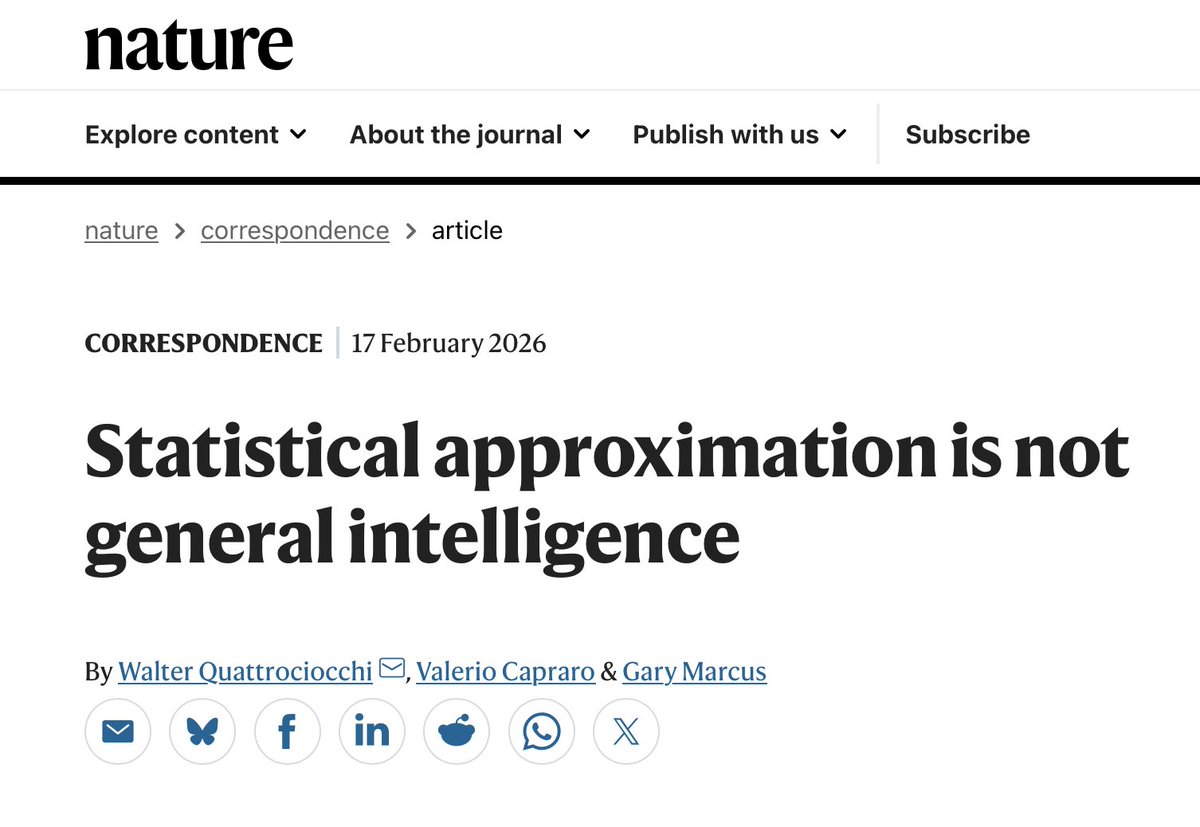
Most AI evaluation is still based on one assumption: if a system statistically approximates human behaviour, then it is close to human intelligence.
But approximation is not intelligence.
Simulation is not understanding.
LLMs can produce the right answer without knowing why it is right. They can simulate empathy without feeling. They can imitate judgment without responsibility. They can generate coherent explanations without having a world to which those explanations are accountable.
Stop confusing behavioural similarity with cognitive equivalence.
Human understanding is embodied, affective, relational, motivational, and normative. It is not just the production of plausible text.
*
Full paper in the first reply
Las inteligencias artificiales no viven una experiencia, no poseen un cuerpo, no pasan por la alegría y el dolor, no maduran en las relaciones ni conocen desde dentro lo que significan el amor, el trabajo, la amistad y la responsabilidad. Tampoco tienen una conciencia moral: no juzgan el bien y el mal, no captan el sentido último de las situaciones ni asumen el peso de las consecuencias. Pueden imitar, pueden simular pero no conocen lo que producen, porque no residen en el horizonte afectivo, relacional y espiritual en el que el ser humano se hace sabio. #MagnificaHumanitas
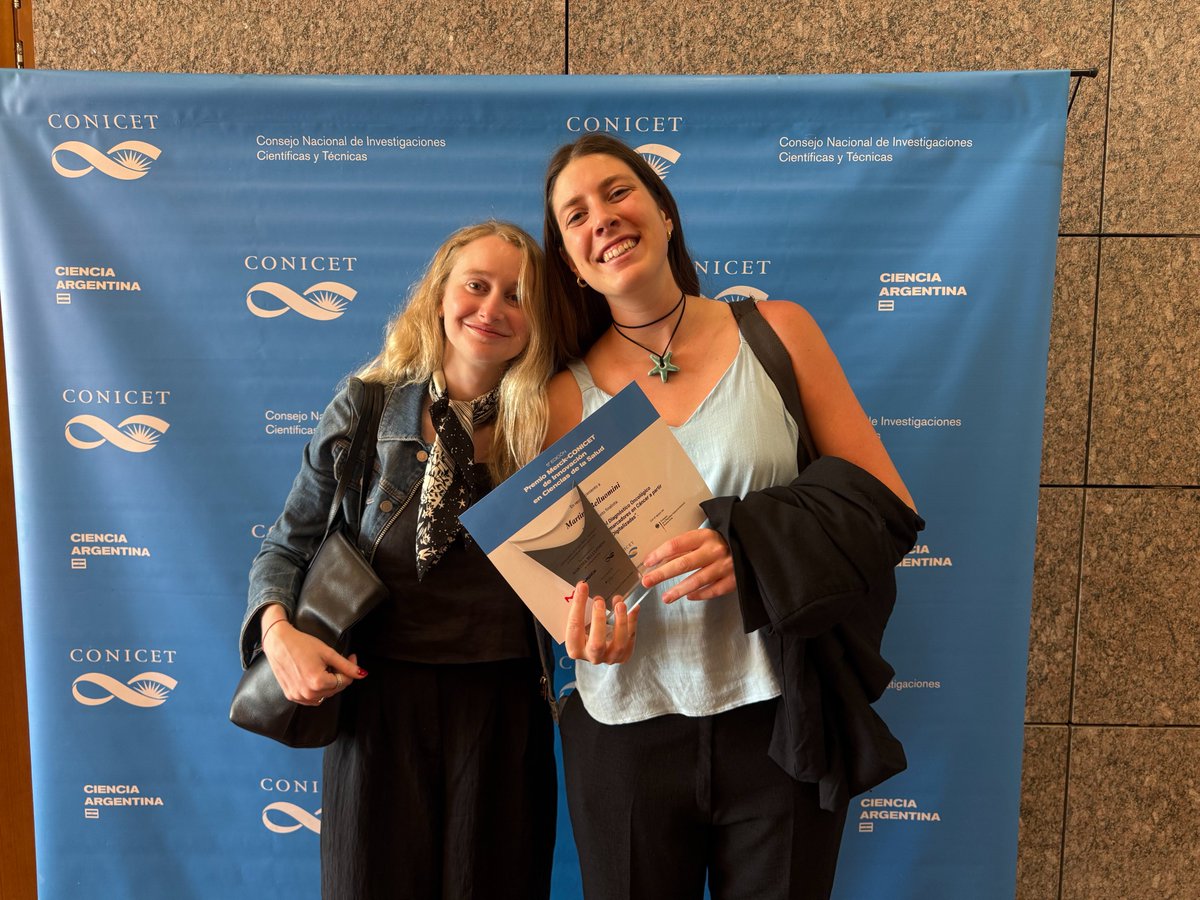
DOS BIOINGENIERAS CREARON UNA IA QUE PASA DE DETECTAR MUTACIONES DE CÁNCER EN UNA BIOPSIA EN UN MES A CINCO MINUTOS
Ana Gorodisch y Martina Belluomini son de Buenos Aires. Se recibieron de bioingenieras en el ITBA en 2023. Para su tesis de grado desarrollaron un algoritmo de inteligencia artificial que analiza imágenes de biopsias tumorales y detecta mutaciones genéticas invisibles a simple vista. En 2024, lo presentaron en el congreso de la American Society of Clinical Oncology. Ahí vieron que la necesidad era real y que nadie estaba desarrollando algo similar localmente.
En 2025 fundaron Kuvia. La tecnología toma la imagen de una biopsia tumoral, que ya se obtiene de rutina en cualquier paciente oncológico, y detecta en cinco minutos los biomarcadores que definen el mejor tratamiento, sin insumos adicionales. Hoy ese proceso puede tardar hasta un mes y no está disponible en todos los centros médicos.
Desarrollaron un producto para detectar un biomarcador clave en el cáncer de colon y endometrio, entrenado con los primeros datos de patología digital del país y en validación en más de cinco instituciones. Una de ellas es Biogenar, un laboratorio de anatomía patológica ubicado en Buenos Aires.
Fueron seleccionadas en Transformar Salud, la iniciativa de la Fundación Garrahan y Roche, para desarrollar una IA orientada a cáncer pediátrico. Y el Harvard Health Systems Innovation Lab destacó su solución entre los desarrollos globales de IA en salud.
Hoy son cuatro en el equipo: Ana como CEO, Martina como CTO y dos data scientists. Colaboran con un laboratorio de diagnósticos en Estados Unidos y están en conversaciones para llegar a Brasil.
"Queremos usar nuestra tecnología no solo para generar diagnósticos más rápidos y económicos, sino también para desarrollar nuevos diagnósticos que hoy no existen"
Esse vídeo literalmente comprova Deleuze
Enquanto Platão tinha uma visão negativa acerca do simulacro, que seria uma forma diminuída de realidades superiores, Deleuze tinha uma visão positiva, porque o simulacro é o meio pelo qual a diferença é produzida e novas coisas surgem. Em Deleuze, não há modelo original e nem forma diminuída, apenas diferença. A cópia da cópia da cópia da cópia, sem início e sem fim, é o que torna a criação possível. A diferença é uma força criativa.